Month: November 2013

  • As seen on TV – where are today’s trusted sources

    As seen on TV – where are today’s trusted sources

    In a local shopping centre over the weekend this business was selling massage tables using the fact they’d been mentioned on TV to enhance their reputation.

    Citing an appearance on TV in the hope of improving your credibility is very much a mid-20th Century way of doing things. In the 1960s or 70s an enthusiastic mention from a TV host was the way to get the punters beating a path to your door.

    Today, things aren’t quite the same. TV was on a decline as a trusted medium – despite the successes of talk show hosts like Oprah Winfrey – long before the internet arrived. The web bought social media and now buyers can consult their friends and peers before deciding to buy.

    What was interesting about the sign was there was no indication of a social media presence or web page and that in itself showed how old school this business’ advertising was.

    For the business owner, it would have been hard work getting a mention on TV. Space isn’t cheap to buy and getting a mention on a current affairs show requires either the services of an expensive PR agency or many hours of bugging producers and not a small degree of luck.

    Then again, maybe a complete lack of online engagement didn’t matter. The shopping centre I was in would have an average customer age well over forty and, most of the market the business was aiming probably comes from the sizeable retirement village across the road.

    How this business ignores modern communication channels is instructive about the generational change in business and society, particularly on how different age groups find their trusted sources.

    Similar posts:

    • No Related Posts
  • Abolishing the service visit

    Abolishing the service visit

    “Service used to be an act of damage control,” said Salesforce’s Peter Coffee at the recent Dreamforce conference. “You are bleeding brand equity until that problem is fixed.”

    Coffee’s view is that the internet of things is an opportunity to delight the customer with proactive service that allows companies to fix customers’ problems before they happen.

    Zero planned maintenance

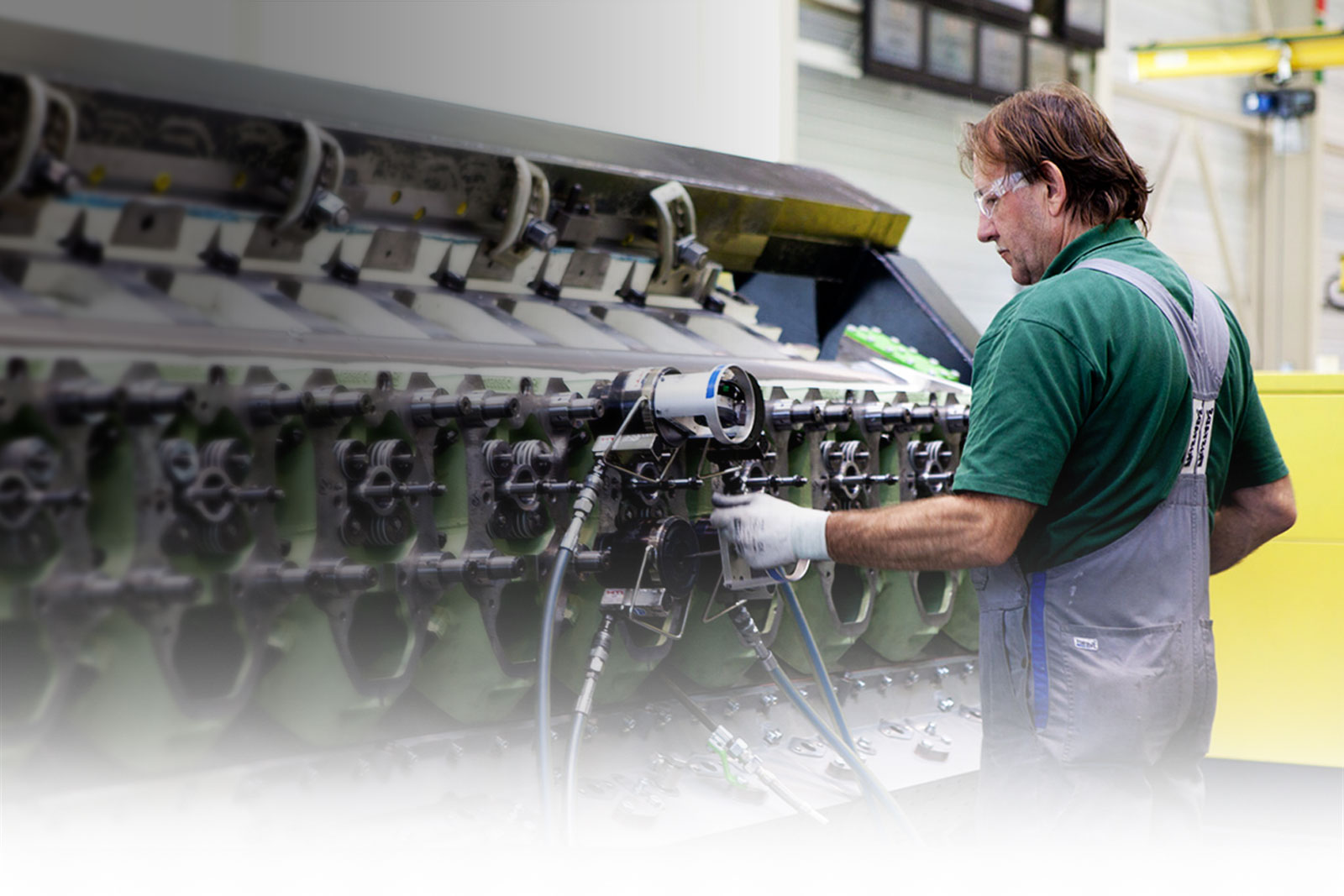
    Taking this idea further is GE’s Chief Economist, Marco Annunziata, who sees the internet of things as an opportunity to introduce the concept of Zero Planned Downtime where there is no need to stop machines for scheduled repairs and maintenance.

    “A lot of the maintenance work is done on a fixed schedule,” Annunziata. “You end up wasting time and money servicing machines that are perfectly fine.”

    “On the other hand you might miss that something is about to go wrong between two maintenance periods.”

    “The idea of the industrial internet is that by gathering so much data from these machines themselves – plus having the software to analyse this data – you will have information that flags to you when intervention is needed.”

    Annunziata’s view is that connected machines won’t need to have regular service intervals, instead of insisting a car has  an inspection every ten thousand kilometers where the tyres are replaced and the oil changed, often unnecessarily, the vehicle need only be called in for maintenance when its sensors flag that a part or consumable needs attention.

    Finding the benefits

    While that can mean big savings for car owners, it’s in fields such as aviation, mining and logistics where the greatest benefits of Zero Planned Downtime would be found.

    For businesses it’s another example of how they will fall behind if they don’t invest in modern technology as those who invest in newer, connected equipment will be able to reduce downtime and maintenance cost.

    How achievable Zero Planned Downtime is in many fields remains to be seen, not least because of regulatory hurdles in sectors like aviation, however the idea does promise to change the business model of companies that depend upon service revenue.

    Similar posts:

    • No Related Posts
  • Is NFC ready for prime time

    Is NFC ready for prime time

    One of ‘coming real soon’ technologies of our times is Near Field Communications (NFC), a short range radio service connecting suitably equipped electronic devices.

    NFC has been tipped to arrive ‘real soon now’ for several years as mobile phone companies, banks and telcos fight to control the payments system.

    The service hasn’t taken off for a number of reasons; it’s clunky to use, the technology itself isn’t consistently applied and many smartphones don’t have the feature, the most notable being the iPhone.

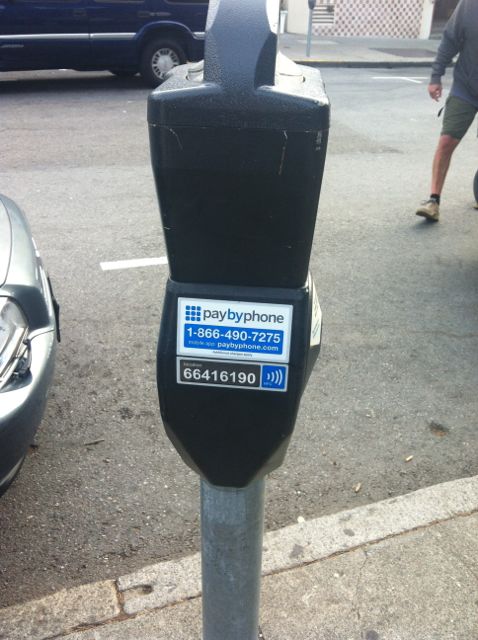
    Most of the applications cited for NFC are contactless payment services where a customer can wave a phone to pay for things, a good example is this parking meter in San Francisco.

    NFC-parking-meter-detail

    On the other side of the Pacific, Google are running a campaign in Australia encouraging commuters to try the NFC features that are built into most Android phones.

    IMG_4447

    Unfortunately the technology doesn’t work, as the comments to this blog post indicate. The users’ problems illustrate why NFC is struggling; it’s clunky, unreliable and customers don’t understand it.

    It’s notable the Google campaign includes a QR code, another technology that’s been pending for nearly a decade.

    Both are doomed though while customers struggle to use them.

    We may well see both QR codes and NFC succeed eventually, but right now they are the classic case of a technological solution searching for a problem to solve.

    Similar posts:

    • No Related Posts
  • Raising a citizens’ army

    Raising a citizens’ army

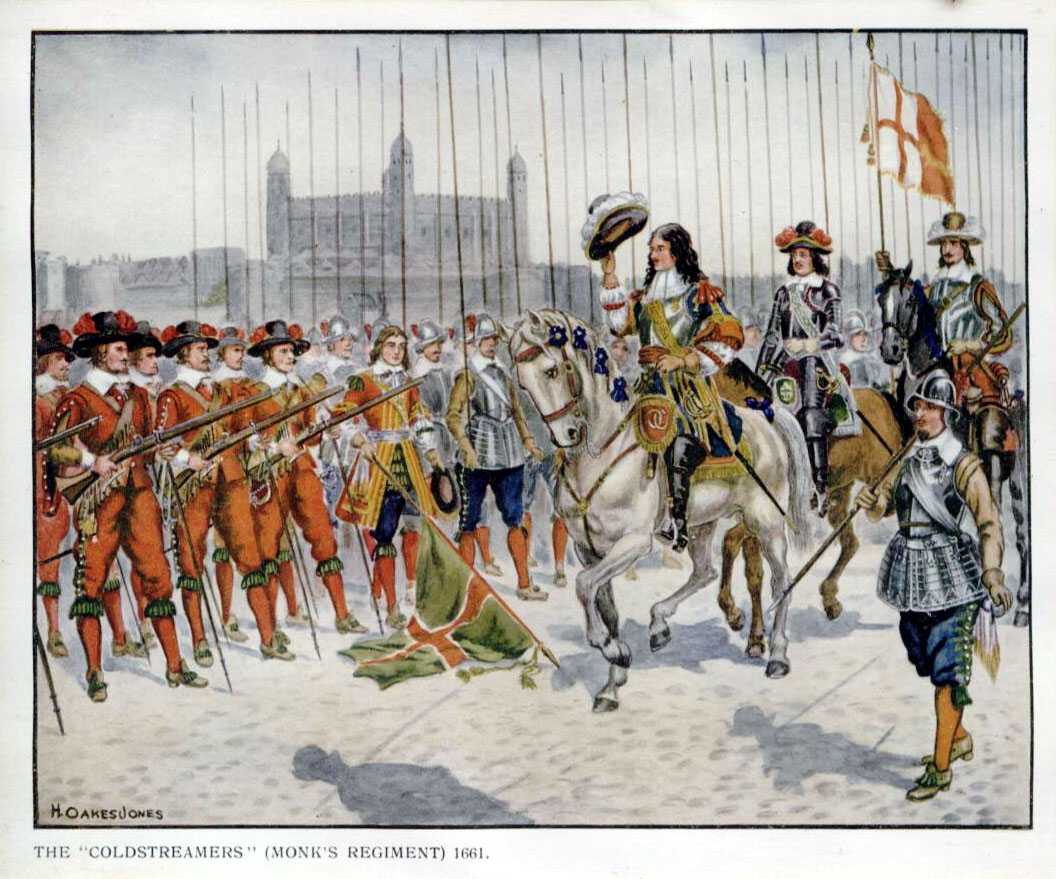
    In the English Midlands the leader of Birmingham City Council, the wonderfully named Sir Albert Bore, recently suggested a ‘citizens army’ be raised to provide services such as libraries that are being affected by budget cuts.

    Bore’s suggestion is a response to his council cutting library services in the face of community anger and legislative obligations, to assuage both pressures it’s hoped local volunteers can continue to run and maintain the threatened facilities.

    The bind Albert Bore and the Birmingham City Council find themselves in is a quandary all communities and governments are facing as an aging population causes tax revenues to decline at the very time the demand for government services increases.

    Faced with cuts, many groups are going to have to take matters into their own hands to keep services running. Some communities will do this well while others won’t.

    It’s also going to be interesting to see how this plays over generations with baby boomers being far more likely to volunteer than their GenX or GenY kids, something probably caused by more precarious job security in the modern job market and the need for younger couples to work harder and longer than their parents to pay their rent or mortgage.

    Angry baby boomers demanding the ‘government ought to do something’ may well find the onus is thrown back onto them to provide the services they believe they’re entitled to.

    What is the most fascinating part of this predictable situation is how governments around the developed world have blissfully pretended that this wasn’t going to happen as their populations aged.

    Perhaps the biggest citizens’ army of all will be the voters asking why the Western world’s governments and political parties ignored  obvious and inevitable demographic trends for the last fifty years. That would be a question worth answering.

    Similar posts:

  • Delighting the customer – the new business normal

    Delighting the customer – the new business normal

    Salesforce’s Executive Vice President of Strategic Reserach, Peter Coffee joined the Decoding The New Economy channel at last week’s Dreamforce conference to discuss the new normal — delighting the customer.

    Coffee’s role at Salesforce is to help the company’s potential clients understand the new normals of business life. “It’s a lot of listening,” he says.

    In describing the new normal, Coffee is in tune with Salesforce’s CEO Marc Benioff in seeing mobile services as being one of the key parts of how business will look in the near future.

    “The fundamental statement is your mobile device is no longer an accessory,” says Coffee. “It’s the first thing you reach for in the morning and it’s the last thing you touch at night.”

    “Fundamentally people are mobile centric so we need to rethink our operations.”

    Continuing the social journey

    It’s not just mobile services that are changing the way we do, social media continues to be companies’ weak points in Coffee’s opinion.

    “There’s research that’s come out of places like MIT that shows traditional print and broadcast media are still valuable for creating awareness of your brand but the final step of turning someone from knowing who you are into deciding to do business with you is now made today only when a trusted network confirms it.”

    “People don’t make that final step of buying from you until they’ve consulted their trusted advisors.”

    “Another fundamental change that’s happened is that the connectivity of the customer is such that if you have a customer that’s unhappy with you for even five or ten minutes there’s a tweet or a Facebook post or a LinkedIn update just begging to leak out and damage your brand,” says Coffee.

    “The closer you can get to instantaneous resolution to the issue, the better.”

    Internet of machines

    With the internet of machines, the ability to resolve customers’ problems instantaneously becomes more more achievable in Coffee’s opinion.

    “Connecting devices is an extraordinary thing,” says Coffee. “It takes things that we used to think we understood and turns them inside out.”

    “If you are working with connected products you can identify behaviours across the entire population of those productslong before they become gross enough to bother the customer.”

    “You can proactively reach out to a customer and say ‘you probably haven’t noticed anything but we’d like to come around and do a little calibration on your device any time in the next three days at your convenience.’”

    “Wow! That’s not service, that’s customer care. That’s positive brand equity creation.”

    Delighting the customers

    All of these mobile, social and internet of things technologies will give businesses the tools to delight their customers and Coffee sees that as the great challenge in the new business normal.

    While many businesses will meet the challenges presented by mobile customers and their connected machines Coffee warns those who don’t are in for a painful time.

    “If you do not have delighted customers you have no market.” States Coffee, “the way that you delight customers is by making sure every interaction with you leaves them happier than they were before.”

    “Traditional silos of sales, service, support and marketing must be dissolved into one new entity which is proactive customer connection.”

    “Companies that neglect to adopt it will discover they have customers who are sensitive to nothing but price,” warns Coffee.

    Paul travelled to Dreamforce in San Francisco as a guest of Salesforce.

    Similar posts:

    • No Related Posts