Author: Paul Wallbank

  • Small business and cloud computing

    Small business and cloud computing

    This blog, and its predecessor, have long maintained that computers and the internet have levelled the playing field between large corporations and small business so it was interesting Telstra’s managers say that over lunch today.

    Australia’s biggest telco was showing off their cloud services for small to medium businesses with a presentation from futurist Ross Dawson on the changing technology world then real world case studies from Darwin’s Abode New Homes, Canberra’s Red Robot and Melbourne’s Cargo Crew.

    Narelle Craig of Cargo Crew led with one very good reason for adopting cloud services – Cryptolocker ransomware.

    After an infection that locked them out of their systems and cost the business a hundred thousand dollars, they shifted their on premise software to the cloud.

    It’s easy to imagine how Cargo Crew came unstuck, a basic system that met the needs of a four person company five years ago grew into an unwieldy beast servicing 25 staff today. As the business grew, the disruption of upgrading IT systems was seen as too time consuming and costly.

    Until of course something happened. A ransomware infection for Cargo Crew and for Abode a fire in a neighbouring office the evening after they’d installed a new 20,000 dollar server, where thankfully they didn’t lose anything but the scare was enough for them to start looking at alternatives.

    Cargo Crew’s tale is a reminder of how basic most small to medium businesses’ IT systems are and how rudimentary their IT security is. While technology does level the playing field, there are still some things smaller businesses struggle with.


    Similar posts:

    • No Related Posts
  • Beating the bots: The evolving call centre business

    Beating the bots: The evolving call centre business

    The call centre business is very much an example of an industry driven by technological change, having only coming into being over the last 50 years as telecommunications became ubiquitous and affordable before being one of the biggest offshored industries.

    In an age of artificial intelligence, web based help pages and chatbots, it’s easy to think the call centre era may be coming to a close but Acticall Sitel Group’s Australian and New Zealand managers Steve Barker, the regional Chief Operating Officer, and Sally Holloway, Director of Business Operations, believe the industry has a long way to go yet.

    Miami based Acticall Sitel Group operates call centres in 22 countries with 75,000 ‘associates’ providing services to over 200 major companies so their view on how the industry is evolving is worth hearing.

    Technological shifts

    Naturally technology is the driving force with the increasing availability of broadband meaning more ‘associates’ can work from home rather than in call centres while cloud services are reducing the cost and complexity of call centres.

    The work from home aspect is proving popular with their clients as well as businesses see retaining skilled staff and the expense of real estate driving many organisations to extend their programs. An interesting observation given IBM’s and Yahoo!’s moves in restricting home office options in recent times.

    Social media has also changed the type of interactions consumers are having with organisations while artificial intelligence and robots – chatbots – are automating many call centre functions.

    A broader industry

    Holloway though says she doesn’t see voice services going away, “some interactions still require the personal touch”, but technology is broadening the ways customers interact with businesses.

    Interestingly, both Holloway and Barker believe that the commoditization of call centres is over as companies have realised the importance of good service in competitive markets although that varies between industries.

    Added to that is the stripping out of costs in areas like customer service has largely run its course over the past few decades and in most organisations there is little fat left to cut from client facing functions.

    Falling prices for technology, if not labour, does offer scope for smaller businesses to engage call centre providers that were once only available to larger corporates.

    Like most industries, the relationship between workers and automation in call centres is playing out in complex ways as staff get to use more advanced skills and low value tasks are given to machines.

    The evolution of the call centre may well be a pointer for other industries as we all grapple with the effects of automation.

    Similar posts:

  • Bootstrapping to success

    Bootstrapping to success

    One of the downsides of the current tech startup boom is the obsession with investor funding, the race to be a billion dollar ‘unicorn’ like Uber or AirBnB obsesses most of us reporting on this space.

    The paradox is while we gleefully report businesses raising hundreds of millions of dollars at ever increasing valuations, we’re also discussing how the cost of entering industries or launching new companies is collapsing, making it easier to launch a venture than every before.

    Which leads us to good old fashioned ‘bootstrapping’ – funding a business’ growth out of sales.

    A recent story I wrote on Sydney based HR tech company Expr3ss! reminded me of that where owner Carolyne Burns described how she financed her business initially through the sale of her house and has never taken a cent from investors over a decade of profitable operations.

    Bootstrapping is the traditional way generations of business owners and entrepreneurs have funded their ventures and it’s only in recent years with the rise of the tech startup that venture capital or private equity has been seen as investment sources for most small businesses.

    That rise of VC and PE investors though could be partly due to the banks stepping out of their role of financing small businesses as they’ve focused on financial engineering and funding speculators.

    Also driving things in the last decade has been the flood of cheap money that’s washed across the world as governments and central bankers try to stave off deflation.

    Many businesses needing money to fund capital investment or expansion have found it’s become harder to go to banks or traditional investors and that partly explains the rise of VC’s, Private Equity and the range of new online lender and crowdfunding platforms.

    Venture Capital and investor money though never really comes cheap and having raised funds from investors, a founder or business owner’s job becomes as much about managing investor expectations as running the company.


    For many business founders, the whole reason for starting their own company was to run their own show. So answering to a bunch of investors defeats the purpose of going on one’s own.

    Carolyne Burns’ story is a reminder that the best, and cheapest, form of business financing is profitable sales. It’s something we should remember in an age that celebrates loss making companies dependent upon indulgent investors.

    Similar posts:

  • ABC Brisbane on the future of retail

    ABC Brisbane on the future of retail

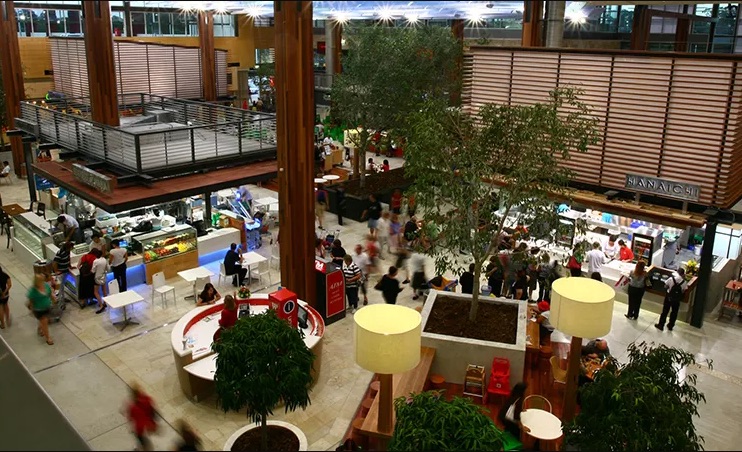
    This morning I’m talking with Steve Austin on ABC Brisbane about the future of retail as the city’s biggest shopping mall opens.

    What does such a huge complex mean to the local economy and is it sustainable as the retail industry evolves?

    Having had a massive upgrade, we can be sure Westfield Chermside will have plenty of technology to help customers spend money and we covered some of the ways modern retails have to understand consumer behaviour and predict what individuals will spend.

    Prior to the segment (which starts around the 60 minute mark), Steve took calls from listeners about how retail has changed in Brisbane over the past fifty years.  The demise of fondly remembered department stores is a reminder of how the sector changed as consumer behaviour changed over the last half of the Twentieth Century.


    Similar posts:

  • India’s technocracy

    India’s technocracy

    Buzzfeed today has an in depth look at India’s Aadhaar national identity system.

    1.12 billion Indians are now enrolled in the system that’s rapidly becoming mandatory as everything from telephone companies to job interviewers demand an identification number.

    Aadhar is far from without critics with warnings that the database has a rich potential for abuse and the risk of betraying Indians’ biometric data should the system be compromised.

    The latter point is important as biometric data isn’t like passwords – once biometric data been compromised it can’t be changed which opens up massive possibilities for identity fraud.

    Regardless of the risks, India’s state and Federal governments are pressing ahead with the system and making sure it is a fundamental part of national life. Coupled with the recent demonetisation of the economy, the nation’s governments now have a very good picture of most Indian’s lives.

    For civil rights campaigners this is a worrying system while government officials and politicians claim it will stamp out fraud and strengthen national security.

    India is leading the way in where many other nations are going in coming years, it would be worthwhile watching how Aadhaar develops.

    Similar posts: