Author: Paul Wallbank

  • Gadi Amit – the designer as a contrarian

    Gadi Amit – the designer as a contrarian

    Gadi Amit, founder of San Francisco’s New Deal Design, has been on the forefront of designing  many of today’s wearable devices including the Fitbit, Lytro Camera and Google’s modular Ara phone.

    Ahead of his visit to Sydney to speak at the Vivid Festival last June, Gadi spoke about his philosophy on design and the future of wearable technologies.

    “As a matter of method we always try to look for the contrarian point of view,” Gadi says about his approach to a new project.

    “The initial point of view is better served by being tested against a contrary point of view, in about fifty percent of the cases we find the contrarian point of view actually wins.”

    Cherishing sustainable devices

    One of the key challenges facing designers today is creating sustainable product and Gadi sees the answer lying in developing durable, adaptable products.

    “I’m focusing most of my work on maintaining the usage of the object for as long as we can and extending its meaningful life to people.”

    “This way we make sure that that it’s usuable, it’s beautiful, it’s loved and it’s cherished.”

    project-ara-google-phone

    Google’s Project Ara is an example of Gadi’s philosophy of extending a mobile phone’s life by building the device up from modular units that allow handsets to adapt to users’ needs.

    Rejecting big data

    One of the effects of wearable and smart devices is the explosion of big data, Gadi sees this as problem for users and the result of a mismatch between the development of software and hardware.

    “The hardware design is actually ahead of the software design. Software is still lagging behind and still spewing data all over the screen.”

    “I think people don’t want more data, they want less data. They want meaningful cues that will be served with very little fanfare. You don’t need to know you walked 10,000 steps, you need to know if you’ve walked enough or not enough.”

    Gadi cites the early design of the Fitbit where the software showed a flower blooming to indicate the wearer was meeting the fitness objectives as an example of a simple and elegant way to convey complex information.

    Moving to a world of unlimited screens

    One of the opportunities Gadi sees with wearable devices is how methods of conveying complex information are going to change radically.

    “There’s greater understanding that we have to distil user interfaces into something more basic,” Gadi explains. “It’s a new design process that involves a lot of experimentation with the human body and hardware.”

    Escaping the boxes of design

    What excites Gadi about the design industry today is the diversity of opportunities.

    “Ten years ago an industrial designer dealt with maybe four or five types of boxes – you might design a mobile phone, which was a small level box, you might design a laptop which was a mid level box and you might design a PC which was a bigger box.”

    “I remember one executive describing the world to me as ‘we have four screens; there is the large TV screen, there is the PC screen, the notebook and the mobile. That was the grand unifying theory of the universe.”

    “What we have now in the studio are objects the size of a human finger that are made of soft material and have amazing kinematics and we have objects the size of a fingernail that are still interactive with humans.”

    “I’m really excited about it.”

    Similar posts:

    • No Related Posts
  • What happened to Australia?

    What happened to Australia?

    Today I have a piece up in Technology Spectator on PwC’s Expanding Australia’s Economy report, the headline for which probably guarantees I’ll never get a job in a large Australian corporation again.

    While the headline – which wasn’t mine – is inflammatory, there is an element of truth to it as Australian companies have become far more insular and comfortable in the last twenty years.

    It wasn’t always like that, for a brief period in the late 1980s and early 1990s corporate Australia was prepared to take on the world. But something happened in the mid 1990s.

    John Winston Howard

    One of the key turning points was the election of the Liberal government in 1996, John Howard’s fundamental belief was that things were better in the 1950s and Australia should return to those days. He delivered.

    The Australian people thought his vision was a great idea, having become exhausted by the reform agenda of the 1980s Hawke and Keating Labor governments that had opened and reinvigorated the economy.

    Howard was helped by the Labor Party abandoning its reformist agenda with its successful 1993 campaign against the Liberal’s policy of changing the tax system. As George Megalogenis pointed out in his book The Australian Moment, Paul Keating’s populist victory over John Hewson demolished any appetite for meaningful reform among Australia’s political classes.

    Cosy clubs

    The centerpiece of Keating’s economic reforms was the compulsory retirement savings system; while the idea was good in principle, the practice of private fund managers looking after the savings has meant most of the investment has been concentrated in the top ASX stocks.

    As a consequence, Australia’s top companies were relieved of the chore of answering to stroppy shareholders as their registries were dominated by their friends from Sydney’s Balmoral Beach Club and the hallowed halls of the Melbourne Club.

    Domestic duopolies

    Compounding that problem was another failure of the Hawke-Keating years of allowing domestic monopolies to develop on the basis that Australian companies needed a strong local footing in order to compete in global markets.

    For a while that worked until Australia’s now powerful duopolies decided it was more profitable to exploit their domestic market strength rather than competing as global players. This happened around the time Keating won the 1993 election, by time Howard became PM the practice was well established.

    The combination of tame shareholders and comfortable markets is why Australian corporations haven’t responding to global pressures; they simply don’t have to. Which leads us back to the conclusions of the PwC report.

    Australia needs to lift its game. We are lagging behind our peers globally and are not considered a leader of innovation. The Organisation for Economic Co-operation and Development in its Science, Technology and Industry Outlook 2012 rates Australia as average against its key drivers that measure competency and capacity to innovate. Change is required.

    It’s difficult to see where change is going to come from for Australia while everyone – business leaders, politicians and the population at large – are comfortable. As the long as The Lucky Country stays lucky it can afford not to invest in the 21st Century.

    Similar posts:

  • Amazon’s death grip

    Amazon’s death grip

    Hachette Book Group is the latest victim of Amazon throwing its weight around the bookselling industry reports the New York Times.

    While it’s not the first time this has happened, Amazon’s willingness to bully suppliers – and disappoint customers – is a taste of what happens when one company controls a choke point in the distribution network.

    In the early days of the internet we believed the web would eliminate the middleman, instead the net put the existing intermediatries out of business and gave us a new, global breed of gatekeepers.

    The galling thing about Amazon is the company has barely made a profit in its 20 years of operation, one wonders how profitable it will be once should the operation manage to wrest control the entire bookselling industry.

    In many ways, Amazon is a cautionary tale for everyone trading online; beware of allowing any one platform too much power over your business.

    Similar posts:

  • Securing the industrial internet

    Securing the industrial internet

    One of the big concerns with connecting devices to the public internet is security, particularly when equipment that was never intended to be on the net is suddenly wired up.

    When the world’s computers started to be connected to the Internet in the mid-1990s it became apparent very quickly that most of the operating systems then in use were hopelessly vulnerable to security problems.

    The worry is the same thing will happen today with the Internet of Things, particularly with household equipment which – if the PC industry’s experience is anything to go by – will open up whole new fields of risk to homeowners.

    While having your kettle or home networked hacked could be painful, it’s nothing compared to the risks of infrastructure or vital equipment being compromised.

    So GE’s acquisition of security company Wurldtech is an important development as it focuses on the software aspects of its products and the Industrial Internet – GE’s own term for the internet of things.

    Techcrunch’s Ron Miller has a good run down on GE’s purchase of Wurldtech where Neil McDonnell, the CEO of the acquired business, describes the company’s two pronged approach to security.

    First, they do testing to discover vulnerabilities in the system and they certify sites that are secure. Secondly, they provide specific security solutions around a system such as a substation or pump.

    For GE, Wurldtech will help them secure existing infrastructure and equipment that’s being connected to the net, what they learn should also help designers of the next generation of equipment build security into their products.

    GE’s acquistion of Wurldtech is another example of just how seriously engineering companies are taking security in the internet of things, hopefully those building consumer systems are paying attention too.

    Similar posts:

    • No Related Posts
  • Connecting bridges to the internet of things

    Connecting bridges to the internet of things

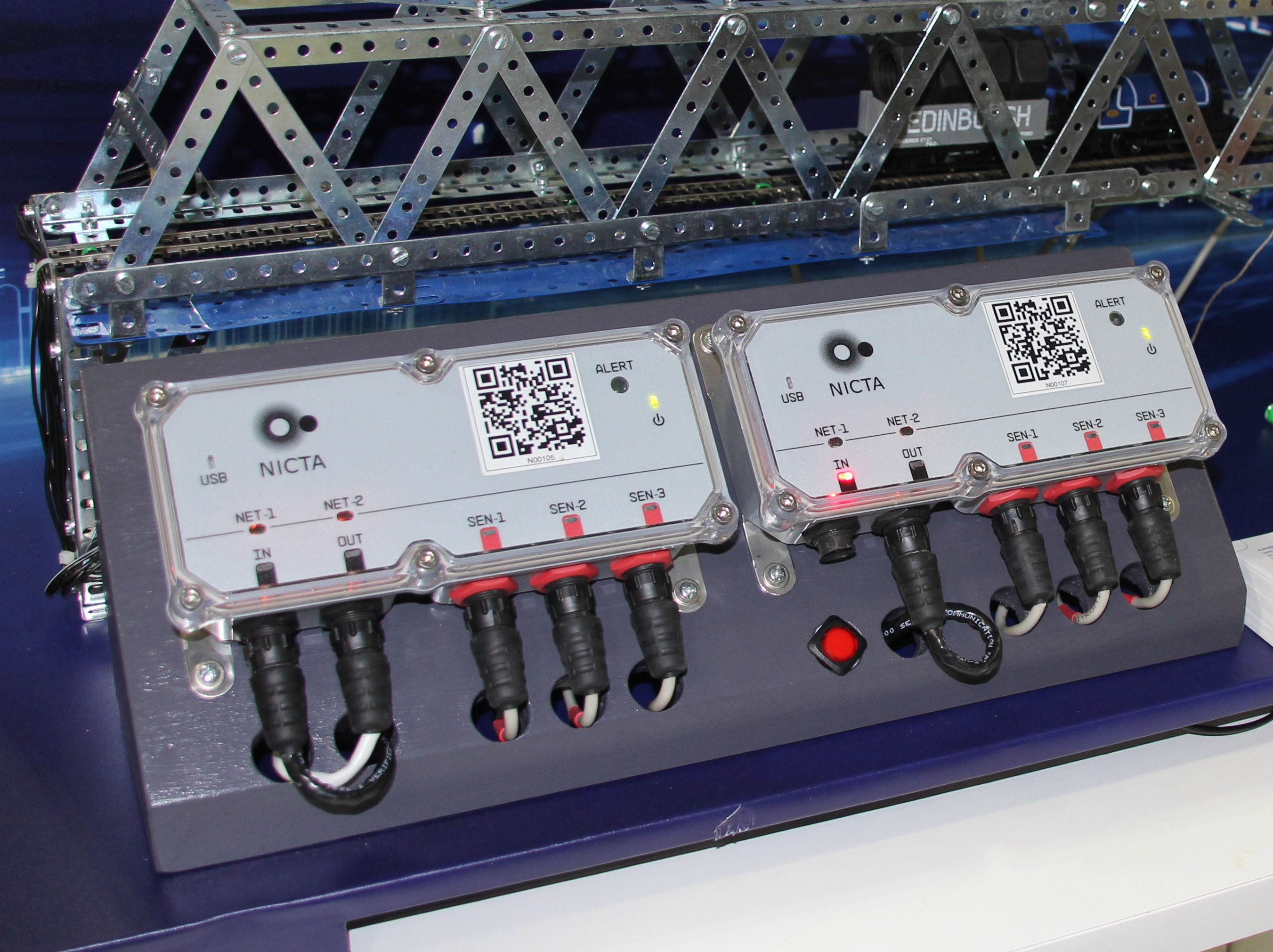
    On Networked Globe today I have a description of NICTA’s Sydney Harbour Bridge Monitoring Project where the research agency is rolling out 800 sensors across the structure to reduce maintenance costs.

    The project a good example of how cheap sensors and abundant computing power is changing workplaces, connecting the bridge to the Internet of Things makes it easier for asset managers and engineers to understand what is happening to their structure.

    While the project promises a lot, it’s only a fraction of what’s possible as the sensors are only measuring movements so there’s a lot more they can do.

    The big promise though is for smaller structures than the Sydney Harbour Bridge. Around the world local governments are struggling to maintain their assets, if NICTA can develop a feasible monitoring product then many agencies will be looking at how they can reduce their budgets.

    While we tend to focus on connected kettles and other household devices when we talk about the internet of things, the real benefits and profits lie in the ‘big iron’ industrial and infrastructure applications.

    Similar posts: