Author: Paul Wallbank

  • You don’t wanna be on the front page.

    Nothing amuses a journo or ruins a PR’s day more than a CEO or founder declaring “we want to be on the front page of x publication.”

    The sensible response to that demand is ‘why?’ and it’s an important question for anyone looking for media coverage.

    Usually ‘x publication’ is the nation’s major business outlet, think the AFR in Australia, the FT in the UK, or the Wall Street Journal in the United States. Every country has its equivalent.

    Positive stories leading a site or paper aren’t something easily won, unless you’re buying space which is a different story.

    However, regardless of whether you’re buying space or you’ve earned a story at the top of the page, is it something you really want and, if so, why?

    A favourite story of mine involves an old colleague who was editing one of Australia’s top tech magazines (back in the days when front cover CDs drove sales).

    Her magazine awarded ‘PC of the Year’ to a small suburban computer shop, resulting in that store deluged with orders.

    Great news, right?

    Not so for the business as the owners found themselves overwhelmed with work and, shortly after, buried with customer complaints as they struggled to meet demand. Eventually they went out of business with a horde of disaffected clients and consumer affairs on their tails.

    Most business owners don’t think through why they are looking for publicity – if you suddenly get attention are you risking ending up like that suburban computer shop?

    The answer to the ‘why’ question often turns out to be complex – some businesses are looking to juice sales or build their brand; others, particularly in the startup space, want to get on investors’ radars; while high-growth businesses may be looking at attracting good quality staff.

    And there’s ego, which is often the biggest driver of the “I wanna be on the front page” demand.

    The latter’s easy to get dispel with a litany of all the times CEOs and founders careers have been scuppered by a high-profile scandal on the front pages – basically the “you don’t wanna be on the front page” reply.

    More complex are the other motives, and they require a nuanced, well-thought out strategy with the audience and the desired end result being key considerations.

    Often, that audience is more in a niche publication, or even the company’s own social and owned channels, rather than a city or national publication.

    While it’s a good ego-stroke to see yourself illustrating the day’s top story in the national business paper, for most organisations that’s not where the real benefit of media coverage lies in building a name, selling a product, or catching the eye of well-heeled investors.

    Sensibly thinking about where you want to be seen is the first step to getting coverage. Of course, you still need to have something decent to cover.

    But, no, you really don’t need to be on the front page.
    Similar posts:

  • One step beyond

    One step beyond

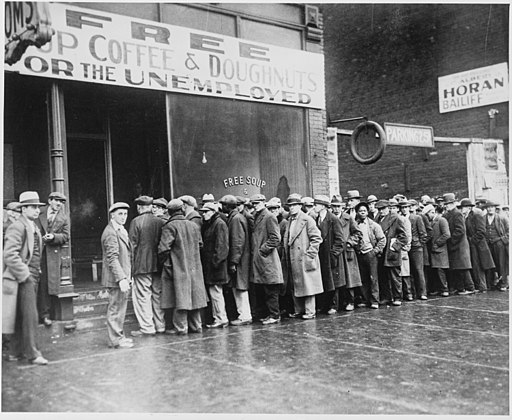
    The catastrophe facing the economy from the necessary closing of industry in the face of the COVID-19 outbreak has dawned on the Australian government. But we have a long way to go.

    Prime Minister Scott Morrison’s belated and inadequate Jobs Keeper package announced today is the first step in addressing the greatest economic crisis facing Australia since Federation and this package will be almost be widened, simplified and bought forward well before payments are scheduled to kick in at the beginning of May.

    In 2008, the aim of stimulus and support packages was to avoid the very situation we find ourselves in now — widespread business collapses and long unemployment queues. We’re one step beyond where governments were a decade ago.

    The size of the collapse should not be understated, looking at the composition of the Australian workforce, we can see exactly how great the damage has been over the past two weeks with two sectors – tourism and hospitality – taking the immediate hit

    Industry of employment (Division)Feb-19
    (‘000)
    Agriculture, Forestry and Fishing332
    Mining251.7
    Manufacturing872.5
    Electricity, Gas, Water and Waste Services147.6
    Construction1,153.90
    Wholesale Trade390.9
    Retail Trade1,284.70
    Accommodation and Food Services907.1
    Transport, Postal and Warehousing666.1
    Information Media and Telecommunications220.4
    Financial and Insurance Services445.5
    Rental, Hiring and Real Estate Services216.3
    Professional, Scientific and Technical Services1,115.30
    Administrative and Support Services414.1
    Public Administration and Safety858.5
    Education and Training1,032.40
    Health Care and Social Assistance1,702.70
    Arts and Recreation Services247.4
    Other Services515.7
    Total employed12,774.60

    Source: ABS, Labour force, detailed, quarterly, Feb 2019, cat. no. 6291.0.55.003 (Table 04)

    Given the widespread shut downs over the past three weeks, it would be conservative to estimate a million jobs have been lost across the Accommodation and Food Services, Retail Trade, and Arts and Recreation sectors.

    With the near shutting down of the Australian aviation industry and the laying off of nearly 30,000 workers by Qantas and Virgin, it would be conservative to say at least 20% of the Transport, Postal and Warehousing sector have lost their jobs as well, despite the demand on logistics chains as shoppers panic buy.

    Similar disasters are looming in other sectors including, perversely, Health Care and Social Assistance as areas like day care and private hospitals start to close.

    All of which makes the Federal Government’s dithering with support packages for industry, workers and small business more tragic. The delay in bringing in today’s package, at least a week late, has been a disaster for the economy.

    The idea payments won’t start until the first week in May is laughable, the drag on the economy, and the human tragedy of thousands of failed businesses in the meantime means it will almost certainly be bought forward with the 30% turnover fall requirement being dropped

    If it wasn’t obvious during the slow and muddled response to the bushfire crisis, it’s clear Australia’s leaders struggle with an emergency, and this one has a long way to go.

    With the economic crisis threatening to go a lot longer than the pandemic, there will be a lot more money spent and already we’re hearing the cries of ‘who will pay for this?’

    One lesson from the 2008 crisis was the cost of austerity to pay for the support and bail outs. Hopefully Australian politicians can learn from Europe’s mistakes and avoid Austerity although that will challenge the Liberal and Labor parties’ modern ideology.

    We have a long way to go on this.

    Similar posts:

    • No Related Posts
  • Y2K and its roll in my downfall

    Y2K and its roll in my downfall

    Two decades ago today, the world was breathing a collective sigh of relief as as the direst predictions of Y2K turned out to be overcooked.

    I was one of those, at the time running an IT support business and appearing on a fortnightly tech segment on the local ABC station. Little did I know that Y2K had already set me on at least two career changes.

    The radio show itself had been as a result of the Y2K bug. In early 1998 I heard a pundit giving some dangerous computer advice on the-then 2BL – now ABC Sydney.

    His advice risked locking small business owners out of their accounting systems and it wasn’t hard to imagine the devastation he could cause for any proprietor following his instructions.

    So I dashed off a fax to the show’s producers – the ABC didn’t accept emails from the public in 1998 – arrogantly suggesting it might not be a bad idea to think twice before inviting the guest back again.

    Two weeks later Bob Hughes, ABC Sydney’s then weekend announcer called asking if I’d like to come in and talk about Y2K and some of the other issues I’d raised in the fax.

    I rocked up the following Saturday morning and did ten minutes on air giving, what I hoped, was a useful and plain English overview of the Y2K bug dispelling some myths and hysteria as well as some useful tips on checking for problems.

    Then, without warning, Bob opened the line for listeners’ calls.

    After what felt like two hours of stumbling my way through a range of random callers, Bob said “see you in a few weeks” and I was on the roster.

    I ended up doing ABC shows for the next 18 years. First on ABC Sydney Weekends and then on the national Nightlife program with the evergreen Tony Delroy.

    It was one Thursday night spot with Tony that started my writing ventures. I appeared with Yvonne Adele, now a professional MC and public speaker but then making her name as Ms Megabyte.

    Yvonne had been working with John Wylie and Sons on the Australian edition of their flagship PCs for Dummies but her commitments were making it hard for her to give the project the time it needed. She put my name forward to work on them.

    Having already written one book on small business IT which had been born out of the feedback from the radio spots, PCs for Dummies was an obvious move and it led to four more titles.

    That writing in turn led to a Smart Company column covering small business tech issues which I stuck with for ten years as I moved on from my IT support business and dabbled in other ventures.

    As the other ventures didn’t have the success of PC Rescue, I found myself increasingly relying on freelance writing for income which eventually led to contributing pieces to the mainstream newspapers on tech and NBN issues.

    Eventually that turn to journalism saw me spend two years News Editor at Mumbrella and now a role at a Australia’s main IT professional organisation.

    All of this started with the Y2K bug. It’s funny how things take you where you don’t expect.

    It wasn’t just me that saw Y2K deliver a career change, for the Australian IT industry, the year 2000 was its peak. That year saw the dot com boom peak and the introduction of the GST. It was a good time to be in tech.

    But good times don’t last, and the combination of Y2K passing, the GST being implemented in July 2000 and the tech wreck coming at the end of the year, many Australian tech professionals found themselves driving cabs or working on building sites.

    The industry lost many good people and only in the last few years, two decades on, has it truly recovered. But that’s a post for another time.

    Similar posts:

    • No Related Posts
  • Australia’s lost business agility

    Australia’s lost business agility

    The recent digital competitive index by Swiss business school IMD, flagged a worrying trend in Australian industry, reporting the nation’s commercial sector is falling behind its international counterparts in digital competitiveness.

    Overall the IMD’s digital competitive rankings weren’t terrible for Australia with the nation only sliding one place to 15th globally from its 2018 place — albeit down from ninth five years ago.

    But the indicators that kept Australia in the top 20 were in the nation’s international student numbers and the national credit rating, hardly the mark of an economy on the leading edge.

    Jarringly, the survey ranked the nation’s business agility, 45th out of the 63 economies surveyed.

    IMD’s definition of an economy’s business agility includes the local industry’s adoption of big data, IT integration, concentration of robots and local companies’ ability to respond to opportunities among other factors.

    For those of us who’ve spent the last two decades proselytising about the importance of investing in technology, the fall was disappointing but unsurprising as Australia has long been lagging in its digital investments.

    The answers to why this is happened over a twenty year period that saw Australia become one of the world’s richest economies lies mainly in the investment priorities and opportunities of the nation’s small business and corporate sectors.

    With the exception of the mining industry, Australian corporations aren’t globally focused. Most of the nation’s large corporations are domestically facing service providers like banks, telcos, toll road operators and supermarkets which sees them focused on maximising local profits rather than competing in international markets.

    Most of them also operate as duopolies or monopolies, so much so that in most sectors, Australia can be described as the ‘Noah’s Ark of business’.

    Added to that, those dominant local corporates have shareholders addicted to high dividends., in turn reducing the funds available for reinvesting in the businesses.

    When Australian corporates do invest in digital technologies, it’s almost always to slash costs. A mindset which leads them into disastrous deals with global IT outsourcers and tech vendors.

    Of course continual failure on that level doesn’t matter when you can pass the costs of failure onto customers by increasing milk prices or credit card fees.

    For the small business sector there’s a slightly different set of constraints, however with most SMB’s also being local service providers they haven’t needed to invest to stay competitive.

    But small businesses trying to compete in global markets, or looking to invest invest, face another problem — accessing capital.

    Over the last 30 years, Australia’s small business sector has been frozen out of bank lending with loans only accessible to proprietors able to pledge 100% collateral — usually home equity — against their loans.

    For providing effectively risk free loans Australian banks charged handsomely, helping make them the profitable banks on the planet, something that was missed in the weak, and dare one say naive, conclusions of the Hayne Royal Commission into the nation’s finance industry.

    The upshot of the banks’ refusal to lend to small businesses means their investment and subsequent productivity has stagnated and fewer have been able to compete in global markets.

    So Australia’s fall in competitive indexes isn’t surprising and it’s an added handbrake on the economy as the government struggles with flat income growth, stagnant private sector employment rates and declining GDP per capita.

    Fixing these roadblocks is wholly up to government — the banking system needs to be reformed, taxation policies need to be overhauled and serious consideration has to be made about breaking up the nation’s more inefficient and dominant corporates to stimulate domestic competition and innovation.

    Sadly, there’s little recognition of the problem among Australian’s politicians, bureaucrats, business leaders or media and, one suspects, there’s no appetite for meaningful reform.

    So Australia will muddle along for the moment, but its hard to see how living standards can be maintained as the country’s business sector stagnates.

    Which is the real warning from the IMD.

    Similar posts:

  • Changes

    Changes

    Last month everything changed.

    Instead of waking up at 5am, lying in bed and checking the overnight news and media releases on my phone, I was able to lie in, consider going to the gym and wandering into work at a sensible hour.

    My two years as Mumbrella’s news editor had come to end.

    Modern digital journalism is not for the lazy or the faint hearted. The tyranny of a daily newsletter means the editors are always hungry for stories and stressing about scooping the opposition.

    The hours up to sending the daily newsletter – around 10.30am for Mumbrella – go in a blur.

    After the newsletter is sent, the duty editor’s challenge is to keep the website up to date while keeping a beady eye out for breaking news, story ideas for coming days, complaints about earlier stories and moderating the often defamatory comment stream.

    Lucky editors have great reporters in their teams. In my case, I had Zoe Samios and Abigail Dawson who both awed and scared me with their work ethic and ferocious competitiveness.

    I was very lucky.

    That luck held in working alongside Josie Tutty, Mumbrella’s deputy editor, whose editorial sense and attention to detail saved me from countless shocking howlers.

    With that team, Mumbrella managed to score its highest ever traffic in 2018.

    Those opportunities, privileges and challenges came at a cost, though with stress an every-present problem for everyone in editorial teams.

    One former editor of an industry website told me they had PTSD after four years of running one site.

    Despite the stresses, those two years had been interesting. I’d learned a lot and I’m eternally grateful to Tim Burrowes for the opportunity to have a deep, if short, dive into an industry which I didn’t really understand along with the privilege of working with some of the smartest and hardest working young journalists in Australia.

    It was also the opportunity to be on the editor’s side of journalism, a challenge I genuinely thought I would never get.

    However when Zoe, Abby and Josie decided to move on for their own individual reasons, it was time for me to move on as well.

    Again, I was lucky. A role at the Australian Computer Society opened up which allows me to get back into tech in a position that gives me the opportunity to help raise the IT industry’s importance to the nation’s and political leaders.

    This has been my passion and was too good an opportunity to pass up.

    Added to the attractions were a much shorter commute, nicer offices, more civilised working hours and far less stress.

    I’ll miss the hipster vibe of Chippendale, even though I was probably the oldest person in the suburb, let alone the office, along with the opportunity of dressing like an extra from Mr Robot.

    Now I’m at Barangaroo (the towers in the featured image) I have to dress like a sensible, middle aged adult.

    The last two years were at times fun, at times dispiriting and at times infuriating. On the latter point, it’s remarkable how sensitive those outwardly hard-nosed agency bosses, journalists and publishers can be when relatively trivial stories upset their fragile egos.

    I won’t miss those panicked phone calls from hysterical publishers, journos and agency bosses who, quite frankly, were old enough to know better. You know who you are.

    But on balance, my time at Mumbrella was a challenging and fun adventure. I wish the new team, as well as Tim and his co-founder Martin Lane, all best in navigating a business reporting on an industry that doesn’t understand its own challenges.

    So I’m thankful for the opportunity, and I’m grateful for the change.

    I hope to see many of you around in the new role.

    Similar posts: