Author: Paul Wallbank

  • San Francisco’s stuggle with property prices

    San Francisco’s stuggle with property prices

    “You’re not wanted here” is the message from San Francisco residents protesting against tech workers and tycoon moving into the city.

    Over the last year the protests against the ‘Google Buses’ that ferry tech company workers from San Francisco to Silicon Valley has steadily ratched up with protests against high profile individuals, people vomiting on the buses and Google Glass wearers getting their devices smashed.

    Around the world, from London and Berlin to Auckland and Hong Kong, cities are worrying about the diversity of their cities as the global asset bubble inflates property prices beyond the reach of ordinary citizens.

    In many respects San Francisco is probably unique in its relationship to Silicon Valley and its restricted geography, but it’s hard not to think if the current technology stock falls on the US stock markets became a Tech Wreck style bust then the city’s problems might solve themselves.

    The challenge for all major cities around the world is to manage the current boom in property prices that threaten to drive out lower paid workers essential to vibrant economies – although ultimately anything that can’t be sustained won’t be sustained and it’s hard to see how housing can run too far ahead of wages before a reversal happens.

    In the meantime though we can expect to see many cities struggle with the same issues that face San Francisco.

    Similar posts:

    • No Related Posts
  • Burying capitalism with the Internet of Things

    Burying capitalism with the Internet of Things

    A strange piece by author Jeremy Rivkin in The Guardian argues the internet of things will facilitate an economic shift from markets to collaborative commons which threatens capitalism as marginal costs fall to zero.

    Rivkin argues that the rise of the ‘prosumer’, who contributes content and adds economic value for free, is undermining the basic tenants of capitalism.

    A telling blow to capitalism in Rivkin’s eyes is the abundant data generated by the Internet of Things;

    Siemens, IBM, Cisco and General Electric are among the firms erecting an internet-of-things infrastructure, connecting the world in a global neural network.

    There are now 11 billion sensors connecting devices to the internet of things. By 2030, 100 trillion sensors will be attached to natural resources, production lines, warehouses, transportation networks, the electricity grid and recycling flows, and be implanted in homes, offices, stores, and vehicles – continually sending big data to the communications, energy and logistics internets.

    Anyone will be able to access the internet of things and use big data and analytics to develop predictive algorithms that can speed efficiency, dramatically increase productivity and lower the marginal cost of producing and distributing physical things, including energy, products and services, to near zero, just as we now do with information goods.

    That Rivkin mentions large corporations like Cisco, Siemens, IBM and General Electric illustrates the flaw in his idea — these companies are profiting from the Internet of Things and the data it’s generating.

    Rather than being killed, capitalism is evolving to the new marketplaces.

    Nowhere is this truer than in the sharing economy where the new lords of the digital manor are  profiting from the work and free content generated by unpaid ‘prosumers’.

    How long the free business models can survive is open to question, in many respects the age of the digital sharecropper is a transition phase that isn’t sustainable and it’s more likely we’re seeing a move to an economy where information is far more abundant than it was previously.

    Such a change is not unprecedented, far more basic human needs are food and energy. In Western economies, we have been living in a time of unimagined abundance of both for the last century.

    In subsistence economies, food and the energy to grow or hunt it is scarce and its why living standards are low and life expectancies are short. Agricultural society start to solve the food scarcity problem and industrial societies automate farming and increase living standards through abundant energy.

    During the pre-industrial era, the basic unit of energy was the horse – hence the term horsepower – and it was rare to have more than four horses driving a coach or piece of machinery.

    Today, we have locomotive engines that provide 6,000 horsepower, a basic farm tractor delivers around 100 HP  and a typical family car around 200. We live in an age of abundant energy and our living standards reflect it.

    We’re moving into an era of abundant information that will change our societies in a similar way to the age of abundant power has changed economies over the past 300 years.

    Open source, the sharing economy and the internet of things will all change aspects of our economies and society but people will still be making a living one way or another so they can buy a meal and pay their rent.

    The age of abundant information means massive change to the way we work, but it no more means the end of capitalism than the steam engine did.

    Similar posts:

  • Bleeding hearts and internet security

    Bleeding hearts and internet security

    The big tech news story of the last two days has been the Heartbleed security flaw, that might have compromised users’ passwords and other details.

    Given the nature of the bug where a server can tricked into giving away bits of what’s stored in its memory, it’s hard to say exactly what has been compromised – on most sites you’d be very unlucky to have your password on banking details in the system at the precise millisecond a malicious attacker exploited the bug – but the risks are still real.

    While webmasters and system admins around the world are frantically patching their systems, for the average user the best advice is to wait before changing your passwords as if the bad guys already have your details you’d have probably used them by now and changing your logins on a vulnerable server might actually increase the risk of crooks stealing your information.

    The Internet of Things

    The longer term risks with Heartbleed are actually in embedded systems and the Internet of Things; many systems will have hard coded implementations of the buggy software which may never be patched and these devices may be give up much richer data than a web server would.

    It’s another illustration of how difficult the task of keeping embedded technologies up to date and how to secure the Internet of Things.

    Open source blues

    While there’s no shortage of similar security lapses in commercial software, the Heartbleed saga is going to concentrate the minds of open source community on how to tighten peer review and audit version updates.

    Most open source projects are staffed by small groups of time poor volunteers, making auditing and quality control harder. That key parts of the internet and computer industries rely on these underfunded, and often unappreciated groups is a weakness for the entire sector.

    No technological change is simple or without problems and securing information is one of the great challenges of today’s tech revolution and Heartbleed is a strong reminder of that, hopefully we’ll learn some lessons about building robust systems.

    Similar posts:

    • No Related Posts
  • No country for small business

    No country for small business

    Facebook’s latest changes to its layout creates more problems for small business using social media as the real estate available on its site for eyeballs gets smaller.

    The social media giant has been catching criticism recently for changes to its algorithm that make it harder for businesses to be seen online.

    In the hospitality industry, discontent was articulated by the Eat 24 website which closed its Facebook Page down after finding the problems too hard.

    With the changes to the online advertising feed, it makes it even harder for small business to be seen on the platform as reduced space means higher prices for the space that remains available.

    It’s hard to see small businesses getting much traction with the changes when they’re up against big brands with large budgets.

    On the other hand for the big brands, the importance of proper targeting becomes even greater as wasting

    A challenge for small business

    The big problem now for small business is where do you advertise where the customers are?

    A decade or so ago, this was a no-brainer – the local service or retail business advertised in the local newspaper or Yellow Pages. Customers went there and, despite their chronic inefficiencies, they worked.

    Now with Facebook’s changes, it’s harder for customers to follow small business and this is a particular problem for hospitality where updates are hard.

    The failure of Google

    Google should have owned this market with Google Places however the service has been neglected as the company folded the business listing service into the Plus social media platform.

    Today it’s hard to see where small business is going to achieve organic reach – unpaid appearances in social media and search – or paid reach as the competition with deep pocketed big brands is fierce.

    Services like Yelp! were for a while a possible alternative but increasingly the deals they are stitching up deals with companies like Yahoo! and Australia’s Sensis are marginalising small business.

    So the online world is getting harder for small business to get their message out onto online channels.

    For the moment that’s a problem although it’s an interesting opportunity for an entrepreneur – possibly even a media company – to exploit.

    Similar posts:

    • No Related Posts
  • Windows XP and patches

    Windows XP and patches

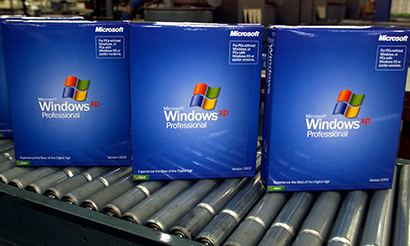
    It’s notable that the long flagged end of Microsoft’s support for Windows XP happened the day before the Heartbleed bug, one of the most worrying security flaws we’ve seen was publicly revealed.

    One of the questions that has bugged many of us in the industry – pardon the pun – is whether Microsoft would back down on its insistence they would not issue security patches for Windows XP when a major exploit became public.

    With between 15 and 30% of the world’s desktop computers still running XP and  6,000 websites  reportedly running on the superseded system, it’s hard not to see how Microsoft could justify not sending out an update should an exploit the size of the Heartbleed bug become apparent.

    As it is, there may be some argument for updating some of the security certificates in the Windows XP and the older versions of Internet Explorer in the light of the Heartbleed bug, we’ll wait to see on that.

    While Heartbleed doesn’t directly affect Windows XP computers, it’s still a reminder that life is going to get tough for those running an unpatchable operating system.

    Similar posts:

    • No Related Posts