Author: Paul Wallbank

  • Peak Wireless and the data paradox

    Peak Wireless and the data paradox

    Australia’s government research agency, the CSIRO, released a somewhat alarming media alert this morning warning that our cities are approaching Peak Data.

    Peak Data, which borrows from the ‘Peak Oil’ term coined in the 1970s to describe the point where oil production reaches a maximum, is where we run out available bandwidth on our wireless networks.

    The release is around the agency’s new report, A World Without Wires, where the agency lays out its view of the future of cellular and radio communications.

    “In the future, how spectrum is allocated may change and we can expect innovation to find new ways to make it more efficient but the underlying position is that spectrum is an increasingly rare resource,” says  the CSIRO’s Director of Digital Productivity and Services Flagship Dr Ian Oppermann.

    “With more and more essential services, including medical, education and government services, being delivered digitally and on mobile devices, finding a solution to “peak data” will become ever more important into the future.”

    The wireless data paradox

    It’s a paradox that just as we’re entering a world of unlimited data, we have limitations of what we can broadcast wirelessly as radio spectrum becomes scarce and contested.

    With fixed line communications, particularly fibre optics, available spectrum can be relatively simply increased by laying down more cables – wireless only has one environment to broadcast in –  so finding ways of pushing more data through the airways is what much of the CSIRO’s paper addresses.

    For telecommunications companies, this presents both a challenge and an opportunity; the challenge being squeezing more data into limited spectrum while the opportunity lies in charging more for guaranteed connectivity.

    The latter raises questions about network neutrality and the question of whether different types of traffic across wireless networks can be charged differently or given differing levels of priority.

    Distributing the load

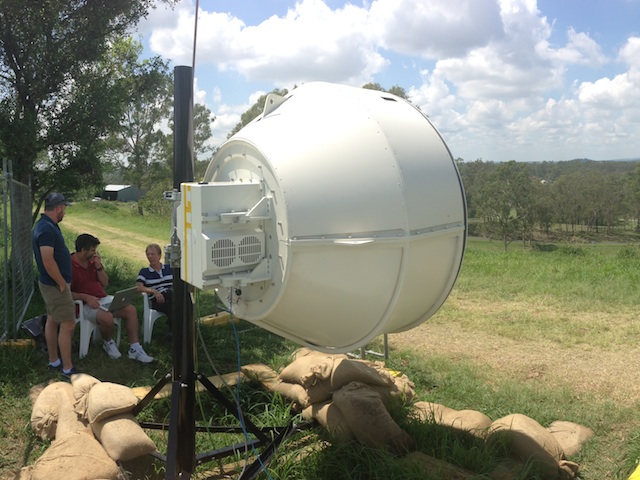
    This also gives credence to the distributed processing strategies like Cisco’s Fog Computing idea that takes the load off public networks and can potentially hand traffic over to fixed networks or point to point microwave services.

    While M2M data is tiny compared to voice and domestic user needs, it does mean business critical services will have to compete with other users, both in the private Wi-Fi frequencies or the public mobile networks spectrum.

    Overall though, the situation isn’t quite as dire as it seems; technological advances are going to figure out new ways of stuffing data into the available spectrum and aggressively priced data plans are going to discourage customers from using data intensive applications.

    A key lesson from this though is those designing, M2M, Internet of Things or smart city applications can’t assume that bandwidth will always be available to communicate to their devices.

    For the Internet of Things, robust design will require considering security, latency and quality of service.


    Similar posts:

    • No Related Posts
  • Context and the digital divide

    Context and the digital divide

    “This is the most difficult time in history to be a wine maker, declares Paul Mabray, Chief Strategy Office and founder of Vintank.

    “Never has the wine industry been as competitive as it is today.”

    Update: The Wine Communicators of Australia, who sponsored Mabray’s visit, have posted Paul’s presentation that covers this post’s theme in more detail.

    Mabray’s business monitors social media for wineries and collects information on wine enthusiasts. Since Vintank’s founding in 2008 the service has collected information on over thirteen million people and their tastes in wine.

    Rewriting the rule book

    Social media, or social Customer Relationship Management (sCRM), is what Mabray sees as being part of the future of the wine industry that’s evolving from a model developed in the 1970s which started to break down with the financial crisis of 2009.

    “In the old days there was a playbook originating with Robert Mondavi in the 1970s which is create amazing wine, you get amazing reviews and you go find wholesalers who bring this wine to the market.”

    “As a result of the global proliferation of brands the increase of awareness and consumption patterns where people like wine more, those playbooks didn’t work in 2009 when the crisis started.”

    With the old marketing playbook not working, wineries had to find other methods to connect to their markets and social media has become one of the key channels.

    Now the challenge in the wine industry, like all sectors, is dealing with the massive amount of data coming in though social media and other channels.

    The cacophony of data

    “If you rewind to when social media came out, everyone had these stream based things and the noise factor was so heavy,” says Mabray.

    “For small businesses this creates an ‘analysis to paralysis’ where they’d rather not do anything.”

    Mabray sees paralysis as a problem for all organisations, particularly for big brands who are being overwhelmed by data.

    “The cacophony of data at a brand level is just too much,” he says.

    “It’s as noisy as all get go and I think the transition is to break Big Data down into small bite size pieces for businesses to digest is the future, it shouldn’t be the businesses problem, it should be the software companies’.”

    A growing digital divide

    Mabray sees a divide developing between the producers who are embracing technology and those who aren’t, “the efficiencies attributed to technology are obvious whether they’re using CRM, business intelligence or other components.”

    “The people who are doing this are recognising the growth and saying ‘hey, this stuff actually works! If I feed the horse it runs.”

    While Mabray is focused on digital media and the wine industry, similar factors are work in other industries and technology sectors; whether it’s data collected by farm sensors to posts on Instagram or Facebook.

    Facebook blues

    Mabray is less than impressed with Facebook and sees businesses concentrating on the social media service as making a mistake.

    “I think that every social media platform that’s been developed had such a strong emphasis on consumer to consumer interaction that they’ve left the business behind, despite thinking that business will pay the bills.”

    “As a result almost every single business application that’s come from these social media companies has met with hiccups. That’s because it wasn’t part of the original plan.”

    Facebook in particular is problematic in his view, “it’s like setting up a kiosk in the supermall of the world.”

    The business anger towards Facebook’s recent changes is due to the effort companies have put into the platform, Mabray believes; “everyone’s angry about Facebook because we put so much into getting the data there.”

    “We said ‘go meet us on Facebook’, we spent money collecting the items and manufacturing the content to attract people and now we have to spend money to get the attention of the people we attracted to the service in the first place.”

    Despite the downsides of social media Mabray sees customer support as one of the key areas the services. “It’s easy to do in 140 characters.”

    Context is king

    “Everything come back to context. There’s this phrase that ‘content is king’,” Mabray says. “Context is king.”

    “Anyone can produce content. It’s a bull market for free content. We have content pollution – there’s so much junk to wade through.

    Mabray’s advice to business is to listen to the market: “Customers are in control more than they have ever been in human history: Google flattens the world and social media amplifies it.”

    For wineries, like most other industries, the opportunity is to deal with that flat, amplified world.

    Similar posts:

    • No Related Posts
  • Cloud computing’s walled gardens

    Cloud computing’s walled gardens

    I’ve spent the last few days playing with Microsoft’s Office 365 and its iOS Apps for a review for tomorrow’s Business Spectator.

    One thing that’s clear with comparing the various competitors in the online space is how all of them are trying to lock users into their own walled gardens.

    This the various web empires are tying to lock us into their worlds isn’t surprising – it’s been going on for some time – however now we’re seeing it becoming harder to keep out of making a choice on whose empire you have to choose.

    For the next generation of computers, this is going to be a challenge as the Internet of Things will be crippled should it turn out that one’s brand of smartcar won’t talk to your phone or intelligent garage door opener, let alone logistics chains breaking down due to an incompatibility somewhere in the process.

    The cloud computing industry has entered an interesting period where the big players are hoping to carve up the market for themselves; what the market thinks about this remains to be seen.

    Similar posts:

    • No Related Posts
  • Evangelism and the makers’ movement

    Evangelism and the makers’ movement

    The latest Decoding the New Economy interview is with Salesforce’s Reid Carlberg.

    During the interview with Reid we cover how the Internet of Things and big data is changing business and society along with the journey to becoming a software company’s evangelist.

    Reid has a fascinating story to tell about how the makers’ movement is evolving as big data and the internet of things develops.

    The interview is an insight into a winding career path and how Big Data and the Internet of Things is changing business and society.

    Similar posts:

    • No Related Posts
  • A life in photojournalism

    A life in photojournalism

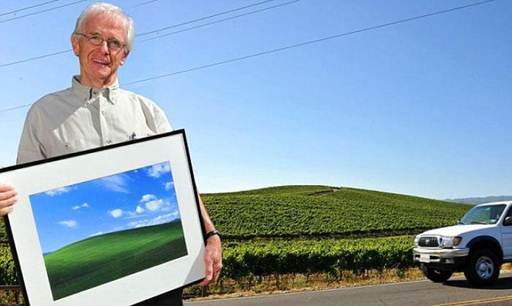
    The latest Decoding the New Economy video is an interview with wine photographer Charles O’Rear.

    Charles was on tour with Microsoft to promote the end of Windows XP, it was his photo of a Napa Valley hillside that became the background feature the system’s default ‘Bliss’ theme.

    The interview is a long ranging discussion on how photojournalism has changed over the last four decades along with the evolution of both the art and science of photography itself.

    Similar posts: