Author: Paul Wallbank

  • Goodbye to Yahoo!

    Goodbye to Yahoo!

    And so Yahoo!’s journey comes to an end with the company being renamed Altba and most of its operating assets given over to Verizon.

    With the changes both CEO Marissa Mayer and original co-founder David Filo will leave Altba’s slimmed down board.

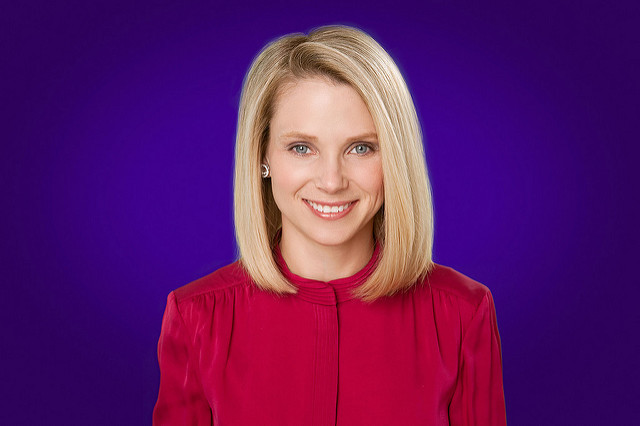
    Mayer’s failure is a lesson that being an early employee at a successful, fast growth tech startup isn’t a measure of leadership. It may even be a hindrance given companies like Google were inventing new industries during her tenure there which develops different management skills to what a business like Yahoo! needs.

    The biggest lesson of Yahoo!’s demise is how even the most powerful online brands isn’t immune from disruption itself, with what was once the internet’s most popular website being eclipsed by Google and Facebook.

    Interestingly, as Quartz reports, Yahoo! is still one of the US’s most popular sites and only slightly behind Google and Facebook in unique monthly views.

    Despite this, Yahoo! has struggled to grow for 15 years and has struggle to make money although it remains a four billion dollar a year business.

    Which shows eyeballs aren’t enough for a mature web business, at some stage it has to show a return to justify its valuations.

    Among Yahoo!’s many properties remain some gems like Flickr and it will be interesting to watch what Verizon does with them. Sadly any successes will be tiny compared to what the company once promised.

    Similar posts:

  • Uber’s sharing strategy

    For most of its existence, Uber hasn’t been shy about claiming to be at the forefront of the future of transport which fits into yesterday’s announcement of Uber Movement which promises to provide aggregated and anonymised trip data to give communities and businesses an overview of road usage in their districts.

    Jordan Gilbertson,  one of the company’s Product Managers, and Andrew Salzberg, Head of Transportation Policy, described how Uber intends to make transit time data available.

    Uber trips occur all over cities, so by analyzing a lot of trips over time, we can reliably estimate how long it takes to get from one area to another. Since Uber is available 24/7, we can compare travel conditions across different times of day, days of the week, or months of the year—and how travel times are impacted by big events, road closures or other things happening in a city.

    As the Washington Post reports, transport agencies do already have a lot of data on some aspects of commuter behaviour – particularly public transport usage – and the Uber information fills as ‘missing part of the puzzle’.

    Taxis and buses are also increasing equipped with real time tracking equipment that also gives this data while traffic services like Wayze have been collecting this information for a decade.

    So agencies aren’t short of this data and the concentration of Uber’s customer base in more affluent areas means their information may be skewed away from poorer areas. Recently a Sydney taxi driver mentioned to me how he’d stopped driving for Uber because most of the city’s sprawling Western Suburbs where he tended to drive didn’t use the service.

    Uber’s offer is another piece in their data strategy that sees the company being a data hub for the logistics industry. It also helps if you’ve co-opted governments into your scheme.

    Similar posts:

  • Medium and the broken media model

    Medium and the broken media model

    How do you make money from online publishing? Medium’s Ev Williams shows he is as far away from the answer as the rest of us.

    In a blog post yesterday Ev announced his company is firing fifty staff as online advertising revenues fall short.

    Online advertising’s disappointing revenues are no surprise to pretty well anyone observing the online publishing industry for the past five years, it seems to have come as a revelation to Ev and the investors who’ve staked an estimated $140 million in the venture.

    That money, which most online publishers would gag for, seems to have gone on a bloated headcount given the company can afford to fire fifty people. It’s a shame the company’s investors didn’t appoint a board that checked management’s hiring practices.

    Something that should worry other publishers is the organisation’s Promoted Stories division is being shut down as part of the restructure. This underscores how branded content doesn’t scale the same way traditional advertising does and won’t represent a major revenue stream for online publications.

    It isn’t the first time Ev Williams has got it wrong, in founding Twitter he and his team turned their back on ordinary users and developers to focus on courting celebrities in the hope big brands would pay large amounts to be associated with them. It didn’t work.

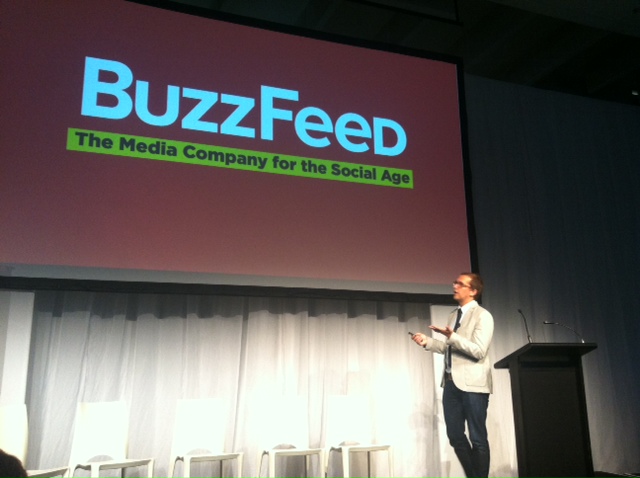
    Contrasting Ev’s Twitter and Medium experiences with that of Buzzfeed founder Jonah Peretti is interesting. While Buzzfeed still hasn’t found the formula for profitability, Peretti and his team have gained a deep understanding of what works in online publishing.

    To be fair to Ev, we’re all trying to figure out the revenue model that will work for online media, his travails with Twitter and Medium show just how hard it is to find a way for publishers to make money from the web. What is clear though is burning a lot of cash on sales staff is not the answer.

    Similar posts:

    • No Related Posts
  • Jonah Peretti’s seven digital advantages

    Jonah Peretti’s seven digital advantages

    Buzzfeed founder Jonah Peretti laid out his vision of the changing media industry in his year end memo but he missed the one item most important – revenue.

    “Print revenue is decelerating at a rapid pace, cable subscriptions and TV ratings are starting to decrease even for live sports, and traditional media businesses are at various stages of a terrifying decline,” writes Peretti in accurately describes the challenges facing the industry.

    Buzzfeed’s success has largely relied on sharing across social media, particularly Facebook. In his memo Peretti lays out how he sees the modern social and personalised publishers as having seven digital advantages over the push model of the mass media days.

    1. Instant access to fresh content
    2. On-demand access to entire media libraries
    3. Nearly free distribution enabling many free ad-supported services
    4. Global distribution providing access to content from every market
    5. Data about audiences allowing personalization and customization of content experience
    6. A feedback loop between audiences and content creators making media production more dynamic and responsive
    7. Social experiences where people can use content to communicate and connect with the people who matter to them and weave media into their daily lives

    Peretti is absolutely right, those digital advantages put online platforms far ahead of print publishers and broadcasters although the advertisers haven’t quite figured out how to make these positives work for them.

    That advertisers can’t get their models to work on the digital platforms is also a problem for Peretti and Buzzfeed and the site had to half its 2016 revenue estimates earlier this year.

    In the search for new opportunities, Buzzfeed hired a new Vice President of Marketing earlier this month as it appears the branded content model is too labor intensive and video isn’t proving to be the river of gold most online publishers hoped.

    The advertising model appears to be just as broken for online publishers as it is for the traditional channels.

    As Peretti has pointed out in previous end of year memos, new media platforms always struggle in their early years.

    The difference in the modern media world is the internet destroyed the scarcity of publisher and broadcaster controlled advertising space, replacing it with an almost unlimited inventory supplied by Google, Facebook and other services that take most of the profit.

    A better comparison to today’s online advertising conundrum are the early days of radio where it took RCA’s David Sarnoff to figure out how to make broadcasting profitable.

    Like radio, online has great advantages over the older distribution methods but the revenue models that worked for those more traditional businesses don’t work on the newer medium.

    Peretti, like every online publisher, is trying to find that new model and it seems he’s as further away from discovering it as the rest of us.

    Similar posts:

    • No Related Posts
  • Rethinking artificial intelligence and the smarthome

    Rethinking artificial intelligence and the smarthome

    What happens when the founder and CEO of one of the world’s biggest tech companies decides to create a genuinely smart home? Facebook’s Mark Zuckerberg spend 2016 finding out.

    “My goal was to learn about the state of artificial intelligence — where we’re further along than people realize and where we’re still a long ways off,” Zuckerberg writes in a blog post.

    The immediate problem Zuckerberg faced in creating his home made Jarvis automation system was many household appliances are not network ready and for those that are,  the proliferation of standards makes tying them together difficult.

    For assistants like Jarvis to be able to control everything in homes for more people, we need more devices to be connected and the industry needs to develop common APIs and standards for the devices to talk to each other.

    Having jerry rigged a number of workarounds, including a cannon to fire his favourite t-shirts from the wardrobe and retrofitting a 1950s toaster to make his breakfast, Zuckerberg then faced another problem – the user interface.

    While voice is presumed to be the main way people will control the smart homes of the future, it turns out that text is a much less obtrusive way to communicate with the system.

    One thing that surprised me about my communication with Jarvis is that when I have the choice of either speaking or texting, I text much more than I would have expected. This is for a number of reasons, but mostly it feels less disturbing to people around me. If I’m doing something that relates to them, like playing music for all of us, then speaking feels fine, but most of the time text feels more appropriate. Similarly, when Jarvis communicates with me, I’d much rather receive that over text message than voice. That’s because voice can be disruptive and text gives you more control of when you want to look at it.

    Given the lead companies like Amazon, Microsoft, Google and Apple have over Facebook in voice recognition, it’s easy to dismiss Zuckerberg’s emphasis on text, but his view does feel correct. Having a HAL type voice booming through house isn’t optimal when you have a sleeping partner, children or house guests.

    Zuckerberg’s view also overlooks other control methods, Microsoft and Apple have been doing much in the realm of touch interfaces while wearables offer a range of possibilities for people to communicate with systems.

    The bigger problem Zuckerberg identifies is with Artificial Intelligence itself. At this stage of its development AI struggles to understand context and machine learning is far from mature.

    Another interesting limitation of speech recognition systems — and machine learning systems more generally — is that they are more optimized for specific problems than most people realize. For example, understanding a person talking to a computer is subtly different problem from understanding a person talking to another person.

    Ultimately Zuckerberg concludes that we have a long way to go with Artificial Intelligence and while there’s many things we’re going to be able to do in the near term, the real challenge lies in understanding the learning process itself, not to mention the concept of intelligence.

    In a way, AI is both closer and farther off than we imagine. AI is closer to being able to do more powerful things than most people expect — driving cars, curing diseases, discovering planets, understanding media. Those will each have a great impact on the world, but we’re still figuring out what real intelligence is.

    Perhaps we’re looking at the what intelligence and learning from a human perspective. Maybe we to approach artificial intelligence and machine learning from the computer’s perspective – what does intelligence look like to a machine?

    Similar posts:
    • No Related Posts