
Author: Paul Wallbank

  • You can’t cost cut your way to growth

    You can’t cost cut your way to growth

    Yesterday I interviewed Alex Bard, Senior Vice President for Service Cloud at Salesforce for the Decoding The New Economy YouTube channel.

    Alex’s interview will be up tomorrow, but during the conversation afterwards he made a comment about modern management saying, “you can’t cost cut your way to growth.”

    This is at odds with 1980s management theory where CEOs like Jack Welsh at GE and Al ‘Chainsaw’ Dunlap at Scott Paper slashed costs to bring listless businesses back into profit.

    During that period, many businesses were overstaffed and poorly managed so leaders like Welsh and Dunlap were the right men for their time.

    To a generation of bean counting executives, Dunlap and Welsh proved that any business problem could be fixed by cutting costs. They were truly men of their times.

    Which brings us to Australia’s Qantas Airlines who, at the time Alex Bard and I were having coffee, announced 5,000 job cuts; close to 25% of the company’s workforce.

    Qantas certainly does have problems as shown in its $252 million loss and some of them, as with all legacy national carriers, lie with long outdated labour arrangements.

    However the airline’s problems are much deeper than a featherbedded workforce and most of the blame for Qantas’ dilemma lies with the company’s management.

    Management mistakes have included maintaining an old fleet of Boeing 767s and 747s while pouring investment into their discount subsidiary, disastrous international alliances in Asia that have seen them kicked out of Vietnam and planes for their Japanese venture grounded in Europe.

    Probably the biggest mistake though for Qantas though was management’s assumption it had a cosy position in its domestic market.

    Like most Australian industries, the nation’s aviation sector is a duopoly dominated by Qantas, a result of the 1980s theory that the country could sustain global champions subsidised by hapless domestic consumers.

    This theory has proved disastrously wrong for Australian consumers with the duopolies becoming very good at exploiting their domestic market power after deciding it was simply to hard to compete outside the home country.

    For Australia, the consequence of this strategic mistake by the country’s business and political leaders has been to make domestic industries hopelessly uncompetitive as local managers are largely isolated from genuine competitive pressures.

    Qantas is the classic case study of Australia’s insular corporate mentality as the airline steadily abandoned its international routes and focused on maximising profits on its domestic operations, particularly those unfortunate rural routes where the Flying Kangaroo has no competition.

    Unfortunately for Qantas’ shareholders; Virgin Australia, the other duopoly player in the Australian airline industry, wasn’t going to play by the rules that keeps the rest of the country’s complacent corporate sector relaxed and comfortable.

    As a consequence, Qantas found itself in a damaging price war as it sought to protect its 65% domestic market share. Worse still for the airline, its competitor started offering Business Class services and competitive lounge facilities that started to erode its most lucrative fares.

    For Qantas, the sensible option is to focus on its strengths and build in its most profitable areas but instead the airline’s CEO, Alan Joyce, chooses to fight for the airline’s precious two third market share while slashing staff numbers.

    Alan’s response is classic ‘cutting for growth’ and it won’t work – the airline desperately needs investment and visionary management, both of which it won’t get.

    Cosy management can prosper in a cosy market, but it leaves those companies exposed to disruption from keener competitors and that’s what Qantas is learning.

    Sadly for Qantas’ management, they aren’t in the 1980s and Joyce is no Jack Welsh. Today, as Alex Bard points out, the game is customer service and slashing your workforce is the wrong starting point.

    Similar posts:

  • Kickstarting the smarthome revolution

    Kickstarting the smarthome revolution

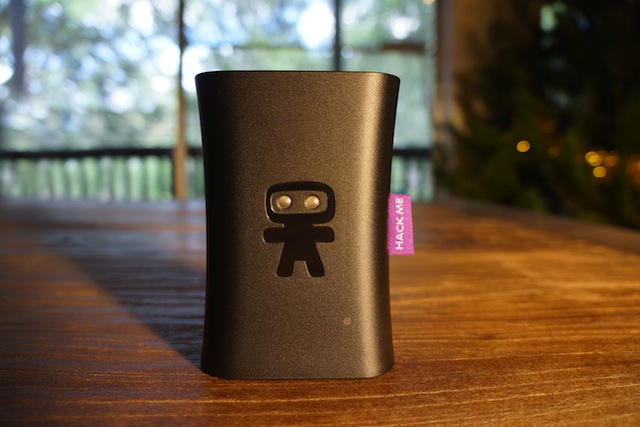
    The latest Decoding the New Economy clip is up with an interview with Daniel Friedman of Sydney startup Ninja Blocks.

    Ninja Blocks focuses on controlling smarthomes with basic “if, then” rules where house holders can set basic instructions like “if the garage door opens after 5pm then turn on the kettle.”

    It’s an interesting interview that covers Ninja Blocks’ vision along with the challenges of selling electronic devices globally and how to run a successful Kickstarter campaign for a hardware startup.

    Similar posts:

    • No Related Posts
  • Zuckerberg meets the telcos

    Zuckerberg meets the telcos

    One of the fascinations of this blog is how telecommunications executives desperately fight against the idea of their service being a basic utility.

    Should you scratch a tough, hardbitten telco executive; you’ll find a sensitive soul who desperately wants to be seen as a swashbuckling media tycoon or cool startup wunderkind rather than the manager of a staid old telephone company.

    Once you understand the buried desired of telco executives, it’s not surprising that Facebook founder Mark Zuckerberg was invited to give the opening keynote of the 2014 Mobile World Congress.

    Sadly for the Telcos it wasn’t good news as the real life tycoon and wunderkind described how Whatsapp, the startup he acquired for $16 billion last week, is going to introduce voice services in the near future.

    Having seen messaging services like Whatsapp slowly strangle the telecommunications industry golden goose that was SMS, the telcos now face lucrative voice services being further eroded by these Over The Top smartphone apps.

    Which leaves them with data, the lowest margin service in the telco stable.

    Far from being the bravest man in Silicon Valley, Mark Zuckerberg is the telco industry’s future. Which is why the industry’s executives want to find ways to profit from developments like machine to machine (M2M) communications and media ventures.

    The worry though is most of the new telco opportunities don’t appear to anywhere near as profitable as now declining or stagnant services that have been so lucrative in the past.

    Which makes Ericsson’s partnership with Facebook in developing an Innovation Lab for the internet.com initiative intruiging.

    The objective of Internet.com is to make the internet more accessible to more of the world, which again threatens incumbent telco models.

    Transmitting data—even a text message or a simple web page—requires bandwidth, something that’s scarce in many parts of the world. Partners will invest in tools and software to improve data compression capabilities and make data networks and services run more efficiently.

    Efficient, compressed data means even less revenue for the operators so it’s no wonder they’re looking at those alternate revenue streams.

    No telco executive is likely to starve in the near future, but as revenues stagnate in their established markets it’s no wonder the industry’s leaders are wondering whether it’s worthwhile hitching their fortunes to Facebook’s success.

    Similar posts:

    • No Related Posts
  • Disrupting the smartphone market

    Disrupting the smartphone market

    It’s been a long time since we’ve had a three or four way war in the technology industry, with most sectors settling down into a two way fight between alternatives.

    Mozilla’s promised $25 smartphone project threatens to open the mobile industry into a three way battle just as it appeared the market had comfortably settled down into an Android and iOS duopoly.

    Now we see a three way race and possibly four if Samsung can get traction with its Tizen operating system that it’s bundling into the latest version of the Gear smartwatch.

    One positive aspect of the four way battle is that three of the participants – Firefox, Tizen and Android are relatively open so compatibility between them isn’t impossible.

    For Google and Apple though, this four way tussle presents a problem to their business plans.

    Apple’s iOS ambitions of putting the software in smarthomes, connected cars and, possibly most lucratively of all, into retailing with iBeacon are threatened by a fragmented market and a rapidly eroding market share.

    For Google, both Firefox and Tizen threaten the dominant position of their Android operating system that forms a plank in the company’s ambition to control the planet’s data and become an ‘identity service’.

    Worse still for Google’s information ambitions, Firefox is working with Deutsche Telekom on a security initiative that will lock away users’ data.

    So the stakes are high in the smartphone operating systems wars.

    It’s early days to forecast the demise of either Android or Apple iOS, which is unlikely in the short term, but if Firefox’s operating system does take hold it will mean the smartphone industry is about to become a lot more complex.

    Similar posts:

    • No Related Posts
  • Microsoft struggles with in car technologies

    Microsoft struggles with in car technologies

    As Microsoft prepare for a major launch at this week’s Mobile World Congress, the news isn’t good for the company’s flagship Windows operating system.

    Two Bloomberg reports illustrate the problems; the major story is the company is planning to drop licensing fees for Windows 8.1 while the other, still serious, news is that Ford will be dropping Windows as its in-car operating systems.

    Automotive systems are one of the key markets for Microsoft as the company tries to move into markets beyond the stagnating personal computer sector and should the reports be true that Ford is looking at moving to the rival Blackberry owned QNX system then Windows Embedded has taken an embarrassing blow in a key market.

    More serious though is Bloomberg’s report that Microsoft plans to cut its licensing fees for Windows installed on cheaper devices.

    While not unexpected, this will damage the company’s earnings given the Windows division made up 22% of Microsoft’s earnings last year.

    It’s clear that the free Android system is beginning to hurt Microsoft both in the smartphone and personal computer markets.

    For Microsoft’s new CEO Satya Nadella, dealing with Windows’ place in the new Microsoft is going to be one of his most pressing challenges and will almost certainly define his first year in the role.

    As the Internet of Things and Machine to Machine markets grow, Microsoft is going to have quickly decide if the company wants to compete in the market.

    Similar posts:

    • No Related Posts