Author: Paul Wallbank

  • Has the social media bubble popped?

    Has the social media bubble popped?

    Last week Facebook’s stock soared after the company reported better than expected earnings on its advertising services.

    It seemed that the social media sites had finally cracked the code on how to make money out of their billions of enthusiastic users.

    This week sees a different story as both Twitter and LinkedIn disappointed investors with missed revenues targets in their quarterly earnings reports.

    Twitter’s blues

    For Twitter the market reaction was merciless – the stock price dropped 24% – as a $500 million loss in it’s first quarter of trading on the stock market is not a good look.

    In Twitter’s defense, all of that loss was due to the cost of acquisitions being booked by the company. In 2013 the social media site spent over $500 million buying out various advertising, curation and and analytics services.

    The question now for Twitter is whether they can weld together a profitable platform from the collections of businesses they’ve acquired and start delivering a return to investors.

    A miss for LinkedIn

    LinkedIn has a similar bent towards acquisitions having announced its purchase of data analytics company Bright on the same day as its disappointing results, however the company’s undershooting expectations was because of lower than expected revenues.

    ‘Disappointing’ is an interesting word in the context of LinkedIn as revenues were up 47% over the previous year.

    What possibly should have been more concerning for analysts than the headline revenue number are Linkedin’s soaring costs of doing business – both sales & marketing and product development costs were up 50% year on year – which cut profits by over two thirds.

    The most worrying part of LinkedIn’s earnings miss is the company’s price to earnings ratio. Currently the stock trades at an eye-watering P/E of 1,000 which implies investors are expecting a lot more revenue into the business.

    Over-inflated expectations

    It’s hard to argue that social media stocks aren’t in a bubble with those multiples. Even Facebook trades a hefty one hundred times earnings despite its improved revenues.

    Perhaps the simple fact is we’re expecting too much from social media services; they are good businesses, but maybe they’ll never be the fantastic profit machines that Apple, Google or Microsoft have been.

    Similar posts:

    • No Related Posts
  • Could the Internet of Things grow by fifty times?

    Could the Internet of Things grow by fifty times?

    One of the annual events in the tech world is Cisco’s Visual Networking Index, the company’s survey of internet traffic trends.

    The numbers, as always, are staggering and this year Cisco are forecasting that global internet traffic will grow by a factor of eleven over the next four years to 190 exabytes – that’s 190,000,000,000,000Mb or the equivalent of 19o billion hard drives.

    What’s particularly fascinating about this year’s index Cisco forecast that by 2018 there will be more mobile devices on the planet than people.

    Many of those devices will be the sensors and equipment that makes up the Internet of Things (IoT), or Machine to Machine (M2M) technologies and Cisco expects the internet traffic in this area to surge fifty-fold over the next four years.

    This is remarkable as most of the M2M devices don’t use much data as the vast majority only need to send out the odd short signal – as opposed to smartphones that download megabytes of information each day.Cisco’s predictions underscore just how pervasive this technology is going to become in the next few years, the challenge for us is to understand how to use and protect the masses of data these systems are going to generate.

    Similar posts:

    • No Related Posts
  • Trapped in orbit – the founder’s dilemma

    Trapped in orbit – the founder’s dilemma

    Earlier this week Microsoft co-founder Paul Allen celebrated his Seattle Hawks winning the Super Bowl while his former business partner, Bill Gates, still struggles to escape the clutches of the software giant they founded forty years ago.

    After a long drawn out process, software giant Microsoft has finally chosen its replacement for CEO Steve Ballmer however founder Bill Gates finds himself firmly trapped in the company’s orbit.

    Hoodie wearing Satya Nadella‘s ascension to Microsoft CEO was probably the poorest held secret in the tech industry having been openly reported for several weeks.

    Nadella has a massive task ahead of him as the industry that’s been so lucrative for Microsoft over the past thirty years evolves to deal with the post-PC era.

    Microsoft CEO Satya Nadella
    Microsoft CEO Satya Nadella

    How Nadella manages Microsoft’s transition will define his business career and tenure at the top job, it will also determine the company’s position in a marketplace where PCs running Windows are no longer relevant.

    The biggest news from Microsoft’s announcement though was that Bill Gates will step down as Chairman of the Board and take a new position as ‘founder and technology advisor’.

    Microsoft also announced that Bill Gates, previously Chairman of the Board of Directors, will assume a new role on the Board as Founder and Technology Advisor, and will devote more time to the company, supporting Nadella in shaping technology and product direction. John Thompson, lead independent director for the Board of Directors, will assume the role of Chairman of the Board of Directors and remain an independent director on the Board.

    Despite leaving the CEO role over a decade ago, Gates finds himself back in a hands on role at the company.

    The value of Bill Gates

    It’s questionable what value Gates is going to add in the role of ‘Technology Advisor’ as Microsoft’s markets are very different to those the company was founded in and came to dominate in the 1980s and 90s.

    For Nadella, it’s not exactly a vote of confidence from the board in appointing the company’s founder to hover over his shoulder offering helpful advice.

    On a personal level this must be disappointing for the founder and former CEO as well in that his mind is on far greater topics such as eliminating malaria through the Bill and Melinda Gates Foundation.

    Trapped by Microsoft’s gravity

    Gates’ situation though is a classic example of a business founder who’s never been able to get out of the orbit of their business. Despite their best efforts, they keep being dragged back to give a helping hand.

    At least though Gates has at least been able to step away to some degree, many baby boomers with smaller businesses are going to be locked into their companies as GenX or Y entrepreneurs don’t have the funds to pay what the proprietors need to retire.

    Those boomer entrepreneurs are going to work in their businesses until either they or their venture is put to rest.

    Bill Gates’ dilemma though shows how tough it is for business founders to escape the gravitational pull of their creations, even when it’s as big a business as Microsoft.

    Paul Allen showed how to step away from a business and is enjoying life, Bill Gates’ story though is much more typical for business founders trapped in the enterprises they built.

    Similar posts:

    • No Related Posts
  • Mortein and The Queen

    Mortein and The Queen

    A great little story from the Australian government’s research arm, the CSIRO, tells the story of how the Queen Elizabeth II lead the commercial insect repellent industry and how intellectual property has changed.

    The story tells how the original experiments were carried out in 1940 to see what substances were best in repelling mosquitos as part of the preparation for a tropical war against Japan.

    After the war, research continued and during the 1963 Royal Tour of Australia, the Queen was sprayed with the government repellant to keep flies off her while she played golf.

    Journalists following the Queen noted the absence of flies around the official party, and word about CSIRO’s new fly-repellent spread. A few days later representatives from the company making Mortein insecticides called Doug Waterhouse for his formula, which he passed on freely, as was CSIRO’s policy at the time and the rest, as they say, is history.

    It’s unthinkable today that any research organisation would give intellectual property away and a modern agreement would include hansom royalties for the formula.

    There’s an argument that giving away the intellectual property helped innovation and public health, but in these stingy and cash strapped days it’s hard to see how government scientific organisations could survive without royalty payments.

    It certainly is true that the past is a different country.

    Fly spray can courtesy of Wikipedia

    Similar posts:

    • No Related Posts
  • Buzzfeed and the cat problem

    Buzzfeed and the cat problem

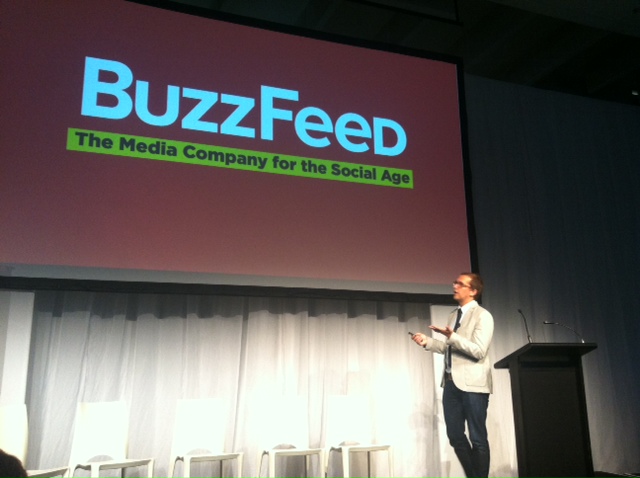
    Last week, the viral news site Buzzfeed launched its Australian operation with a visit from Scott Lamb, the company’s Vice President for International operations.

    As the “media company for the social age” in Scott’s words, Buzzfeed has led the way in ‘viral media’.

    The viral media model revolves around audience reach, and revenue, being measured on the amount of sharing on social media services like Facebook and Twitter rather than how many people view or visit their websites.

    Buzzfeed’s Cat problem

    For Buzzfeed attracting this traffic mean cats – people love sharing pictures of cats on the web.

    While Scott likes cats as much as any of his readers, he describes the industry as facing a ‘cat problem’.

    “The cat problem is that we all love cats, but they’re also a barrier to taking the internet seriously,” Scott said. “It’s true for Buzzfeed and it’s true for a lot of other websites as well.”

    Cats may be both a problem and a boon for Buzzfeed but there’s more to the business with Scott describing to the Sydney audience what he saw as the four myths of online media;

    1. Long form writing doesn’t work on the web
    2. Paying attention to clicks leads to lowest common denominator stories
    3. Social is merely a box you need to check
    4. Creating sharing content is easy and trivial

    There’s no doubt that item four is hard, although how much harder re-purposing stuff found on the web is compared to creating original content is open to question.

    Point three is a given for Buzzfeed given its business model and there would be few media sites that weren’t concerned about how often their stories aren’t shared on social media.

    Being taken seriously though weighs heavily on Buzzfeed so it was the two first points that Scott emphasised in his Sydney presentation.

    Long form journalism

    Scott was proud to show off  BuzzRead stories like Why I Bought A House In Detroit For $500 or The Most Dangerous Sentence in US History to show the site’s credibility as a reputable, considered venue for long form journalism, just like the New York Times.

    The problem for Buzzfeed’s aspirations though is the US Presidential story received 1,400 tweets and just over four thousand Facebook shares, the Detroit story gained five thousand tweets and 29,000 shares.

    On the other hand, a quiz on what city should you live in received 578,000 shares and 26,000 tweets. For the record, I got London which is something I’m ambivalent about but certainly beats getting Murmansk.

    That meme proved so good that Buzz Feed repeated it a week later with a what sort of job you should have quiz.

    You can’t blame them for exploiting a meme, particularly one that gets half a million shares.

    Scott though didn’t see the traffic mismatch between the worthy and the tabloid as being a problem; “we know we can’t equate an 8,000 world article to a quiz,” Scott said. “In terms of our business model our revenue isn’t tied to page views.”

    “There is incentive for us to get as many a views for an 8,000 word article as possible.”

    Riding the Facebook tiger

    Regardless of the viability of 8,000 words articles, the real problem for Buzzfeed in its aspirations to become a virally shared New York Times is the site’s reliance on Facebook.

    Relying on Facebook is path to disappointment, the service has shown it’s quite willing to burn partners, including advertisers, small businesses and users in the interests of its own corporate interests.

    For Buzzfeed, the assumption the media site’s corporate interests will always align with Facebook’s is brave assumption.

    Another problem for Buzzfeed is content, the bulk of the site’s material and what drives most sharing are posts that gather pictures from the web – primarily Facebook.

    Using other people’s content lies at the core of viral sharing sites and most of Buzzfeed’s competitors shamelessly steal material from other websites, particularly Buzzfeed, in the aim to drive shares from gullible users.

    Buzzfeed itself isn’t immune from that risk, with a photographer suing the site for $3.6 million over a photograph used in one of its lists.

    Risks in the model

    On the scale of risks to Buzzfeed not being seen as an viral version of the New York Times is quite low; the real risks are of being overtaken by a savvier competitor, falling victim to a Facebook change of policy, or simply turning out to be a transition effect in an industry that’s undergoing massive and rapid change.

    The aspiration of Buzzfeed becoming a New York Times is probably irrelevant anyway, most Facebook users don’t care about long form journalism – they like cats.

    In an era where the public wants animal pictures and celebrity scandals – who needs to be the New York Times?

    Perhaps the cat problem isn’t a problem, but the future for media channels like Buzzfeed.

    Similar posts:

    • No Related Posts