Author: Paul Wallbank

  • Revisiting the Lipstick effect

    Revisiting the Lipstick effect

    During the recession much was made about the ‘lipstick effect’ – the idea some businesses and products would survive because they’re little luxuries that cash strapped consumers will spend on while scrimping and saving in other areas.

    Some of those areas are ladies’ cosmetics (lipstick), chocolate, movies and coffee shops. All of them offering small pleasures for a few dollars.

    It’s a theory I’ve always been sceptical of and an episode of the BBC’s World Of Business where Peter Day travels to Cork to see how Ireland’s second city is recovering from the great recession illustrates the reality is a lot more complex than the theory suggests.

    “We really struggled to keep alive,” Claire Nash of Nash 19 restaurant says in her interview with Day on her business experience during the recession.

    “My turnover just absolutely took a spiralling tumble and it wasn’t that the customer weren’t coming in – those that had lost their jobs weren’t coming in – but those that hadn’t lost their jobs were really hurting and they were very careful with their spend.

    “So they started using us as a treat, which was a model I never wanted to enter into but we weathered the storm.”

    It can be argued that Claire survived because of the lipstick effect – she kept enough customers to survive – but it was tough and had she taken out the loans offered to her during the boom it’s unlikely her restaurant would have survived.

    The key point though is the lipstick effect turned out to be a very different, and much less lucrative business, for Claire and other businesses in Cork.

    So assuming a business will remained unscathed because of the assumption the lipstick effect is a big risk, if that’s the plan then Sequoia Capital’s infamous Powerpoint of Doom comes to mind.

    While the presentation was aimed at tech companies and investors, it’s a good overview of how the Global Financial Crisis happened and Slide 49 – Survival of the Quickest – is probably the best lesson for any business: Act fast to adapt.

    The lipstick theory is a nice way to justify unsustainable business models, particularly those that rely on consumer spending, in the face of a recession but the assumption spending will remain the same as customers will seek little luxuries is deeply flawed.

    A business that doesn’t respond quickly to changed circumstances and reduced spending is one that might not survive a downturn.

    Peter Day’s Cork story is a good listen on how Ireland and Cork have weathered the global financial crisis, the main question from the piece is how much have the Irish and the rest of the world learned from the mistakes of the boom years at the start of the 21st Century.
    Similar posts:

  • Milestones of the personal computer industry

    Milestones of the personal computer industry

    “There have only been two milestone products in our industry to date,” Steve Jobs told the Boston Computing Club in 1984. “The first was Apple II in 1977 and the second was the IBM PC in 1981.”

    Jobs at the time was announcing the third breakthrough – the Apple Mac – which turned 30 last week.

    Looking back over the four decades of the PC industry, Jobs’ claim that the Apple Mac was the sector’s third milestone stands up to scrutiny, however the greatest milestone of all for the PC was the launch of Window 3.0 in 1990.

    The rise of Windows

    Windows 3.0 changed the business model of the industry, it established software vendors – particularly Microsoft – as being dominant over hardware manufacturers, that shift nearly killed Apple and eventually sent most PC builders to the wall.

    Microsoft’s advantage over Apple, IBM, Atari and dozens of other systems, was that users weren’t locked into one vendor’s products. It was possible

    The Windows 3.0 milestone was even more important in that it forced a shakeout in the software industry as well, many of the incumbent vendors – most notably WordPerfect – though the Windows Graphic User Interface (GUI) was a flash in the pan and that most office workers would prefer to use keyboard instructions rather than mouse clicks.

    WordPerfect was horribly, horribly wrong in judging the market and by the time they released the Windows versions of their product Microsoft had captured key market share for Word and the bundled Office suite that dominates the business world today.

    Going mobile

    So things were good for Microsoft until the next milestone, which again was marked by Steve Jobs, the launch of the iPhone genuinely did change the smartphone industry and was the first inkling of mobile would eventually destabilise the PC sector.

    It’s interesting comparing Jobs’ iconic 2007 iPhone which sets the standard for product launches with the somewhat rough at the edges 1984 Boston presentation although both show how Steve Jobs was a master salesperson and a passionate believer in his products.

    The PC’s final milestone

    Three years later Steve Jobs delivered the milestone product that marked the beginning of the end for the PC industry, the iPad finally delivered a mobile computing device that businesses and consumers wanted.

    Apple’s iPad also marked a fundamental shift in the computer industry – no longer did the software companies control the market, power had shifted back to the manufacturers.

    From that moment on the PC, and Microsoft’s Windows business, started a terminal decline.

    The rise and fall of the personal computer is a great illustration of a transition technology. That Steve Jobs bookmarked the beginning and the end of the PC industry is an interesting note about a technology that changed the home and workplace.

    Similar posts:

    • No Related Posts
  • When Marissa met Mark

    When Marissa met Mark

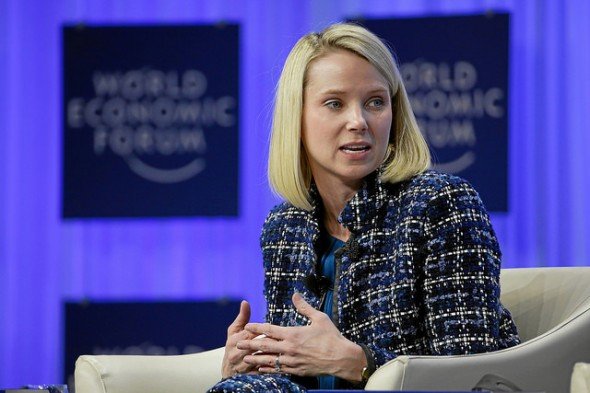
    Not unexpectedly, last week’s World Economic Forum featured some high profile panels. One particularly heavy hitting group was the New Digital Context session featuring some of the tech industry top CEOs.

    Featuring Yahoo’s Marissa Mayer, Salesforce’s Marc Benioff, Cisco’s John Chambers, BT’s Gavin Patterson and AT&T’s Randall L. Stephenson the panel looked at the rate of disruption and change to global business.

    A  key point in the discussion is Benioff and Mayer disagreeing with the host, Forrester CEO George Colony, about the rate of change and how businesses should be managing disruption.

    Mayer’s view was Yahoo!’s is evolving to changes markets while Benioff feels the rate of change is so great that most corporations’ fundamental business models being changed.

    It’s an interesting point and something we’ll look at a bit closer tomorrow.

    Similar posts:

    • No Related Posts
  • The evolution of the Internet of Things

    The evolution of the Internet of Things

    One of the notable things about modern technology is that few of the developments are actually new, the Internet of Things is a good example of this.

    Most of the tech we talk about is a collection of existing technologies that have been cobbled together — cloud computing, 3D printing and the Internet of things are all good examples of this.

    Libelium’s Cooking Hacks community page has a good infographic on how the makers’ movement, crowd funding and miniaturization have driven the development of the Internet of Things, 3D printing and wearable technologies.

    The diagram, shown at the bottom of the post, is a good illustration of how technologies are evolving and the businesses that are being spawned from the developments.

    Cooking Hack’s infographic show why it’s an exciting time to be in business.

    maker_movement_cooking _hacks_infographic


    Similar posts:

    • No Related Posts
  • Microsoft edges towards the post PC era and the end of Windows

    Microsoft edges towards the post PC era and the end of Windows

    Microsoft’s evolution to the post PC era has been a fascination of this blog for several years now as the company’s once flagship Windows becomes irrelevant in a world dominated by smartphones and tablet computers.

    The launch of Windows 8 and the Surface tablet were the great hope for the company, but it appears the business model that built Microsoft into one of the world’s biggest companies is doomed. Microsoft is shifting to the post-PC era where Windows has little role.

    Yesterday’s financial results emphasised the shift as the consumer licensing business fell 6% year against last years revenues while the company’s overall revenues rose 14% – the old consumer Windows business is dying.

    This is illustrated in the company’s quarterly report, where the business units that delivered the growth were all in non-Windows areas.

    • SQL Server continued to gain market share with revenue growing double-digits
    • System Center showed continued strength with double-digit revenue growth
    • Commercial cloud services revenue more than doubled
    • Office 365 commercial seats and Azure customers both grew triple-digits.

    Drilling down into the numbers the trend against Windows is even more stark, here’s a chart of the performance of the division over the last ten years.

    Microsoft Windows division financial performance
    Microsoft Windows division financial performance

    As we see, life was good for Microsoft Windows until the iPad arrived.

    Following Apple’s proof that tablet computers could deliver what business and home customers wanted from a portable device, Windows’ revenue stagnated and now income and margins are falling.

    The devices and services strategy of outgoing CEO Steve Ballmer recognises is a reflection of how Windows is becoming irrelevant to the business.

    It’s hard to see where Microsoft now goes with Windows, the product still remains a key part of the business with 22% of revenues – although that’s down from 27% last year – and its hard to see a buyer parting with the hundreds of billions the division would be worth as a stand alone business.

    For Steve Ballmer’s successor as Microsoft CEO dealing with the Windows problem will be one of many big issues they’ll have to deal with, the future of the once iconic product though won’t define the future of the business.

    Similar posts:

    • No Related Posts