Author: Paul Wallbank

  • De-hyping the hype cycle

    De-hyping the hype cycle

    One of the useful tools in describing how technology is accepted by the market and society is the Gartner Hype Cycle.

    Developed by the consulting firm, it describes the typical pattern of a technology product where at first it is ignored, then hyped before falling into the ‘Trough of Disillusionment” before maturing to find a productive role in the marketplace.

    The curve though isn’t perfect – many products crash without making the ‘plateau of productivity’ and every technology has its own unique timeframe. Gartner’s role as technology analysts as commercial considerations come into play as well.

    Given those imperfections, it’s worthwhile tracking how some of the technologies did on the hype cycle and how Gartner’s predictions went and on Imgur, Anton Tarasenkno has posted all the the Gartner end of year hype cycles from 2000 onwards to give us that opportunity.

    PDAs and Smartphones

    The ‘Personal PDA’ illustrates how technologies evolve and the original concepts become a dead end.

    In 2001, the Personal Digital Assistant – devices like the Palm Pilot, Sharp Zaurus and HP iPac – were the productivity must have for connected workers and Gartner flagged them to be on the ‘Plateau of Productivity in between three to five years.

    They never made it. The entire category crashed due to to poor product releases, confusing software wars – the buggy mess that Microsoft Windows CE scared many consumers away – and the rise of smartphones.

    PDA’s vanish from the Gartner cycle in 2003 and three years later Smartphones make an appearance grinding their way up to the ‘Plateau of Productivity’.

    There is a fair argument that smartphones are an evolution of the PDA – although not one of the PDA vendors or operating systems actually made it onto successful smartphones – but it does seem a bit of a sleight of hand simply to substitute one for the other.

    As it turns out though, the 2006 prediction for the smartphone was spot on given the iPhone was released the following year.

    Cloud computing

    The evolution of ‘cloud computing’ is an interesting tale in itself. At the time of the 2000 Gartner hype cycle is was being described as Application Service Providers (ASPs) although the concept and technology could claim to be the descendent of the much earlier time shared mainframe computing systems leased out primarily by IBM.

    In the 2000 Hype Cycle Gartner has ASPs just past the ‘Peak of Inflated Expectations’ and this was a fair call as ASPs were dragged down by the general ennui following the Tech Wreck a year later which saw the technology close to the ‘Trough of Disillusionment’.

    ASPs then vanish for four years before reappearing as ‘Software as a Service/ASP’ in 2005 on the grind up to the ‘Plateau of Productivity.’

    Portal mania

    In the early days of the World Wide Web, portals were hot. On the public web, Yahoo! and MSN were expected to be the go-to destination for surfers while within large organisations, the intranet page was expected to be the centre of all corporate knowledge and the first place employees were expected to log into in the morning.

    For the 2003 hype cycle, Gartner’s analysts certainly believed in portals with twelve different types of portals or related technology listed. The following year, the number had grown to fifteen.

    Interestingly, the most advanced portal technology on the curve, ‘mobile access to portals’, was stuck climbing out the trough for both of those years. That probably indicates even Gartner’s enthusiasm for the term and the technology was enough to prevent the idea being overtaken by search and social media.

    Looking to the future

    While it’s entertaining with the benefit of hindsight to look at where Gartner’s predictions of more than a decade ago, it is worthwhile considering what the company’s analysts are predicting this year.

    Virtual reality is the tech clawing its way up out of the ‘Trough of Disillusionment’ while augmented reality is hurtling towards the depths. Both are flagged to be mainstream on a five to ten year horizon.

    At the ‘Peak of Inflated Expectations’ sits Machine Learning with the connected home and Blockchain approaching the top. Towards the start of the curve are technologies like Quantum Computing and human augmentation, both are flagged to be more than ten years away from gaining mainstream adoption.

    Picking apart the Gartner Hype Cycle is a useful exercise in understanding the limits of the idea as well as reminding us of just how difficult it is to predict how technologies will mature and be accepted by society and industry.

     

    Similar posts:

    • No Related Posts
  • Mapping digital divides

    Mapping digital divides

    Earlier this year, Telstra released the Digital Inclusion Index along with its report on measuring Australia’s digital divide.

    Last week in Sydney the company hosted a half day conference to look at the ramifications of the 2016 report.

    Overall the report was good news with most indicators showing improvements although the gap between the connected and the most disadvantaged has widened since the first index was compiled in 2014.

    In general, wealthier, younger, more educated, and urban Australians enjoy much greater inclusion. All over the country, digital inclusion rates are clearly influenced by differences in income, educational attainment, and the geography of socioeconomic disadvantage. And over time, some Australian communities are falling further behind.

    The one factor the survey found that is declining nationally is affordability which the authors put down to Australians’ increasing reliance on the internet.

    The Affordability measure is the only dimension to have registered a decline since 2014, but this outcome does not simply reflect rising costs. In fact, internet services are becoming comparatively less expensive – but at the same time, Australians are spending more on them.

    Sadly affordability isn’t going to improve should the government’s proposed broadband levy of seven dollars a month become reality to subsidise rural users.

    That such a levy would be proposed by a government that was opposed to a National Broadband Network and to ‘Big New Taxes’ while in opposition is an irony left for Australian political historians to discuss but it shows how comprehensively the NBN project has failed.

    Even sadder is the NBN  isn’t delivering for businesses as it increasingly becomes apparent the network being built will struggle to deliver 21st Century services to most of the nation.

    That businesses are struggling to connect emphasises just how serious the digital divide is becoming for the economy – as supply chains in every industry become increasingly globalised regions that aren’t connected risk being isolated from their markets.

    Policy makers have to consider the costs of those communities and groups being isolated from the modern economy. If we are going to be serious about building a twenty-first century society then we have to consider how disadvantaged groups and regions access global networks as well as making sure they have the skills to benefit from these technologies.

    Mapping the areas of the disadvantage is a good first step but we have to look at how we address the segments of our society that are being left behind.

    Similar posts:

  • Shipping dead products

    Shipping dead products

    A scathing review of Google Home raises questions about the company’s ability to ship hardware and its executives’ commitment to consumer markets.

    “I was so excited,” recalls Business Insider’s Ben Gilbert about the announcement of the revamped Google Home last may. Sadly, he found the device lacking integration with the rest of the company’s services and unreliable in connecting with his Wi-Fi network.

    He returned the device and now vows to wait until “AI technology to improve dramatically.”

    While Gilbert may wait, the market won’t with Amazon’s Alexa and Apple’s Siri cementing their market positions and a range of startups promising to change the market.

    Google – or Alphabet’s – failure to execute with the Home product should worry shareholders as the company has shown it hasn’t been good at getting consumer devices to the market and the organisation’s notorious management attention deficit disorder seems to have crippled this device very early in its development, a far from good sign.

    The Google Pixel smartphone shows the company is capable of shipping good products, but that commitment has to extend across all their hardware and consumer software products.

    In highly competitive market with well cashed up and focused competitors like Amazon, Facebook and Apple, Google will have to ensure good products are shipped in their name. Substandard will not survive in this marketplace.

    Similar posts:

    • No Related Posts
  • Old king coal loses his merry men

    Old king coal loses his merry men

    The industrial revolution’s most important energy resource was coal, even today it generates most of the world’s electric power.

    However, the last half century hasn’t been good for those communities and workers whose incomes are dependent upon coal as the industry has moved away from labour intensive ways of digging the stuff up, alternative sources of energy have developed and the consequences of dumping billions of tons of carbon into the planet’s atmosphere come to be understood.

    The US Energy Information Administration’s annual report on the nation’s coal industry makes grim reading, with both production and employment levels falling.

    Coal industry jobs were one of the touchstone issues in the recent US Presidential elections. As The Guardian reported, former staunch Democrats in the mining regions – some of America’s poorest counties – supported Donald Trump on the strength of the promise to reinvigorate the sector.

    Sadly, as the EAI reports, those coal jobs are never coming back even if the world starts using more. Since World War II, the productivity of US coal mines has increased from .72 tons per worker to 5.22 in 2011.

    Despite a recent slight drop in US productivity at the end of last decade – apparently due to spoil recovery during a period of booming prices – the trend is not good. As Australian academics warn, increased mine automation means jobs in that industry are going to become increasingly scarce.

    Like Donald Trump and the distressed US mining regions, Australian politicians believe that coal mining will provide the jobs of the future. They are wrong.

    Those communities and politicians hoping for jobs in the 21st Century may well be better off looking to the future rather than the past. Nineteenth Century thinking is not going to provide answers.

    Similar posts:

  • GorillaStack – the weekend hacking exercise that grew into a business

    GorillaStack – the weekend hacking exercise that grew into a business

    As a business born out of a weekend hack  Sydney based GorillaStack is almost a classic tech tale.

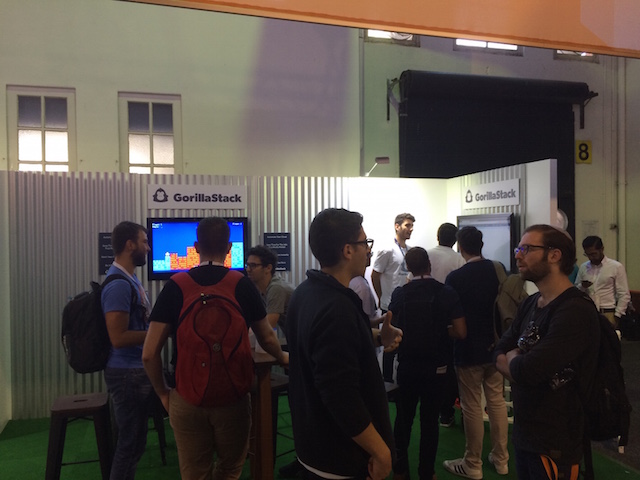
    “I was involved in a startup previously,” says GorillaStack’s CTO, Elliott Spira, recalling how the company was his co-founder Oliver Berger at the AWS Re:Invent conference in Las Vegas last week.

    “We noticed we had spikes in our AWS spend, there was a big attribution issue and one day we said ‘how about we do a weekend project and try to spin something up that listens to our Cloudwatch metrics and tells us how much we’re spending at any time of the month.”

    As the challenge was accepted, the team went to work. “We hacked away all weekend as we like to do, being nerds, and by the time the weekend was over we had the basic cost dashboard that told us how much we were spending each month.”

    Adding more features

    “The next weekend we decided to add another feature and we decided to add cost alerting where we’d get an email when we passed a certain threshold. That was really cool as we could budget and know when we were spending too much.”

    “On the following weekend we started working on periodic alerts on how much we were spending over a set set time and from there the idea started to prosper, we thought ‘oh wow, we have a bit of a product going here. Let’s show some friends who also use AWS.’ From that feedback we found people wanted to keep the dashboards up and keep track of what was being spent.”

    Today GorillaStack offers a service that allows companies to manage their AWS usage, something that can easily get expensive for organisations not closely watching what they are using. “What we try to do is make a cultural change where people become conscious of what is actually theirs in the cloud.” Elliott says. “We’re actually seeing that change.”

    Living the culture

    “In terms of that culture, we try to live that culture as well. We have private Slack channels with each of our customers so there’s a constant line of communication,” says Oliver. “Those Slack channels have proved to be an effective customer support and product development tool. “we’ve fostered quite a good community.”

    With the initial hack being successful the company was formally founded in June 2015 and to date is bootstrapped, having not taken any investor’s money. “We want to get to a stage where we’re comfortable with the product,”says Oliver.

    Currently the user base includes paid customers like Citrix, Bauer Media, Health Direct and the Australian Football League. “We have quite a good spread in terms of geography and mix of customers,” observer Oliver. “Right now the breadth suits us.”

    Applying the freemium business model

    Following the freemium model, the company also offers a free tier offering a single switch. “If you want anything more you move onto our paid tiers,” says Elliott.

    To the question whether the company is looking at catering to other services such as Microsoft Azure or the Google Cloud, the dominance of AWS comes into play. “Right now we’re definitely sticking with the giant, we’re really looking at growing our capability so we do more and offer more to our existing customers,” says Elliott. “I think it’s really important to focus on delivering value to them and our business’ future,” Elliot says.

    Looking to the immediate future, their focus is on extending their current customer offering. “We’ve a fair bit on our roadmap, we have a bit focus on chatops with a more in depth integration with Slack and Hipchat integration with our existing product,” says Elliott.

    In talking to the Gorilla Stack founders, it’s striking just how the startup follows the classic tech model of a bootstrapped company that started by a bunch of hackers solving their own problem. How the business evolves will be fascinating to watch.

    Paul travelled to AWS Re:Invent in Las Vegas as a guest of Amazon Web Services

    Similar posts:

    • No Related Posts