Author: Paul Wallbank

  • Google schmoogle – how one telco destroyed 9 billion dollars in shareholder funds

    Google schmoogle – how one telco destroyed 9 billion dollars in shareholder funds

    How one company blew nine billion dollars in shareholders’ equity is a business lesson on the value of timing and wise management.

    As a rule, telecommunications executives are an arrogant bunch and none are more so than Sol Trujillo – formerly of American West, French provider Orange and finally Telstra, Australia’s incumbent telecommunications operator.

    History shows that Telstra’s board, largely made up of dim-witted political appointees, had little idea of what they were getting when they hired Trujillo in 2005 but they soon found out as the brash American’s less than diplomatic style quickly alienated politicians and industry commentators alike.

    Trujillo though wasn’t particularly concerned about the sensibilities of passes for Australia’s business and political elites, he was happier to take on bigger players on the global stage and one of those was Google.

    Google Schmoogle

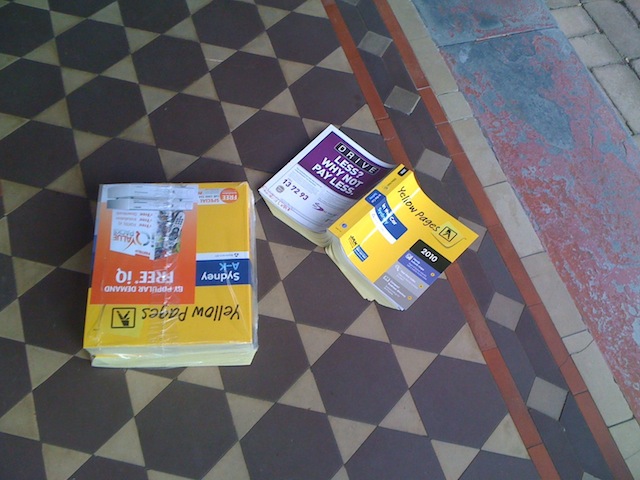
    Like telcos and media companies around the world in the mid-2000s, Telstra had a problem with its directories business as the World Wide Web was eroding the value of the Yellow and White Pages franchises.

    At the time many analysts were agitating for Sensis, Telstra’s directory division, to be sold off as a separate business. In 2005 it was valued at ten billion dollars which was a tidy sum for the telco as it rolled out its Next G network.

    Trujillo though had a better idea – Sensis would claw back the market by taking Google on with their own search engine.

    Sensis Search was born in November 2005 and the Telstra CEO dismissed questions about the wisdom of taking on the search engine giant with the comment, “Google Schmoogle.”

    Three years later, Telstra quietly accepted defeat with Sensis CEO Bruce Akhurst announcing a ‘commercial agreement’ with Google.

    Nielsen NetRatings at the time showed Google search being used by 9.3 million Australians compared to just 184,000 users for Sensis Search.

    In Telstra’s 2008 annual report, Sensis earned 2.1 billion dollars. On a 2.5x valuation, the division was worth five billion to Telstra’s shareholders at the time the search engine was closed down..

    The Dying Yelp

    Despite the setback, Sensis was able to struggle along for another decade on the back of its strong cashflow and legacy market position although income was steadily falling.

    In a desperate attempt to shore up its declining revenues, the company picked up the failed digital ventures of Australia’s newspaper duopoly and licensed operations from overseas startups like Yelp!

    Few of these acquisitions made sense and none of them were properly integrated into the declining directory media business.

    Finally a year ago, Sensis admitted they live in a digital era with Managing Director John Allen admitting what most industry observers knew a decade earlier;

    Until now we have been operating with an outdated print-based model – this is no longer sustainable for us. As we have made clear in the past, we will continue to produce Yellow and White Pages books to meet the needs of customers and advertisers who rely on the printed directories, but our future is online and mobile where the vast majority of search and directory business takes place.

    But it was all too late, the market had been lost along with the bulk of shareholders’ equity.

    Today Telstra announced a 70% sale of Sensis to US based Platinum Equity for $A454 million. The value of the entire business being $650 million – 7% of the division’s value nine years ago.With over nine billion Aussie dollars squandered on hubris and a failure to recognise a changed market place, Sensis stands as a good example of how valuable timing and good management are in business.Sol Trujillo though did very nicely, and the dim witted men who sat on Telstra’s board in 2005 will never be called to account for wasting so much of their shareholders’ money.

    Similar posts:

    • No Related Posts
  • Building a house with 3D printing

    Building a house with 3D printing

    Much of the discussion around 3D printing has focused on making your own coffee cups, toys and small mechanical parts, but what if we start thinking about using these devices to build houses?

    University of Southern California spin off Contour Crafting received attention at the CES over the bold claim by the program’s director, Professor Behrokh Khoshnevis, that it will be soon possible to build a house in 24 hours.

    That’s an audacious claim although it doesn’t include site works or fitting out, much less the design of the structure.

    Contour Crafting isn’t the only university spin off experimenting with 3D printing to build structures; Freeform Construction, part of the UK’s University of Loughborough, has also been working on developing the technology.

    The British team haven’t been as audacious as their US colleagues and, rather than see whole buildings being constructed, they see potential applications being in fabricating specialised parts including cladding panels and complex structural components.

    Like all robotic applications working in hazardous environments is another aspect touted for the technology.

    The British team is almost certainly right in their view, 3D printing is unlikely to fabricate entire buildings onsite but it will have applications in the building industry which will have ramifications for tradesmen, architects and project managers.

    For architects this technology could prove to liberating as it gives designers the opportunity to create structures that haven’t been feasible or possible with existing materials and techniques.

    Some trades though may not fare so well should this technology appear on building sites, it certainly doesn’t look like good news for bricklayers and form workers.

    It will probably take sometime for this technology and it’s still very much under development, Contour Crafting itself won awards in 2006 and the machines are still under development.

    Bill Gates famously pointed out that in the short term we over-estimate the effects of technology while in the long term we underestimate them and that’s almost certainly the case with using 3D printing to build structures.

    Similar posts:

    • No Related Posts
  • Dangerous liaisons – the risks in government support

    Dangerous liaisons – the risks in government support

    “I coulda bin a contender” is the first thing that comes to mind when reading The Register’s story on how the iPhone could have been a British invention.

    However the tale of British engineer Andrew Fentem and his struggles with the UK investment bureaucracy is a warning to all of those who think that government support programs are an easily solution for getting ideas to market.

    Fentem’s story is a common one around the world – an inventor approaches a government agency which agrees to support the project and then bogs the entire venture down in paperwork and bureaucracy.

    In some respects this is understandable as bureaucrats and politicians are deeply risk averse, which is fair when taxpayers money is involved, with the result that justifying an investment is going to be more about ticking boxes and meeting criteria rather than genuinely helping projects succeed.

    During my short stint in working for a government agency every week would see at least three people contacting me about taxpayer support for their businesses.

    Most of the time there was no godly reason for the government to give these folk a penny and it took the few diplomatic skills I have to politely break the news they had little prospect of getting a grant or subsidy.

    Some approaches though were very good projects but usually I’d warn the inventor or entrepreneur that any support the state government would give them would come at the cost of spending hours completing irritating paper work.

    My advice was that driving a cab and living on noodles for six months to raise the capital would be a better investment of their time than dealing with grey suited bureaucrats like me.

    This advice didn’t always go down well, but it was better for both the taxpayer and the entrepreneur in the long run.

    Well thought out government programs can do a lot of good for businesses or inventions that might not otherwise come to fruition, although many of the success stories probably have as much to do with the calibre of the public servants running the scheme as they do with the programs themselves.

    In the case of Andrew Fentem and his touchscreen technology it’s almost certain that the folk at NESTA were out of their depth and far more comfortable with subsidising trips to Las Vegas for circus clowns, which in itself is a valuable lesson for governments on defining programs and supervising agencies.

    Raising funds for any business or invention is a tough game anywhere in the world and assuming governments are an easy way to find money is as flawed as any other misconception about building a startup.

    The moral is government money in neither free nor easy if you’re an inventor or an entrepreneur.

    Similar posts:

  • A triumph over orthodoxy – Seven years of the iPhone

    A triumph over orthodoxy – Seven years of the iPhone

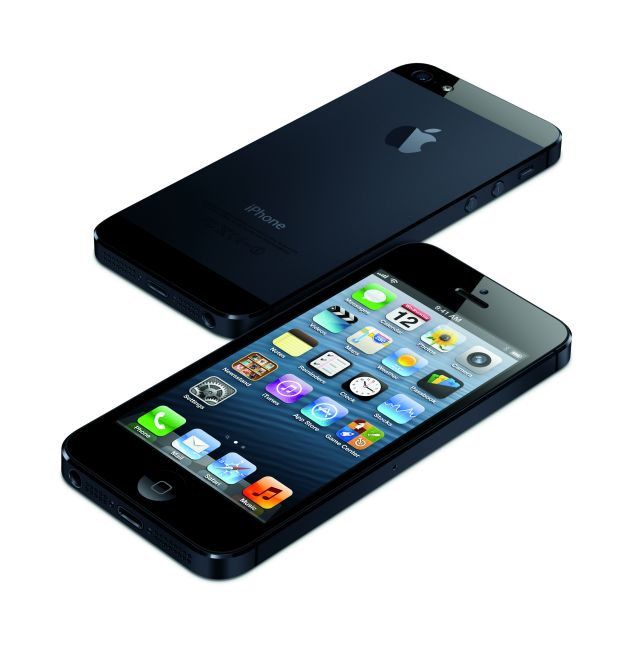
    “Once in a while a revolutionary product comes along that changes everything.”

    Those were Steve Jobs’ words when he launched the iPhone seven years ago.

    It was a strong opening that was reinforced by the event’s tag line, “Today Apple reinvents the phone.”

    It wasn’t an idle boast, the iPhone was a leapfrog development – using Jobs’ words – over the existing clunky smartphones and it changed the entire industry and spawned some new ones.

    Smart Company’s Yolanda Redrup asked me for a few comments on her story on the iPhone’s birthday and her questions triggered some thoughts on just how the iPhone changed the mobile phone and telco industries.

    A triumph over orthodoxy

    Apple’s iPhone triumph was born out of the established players’ orthodoxy; companies like Nokia, Blackberry and Palm were wedded to the idea that a tactile QWERTY keyboard was essential for a smartphone.

    Those keyboards took away nearly half the real estate on the phone, Jobs called it “the lower forty”, and it made surfing the net a painful task, let alone watching videos or movies.

    Full featured keyboards made making calls difficult as well. One of the barriers of adopting smartphones was that using the things as phones was quite difficult.

    By having software keyboard and dialling pads that only appeared when needed, Apple solved the problems that faced smartphone users.

    Disrupting the telcos

    The other orthodoxy in the smartphone industry was that the telcos were essential gatekeepers. Nokia and the other incumbents put the needs of telecommunications companies over users of their phones.

    As a consequence email and web browsing capabilities of the existing smartphones were crippled as the telcos tried to lock their customers into their own proprietary networks rather that giving them access to the public internet.

    With the iPhone, Apple broke out of that telco dominance and started to dictate terms to the phone companies. This wouldn’t have been possible if the iPhone hadn’t been a far better, and much more popular, product.

    Building the app store

    Another area where the iPhone disrupted the phone companies’ business was with the App Store. Every smartphone had its own add-on programs but they were expensive with poor functionality and developers had to build versions for every company’s operating system.

    Both the telcos and the phone vendors could see that app stores were a potentially lucrative area but systemically failed to execute on the idea with clunky and expensive software.

    The App Store showed how smartphones should work and coupled with music, another area where the handset vendors dismally failed, Apple is now earning over a billion dollars a month from iTunes.

    Technological change

    Some of the iPhone’s success was due to technologies maturing; earlier smartphones were crippled by slow data connections over 2G or CDMA networks and cloud computing, or software-as-a-service as it was then called, was just beginning to mature as a technology.

    Cloud services and 3G connectivity meant the iPhone could hand off most apps’ processing needs to the service provider, something that the earlier smartphones couldn’t do because the technology wasn’t there.

    That connectivity did come at a cost, the iPhone and its competitors created huge challenges for telcos as they struggled to meet the data demands of their enthusiastic web surfing customers.

    Looking at the future

    While the iPhone came to dominate the smartphone market, that dominance didn’t last as Google Android devices started to flood the marketplace. Now Samsung is as big a player as Apple and a wave of cheap Chinese products are now flooding the industry.

    For Apple and the other smartphone vendors the opportunities now lie in the internet of things (IoT) as connected cars, workplaces and homes require a device to control them. That device is often the smartphone.

    In the next few years the market battleground is going to be creating the applications, platforms and ecosystems around these IoT technologies and its no coincidence that Apple has partnered with BMW on providing software for their smartcar.

    Jobs finished his iPhone presentation with the Wayne Gretzky quote, “I skate to where the puck is going to be, not where it has been” and committed Apple to always being where the market is going to be.

    Where the market is going to be in the next seven years is anyone’s guess, but it would be dangerous to count Apple out.

    Similar posts:

    • No Related Posts
  • Who pays for the internet of things?

    Who pays for the internet of things?

    “If there’s one number I’d like you to remember, it’s 19 trillion.” Cisco CEO John Chambers told the 2014 International CES during his keynote speech earlier this week.

    Chambers was referring to the economic value of the Internet of Things or machine to machine technologies as they get rolled out across society, but who pays for the connectivity?

    In the case of the smart home, office, factory or farm the data costs go onto the existing internet bill, but once you get out of the office or on the road then the bills start mounting up as systems start connecting to a cellular or satellite network.

    Certainly the telcos see the opportunity with Ovum Research predicting telco’s M2M revenues will grow to reach US$44.8bn over the next five years.

    While for logistics companies and similar businesses this will be just another cost of doing business, for many consumers being stuck with an expensive mobile data plan with their smart car might not be attractive.

    As car manufacturers start to push their vehicles as being more like smartphones, suddenly the choice of network provider, compatibility with apps and operating systems starts to become a valid concern.

    In that world, choosing a car on the basis of which telco it connects to is a sensible idea.

    Of course it may be that consumers may not own cars by the end of the decade. The vision of companies like Zip Car and Uber is that we just call for a towncar or pick up a share car when we need one.

    Certainly that vision makes sense from an economic perspective and the trends right now show that millennials are nowhere near as interested in cars as their parents and grandparents were.

    As with every technological change, it’s not always obvious in the early days how things will pan out. In 1977 the founder of Digital Equipment Corporation Ken Olsen said, “there is no reason anyone would want a computer in their home.” Within 15 years he was proved very wrong.

    The motor car drove western society during the Twentieth Century and to assume we’ll continue to use it the same way in the 21st is as flawed as believing a hundred years ago that we’d continue to use horse carriages the same way as previously.

    So the assumptions about where money is to be made with the Internet of Things may turn out to surprise us all.


    Similar posts: