
Author: Paul Wallbank

  • It’s only technology

    It’s only technology

    “We treated Bitcoin as a tech story but now it’s become a much more serious economic story,” said a radio show compere earlier today when discussing the digital currency.

    One of the great frustrations of any technologist is the pigeon holing of tech stories – the real news is somewhere else while tech and science stories are treated as oddities, usually falling into a ‘mad professor’, ‘the internet ate my granny’ or ‘look at this cool gadget’ type pieces.

    Defining the world we live in

    In reality, technology defines the world in which we live. It’s tech that means you have running water in the morning, food in the supermarket and the electricity or gas to cook it with.

    Many of us work in jobs that were unknown a hundred years ago and even in long established roles like farming technology has changed the workplace unrecognisably.

    Even if you’re a blacksmith, coach carriage driver or papyrus paper maker untouched by the last century’s developments, all of those roles came about because of earlier advances in technology.

    The modern hubris

    Right now we seem to be falling for the hubris that we are exceptional – the first generation ever to have our lives changed by technology.

    If technological change is the measure of a great generation then that title belongs to our great grandparents.

    Those born at the beginning of last century in what we now call the developed world saw the rollout of mains electricity, telephones, the motor car, penicillin and the end of childhood mortality.

    For those born in the 1890s who survived childhood, then two world wars, the Spanish Flu outbreak and the Great Depression, many lived to see a man walk on the moon. Something beyond imagination at the time of their birth.

    It’s something we need to keep in perspective when we talk about today’s technological advances.

    Which brings us back to ‘it’s only a tech story’ – it may well be that technology and science are discounted today because we now take the complex systems that underpin our comfortable first world lifestyles for granted.

    In which case we should be paying more attention to those tech stories, as they are showing where future prosperity will come from.

    Similar posts:

  • Measuring an industrial hub’s success

    Measuring an industrial hub’s success

    A short article appeared on London’s City AM website yesterday discussing the successes of Google’s Campus and the government’s Tech City initiative.

    What jumped out of that story is the quote from Benjamin Southworth, the former deputy chief of the Tech City Investment Organistion, that London’s first tech IPO is “probably 18 to 24 months away”

    Southworth’s comments raise the question of how do you measure the success of initiatives like Tech City, does a stockmarket float indicate success of business or tech cluster?

    The debacle of Australia’s Freelancer float which saw the shares soar over 400% on the first day of trading certainly doesn’t indicate anything promising about the startup scene down under apart from the opportunities for those well connected with insiders on Australian Security Exchange traded stocks.

    In London’s case, Google’s Campus gives a far better indicator of what tech hubs and industrial clusters can add to an economy – £34m raised from investors in the 12 months to October 2013, 576 jobs created and 22,000 members of its coworking space.

    Google’s statistics raise an interesting point about the different objectives for the stakeholders in incubators and hubs; entrepreneurs want money or glory, investors want returns, corporate backers want intellectual property or marketing kudos, governments want jobs and politicians want photo opportunities with happy constituents.

    These different objectives means there are different measures for success and one group’s success might mean bitter disappointment for some of the others.

    What the various partners define as success is something anyone involved in an incubator or hub should consider before becoming involved, in that respect it’s like a business or a marriage.

    Similar posts:

  • Building great work

    Building great work

    “You have to understand Paul that we are building a structure designed to last twenty-five years,” sneered the consulting engineer as we sat in a site meeting on a high rise construction site just inside the City of London.

    I sighed deeply and let the matter of cladding fire protection water tanks slide and pondered nearby St Paul’s Cathedral, wondering what Christoper Wren would have thought about the mediocre architecture being thrown up around his masterpiece.

    The consulting engineer was a suitable person to build mediocre buildings, he and his firm were only on the project by virtue of the property developer being from the same masonic temple and the calibre of their shoddy and visionless work reflected their suitability for the project.

    Apart from the pedestrian architecture and engineering, the lack of foresight extended through poor design right through to not allowing enough for future expansion of the building’s communications – by the early 1990s it had already become apparent modern office towers were going to need plenty of space for network cables and the lack of which probably contributed to the structure being totally refurbished in the mid 2000s.

    That day was the beginning of the end of my engineering career as I found I didn’t much care for being patronized by mediocrities all too often encountered in the building industry in the mid 1990s.

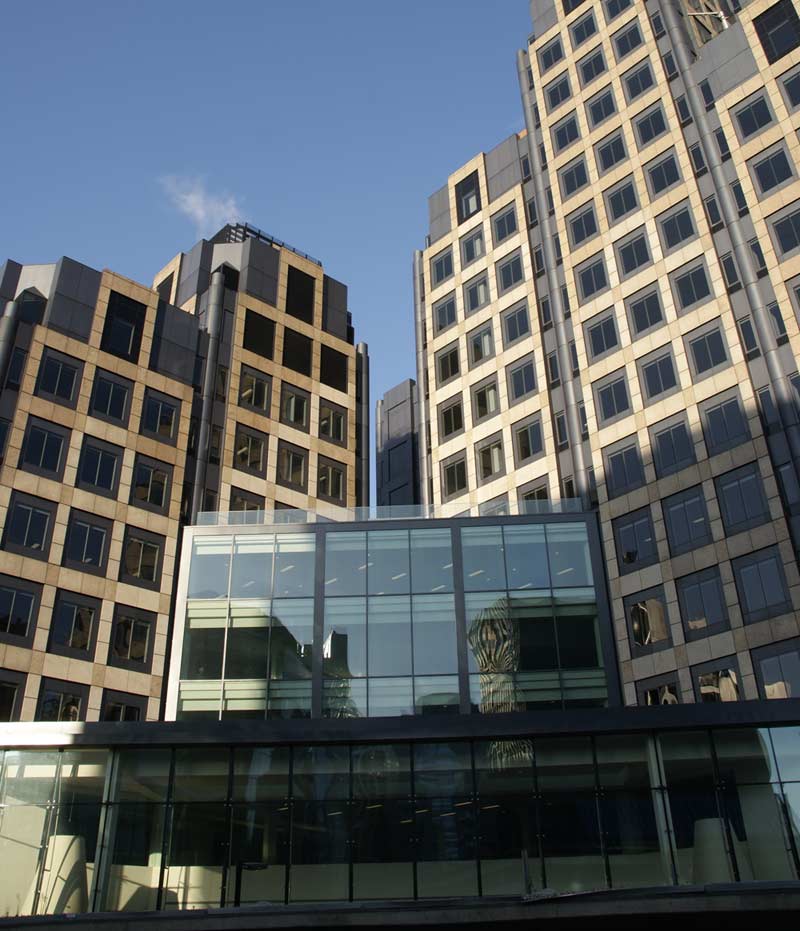
    At the time most of the architecture in London was pedestrian and bland late Twentieth Century mirror glass. The real tragedy being that modern construction techniques give architects and builders possibilities that Wren couldn’t have dreamed of.

    Thankfully London snapped out of that era of mediocrity and today building like The Gherkin, The Shard and London City Hall show what’s possible with imagination and modern building techniques, although things can go wrong.

    Mediocrities patronizing those who don’t share their narrow, bland look on life will always be with us, thankfully we don’t have to accept them in our lives.

    If we want to build great things that push the boundaries or change the world, then those grey mediocrities have no role in our lives.

    Where that consulting engineer and his masonic friends are today, I have no idea but it’s not likely they built any of the iconic buildings that now dot London’s skyline.

    Similar posts:

    • No Related Posts
  • Where will the jobs come from in the internet of things?

    Where will the jobs come from in the internet of things?

    One of the common worries about the internet of things and the automation of business processes is that many jobs are going to be lost as a consequence.

    This is a fair concern however we need to keep in perspective just how radically employment has changed in the last century.

    Concerns about technology displacing occupations is nothing new; in the eighteenth century the Luddite movement was a reaction to skilled workers being displaced by new innovations.

    In an interview with GE’s Chief Economist Marco Annunziata, published in Business Spectator, we covered this topic and Marco had a valid point that the bulk of the Western world’s workforce was employed in agriculture a hundred years ago.

    Today it’s less than two percent in most developed country as agriculture became heavily automated, yet most of those workers who would once have worked in the fields have productive jobs. “As an economist I look at this over a long term perspective and I’ve heard this concern about technology displacing jobs over and over again.”

    Annunziata sees new roles being created, among them what he calls ‘mechanical-digital engineers’ who understand both how the actual machines work as well as the data and the software used to run and monitor them.

    This isn’t to say there won’t be massive disruption – John Steinbeck’s Grapes of Wrath described the massive dislocation that happened in the United States with the first wave of agricultural mechanisation in the 1920s and the decline in rural communities is due directly to modern farms not needing the large workforces that sustained many country towns.

    We can’t see where the jobs of the future will be and just roles like as Search Engine Optimisation and ecommerce experts where unheard of twenty years ago, our kids will be working in occupations we haven’t contemplated.

    It’s up to us to give our kids the skills and flexibility of thinking that will let them find opportunities in a very different workplace.

    Similar posts:

  • As seen on TV – where are today’s trusted sources

    As seen on TV – where are today’s trusted sources

    In a local shopping centre over the weekend this business was selling massage tables using the fact they’d been mentioned on TV to enhance their reputation.

    Citing an appearance on TV in the hope of improving your credibility is very much a mid-20th Century way of doing things. In the 1960s or 70s an enthusiastic mention from a TV host was the way to get the punters beating a path to your door.

    Today, things aren’t quite the same. TV was on a decline as a trusted medium – despite the successes of talk show hosts like Oprah Winfrey – long before the internet arrived. The web bought social media and now buyers can consult their friends and peers before deciding to buy.

    What was interesting about the sign was there was no indication of a social media presence or web page and that in itself showed how old school this business’ advertising was.

    For the business owner, it would have been hard work getting a mention on TV. Space isn’t cheap to buy and getting a mention on a current affairs show requires either the services of an expensive PR agency or many hours of bugging producers and not a small degree of luck.

    Then again, maybe a complete lack of online engagement didn’t matter. The shopping centre I was in would have an average customer age well over forty and, most of the market the business was aiming probably comes from the sizeable retirement village across the road.

    How this business ignores modern communication channels is instructive about the generational change in business and society, particularly on how different age groups find their trusted sources.

    Similar posts:

    • No Related Posts