Author: Paul Wallbank

  • Redefining what’s possible – Cisco and the Internet of things

    Redefining what’s possible – Cisco and the Internet of things

    “You might call us naïve, but we’re looking at changing the world,” Cisco CEO John Chambers told journalists at the Internet of Things World Forum in Barcelona yesterday.

    That’s a big, hairy audacious goal which sounds feasible when the company estimates 50 billion devices will be connected to the net by the end of the decade in an industry worth 14 trillion dollars.

    Given the size of the market there’s a concern that different standards will affect the industry.

    One objective of Cisco holding its event in Barcelona was to start the process of creating standards around the connected devices as the company’s futurist, Dave Evans, pointed out that getting WiFi standards agreed early meant the technology was quickly accepted as users could be confident of their systems talking to each other.

    Regardless of the standards adopted, the Internet of Things is already growing with industries from mining to logistics connecting their equipment. This is improving productivity and speeding up the supply chain.

    The effects on industries promise to be huge.

    Chambers’ message to CEOs was blunt, “by the time it’s obvious you have to move, it’s too late. Have the courage to think big. Have the courage to take risks.”

    For Cisco the Internet of Things is probably not a risk at all, as the company that dominates the market for the equipment that is the plumbing of the net will almost certainly profit greatly from the adoption of connected equipment.

    Other businesses won’t be in such a good position as their industries change and it’s worthwhile listening to Chambers’ advice.
    Similar posts:

    • No Related Posts
  • Defining a technology hierarchy of needs

    Defining a technology hierarchy of needs

    Speaking at the Internet of Everything conference in Barcelona today, Cisco CEO John Chambers described broadband as a basic human right.

    This is an interesting, and somewhat provocative, idea. While there’s no doubt ubiquitous internet is an essential service in an advanced economy and increasingly critical to most industries, calling it a basic human right is a big call.

    Perhaps we need to consider there is a kind of technological order of  services, something similar to Maslow’s Hierarchy of needs.

    maslows-hierarchy-of-needs

    In the tech sector  the most basic is electricity as without power all this technology is useless.

    Sitting above this are the core infrastructure like the cables, ducts, telegraph poles and subsea cables.

    Then perhaps there is the internet itself including the routers, switches and base stations which keep the internet running.

    Above those are the connected devices — the smartphones, the robot mining equipment and the internet fridge.

    Processing all the data these devices generate is the job of the data centres and cloud computing services which make the internet of everything work.

    So perhaps to describe broadband as a fundamental human right is overstating things when a large proportion of humanity doesn’t have access to reliable electricity or drinking water.

    What’s interesting watching John Chambers talk is how passionate he is about the Internet of Everything, so much so he’s betting the company on it.

    It’s understandable that John Chambers and Cisco would consider broadband internet to be one of life’s essentials as it is critical for the company’s growth and survival but for humanity we should remember that some technologies and services are more essential than others.


    Similar posts:

    • No Related Posts
  • Does the Internet of things need a killer app?

    Does the Internet of things need a killer app?

    Today was the opening of Cisco System’s Internet of Things conference in Barcelona, Spain and in the morning sessions there was constant question of what will be the killer app for this range of technologies.

    A killer app is the application that drives adoption of a new technology – for the Personal Computer, it was spreadsheet programs that made systems attractive to company accountants and from there the PC made its way into the workplace.

    Right now, you’d have to say parking systems are the great hope for the industry and this makes sense in that it’s an easy to explain to the general public and it helps solve an ongoing problem for local governments.

    But does the Internet of Everything really need a killer app?

    The Internet of everything is the coming together of various different technologies — cheap processors, pervasive internet, cloud computing and big data are all reasons why the concept has taken off.

    In fact, many of the applications aren’t new, telemetry systems have been around since the early days of networks and even parking technologies like number plate recognition and space meters have become common over the last decade.

    Across industries like logistics, mining and agriculture the Internet of Things or Machine to Machine (M2M) communications has been steadily growing with each new generation of connected equipment.

    The difference with the next wave of technology is that devices are smarter and able to talk to each other which is where companies like Cisco see the opportunity of tapping into what they believe will be a 14 trillion dollar market by the end of the decade.

    What concerns many in the industry is the risk of the technologies become proprietary islands where each major company has its own standards that don’t talk to the others.

    The risk of vendor lock in is probably greater than the search for a killer app, indeed there’s no particular reason why anyone should be waiting for a compelling application to come along.

    Instead of waiting for a killer app it’s probably better for industries to find their own uses for these technologies and steadily implement them.

    While Cisco are almost certainly right about the impact of the Internet of Everything, it’s one of these pervasive technologies that changes everything in ways that aren’t immediately apparent like the motor car or the internet itself.

    Similar posts:

    • No Related Posts
  • Travel review – the joy of a half empty plane

    Travel review – the joy of a half empty plane

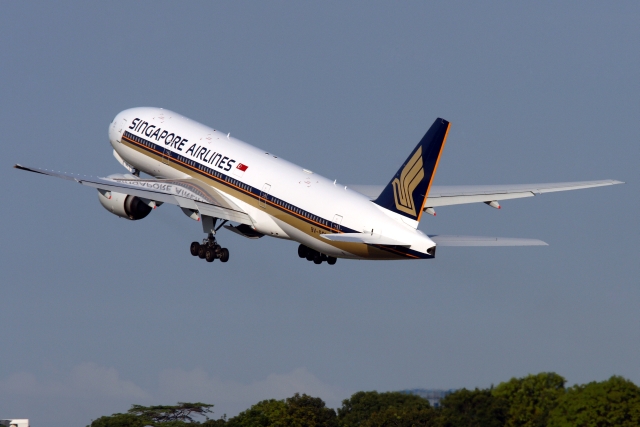
    The unusual Singapore Airlines service to Barcelona and Sao Paolo service is a long journey made easier by it not being very full.

    Singapore Airline’s SQ 68 is a truly long haul flight with a 14 hour leg between Singapore and Barcelona followed by another nine hours onto Sao Paolo.

    The Singapore to Barcelona leg departs just after midnight and arrives at dawn on the same day, for all but the last hour the flight is in complete darkness. It’s a flight made for sleeping.

    Luckily for those of us in Economy Class, the flight was only one third capacity and sitting down the back of the Boeing 777 in seat 54A meant getting a full row of seats — perfect for stretching out on the three abreast seats.

    sq-68-spare-seats

    Even without the spare seats, the Singapore Airlines 777 has the same seat dimensions as their A380 services which makes the seats reasonably comfortable with adequate rest room.

    sq-68-leg-room

    sq-68-leg-room

    Being able to stretch out does make a difference and it was possible to get a fairly solid eight hours sleep by stretching across the three seats.

    sq-68-dinner

    As usual with Singapore Airlines the food was good with a nice dinner of roast fish in white wine sauce shortly after leaving and a breakfast choice of barbecue pork noodles or a standard eggs and chicken sausage – the noodles are good.

    sq-68-breakfast

    With 14 hours in the air KrisWorld, the inflight entertainment system, gets a solid workout and in many ways the service is bizarre with a few informative business or news channels but an impressive collection of crappy reality TV shows including My Cat From Hell and the Totally Insane Guinness World Records Christmas Special.

    Like the Sydney-Singapore flights, satellite Internet access is available on this service and coverage is constant through the flight.

    sq-68-power-outlet

    A notable point for Australian travellers on Singapore Airlines’ 777 services to Europe is that the inseat power sockets are 110v and don’t support Australian plugs. So take a European or Asian adapter if you want to charge devices enroute.

    Staff did have a habit of vanishing into the galley during the night, but they were obliging in providing water, juice and snacks during the long night time leg if you asked.

    Were the flight full, this journey wouldn’t have been fun as the 777 economy class cabin would struggle with toilets and food service during the trip but when half-full it’s quite a pleasant way to fly.

    It’s hard to see how the Singapore – Barcelona – Sao Paolo is going to be sustainable if the load factors on my flight were normal but in the meantime, getting a row to yourself means it’s a nice way of getting to Southern Europe from East Asia.

    Similar posts:

    • No Related Posts
  • Validating your market

    Validating your market

    Last week I interviewed Anthony Foy, CEO of Workshare about his business and the growth in the online sharing and collaboration markets.

    When researching Workshare the obvious message is the business can be best described as a Dropbox for enterprises.

    It always pays to be cautious when comparing a business to a competitor as often the managers or founders don’t like mentioning marketplace rivals.

    Frequently, it turns out the rival in the market helps you define what your service delivers.

    A good example of this was a gay and lesbian dating service run by a pair of acquaintances.

    Naturally the obvious comparison was with the Grindr app but the two founders – who we’ll call George and John – had completely different views about this.

    George’s view was “don’t mention the G word” as Grindr was the feared rival while John’s view was that their opposition validated their market and actually made it easier for them to explain their business.

    John’s view turns out to be that of Anthony Foy’s – that Dropbox actually makes it easier for Workshare to articulate its business.

    Investors, customers and staff understand what Dropbox does so there’s no need to for Workshare to convince people there’s a demand for what they do or to explain exactly what their service does.

    This has proved true for many successful businesses. Facebook needed Friendster and Myspace to prove the market for social media existed while Google had Yahoo! and Altavista to show there was a need for an online search engine.

    Just because you aren’t first to the market doesn’t mean you won’t be successful. Sometimes your competitors are your greatest asset in helping the rest of the industry understand exactly what you do.

    Similar posts:

    • No Related Posts