
Author: Paul Wallbank

  • Pay Pal and the Modern Spice routes

    Pay Pal and the Modern Spice routes

    Online payments company PayPal has released a paper on the The Modern Spice Routes which describes the pattern of online trade across the US, Germany, UK, China, Brazil and Australia.

    The results are a snapshot of how online commerce patterns are evolving.

    PayPal commissioned the Nielsen Company to survey 6,000 online shoppers about their cross border online buying habits to determine some of the characteristics of global internet commerce.

    What immediately stands out in the report is the United States’ dominance with 45% of global market share, China follows with 26%.

    At the bottom of the pack is Australia with 16% and, surprisingly, Germany with 13%.

    The US itself is an interesting study with the most preferred overseas shopping destination being the United Kingdom followed by China.

    Why are people shopping online?

    American respondents were overwhelming shopping overseas to access more variety, with 80% of respondents citing the reasons for shopping offshore being “more variety that cannot be found locally”.

    Finding more variety was the key factor in all the markets. Even in countries like China and Australia were respondents cited saving money as their main reason for shopping internationally online, more diversity in offerings came a very close second.

    That in itself show the opportunity for companies selling internationally  – be unique and don’t offer what can be found at the local WalMart or Tesco.

    Illustrating this, the PayPal report cited Australia’s Black Milk clothing and Germany’s Hatshopping as two international success stories.

    Intra-region trading

    An understated point with the report is just what proportion of international shopping is of each country’s spend – in the United States’ case it is only 18% while in Australia it’s 35%.

    Illustrating those internal trading patterns are the British and German figures that show online shopping in other European nations is substantial, so intra-EU trade is a considerable factor.

    Similarly, the second popular destination, after the United States, for Chinese online shoppers is the Hong Kong SAR. In fact the Chinese statistics show that intra-Asian trade is just as substantial as EU commerce with Japan, Korea and Singapore all feature highly on the list of shopping destinations.

    This illustrates a problem for Australia as it has neither the United States’ massive domestic market or a group of closely integrated neighbours and the high level of international online shopping indicates just how poorly local merchants are doing with their internet strategies.

    Indeed, for Australia that the proportion of online shoppers buying overseas is so high should be a worry for local merchants.

    Today’s modern trade of bulk carriers, courier companies and shipping containers is very different to the spice routes of Marco Polo’s day, the world is evolving around new trading patterns right now.

    For businesses like Australia’s retailers those changed trade routes may not be kind to those who can’t change.
    Similar posts:

    • No Related Posts
  • Travel review – As good as economy class flying can get

    Travel review – As good as economy class flying can get

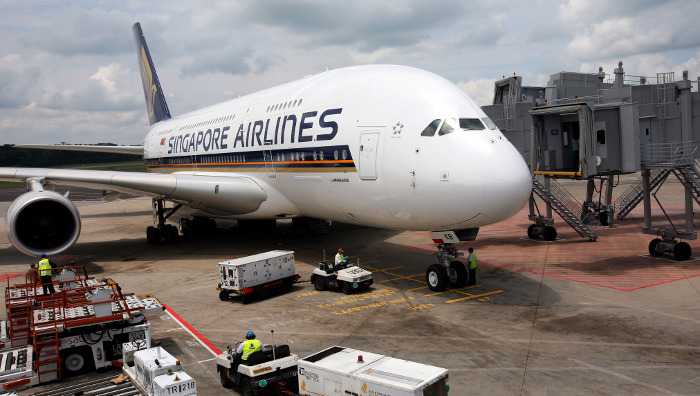
    The twice daily Singapore Airlines A380 flights between Sydney and Singapore is probably as good as economy class air travel can get if you’re able to snag a seat on the upper deck.

    On the way to Barcelona to attend the Cisco Internet of Everything conference I took seat 71K in that upper deck economy section for what turned out to be a pleasant seven hour trip to Singapore before a 14 hour trudge to Spain.

    20131028-000124.jpg

    Window seat 71K has the advantage of being just forward of the rear exit door so there’s no passenger behind, the upper deck economy section also has the advantage of only being a 2-4-2 seat configuration which makes relations with your fellow passengers a lot more comfortable if you’re in the window seat.

    20131028-000222.jpg

    For someone just on six foot like me, the leg room is fine and there’s plenty of space to stretch the legs out under the seat. Power sockets are inside the ends of the moveable armrests so in the case of these seats, the single power outlet is shared.

    20131027-235927.jpg

    If you choose the Window seat so you can sleep against the fuselage then A380 on all airlines is a disappointment as the cabin wall’s curve means there is a wide gap between the seat and the windows. The advantage of this is are the useful storage bins by the window

    20131027-235850.jpg


    During the flight the crew were friendly and quite happy to keep the alcohol flowing to the more enthusiastic passengers over and above the three regular drinks services.

    Being upstairs in the smaller economy cabin also means slightly better service and the toilet to passenger ratio is somewhat more friendly too.

    The food was tasty with the Sydney caterers doing a good job with the Asian options.

    20131028-000201.jpgDinner service was a tasty Thai beef on rice with a Cornetto ice cream dessert.

    20131028-000003.jpg

    Chicken Noodles were a delightful evening snack before landing, the vegetables in this dish were so good they’d have been a nice meal in themselves.

    20131028-000033.jpg

    A nice touch with Singapore Airlines are the toiletries and complimentary tooth brushes and combs in the toilets. This something that’s largely been lost with most airlines.

    The inflight entertainment is what you’d expect of a modern airline with several hundred channels offering everything from language services to recent movies.

    Watching World War Z on the system was an interesting experience. The plane crash was edited out with a strange leap in the narrative as no doubt showing air disasters isn’t a good idea on flights.

    The IFE also had a strange bug where the movies would be in different languages when you switched between them. It took five attempts to get Brad Pitt to speak English.

    In Flight Internet

    Singapore Airlines is now offering inflight internet which is nice but insanely expensive. An attempt to run Speedtest blew through the 15Mb limit and hit $20 US in twenty minutes. Choose the plan that disconnects you on reaching the limit to avoid nasty surprises.

    For those looking at working online for the flight it’s worth noting the service wouldn’t have worked the whole route, while Australia has granted regulatory approval for inflight internet, Indonesia hasn’t so a third of the flight wouldn’t have approval.

    This is an interesting problem for the on air service as approval hasn’t been granted by other large countries – most  notably India and the United States.

    One quibble with the flight was the cabin was quite warm and without individual air vents, there’s no way to cool yourself.

    Apart from some minor quibbles, the Singapore Airlines Sydney to Singapore service is probably as good as it gets in Economy.

    If you can snag a seat upstairs on an A380 it’s probably the best place for long haul travel in economy class.

    Similar posts:

    • No Related Posts
  • In business, be careful what you wish for

    In business, be careful what you wish for

    Yesterday’s blog post looked at MYOB’s journey into cloud computing, in some ways this is a good example of being careful what you wish for.

    Like all box software suppliers, MYOB and Microsoft desperately wanted to move customers to a subscription model through the 1990s and early 2000s, the theory being a steady cashflow would be better than the ‘lumpy’ sales of box product every time a customer upgraded their system.

    Eventually, the box software suppliers got their wish when cloud computing took off after many false starts.

    Unfortunately for the box software suppliers,it turned out their products had to be completely redesigned to run as a cloud service.

    Worse, the new business model also lowered the barriers for entry into their industries which meant the incumbents had to compete dozens of hungry new competitors who weren’t lumbered with legacy code and customers.

    The box software companies got the subscription model they wished for, but turned out not to be the bonanza they hoped.

    Wishing well image courtesy of Deboer through SXC.HU

    Similar posts:

    • No Related Posts
  • MYOB’s journey into the cloud

    MYOB’s journey into the cloud

    The big winners of the Personal Computer era were the software companies. During that time firms like Microsoft, Oracle and Adobe became some of the most profitable companies on the planet.

    With the arrival of cloud computing those profits started to dry up and those software companies that did so well out of the PC era are now scrambling to develop new products to meet a very different market.

    Accounting software provider MYOB is a good example of this changing industry – a business that dominated the Australian small business market and supported an army of certified consultants now finds cloud based competitors like Xero nibbling away at their industry position.

    MYOB Chief Technology Officer Simon Raik-Allen describes his company’s journey to the cloud in the latest Decoding the New Economy video clip.

    “The cloud has amazing benefits for small business,” says Simon. “For twenty-two years we’ve had desktop products and for the last three or four years we’ve had cloud based services.”

    “It’s been a really interesting journey, we’ve been on it for three or four years now where we’re converting the company to a cloud company.”

    “But it’s also a cultural journey,” Simon observes. “I love seeing how people start to think differently when stuff is in the cloud.”

    “Having things in the cloud opens the opportunity for employees to start slicing and dicing data in different ways.”

    “It opens up the innovation curve to what’s possible.”

    Bringing partners on the journey

    Like Microsoft, one of MYOB’s strengths is its partner community – in particularly the company’s twenty thousand strong Certified Consultant program.

    Those consultants, like Microsoft’s partners, are seeing their traditional revenue streams challenged as their business models change, a topic discussed with Growthwise’s Steph Hinds in a previous video interview.

    “Everybody takes the cloud journey at their own place,” says Simon. “For bookkeepers in particular this is an opportunity to change their business in a positive way.”

    “Normally a bookkeeper would drive around and visit two, three or four customers a day and help then with their books. Now they can help twenty customers in a single day.”

    Looking beyond the cloud

    Simon sees more than cloud computing changing accounting software with connected devices like the Pebble Watch, voice and gesture recognition along with Near Field Communications technology all being built into MYOB and computers in the near future.

    “NFC is a very powerful technology,” Simon states. “Imagine in the accounting world where you are doing your books by moving your phone.”

    “In retail NFC is going to be big where you can walk up to a product, wave your phone in front of it and it will tell you about the product.”

    “We are very much driven by what our clients want,” says Simon. “It comes down to the use case of will it add to our customers’ business.”

    An enthusiastic advocate

    One of the things that’s impressive about talking with Simon Raik-Allen is his enthusiasm for technology, whether it’s Pebble Watches, NFC enabled robots or gesture controlled accounting software.

    MYOB needs that enthusiasm in its move away from the once immensely profitable box software business onto the cloud where margins are thinner, the advantages of incumbency aren’t great and the competition from well funded competitors like Xero is immense.

    As with many other ventures, MYOB is dealing with a huge disruption to their core business and the challenges are immense.

    Image courtesy of Morrhigan through sxc.hu

    Similar posts:

    • No Related Posts
  • Lessons in crowdfunding from an unsuccessful Kickstarter campaign

    Lessons in crowdfunding from an unsuccessful Kickstarter campaign

    “I’d rather eat a bullet than do a Kickstarter campaign again,” says Moore’s Cloud founder Mark Pesce in the latest Decoding The New Economy video when asked about crowdfunding his project.

    Moore’s cloud is an internet of things company that focuses on lighting, “we think it’s interesting and something that expresses emotion” Mark says.

    With their first project, Moore’s Cloud looked to raise $700,000 to build their first project but fell well short of their target.

    Falling short lead to Mark and his team executing a classic business pivot from a static lights to Holiday, a system of intelligent fairy lights.

    “We took exactly the same technology and put it into a different form factor,” said Mark. “It’s as if we took the light and unwound it.”

    The failure of the Kickstarter campaign gave the Moore’s Cloud founders an education on how crowdfunding works.

    Customer focused from day one

    An important aspect of crowdfunding is it’s very customer focused. From day one of the campaign, the venture has to devote resources on relations with those who’ve pledged a contribution.

    Most startups don’t have those resources, or the time and skills, to deal with those relations.

    “People say it’s a better way of getting investors. I would have to say ‘it’s not better, it’s different.’” Mark says about crowdfunding.

    The psychology of investors

    One of the differences is the psychology of investors. Mark was urged by the CEO of Indiegogo, Slava Rubin, to set a low target as participants like to back successful campaigns.

    “There’s a whole bunch of psychology I didn’t understand going in,” says Mark. “If we’d had a goal of $200,000 we probably would have filled it in the first two weeks.”

    “Once a campaign is fully funded, it tends to get overfunded.”

    A truism of business is that banks will only lend to you when you don’t need the money and it strangely appears the same thing applies to crowdfunding.

    We’re in the early days of crowdfunding and there’s more to be learned about the way it works and for which ventures the fund raising technique works best.

    The experience of campaigns like Moore’s Cloud are part of how we’ll discover the nuances of crowdfunding and the psychology of the crowds that contribute.

    Similar posts: