Author: Paul Wallbank

  • For God’s sake get a website

    For God’s sake get a website

    The annual MYOB Business Monitor was released earlier this week with the depressing news that half of the Australian businesses surveyed didn’t have a basic website.

    MYOB’s survey reinforced the finding of PayPal’s Digital Literacy Report a week earlier that found only 34% of Australian small businesses list their contact details online.

    This is madness – over a decade ago consumers moved online and now with the mobile internet any business without a website is almost invisible in the marketplace.

    What is really dispiriting about these reports is that listing with the various online services and setting up a website is not hard, at worst it should take half a day for a simple site and to complete Google Places, Facebook and Yellow Pages listings.

    The easiest way to create a website is to setup a free Blogger page, it takes about twenty minutes and is more than adequate if you just need a site that lists your services, location, contact details and phone number.

    While Blogger is good for the basics, it does run the risk of locking a growing business into Google’s walled garden which is why WordPress is the better alternative for more advanced companies or proprietors.

    Most readers of this site already know how important an online presence is for any organisation, but it’s almost certain that everyone knows a business owner who doesn’t have a website.

    If one of those business owners is someone close to you, then the best thing you can do for them is to sit down with them and setup their basic online presence.

    Unless you think it’s time they went out of business. In which case you won’t have to wait long.

    Similar posts:

    • No Related Posts
  • Finding the data editors

    Finding the data editors

    Data journalism is one of the buzz words of the media industry as it deals with its own issues of extracting information from the flood of data swamping business and society.

    One of the media organisations leading the move to data journalism is The Guardian who have an excellent video on what a data journalist does.

    The question though is where are the data editors? Like traditional journalism and writing, a good sub-editor is essential to clean up copy and check that the story makes sense.

    With data, it’s even more important for other pairs of eyes to look at the numbers.

    Last week I was asked by an editor to check a story that lots of number – and those numbers didn’t make sense. In fact, the numbers as they were presented argued against the writer’s point. Had the story run, both the writer’s and the publication’s would have been damaged.

    Many news organisations are cutting back on their sub editing teams and the resulting drop in quality is hurting their publications.

    Poor checking of data is even more risky and it’s going to be interesting to see if media organisations start devoting scarce resources to editing their data driven stories.

    Similar posts:

    • No Related Posts
  • Breaking the break-fix business model

    Breaking the break-fix business model

    One of the most profitable areas for many companies has been in fixing broken products, now the internet of everything promises to put an end to that business model.

    ‘Break-fix’ has always been a good profit earner with business ranging from construction companies to washing machine manufacturers making good money from fixing failed products.

    Speaking at a lunch in Sydney earlier today GE’s CEO of Global Growth and Operations, John Rice, described how the Internet of Everything is changing in the industrial landscape.

    One of the big business changes Rice sees is in the ‘break-fix’ model of many industrial suppliers.

    “We grew up in companies with a break fix mentality,” Rice says. “We sold you equipment and if it broke, you paid us more money to come and fix it.”

    “Your dilemma was our profit opportunity,” Rice pointed out. Now, he says engineering industry shares risks with their customers and the break-fix business is no longer the profit centre it was.

    Goodbye to the TV mechanic

    This is true in many other industries as products become both more reliable and less economical to repair – the local TV repairman has largely vanished and the backyard computer support businesses are going the same way.

    For many businesses, this means a change to how they service their customers and the nature of their operations. For many, it means close monitoring of their products will be essential to manage risk.

    Rice also flagged how grid computing will improve the reliability of equipment and networks citing how giant wind turbine talk to each other.

    “Every wind turbine has an anemometer on top that’s used to judge wind speed and direction,” says Rice. “If you had a problem with the anemometer the wind turbine shut down until someone could come out – maybe a week later – to climb to the top of the turbine, diagnose the problem and start the thing back up.”

    “Today the technology is such that the wind turbines talk to each other so if you’re in a wind field of thirty turbines you don’t rely on one anemometer,” points out Rice. “This is a very simple example of machine to machine interface.”

    Wind turbines and the road toll

    Rice’s example of wind turbines talking to each other is similar to Cisco’s scenario of using the internet of everything to reduce the road toll where cars communicate with road signs, traffic lights and each other to monitor conditions on the highway ahead.

    Those machines talking together also give early warnings of problems which reduces downtime and risk for industrial users, it also means less money for businesses who’ve made money from those problems.

    Similar posts:

    • No Related Posts
  • Building business communities

    Building business communities

    Industrial designers and engineers are probably the last thing most of us think of when discussing online communities.

    Last week two very different events illustrated just how successful businesses benefit from building communities around their products and services.

    Over lunch at a nice restaurant overlooking Sydney Harbour Dassault Systemes launched their their latest Solidworks 3D design software where they described the two million members of their global user community as being key competitive advantage in the industrial design market.

    In the business sector, having that ecosystem of users is the key success as shown by businesses ranging from AutoCAD to Photoshop. Almost every industry has some software package that dominates the sector because ‘everyone uses it’.

    Building social media communities

    At the other end of the scale earlier in the day PayPal Australia launched their latest Driving Business Online campaign showcasing online commerce tools for the small to medium business sector.

    One of the companies they profiled was Brisbane fashion company Black Milk Clothing, a Brisbane based business that has grown from a startup to employing 150 staff in four years entirely through its 560,000 strong Facebook community and 655,000 Instagram followers.

    While there’s risks with relying on social media platforms as a primary marketing channel, Black Milk is a good example of what a retail business can do with building an online community.

    Older examples

    None of this is really new, Apple are probably the best example of a tech community with millions of adoring fans prepared to queue around the block for the latest iPhone.

    Microsoft’s continued profitability despite being in a declining market comes from its army of developers, system admins and IT support services who are deeply committed to the company’s products.

    At it’s most basic, every business needs a core of dedicated customers, committed staff and enthusiastic evangelists — with today’s tools companies like Black Milk are able to build a global brand.

    Not every business can build a global brand out of their communities of enthusiastic customers and dedicated employees but the goodwill in those groups are quite possibly the biggest asset any organisation has.

    With today’s online collaborative tools and social media services there’s no excuse for a business not be nurturing and growing their communities.

    Similar posts:

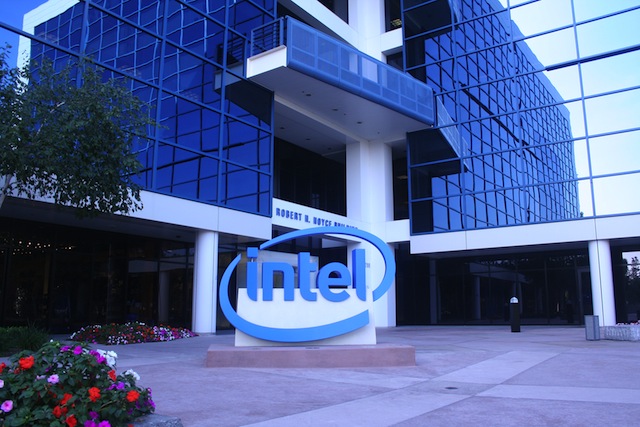
  • Intel’s challenge to find a new message and market

    Intel’s challenge to find a new message and market

    Twenty years ago people cared about the specifications of their computers and chip maker Intel led the industry with its marketing of 486, Pentiums, Pentium Duos and Pentium IIs.

    As we come to the end of the PC era, the consumerisation of technology and the rise of cloud computing mean customers no longer care about what’s inside their systems and Intel is struggling to find a new message.

    Over the last few months Intel have been showing off their latest range of Central Processing Units (CPUs) to enterprise and small to medium business (SMB) groups. Last week the company hosted an SMB event in Sydney that illustrated how Intel is struggling to cut through the market.

    Speaking at the event was Steph Hinds – an evangelist for cloud computing – who told the story of how her Growthwise accounting practice was flooding out during storms.

    Because her systems were on the cloud Steph and her staff were able to work from home and local cafes while the landlord fixed her offices. Had Growthwise been using a server based system the business would have been crippled while her IT people implemented a disaster recovery plan.

    Steph’s story in itself illustrated the Clean, Well Lighted Place argument for cloud computing and also showed how Intel is struggling to sell its PC and server upgrade cycle message in an era where that business model is dead.

    This didn’t stop some of the other speakers at the small business event trying to sell the idea that upgrading computer systems and retaining an IT support company were essential to small business success but it’s a message that was valid a decade ago.

    For Intel the challenge is to find a new message – it may well be that the company’s future lies in supplying the powerful CPUs that run data centres, or maybe the low energy and maintenance chips required to control the billions of intelligent devices that will run the internet of everything.

    The company’s launch of their Galileo board – a tiny computer designed to compete in the intelligent devices market with the likes of the Raspberry Pi – is a step in the latter direction and shows Intel is exploring the possibilities.

    Wherever Intel’s future lies, it doesn’t lie in trying to sell a business model that is quickly going the way of the Brontosaurus.

    During most of the PC era, it was the Wintel partnership that dominated the computer industry, now Microsoft have realised this fundamental market change and started their journey to become a devices and services company.

    The challenge now lies with Intel to decide where their journey will take them in a post PC world.

    Similar posts:

    • No Related Posts