Author: Paul Wallbank

  • Do business awards help companies?

    Do business awards help companies?

    The latest clip on The Decoding the New Economy YouTube channel is an interview of Cameron Wall of Melbourne’s C3 Business Solutions about business intelligence, data analytics and whether winning awards helps a company.

    Cameron’s business has been a successful enterprise having grown to over a hundred employees since being founded seven years ago.

    As a high growth business, the company was listed in the 2010 BRW Fast Starters list, interestingly though Cameron didn’t see a great deal of benefit from winning the accolade.

    “I look at it as being a credential, just because you get the credentials it doesn’t necessarily mean you can charge a premium in the marketplace,” Cameron says. “It all helps in terms of recognition, but we haven’t been thrown anything as a result of the award.”

    On the other hand the company has won the BRW Best Australian workplace three years in a row and Cameron has found this improved the business’ recruitment.

    “Being in a service company you often hear ‘people are our greatest asset’, basically they are our only asset.” Cameron says, “Having a great place to work is really important for us.”

    Cameron found that after winning the great place to work that the flow of resumes increased. “Some of the benefits of that were a lot of people applied to join C3 and it makes the recruitment process a lot easier.”

    How business awards do help companies is in reviewing their operations and practices as Cameron explained, “using the great place to work process is a great way to understand if we’re trending upward, downward and where we’re going.”

    “It was a difficult award to win, as you get probed by every angle.”

    With the growth in data science, business analytics and Big Data companies like C3 are going to need good employees in the global race for talent. Having a reputation as fine place to work is a good way of winning the global race for talent.

    Trophy image by RoyM through sxc.hu

    Similar posts:

    • No Related Posts
  • Google, Facebook and the Silicon Valley paradox

    Google, Facebook and the Silicon Valley paradox

    One of the great advertising campaigns of the 1980s featured entrepreneur and Remington Shaver CEO Victor Kiam telling the world “I liked the product so much I bought the company”.

    The modern equivalent of Victor Kiam’s slogan is “eating your own dogfood” where businesses use their own products in day to day operations. It’s a great way of discovering weaknesses in your offerings.

    One of the paradoxes of modern tech companies is how they don’t always eat their own dogfood when it comes to their business philosphies – they expect their customers to take risks and do things they deem unacceptable in their own businesses and social lives.

    The best example of this are the social media services where founders and senior executives take great pains to hide their personal information, a phenomenon well illustrated by Mark Zuckerberg buying his neighbours’ houses to guarantee his privacy.

    Just as noteworthy  are the policies of Google’s IT department, for past five years most tech evangelists – including myself – have been expounding the benefits of business trends like cloud computing and Bring Your Own Device (BYOD) policies.

    Now it turns out that Google doesn’t trust BYOD, Windows computers or the Cloud, as the company’s Chief Information Officer, Ben Fried tells All Things D of his reasoning of banning file storage service Dropbox;

    The important thing to understand about Dropbox,” Fried said, “is that when your users use it in a corporate context, your corporate data is being held in someone else’s data center.”

    This is exactly the objection made by IT departments around the world about using Google’s services. It certainly doesn’t help those Google resellers trying to sell cloud based applications.

    Fried’s view of BYOD also echoes that of many conservative IT managers;

    “We still want to buy you a corporate laptop, get the benefits of our corporate discounts, and so on. But even more importantly: Control,” Fried said. “We make sure we know how secure that machine is that we know and control, when it was patched, who else is using that computer, things like that that’s really important to us. I don’t believe in BYOD when it comes to the laptop yet.”

    Despite these restrictions on Google’s users, Fried doesn’t see himself or his department as being controlling types.

    “But the important part,” Fried said, “is that we view our role as empowerment, and not standard-setting or constraining or dictating or something like that. We define our role as an IT department in helping people get their work done better than they could without us. Empowerment means allowing people to develop the ways in which they can work best.”

    Fine words indeed when you don’t let people use their own equipment or ask for a business case before you can use Microsoft Office or Apple iWork.

    That Google doesn’t give its staff access to many cloud services while Facebook’s managers restrict their information on social media shows the paradox of Silicon Valley – they want us to use the products they won’t use themselves.

    Back in the 1980s, Victor Kiam liked what he saw so much that he bought the company. You’d have to wonder if Victor would buy Google or Facebook today.

    Similar posts:

    • No Related Posts
  • Microsoft’s devices and services strategy starts taking shape with the Surface tablet

    Microsoft’s devices and services strategy starts taking shape with the Surface tablet

    Microsoft’s latest version of their Surface tablet computer is the company’s first attempt at executing Steve Ballmer’s device and services strategy. If the company succeeds, there are some interesting implications for the tablet computer market.

    Currently Microsoft is on a worldwide PR campaign to promote their latest range of Surface tablet computers. Last week during the Sydney leg of their tour I had the opportunity for a hands on demonstration of the new devices with Jack Cowett of the product’s marketing team.

    The Surface itself is an interesting device with some major upgrades and changes as Microsoft begins to understand the tablet market with the device having more memory, better processors and battery life – although the lack of a cellular version is going to hinder its adoption by the consumer and small business markets.

    Devices and services

    It’s in the device’s integration with Microsoft’s cloud and communication services where the long term vision, and real story behind the Surface lies.

    Most obvious is the bundling of services with purchasers of a Microsoft Surface 2 or Surface Pro getting 200Gb of Sky Drive storage and a year’s free international calls included with the device.

    It’s an early taste of how Microsoft can combine services and devices that leverage off their existing position in the marketplace.

    While these incentives may not be enough to convince customers that the Windows systems are a better buy than Android or Apple devices, integrating these cloud services makes the computers more powerful devices.

    Keyboards as blades

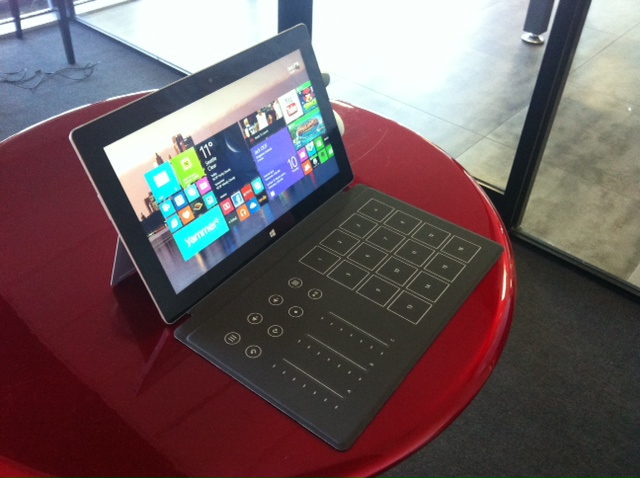
    Equally interesting with the Surface, is Microsoft’s devices play with the range of Surface covers that the company is informally calling ‘blades’ – an unfortunate choice of name which will confuse conversations with many IT managers.

    Blade covers for Microsoft surface tablets
    Blade covers for Microsoft surface tablets

    These covers dispense with the usual keyboard electronic layout with an underlying layout featuring a 1024 sensor pad that give the covers more potential than just being keyboards.

    As part of the Microsoft marketing push to show this aspect off, the company has released a blade cover with a sound mixer layout and seeded the devices with various DJs under the banner of the Remix Project.

    While the blade covers have applications as sound mixers and keyboards, the number and  flexible nature of the 1080 built in sensors will see their application in other areas.

    The way businesses have used tablet computers has taken manufacturers by surprise as  Google’s Eric Schmidt told last week’s Gartner conference and Microsoft’s devices open up more industrial applications.

    Already the medical industry is applying Windows based tablets as Microsoft are proud to show off.

    Should third party developers be able to develop their own skins for Surface blade covers then Microsoft may have a killer industrial device that plugs into existing Windows based networks.

    Added to Microsoft’s opportunity is the possibility of plugging Surface devices into the internet of everything giving business users direct access to the machines in their organisation.

    Should Microsoft be able to capture a slice of these markets, it may well be a pointer for the company’s future in a post-PC world.

    Regardless of how well Microsoft do with the internet of everything, the latest range of Surface tablets and accessories shows how the company is executing its strategy of becoming a devices and services company.

    Similar posts:

    • No Related Posts
  • Steve Jobs’ golden path

    Steve Jobs’ golden path

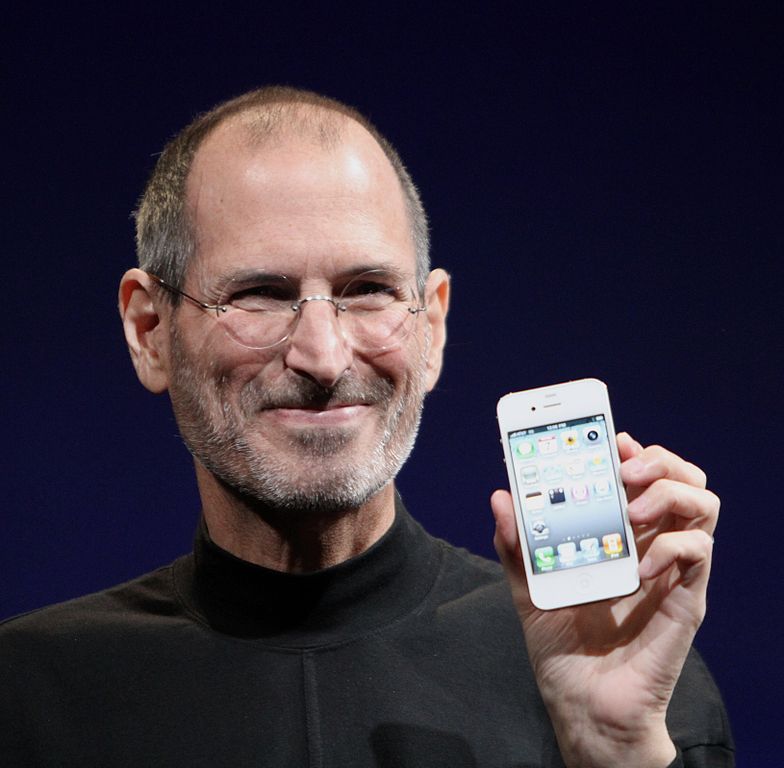
    Today Apple reinvents the smartphone.” Steve Jobs announced at the 2007 Macworld Conference when he showed off the new Apple iPhone.

    As with most of Jobs’ speeches, the iPhone launch was an impressive display combining the man’s talents, vision and technology to rally Apple’s adoring masses.

    Last week the New York Times magazine had an excellent feature on the story behind the landmark launch of the iPhone. It’s worthwhile reading to understand the theatre that goes behind a major tech company’s launch event.

    In the case of the iPhone, a myriad of tricks had to be performed to make sure the still being developed device didn’t fail in Steve Jobs’ hands during the launch – one can be sure the Apple founder wouldn’t have been as relaxed as Bill Gates when a Windows 98 system crashed onstage a decade earlier.

    A key part of Jobs’ presentation was the ‘Golden Path’, a script that would showcase the iPhone’s features while avoiding known problems.

    Hours of trial and error had helped the iPhone team develop what engineers called “the golden path,” a specific set of tasks, performed in a specific way and order, that made the phone look as if it worked.

    Much to the relief of Jobs’ staff, the demonstration worked flawlessly and Jobs’ polished presentation showed why he was one of the most admired, if flawed, business leaders of his generation.

    While most tech CEOs could never dream of emulating Steve Jobs, almost every one has a ‘golden path’ to show off their product in a new light.

    Something we should remember when watching these demonstrations and the press coverage that follows is that most of them are carefully staged theatre and we should hang onto our wallets until well after these devices are on the shop shelves.

    As it turned out, the iPhone was a spectacular success and did re-invent the smartphone industry. Along with being able to deliver a killer presentation, Steve Jobs was also good at driving teams to deliver his vision.

    Steve Jobs image courtesy of Wikimedia.

    Similar posts:

    • No Related Posts
  • Building a business culture

    Building a business culture

    “How can you create a great organisation of people and be that mean a person?” Asks funds manager Julian Robertson about Apple founder Steve Jobs.

    Robertson, who based the decision to sell his Apple shares on the details in Walter Isaacson’s biography of Steve Jobs, was largely ridiculed for his decision but the veteran investor has a very good point.

    A company’s culture develops from the top – if the senior management are paranoid, rogues or thieves then those attributes will eventually percolate through the company.

    The Tyco Lesson

    During the 1990s I had the unfortunate experience of working for Tyco International at the time it was led by Dennis Kozlowski, a man listed by Time Magazine as one of the ten most crooked CEOs of all time, senior management’s attitude of treating the company’s funds as their own piggy bank was copied throughout the organisation.

    Tyco suffered badly during that period and subsequent management has had to work hard to undo the influence of Kozlowski and his cronies’ poor leadership.

    One organisation I’ve watched closely over the last few years has been Australia’s NBNCo, the state owned company set up to build the nation’s National Broadband Network.

    In under four years of operation the company has developed a dysfunctional management culture that saw the project miss its targets by over 70%.

    For the NBN, a hands off attitude by senior management allowed bureaucratic silos to develop in a relatively small and young organisation. Those silos then started perpetuating bad habits as managers hired their friends and ignored good management processes. A lack of process and management accountability have been the main reasons the company has failed to meet its targets.

    Apple’s challenge

    In Apple’s case, Jobs created a culture of fear and secrecy with the company going as far as creating its own secret police designed to intimidate staff. The entire company was beholden to, and evolved around, one man’s vision, ego and quirks.

    While Jobs was ahead of the game, all was good for Apple shareholders but the risk was always that Jobs would make a major mistake or leave the company. It turned out to be the latter when Jobs passed away.

    As with any company built in the image of its founder, Apple now struggles to adapting to life without Steve Jobs and his successors have to reinvent the company’s culture around a more collegiate management structure than an often not-so-benign dictatorship.

    Microsoft are facing a similar transition as Steve Ballmer leaves the company. Like Apple, Microsoft is an immensely profitable facing a changing market at the very time they are transitioning to a new generation of leaders.

    Leaders such as Steve Cook at Apple and Ballmer’s successors at Microsoft have a massive task in changing their company’s culture as they try to undo a generation of management habits and this is why Robertson’s reasoning about selling his stake makes sense.

    Culture matters in an organisation. While a positive culture doesn’t guarantee success, it does make it more likely a company will survive its founders.

    Similar posts: