Author: Paul Wallbank

  • The myth of celebrating failure

    The myth of celebrating failure

    “We should celebrate failure!” One of my friends said over a beer. “If so, I have a lot to celebrate but don’t have a lot of money to dot it with.

    Like many business mantras ‘celebrating failure’ is nice to say until you’ve actually experienced it.

    Failure tastes pretty bitter and it isn’t pleasant when you encounter it. For some, it could kill their careers.

    When you hear business gurus and snake oil merchants expounding the mantra of embracing failure it’s worth considering survivor bias when you hear the case studies

    It’s also worth looking at the state of their suit and how desperately they are selling their box set of inspirational DVDx or books.

    Similar posts:

    • No Related Posts
  • Valuing Twitter

    Valuing Twitter

    Now microblogging service Twitter has released documents ahead of a stock market float, it’s possible to start looking at the viability and stock market valuation of the company.

    When Facebook’s float was first mooted in early 2011, we looked at how the social media service stacked up against Google a decade earlier. The question was ‘is Facebook worth $50 billion?’

    The stockmarket answer was resounding ‘yes’ despite an initial fall that saw investors face a 50% loss in the early days of Facebook being a public company. Today the stock has a market valuation of $122 billion, with an eye popping price/earnings ratio of 122.

    So how does Twitter stack up at the valuations being discussed? Quite well it appears when we put it against Google, Facebook and LinkedIn.

    Company Google Facebook LinkedIn Twitter
    Market Cap 288 123 27 13
    P/E 25 288 901 29

    For Twitter, the real challenge is making money from the service and their latest idea is marketing the service as an essential companion to watching TV.

    The discussion over how Twitter makes money exposes another problem for the service in it has no obvious revenue stream which makes comparing the platform to Facebook or LinkedIn rather problematic.

    Facebook has advertising while LinkedIn has premium subscriber services both of which are problematic.

    Not having an obvious revenue model may not turn out to be a problem – as LinkedIn’s P/E shows – and Twitter’s founders are probably more likely than anyway to be the digital media industry’s David Sarnoff.

    It may be Twitter makes its money from giving advertisers, marketers and others access to the massive stores of data the company is accumulating.

    Whatever way it turns out, Twitter’s going to be the hot IPO news for the tech industry for the rest of the year. At current prices, the investors will be lining up to buy the stock.

    Similar posts:

    • No Related Posts
  • Building tomorrow’s markets

    Building tomorrow’s markets

    “If I’d asked my customers we’d have built a faster horse,” is a quotation often attributed, probably incorrectly, to Henry Ford.

    The point of the quote is that asking today’s customers about tomorrow’s market is pretty pointless when new products change consumer behaviour.

    Just as the farmer of 1906 had no inkling of how the motor car, truck and tractor would change their business, the cellphone user of 2006 had no idea of how the iPhone would change the way they used a phone and communicated with the world.

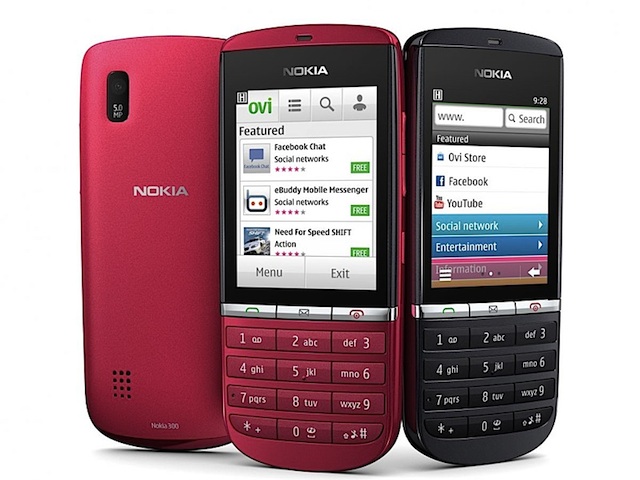
    Which brings us to Nokia.

    The Sami Consulting blog discusses how Nokia lost their lead in the cellphone business as the market migrated the Apple and later Android smartphones.

    Nokia’s problem was they spoke to their customers about their existing mobile phone use rather than considered how the technology might evolve.

    When the inventors of the touchscreen approached Nokia, the company carefully evaluated the technology, consulted their customers and decided it wouldn’t work for their products.

    What does this story tell about foresight?  First, it shows that innovation creates futures that are fundamentally unpredictable. We do not have facts or data about things that do not exist yet.  When a mobile phone becomes an internet device with sensors, touch screens, and broadband access, it becomes a new thing.  If you ask your existing customers what they like, the answer will always be about incremental improvements.  When you ask about the future, the answer will always be about history.

    In many ways Nokia were the beneficiaries of a transition effect, they took advantage of a brief period of technological change  and were caught flat footed when the technologies evolved further.

    To be fair, it’s hard to see that change when you’re focused on incremental improvements.

    The motor car turned out to define the Twentieth Century – even Henry Ford couldn’t have foreseen how the automobile would change society and the design of our communities.

    Both the motor industry and smartphone industries are going through major change, particularly as the internet of everything sees the two technologies coming together.

    One thing is for sure, how we use our phones and cars over the next fifty years will be very different to how we use them today.

    Similar posts:

    • No Related Posts
  • Big Data needs big databases

    Big Data needs big databases

    While the tech industry’s startup hype this week has been focused on the impending Twitter Initial Public Offering, a much more fascinating company quietly completed a major capital raising.

    MongoDB provides an open-source, document database program and last week raised another $150 million from investors that values the company at $1.2 billion dollars.

    Databases lie at the heart of Big Data and businesses need better computer programs to manage the overwhelming amount of information that’s pouring in every day.

    As every business is unique, larger corporations find they spend huge amounts of money on their databases. The enterprise that buys an Oracle, IBM or SAP system usually spends tens, if not hundreds, of millions of dollars in adapting the system to work for them, often with less than spectacular results.

    While implementing MongoDB or any other open source program doesn’t eliminate implementation costs, it is often easier to setup and maintain as most of the information about the system is shared and freely available rather than locked inside the vendor’s proprietary knowledgebases.

    Probably most important of all, the data structures themselves are open so customers don’t find themselves locked into a relationship with one vendor because all their information is in a format that can only be read by one system.

    Open source is where Big Data, social media and cloud computing intersect – without the data itself being open and accessible, most cloud computing and social media services will almost certainly fail.

    So MongoDB and the other open source products are the quiet, back of house technologies that keep the internet as we know it ticking along.

    Bloomberg Businessweek reports there’s some very serious investors in MongoDB.

    The deal attracted new investors such as EMC Corp. (EMC:US) and Salesforce.com Inc. (CRM:US), along with previous backers Red Hat Inc. (RHT:US), Intel Corp. (INTC:US), New Enterprise Associates and Sequoia Capital, according to MongoDB.

    Sequoia Capital are one of the longest lasting Silicon Valley venture capital firms whose greatest success was being one of the first investors in Apple Computers and New Enterprise Ventures have a similar pedigree with companies like 3Com, Juniper Networks and Vonage. Investment by industry leaders like Intel, Red Hat, Salesforce and EMC in the company also shows MongoDB isn’t the standard Silicon Valley Greater Fool play.

    When there’s a gold rush, it’s those selling the shovels who make the big money and the investors in MongoDB and similar services are hoping they’ve found some of the modern day shovels.

    That may well turn out to be the case and while the smart folk make more money from the technologies that drive social media and cloud computing services, the rest of us are distracted by the latest shiny thing.

    Similar posts:

    • No Related Posts
  • Finding a role for Hong Kong in the China story

    Finding a role for Hong Kong in the China story

    The Chinese government’s declaration of a Shanghai Free Trade Zone recently made headlines with speculation the region might be exempt from the nation’s internet blocks.

    For Hong Kong, the Chinese government’s move is another blow to the territory’s already declining position as the main gateway to the People’s Republic.

    As part of the Decoding The New Economy series of interviews, I spoke to Brian Wong of Hong Kong’s Seacliffe Partners about the challenges facing the territory and the role the former British colony will play over the next few decades.

    “Hong Kong, I think, is the perfect bridge between East and West, ” says Brian. “But I think Hong Kong has been in search since the change over in 1997 as to where it really wants to focus itself.

    The territory is squeezed between Singapore that has established itself Asia’s leading financial hub and now is positioning itself as a creative centre and Shanghai which has become the new ‘Gateway to China’ with its domestic financial centre and deep water port.

    Despite the challenges facing the Territory, Brian sees opportunities in the city’s cultural and business environments.

    “One of the great things about Hong Kong still is its international community and its accessibility for creative types,” Brian says. “I think Hong Kong is starting to recognise this advantage.”

    “You have a large base of Chinese based manufacturers looking to beyond just low cost OEM manufacturing, what they need is creative design and innovation. If Hong Kong can be one of the big suppliers of that then they have a really good opportunity.”

    One area Brian sees Hong Kong has an advantage is in its developing a hardware hackers culture that fits in with the massive manufacturing hubs surrounding the territory along the southern Chinese coast.

    “I went to a talk where there was a fellow from Mountain View, California who does a lot of product invention,” Brian tells. “He’s set up a lab in Hong Kong to do product innovation because although he recognises China has a low cost manufacturing base, he doesn’t want to live in Shenzhen.”

    The challenge for Hong Kong is to encourage a more entrepreneurial mindset, Brian believes. He also sees Hong Kong having an opportunity in being a conduit for the Chinese diaspora looking at investing into the PRC.

    Probably the biggest advantage Brian sees Hong Kong having are in its mature legal and capital markets that Shanghai and other Chinese centres lack – “these are world class,” he asserts.

    Ultimately though it may be that Shanghai, Beijing, Taipei or Singapore aren’t threats to Hong Kong at all as each city becomes the centre of certain aspects of a diverse Chinese and East Asian economy.

    “I think much like in the United States there is not just one financial centre – you’ve got Chicago, New York and you’ve got different roles for different cities, LA for media and San Francisco as the gateway into the United States.”

    “There’s room for more than just one. The question is what does Hong Kong want to be and how does it want to be most valuable to the China story.”

    Similar posts: