Author: Paul Wallbank

  • Microsoft’s version three problem

    Microsoft’s version three problem

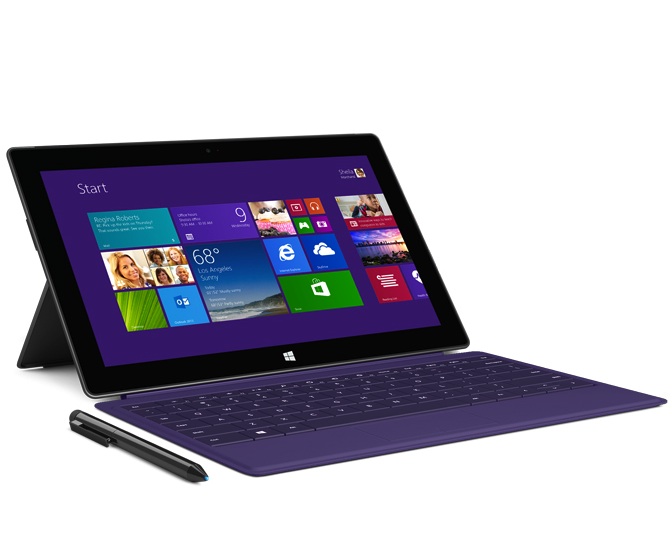
    Microsoft have released their second generation Surface tablet computers following the less than successful first versions that resulted in the company booking a $900 million write off.

    As always, the new devices boast improved battery life, better screens and more storage, all of which are important when competing against Apple’s iPad and the plethora of Android devices.

    For Microsoft, the stakes are high as the company tries to position itself as devices and services business in the post-PC world where tablet computers are one of the key markets.

    Unfortunately the PC industry’s legacy haunts Microsoft as the market believes it takes the company three attempts to get a product right.

    Microsoft Windows is the best example of this, versions one and two of the graphic operating system* were total and utter dogs. It was only with the arrival of Windows 3.0 that PC users started to migrate from DOS.

    This failure to execute lulled Microsoft’s competitors into a false sense of security, WordPerfect in particular completely flubbed the market’s move to Windows and never recovered which was a large reason for Microsoft Office’s eventual domination of the word processor and productivity suite sector.

    Strangely with Windows another pattern developed once Microsoft came to dominate the market, every second version was a dog – Window 98 was followed by the awful Windows ME which in turn was replaced by probably the most successful OS of all in Windows XP.

    XP, released at the high point of Microsoft’s powers, was followed by the disastrous Vista which was redeemed by Windows 7 that was in turn soiled by the now soon to be abandoned Windows 8.

    The problem for Microsoft is the PC industry model is in decline and the company is no longer a scrappy disrupter but instead a wounded giant wondering how to react to a rapidly changing market.

    In the face of Apple and Google’s domination of the tablet and smartphone markets, taking three cracks to get their tablet right is going to be an expensive and difficult path for Microsoft.

    Steve Ballmer’s place in business history might just depend on this version of the Surface, if it does take three attempts to get Microsoft’s tablet product right then his legacy may not be well judged.

    *Purists will argue that early versions of Windows weren’t operating systems as they sat on top of DOS which did the heavy lifting. They are right.

    Similar posts:

    • No Related Posts
  • Exploring the internet of everything

    Exploring the internet of everything

    As part of the Decoding the New Economy video series, I had the opportunity of interviewing Ken Boal, the head of Cisco Australia and New Zealand, about the Internet of Everything and how it will change business.

    “The internet of everything is about things, it’s about people, process and it’s about data,” says Ken. “Compounding together to create new capabilities and drive opportunities for nations, enterprises, government and right down to consumers.”

    “It’s a huge transition in the internet’s evolution.”

    Reducing the road toll

    A previous Cisco presentation looked at some of the ways the internet of everything can reduce road deaths, Ken sees this both private and public sector benefits of the connected economy flowing to consumers and the community.

    “When you think about things like traffic congestion, health care and how education is delivered we know there’s huge opportunities for greater efficiency,” says Ken.

    “Just on road safety, when we’ve got all the vehicles and trucks connected, when the traffic lights and traffic control systems are all connected,” suggests Ken, “then consumers are going be better informed about what is the most efficient route to work.”

    “Cars will be communicating with each other to reduce fatalities and collisions in the future as well.”

    Bringing together industrial, consumer  and public safety technologies creates a grid of connected devices, including cars, that improve public safety while making industries more efficient.

    Of course these connected services come with risks to privacy, particularly when multiple points of data can triangulated despite each individual item being anonymous on their own.

    What Ken finds is particularly important is the current value of these technologies with Cisco predicting $1.4 billion in productivity gains through the internet of everything this year, half of which are available for businesses.

    A warning for Australia

    For Australia, the concern is that business and the economy in general is falling behind, Cisco’s recent Internet of Everything Value Index rated Australia among the BRIC countries in adopting the new technologies.

    “We’ve always counted Aussies as fairly innovative and leading edge,” says Ken. “Australia is ranked tenth out of the twelve largest economies in the adoption of internet of everything capablities.”

    The countries leading – such as Japan, Germany and the United States – have had a solid record of investing in technology, “in Australia, we’ve had that in the past but we’ve lost our mojo.” Ken says, “IT has been viewed more as a problem – a cost to business – rather than a provider of productivity for the long term.”

    How business can adapt

    For businesses, the question is how can they take advantage of the internet of everything? “You don’t have to start from scratch,” says Ken. “There are a whole heap of use cases for every vertical.”

    “Start to drive some innovation. Think about your business processes at the front end where you touch your customers, look at your supply chains and your back office arrangements driving workforce productivity and how fast can you deliver new innovations to the market.”

    “Internet of everything themes can address a whole host of these different processes in different parts of your business.”

    Similar posts:

    • No Related Posts
  • The truth is in the data

    The truth is in the data

    Emma LoRusso founder of Sydney based social analytics service Digivizer believes the truth in a company’s data will challenge many managment and marketing beliefs.

    In a somewhat poorly recorded interview as part of the Decoding the New Economy YouTube channel, Emma described how analysing social media trends and tying them into an organisation’s Customer Relationship Management (CRM) platform can help improve a business’ marketing and customer satisfaction.

    The Truth is in the data

    “A lot of marketing in the past has not been data driven,” says Emma. “There’s still this gap between people saying ‘this is what we think’, ‘this is what we’ve always done’ and ‘this is what they’ve found’ – we’ll come behind that and say ‘let’s let the data tell the truth.’”

    That data is powerful due to the context Emma believes Digivizer adds, “because we can map people to the social web based on their profiles – who are they, what they talk about, who they are engaged with and what’s important to them.”

    “We let data become the truth and we push back on the hypothesis that might have been unsubstantiated previously in the organisation,” Emma says.

    Fighting the average

    For some organisations, this truth can be challenging. “The ones who resist it are those with a fixed position who have built a career of playing to the averages,” states Emma. “We get massive returns, say 39 to one, whereas they were getting maybe seven to one or twelve to one.”

    “Again, data can be the truth in this story.”

    One advantage of real time social media monitoring is marketers can now track how consumers changing lives unfold are affecting their buying habits and desires as people get married, become single, have children, move houses or just simply change tastes.

    Hearing the consumer

    A key part of modern marketing is letting customers know their voices have been heard, as modern consumers know they have a voice and expect companies to acknowledge what they’re saying.

    Emma sees a lot of lip service has been paid in companies to the ‘single customer view’ where businesses need to know their customers better.

    “I actually think it’s customers that are driving that,” says Emma. “Their expectation is ‘I’ve interacted with you a lot of times, you’re asking me to engage with you digitally and now I expect you to serve me better.’”

    “Now if you plug that data into organisations you can start to offer more meaningful – the right message at the right time.”

    Emma believes that makes customers happier as they now feel they’ve been heard and understood. “That’s the beauty in the data,” she says.

    One of the big challenges facing all organisation is using Big Data to understand their customers better, Emma LoRusso and Digivizer are part of the new wage of businesses and entrepreneurs providing the tools to help managers make better decisions.

    While there’s some risks with paying close attention to customers’ online behaviour – as we saw with the famous Target pregnant girl mailout – the benefits for businesses listening to their clients is obvious. It’s another example of how the slow to adapt businesses will be crushed in the changing economy.

    Similar posts:

    • No Related Posts
  • Rebuilding American Manufacturing

    Rebuilding American Manufacturing

    US manufacturing is undergoing a resurgence, just without the jobs reports the New York Times in its story on the textile mills of South Carolina.

    The decline and recovery of US manufacturing is a story of our times – the industrialisation of Asia, trade treaties such as NAFTA and China’s joining the World Trade Organisation all saw Western producers move their operations overseas.

    A weakness with that business model are the extended global supply chains as goods spend months on ships following long manufacturing and design lead times, the exact opposite of what modern consumers are looking for.

    Coupled with domestic manufacturers’ increased investment in automated systems which makes labour costs a smaller factor and the sums start adding up for making things in the United States.

    Unfortunately for the workforce, those automated plants don’t require anywhere near the staff older factories employed and the skills required in today’s mills are substantially different from those needed in those of earlier times.

    Most industries are encountering the same change and new technologies make the modern factory very different to that of a few decades ago.

    The jobs aren’t going to come back in the numbers that were once employed, as the New York Times story illustrates with the decline in the working population.

    US-employment-changes-by-industry

    Despite the recovery in US manufacturing, today’s industry is very different to what it was last century, something that’s missed by those advocating a return 1950s style government policies to protect jobs in sectors like car manufacturing.

    Even if they are successful in rejuvenating local car factories, cotton mills or coal mines, the days of these plants employing tens of thousands of grateful cloth capped workers are over.

    Those politicians whose ideology is based on the old model, or businesspeople who want to work in the old ways, are going to find the modern economy very difficult and challenging.

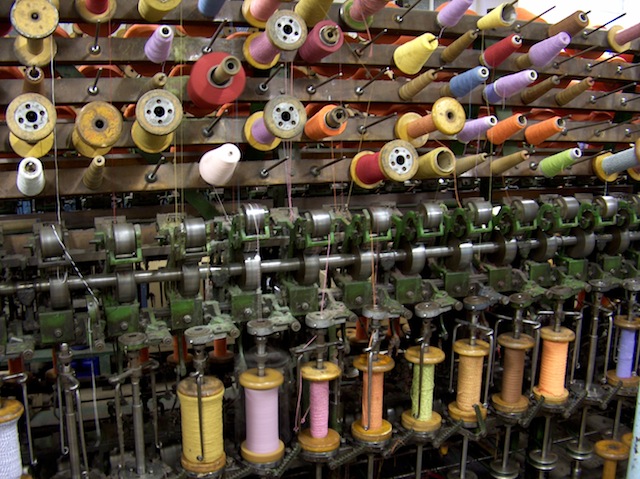
    Image of cotton threads on a weaving machine through jbeeby on sxc.hu

    Similar posts:

  • Microsoft’s continued evolution

    Microsoft’s continued evolution

    Today’s investor briefing by software giant Microsoft shows the company’s evolution as their markets shift.

    Microsoft Chief Operating Officer Kevin Turner broke out the key numbers for the company’s revenues which illustrate just how the company’s business model is changing.

    Over half of Microsoft’s revenues are coming  from enterprise customers and of the product lines, Office unit makes up just under a third, Server and Tools slightly more than a quarter while Windows has fallen to 25 percent.

    Despite the decline in Widows’ revenues, there’s no doubt about Microsoft’s determination to drive the PC upgrade cycle through the retirement of Windows XP as Turner explained.

    We have a giant XP install base. But guess what? We’ve made so much progress on that XP install base. It’s down to 21 percent worldwide, and we have plans to get that number to 13 percent by April when the end-of-life of XP happens.

    A big part of the change is the shift to the cloud with Turner claiming two hundred percent growth in Microsoft’s Azure services.

    Despite the change in Microsoft’s focus, the threats remain with Apple releasing both iOS7 and their new range of iPhones along with Google making their QuickOffice mobile app free to iOS and Android users.

    While Microsoft are steering their ship around, the incumbents in other sectors are protecting their positions. In an evolving world, survival is not guaranteed.

    Similar posts: