Should the moderator of a LinkedIn discussion group choose to ‘block and delete’ a members’ message, that user is thrown out of the group, prevented from re-joining and have their posts in other groups pushed into a moderation queue.
‘Block and delete’ is a very powerful feature – a thin skinned administrator or a vindictive competitor can damage an individual or a LinkedIn reliant business – yet users have no means of challenging the block or undoing the effects.
In every case, the social media service shows it’s unaccountable and opaque, which is ironic as these sites’ proponents preach about the new age of openness.
Once again, the Box Free IT story shows that businesses can’t afford to depend upon social media sites as primary marketing platforms. It’s essential that businesses use social media services to drive traffic to their own websites rather than risking losing their online presence because of an administrative mistake.
These risks are something that everyone using new media should keep in mind when building their online marketing channels.
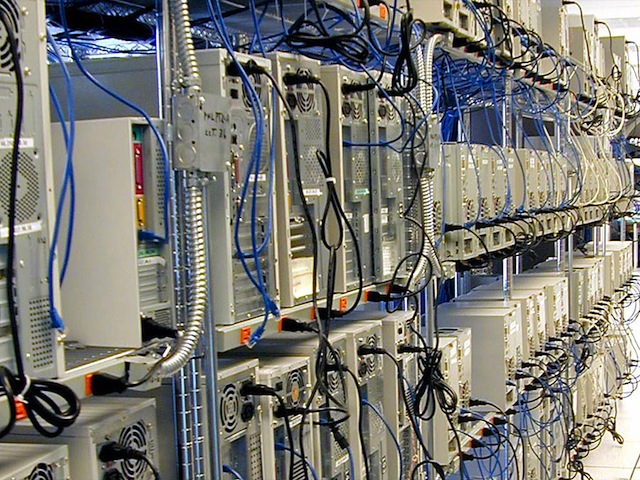
This makes sense, cloud computing is just a way of doing business and different methods work for different organisations.
One of the driving factors is cost, outsourcing your IT requirements to a public cloud company can make sense for a fast growing or cash strapped small business but for a larger organisation it can quickly become expensive.
Those costs though have to be examined carefully. The Wired article itself shows how major expenses can be overlooked in breaking down MemSQL’s expenses.
This past April, MemSQL spent more than $27,000 on Amazon virtual servers. That’s $324,000 a year. But for just $120,000, the company could buy all the physical servers it needed for the job — and those servers would last for a good three years. The company will add more machines over that time, as testing needs continue to grow, but its server costs won’t come anywhere close to the fees it was paying Amazon.
Missing from that calculation is the cost of employing sysadmins to maintain the servers. It’s quite easy to see how the staff expenses could easily eat up the 200,000 dollars a year in hosting costs.
Added to the staff costs are the security and continuity risks — backups, disaster recovery and fallover systems are not cheap and a handful of system administrators won’t have the resources to deal with all the complexities of modern information security.
There are many good reasons not to move a businesses’ IT systems onto the cloud, but it’s best to be careful when evaluating the costs and risks.
It’s necessary to tell compelling stories with the aid of big data and smart algorithms McKinsey’s Joshua Goff told a conference in Sydney two weeks ago.
As part of the recent ADMA Global Forum, the head of McKinsey’s Asia Pacific Consumer Marketing Analytics Center spoke of importance of story telling, big data and personalisation for marketers meeting the challenges of today’s connected marketplace.
Goff sees three disruptions to the current marketing industry – a proliferation of channels, a mountain of raw data to deal with and a hyper-informed consumer. These are challenges which businesses and marketers didn’t have to face in previous years.
To counter these disruptions Goff proposes five actions; develop a four screen strategy, build a content supply chain, broaden personalisation, understand big data isn’t just about data and forget your current marketing mix.
Forget your current marketing mix
“Spending on digital media and non-traditional media is soaring,” says Goff. “We’re recommend to some of our clients to double or triple their spending on these channels.”
Goff showed ASICS’ Support Your Marathoner campaign as an example of how innovative marketers can create digital campaigns that look beyond banner ads and popups. Campaigns like this are critical to building advocacy around a brand.
Develop a four screen strategy
The four screen strategy is essential as consumers are changing how consumers behave, something that is going to accelerate as more screens like Google Glass appear on the market.
“If we have multiple screens is it not reasonable to think when you turn on your TV – and I count the TV as a screen – that they see the same information?” asks Goff. “But recognise that different screens offer different experiences.”
Build a content supply chain
One of the key problems for marketers is feeding content to these screens, which means world class editorial teams will be essential to getting customers’ attention.
“Content is going to be king going forward,” says Goff. “Content is going to be a source of competitive advantage.”
In this mix, user generated content is a key factor as well. One of the examples Goff gave was Disguised Lighting, surprisingly a business to business operation which proves that getting fans as advocates is not just restricted to consumer brands.
Personalisation needs to be broadened
“If you give the customer in return, they will give you the information you want,” Goff states. “Start solving your customer’s problem.”
Personalisation is more than just email, it now means delivering personalised goods and configurable services. The physical experience, such as a Japanese vending machines that tailors the drinks available based on the demographic segment the system identifies the customer as being in.
Big data isn’t just about data
Data is worthless without the algorithms and the APIs required to understand and distribute the information. To do this well, Goff sees data scientists and software engineers as critical which means the global race for talent is going to be particularly acute in these areas.
As an example of big data, and cloud computing, Goff showed Sberbank’s lie detecting ATM machine that issues personal loans based up the applicant’s voice patterns. The device brings together a number of technologies to deliver a personalised experience for customers.
“We can’t afford to wait wait,” warns Goff. “There’s a lot of change and it’s complicated but there are successes and we need to start our own stories.”
At the heart of Goff’s presentation is the fact we live in a noiser world and for brands wanting to cut through that noise they have to offer something more than what has worked in the past.
If an era’s architecture tells us about the times, what do today’s houses tell us about modern society and values?
On Sydney’s North Shore lies a collection of old army bases, from the 1980s onwards the military started moving out and some of the land was handed over as national parks, other parts were converted into office parks or cafes while the disused married quarters were sold off to private home builders.
The old stores and administrative buildings have been adapted into artists’ studios and elegant, if expensive, offices. Overall, that’s been a success which has created quite a thriving businesses and creative community.
old army store converted into an art gallery
Many of the colonial officers’ and NCO’s quarters, impressive sandstone and wood structures, have become offices, restaurants or function centres. Although some are still looking for a purpose.
Old Colonial Military residence
What happened to the functional three bedroom 1960s and 70s brick veneer homes that housed a generation of army brats is less encouraging and tells us much about the times in which we live.
A few of the old post World War II homes remain for Navy families in the still operating, and expanding, HMAS Penguin and these show us the houses that once lined Middle Head Road in Mosman.
1960s Mosman military homeAnother old Mosman military family home
These are perfect examples of the functional family homes that covered Australian suburbia during the 1960s and 70s. While nothing exciting or particularly pretty, they were adequate for their task as baby boomers built their families in the post war prosperity.
When they were sold by the Federal government most those modest family homes on Middle Head were bulldozed to make way for the grey behemoths of the 21st Century.
New grey mosman mansion
Like the Mc Mansions that crowd today’s suburbia, these feature four, five or even six bedrooms with on-suites, multicar garages and games rooms. Just as every child today has to win a prize, every room has to have a plasma TV.
These monuments to the modern consumerist economy triumphantly march along a road that once featured modest homes with gardens, trees and lawns.
Line of grey mosman mansions
In many ways these modern buildings represent the ethos of our time – grey, non-descript, poorly built, overcapitalised and dependent on cheap, never ending debt.
A striking aspect about them is their hostility to the pleasant surroundings and the 1930s mansions that make up most of the street. With their battleship grey, security features and blocky air raid shelter lines they look much more like some sinister military installations than the red brick army homes they replaced.
What’s also notable about these new buildings is many are empty. Some of them are being refurbished, only a few years after being built, and many are undergoing substantial repairs – a testament to how Australian building standards have declined in the past two decades.
Strolling along Mosman’s Middle Head Road its hard not to imagine that if Dorothea Mackellar were writing her iconic My Country poem today, she would have included the lines;
I love a sunburnt country
a land of capital gains
The tragedy for Australia is those old three bedroom houses could have been used by a visionary government to help low income families in Sydney’s increasingly unaffordable suburbs.
There was little chance those modest housing blocks would become anything more than expensive, over capitalised gin palaces for bankers and the city’s well connected business elite who are never slow to see a coal mine or old military property going cheap.
Architecture tells us a lot about our times and the abandoned Middle Harbour army base is a good commentary on the phases of Australian development through the twentieth Century and the beginning of this century.
The houses also tell how Australians see speculating on overcapitalised property as a safer investment than building the technologies and businesses necessary to prosper in this century. How that will turn out remains to be seen.
What will be interesting is how our great-grandchildren see us and our legacy when they look upon the grey, hostile buildings we built to celebrate our good fortune in the early 21st Century.
One of the great challenges in today’s workplace is how organisations will manage Generation Y entering the boardroom.
Lazy, unfocused and high maintenance are some of the descriptions used by boomers when talking about younger workers, but how much truth is there really in that and how do organisations plan for this generation to take leadership positions?
As part of the recent Sydney EMC Forum, I had a chance to discuss the challenges of managing Gen Ys with social researcher Micheal McQueen and EMC Australia Managing Director Alister Dias.
Like many tech companies, EMC has a younger workforce with around 25% of staff being GenY and Diaz sees global thinking and a fresh, bright approach as some of the advantages younger people bring to the workplace.
“We want to see this grow,” says Diaz. “There’s two reasons for this; one is that energy level, quick learning and adaption to the new world but the other is the shortage of general talent in the market.”
That shortage is an early part of the global race for talent, with Diaz seeing the priority for EMC and other tech companies to develop home grown skills rather than importing skilled workers.
Offering a career
For Diaz’s, one of the great challenges in this race for talent is retaining skilled and motivated Gen Y and Gen X through offering more diverse career options.
Career progression is one of the big problems facing both GenY and X workers as, in McQueen’s view, the baby boomers have no intention of going anywhere as many define themselves by their work so they don’t plan to retire.
“For Baby Boomers their work ethic is their identity,” says McQueen. “Stepping back from a leadership position, or any position in general is a big deal.”
Not working huge hours which is a key difference between baby boomers and their GenY kids and grandkids who don’t wear long hours as a badge of honour.
Language barriers
An area that concerns McQueen is a lack of vocabulary as text and social media messaging has eroded the teenagers vocabulary with average 14 year old today only knowing 10,000 words as opposed to 25,000 in 1950.
“It started off as text speak and it’s gone beyond that now,” says McQueen. “If you have a Gen Y person operating with older workers there’s often a disconnect there.”
The effects of electronic gaming and communications also has created a climate where today’s teenagers have less empathy than those of twenty years ago — McQueen cites a University of Michigan study — this has consequences in fields as disparate as sales, technical support and nursing.
Organisations are going to have to learn to deal with these differences. “In our own organisation we talk about the need to adapt to Gen Y,” says EMC’s Diaz. “Personally I think we have to meet them half-way.”
“We’ve found it difficult to get talent. You really have to do your homework on it.”
Part of EMC’s problem in finding skilled Gen Y workers has been the collapse in university IT course enrolments along with the broader turning away from STEM — Science, Technology, Engineering and Mathmetics — related degrees.
Diaz is quite positive on this and sees the pendulum swinging back towards more technical degrees and diplomas with more younger people taking on STEM subjects. At present though enrolment statistics aren’t bearing this out.
Finding those skilled workers is going to be one of the great challenges for business in planning for the rise of GenY workers, one of the greater tasks though might be getting the baby boomers out of the corner office.