Fifteen years later many of those services are closed down or languishing and the founders who were gifted millions of dollars by gullible boards and shareholders have moved on to other pursuits.
It’s difficult to see exactly what Tumblr adds to Yahoo!’s wide range of online properties except a young audience – exactly the reasoning that saw News Corporation’s disastrous investment in MySpace.
“So we’re working hard to get some of the younger folks,” Goldman said on a webcast from the J.P. Morgan Global Technology conference in Boston.
It’s all about trying to “make us cool again,” he said, adding that Yahoo will focus on content that’s “more relevant to that age bracket.”
So they are spending a billion dollars to “make us cool again” – it’s disappointing Marissa Mayer has allowed middle aged male executives to run free with the shareholders’ chequebook in a quest to rediscover their youth.
Like most middle aged life crises, it’s unlikely to end well.
For Tumblr’s founders and investors things have ended well. It’s time to buy those yachts and fast cars those middle aged execs covet.
In the meantime the quest for internet ‘cool’ – whatever that is – will move onto whatever online service teenagers and twenty somethings are using.
Philip Rosedale, the founder of Second Life and various others startups has an interesting take on why San Francisco and Silicon Valley are the centres of the tech startup world.
He puts the region’s success down to the network effect where like minded groups share knowledge and encourage each other.
If you want to create a vibrant start-up ecosystem somewhere else that is competitive with San Francisco and Silicon Valley (and this is starting to happen right now in places such as Boulder and Austin), you want to do two things: You want to pack the people working together into as dense an area as possible, with public areas and co-working venues where they will see each other constantly, even when they aren’t working in the same company. And then you want to encourage them to let down their guard and be as open as possible about what they are doing.
Of course the network effect doesn’t just apply to the Silicon Valley tech startup model, it’s just as true for China’s manufacturing hubs, South Korean shipbuilding or historical centres like Detroit’s motor industry and the English Midlands during the industrial revolution.
We shouldn’t forget that fifty years ago governments sought to to emulate Detroit’s success and a century ago cities strived to be like Birmingham.
That’s something we should keep in mind when looking at ways to emulate Silicon Valley – in trying to copy today’s successes, we may be mimicking a model that has already peaked while overlooking our own unique advantages and the opportunities in new industries.
For cities striving to become world centres of industry, it might be best to first figure out what they do well and then find a way of attracting the smartest people in that field to move there.
Then again, it may just be that most industrial hubs are accidents of history and the best we can do is try to attract smart people to our communities.
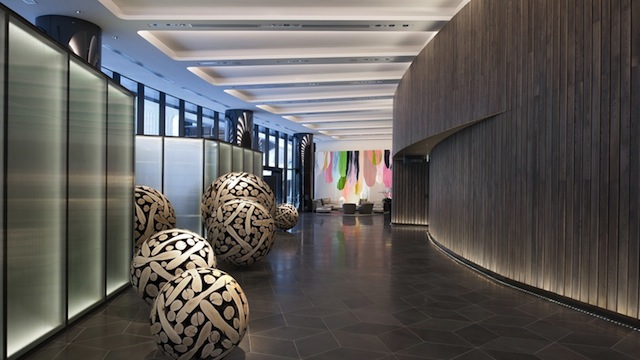
Sitting on Melbourne’s Southbank and tucked in behind the Casino, Crown Metropole is a convenient and comfortable business hotel, particularly if you’re attending conferences at the city’s Exhibition and Conference Centre.
In Sydney, the city’s casino is tucked on an old power station site in an inconvenient location so the locals can – and mainly do – ignore it. Melbourne’s Crown Casino on the other hand, has one of the best locations in the city.
While I’m personally uneasy about the role Crown seems to play in Melbourne’s social and political circles, that location makes the casino’s hotels a very convenient place to stay.
Networking vendor Cisco kindly flew me to Melbourne and put me up in the Crown Metropole hotel, part of the casino complex, for three nights to attend their Cisco Live! conference at the convention centre.
Attending a conference
While Crown Metropole isn’t attached to the conference centre like the Hilton South Wharf, in many ways it’s more convenient being just over the road from the other end of the Melbourne Conference and Exhibition Centre. If your exhibition is in the Eastern end of the building it’s a far shorter walk between the room and the event.
That convenience also translates to seeing the rest of Melbourne with major tram routes nearby and a short walk to Southern Cross Station. For Cheap Charlies, there’s a supermarket and liquor store across the road if you don’t want to partake of the expensive mini bar.
In room facilities
Nice choice of teas in the room
Along with the usual expensive mini-bar, there’s a good range of in room facilities including a nice range of Madame Flavour teas.
In the bathroom there’s also a pleasant range of amenities and very comfortable bathrobes. The bathroom itself has a full size bath to use some of the lotions in.
crown towers hotel room work desk
For the connected traveller though the most important thing are power points and there were plenty available including two easily accessible on the room’s desk. If you need more they are scattered around the room including under the bedside tables.
There’s also HDMI and component video connections to the TV if you want to stream feeds or practice presentations from your laptop. The TV has the standard hotel range of Australian Foxtel channels but lacks some of the international stations.
Wi-Fi is available at an extra charge but I didn’t use it and instead relied on a Telstra 4G hotspot. Some guests did report that they found the hotel’s network could get congested.
Hotel facilities
Outside the room, the hotel has the standard facilities of a five star hotel. The rooftop fitness centre is very nice though while it’s possible to do 25m laps in the pool, it will get crowded during the day. It also appears the gym is open to the public so there will be busy times there as well.
For eating, the first floor has the Mr Hive Restaurant which Cisco were kind enough to host dinner one night. It’s a nice place with good food at standard restaurant prices. Crown has dozens of eating establishments in the complex along with a somewhat expensive food court .
There’s no reason to eat in the Crown complex when its an easy walk into the city for cheaper dining options or down Clarendon Street to South Melbourne. The 96 and 112 trams which stop nearby will take you to St Kilda where there’s no shortage of pubs, cafes and restaurants.
Getting in and out
When it comes time to leave, checkout is easy and the service at all times was professional and courteous. Rooms were made up and cleaned properly. The beds were comfortable and the rooms quiet with very good block out curtains.
Overall, Crown Metropole is a good choice for business travellers attending the Melbourne Conference and Exhbition Centre, it’s also conveniently located for tourists. In all, it’s a good mid-priced hotel.
Peter Kafka of the Wall Street Journal’s All Thing D blog has been closely following Google’s attempts to position YouTube as a successor to television.
Key to that success is getting advertisers on board to spend as much money with online channels as they do on broadcast TV.
To date that’s failed and most of the online ad spend has come at the expense of print media – the money advertisers spent on magazines and newspapers has moved onto the web, but TV’s share of the pie is barely changing and may even be increasing.
The challenges facing web advertising is discovering what works on the new mediums.
McDonald’s modest ad tells a story, flatters viewers by telling them they’re smart enough to go backstage, and still ends up pushing pretty images of hamburgers in front of them. That’s pretty clever advertising sort-of masquerading as something else but not really.
We’re trying to apply old ways of working to a new technology something we do every time a new technology appears.
Moving from silent movies
Probably the best example of this is the movie industry – if you look at the early silent movies they were staged like theatrical productions. It took the best part of two decades for movie directors to figure out the advantages of the silver screen.
Shortly after movie directors figured out what worked on the big screen, the talkies came along and changed the rules again. Then came colour, then television, then the net and now mobile. Each time the movie industry has had to adapt.
It isn’t just the movie and advertising industries facing this problem; publishers, writers and journalists are struggling with exactly the same issues.
Most of what you read online, including this blog, is just old style print writing or journalism being published on a digital platform. Few of us, including me, are pushing the boundaries of what the web can do.
Waiting for Sarnoff
David Sarnoff figured out how to make money from broadcast radio and television in the 1930s with a model that was very different from what the movie industry was doing at the time.
Sarnoff built Radio Corporation of America into the world’s leading broadcaster and the modern advertising industry grew out of RCA’s successful model.
Today both the broadcasting and advertising industries are applying Sarnoff’s innovations of the 1930s to the web with limited success. Just like movie producers struggled with theatrical techniques at the beginning of the Twentieth Century.
Figuring out what works online is today’s great challenge. Google are throwing billions at the problem through YouTube but there’s no guarantee they will be the RCA of the internet.
We may well find that a young coder in Suzhou or a video producer in Sao Paolo has the answer and becomes the Randolph Hearst or David Sarnoff of our time.
Those loom workers in 18th Century Nottingham were the middle class of the day – wages were good and work was plentiful. Then technology took their jobs.
Modern technology has taken the global economy through three waves of structural change over the past thirty years, the first wave was manufacturing moving from the first world to emerging economies as global logistic chains became more efficient.
The second wave, which we’re midway through at the moment, is moving service industry jobs and middleman roles onto the net which destroys the basis of many local businesses.
Many local service businesses thrived because they were the only print shop, secretarial service or lawyer in their town or suburb. The net has destroyed that model of scarcity.
The creative classes – people like writers, photographers and musicians – are suffering from the samee changed economics of scarcity.
Until now, occupations like manual trades such a builders, truckdrivers and plumbers were thought to be immune from the changes that are affecting many service industries.
The third wave of change lead by robotics and automation will hurt many of those fields that were assumed to be immune to technological forces.
One good example are Australia’s legendary $200,000 mining truck drivers. Almost all their jobs will be automated by the end of the decade. The days of of relatively unskilled workers making huge sums in the mines has almost certainly come to an end.
He’s almost certainly right – to the displaced loom worker or stagecoach driver it would have been difficult to see where the next wave of jobs would come from, but they did.
But maybe we also have to change the definition of what is middle class and accept the late 20th Century idea of a plasma TV in every room of a six bedroom, dual car garage house in the suburbs was an historical aberration.
Just like the loom weavers of the 18th Century, it could well be the middle class incomes of the post World War II west were a passing phase.
If so, businesses and politicians who cater to the whims and the prejudices of the late Twentieth Century middle classes will find they have to change their message.