Author: Paul Wallbank

  • Breaking out of the gilded cage – Microsoft’s challenge with Windows

    Breaking out of the gilded cage – Microsoft’s challenge with Windows

    Update: With the announcement that Steve Ballmer will be stepping down as Microsoft CEO, the future direction of the company now becomes the biggest challenge for his replacement.

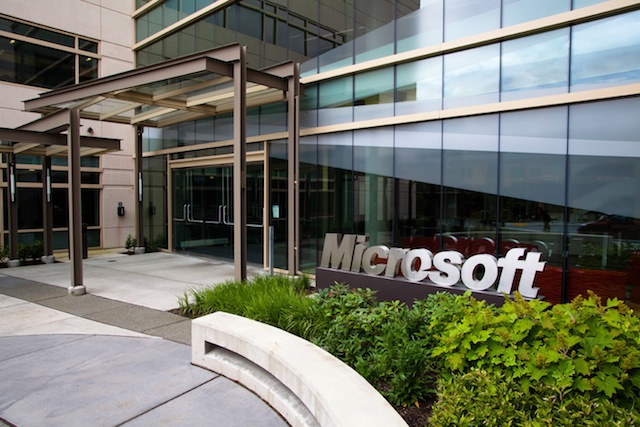
    Over the last three weeks the news for the personal computer industry has not been good. How does Microsoft, the business that leads the sector, move on from the product which has been its mainstay?

    Three stories in the last three weeks have shown how dire the situation is for personal computers, Windows and Microsoft.

    Consulting firm IDC’s report that global PC sales had dropped a stunning 14% was a clear signal the PC era is ending.

    A Gartner report two weeks ago warned that Microsoft faces a slide into irrelevance as Android device sales dwarf Windows’ numbers and Apple sales catch up with PCs.

    Industry commentators Asymco made similar observations about the state of the PC industry noting that Apple takes 45% of all profits from an industry that is in decline.

    In the past Microsoft has responded quickly to industry threats, one of the great management feats of the 20th Century was Bill Gates’ turning the company around to meet the challenges of Netscape and the newly popular internet.

    So how can Microsoft meet the challenges of today’s much more competitive world, while protecting their impressive revenues and profits?

    Replace the management

    Steve Ballmer was employee number 30 at Microsoft having been hired in 1980. Since his appointment as CEO in 2000 the company’s stock price has wallowed.

    Regardless of Ballmer’s performance, 13 years is a long tenure for a CEO in an industry that has radically changed in the last decade. A new perspective in the executive suite may well help the company leverage its strengths and weaknesses.

    Microsoft’s management problems shouldn’t just be blamed on Ballmer however, a stunning Vanity Fair profile of the company last year blamed human resources policies, specifically ‘stack ranking’ employees, for poor performance.

    Overhauling the company’s notoriously siloed management would give Microsoft much more flexibility in meeting the cloud and mobile challenges to its business.

    Ditch Windows

    At the core of Microsoft’s success is the Windows operating system which in 2012 delivered a quarter of the company’s revenue but has reported no growth for two years in a stagnating PC market.

    It is still a cash rich business though and as a stand alone entity, the operating system division could still be an attractive private equity investment.

    The story of Michael Dell’s attempt to take his company private is instructive as investment companies fight for a stake in a business with a turnover is less than Microsoft’s Windows division and far less profits.

    Double down on Windows

    The counter view to floating the Windows division is to double down and concentrate on the company’s core business. While the PC industry is fading, the need for embedded systems in machines is growing.

    Microsoft though hasn’t executed well with non-PC operating systems – the continued failure of tablet versions of Windows XP is a good example – so it may mean a new management team to guide the company down this path.

    Claim the cloud

    The biggest cash generator for Microsoft is their business division that includes their Office and Dynamics products. These are most at risk by the market’s move to cloud services.

    Paradoxically, Microsoft has a track record on the cloud products having acquired Hotmail in 1997, developed the Azure platform and taking steps to move its business products across to Office 365.

    Microsoft’s experience with Hotmail is instructive of the company’s uncertainty with cloud services having renamed the product constantly. Currently its incarnation as Outlook.com indicates further integration with Office 365.

    With a focused management, Microsoft may well be able to compete against both Google and Amazon on the cloud by leveraging its traditional market strengths and its army of evangelists, developers and support partners.

    Buy Nokia

    So far the alliance with Nokia has been underwhelming with Windows Phones being met with market indifference.  A purchase of the struggling mobile phone giant would give Microsoft more depth in understanding the mobile marketplace.

    A more interesting aspect of Microsoft buying the mobile vendor would be the acquisition of Nokia’s mapping technology. This would give Microsoft an advantage over Apple and give them an opportunity to compete with Google in the still developing mobile and local markets.

    For Microsoft, sticking with the status quo is tempting – a business with seventy-three billion dollars income and $17 billion in profits still makes it one of the world’s most impressive businesses.

    The risk though is all of the company’s major revenue streams are being challenged by mobile and cloud service and Microsoft have to adapt to a world very different to the one they grew in.

    As Gartner have pointed out, the company risks becoming irrelevant in an era of mobile devices accessing cloud services.

    The Challenge for Microsoft’s management and board is to find the spark that keeps the company relevant in a marketplace where the company is no longer the dominant player.


    Similar posts:

  • Moving to a subscription economy

    Moving to a subscription economy

    One of the biggest changes in business is the move to subscription based services rather than selling one-off, lump sum products. This is affecting industries ranging from the motor industry to software.

    Business Spectator has a good interview with Tien Zhou of Zuora on the subscription economy and how it’s changing the business world.

    We’re pretty passionate in our belief that every company will be a subscription business in the next five, 10, 20 years. That’s certainly what we’re seeing with digital companies, whether they are technology firms (software, hardware), media and publishing firms, or telecom companies. The ideas of content and access are starting to blend together and we are seeing more and more commerce companies dip their feet as well. So we’re really see this as an across the board phenomenon.

    Probably the industry most focused on the subscription model right now are newspapers – subscribers have always been an important revenue stream for the print media and the loss of their advertising rivers of gold means they are looking at ways to get more money from readers.

    As Tien Zhou points out, businesses moving to subscription services is an across the board phenomenon.

    Yesterday I mentioned the Google Maps connected treadmill, that is a subscription model where the treadmill seller gets money from the initial purchase, but also a revenue stream from the services attached to it.

    The same business model applies to connected motor cars or the social media enabled jet engine. The aim is to replace lump sum purchases with lifetime subscriptions.

    Getting customers onto lifetime subscriptions has been one of Microsoft’s aims for the past decade as the company realised that software users, particularly those using Microsoft Office, hung onto their CDs for years and increasingly decades.

    Perversely it took Google and Apple to show Microsoft how to wean customers onto subscription services.

    That Microsoft Office is a good example of the evolution of subscription software, or Software-as-a-Service (SaaS), isn’t an accident. The enterprise computing sector is currently the most profoundly affected as companies like Google and Salesforce threaten high cost incumbents.

    A good example of the changing economics of software is the supermarket chain Woolworths moving onto Google Docs.

    With 26,000 seats, the reseller can expect to make $260,000 a year in commissions based on Google’s standard terms of $10 per seat per year.

    That total sum is less than the commission a salesperson would have earned for a similar sized IBM, Oracle or Microsoft installation.

    A whole generation of IT salespeople who’ve grown fat and comfortable on their generous commissions now find their incomes being dramatically reduced.

    Similar things are happening in industries like call centres with Zendesk, point of sale systems and event ticketing with Eventbrite – incumbents are finding their incomes steadily being eroded away by online services.

    At the same time agricultural and mining equipment suppliers are introducing big data services for their customers where the information gathered by the sensors built into modern tractors and bulldozers are providing valuable intelligence about the crop and ore being gathered.

    The subscription business model is nothing new, King Camp Gillette perfected the strategy with the safety razor at the beginning of the Twentieth Century. The razors were cheap but the blades were where the money was.

    Microsoft and the rest of the software industry tried to introduce subscriptions in the late 1990s with Software as a Service, but failed because the internet wasn’t mature enough to support the model. Today it is.

    Like many things in today’s economy, the subscription model is going to change a lot of markets. It’s a great opportunity for disruptive businesses.

    Subscription envelope image courtesy of jaylopez through sxc.hu

    Similar posts:

  • Why Australia needs foreign ownership

    Why Australia needs foreign ownership

    Such are the vagaries of radio that I’ve been asked to comment on ABC Radio South Australia about foreign ownership based on an article that was picked up by The Drum 14 months ago.

    That article was written shortly after Dick Smith came out grumbling about the prospect of Woolworths selling the electronics store chain named after him to foreign interests.

    My point at the time was that foreign owners would be preferable to some poorly managed, undercapitalised local buyer as the Australian retail industry – even in a declining market like consumer electronics – needs more innovation and original thinking.

    As it turned out, Dick Smith Electronics was sold to Anchorage Capital, a private equity turn around fund with an interesting portfolio of businesses.

    In the meantime, the argument about foreign ownership of property and businesses, particularly farms, has ratcheted up as opportunistic politicians and the shock jock peanut gallery that sets much of Australia’s media agenda have found a cheap, jingoistic issue to score points from.

    So why is foreign ownership of businesses like farms, mines and factories important for Australia?

    A fair price for hard work

    The main reason for supporting foreign buyers for Aussie businesses is it gives entrepreneurs a chance to get a fair price for their hard work.

    A farmer or factory owner who builds their business shouldn’t have to accept a lower price because Australians don’t want to pay for the asset.

    It’s not a matter of being able to pay Australians as have plenty of money to invest – a trillion dollars in superannuation funds and three billion dollars claimed for negative losses in 2009-10 show there’s plenty of money around – it’s just that Aussies don’t want to invest in farming, mining or other productive sectors.

    We’re already seeing this play out in the small business sector as baby boomer proprietors find they aren’t going to sell their ventures for what they need to fund their retirement.

    Access to capital

    Should the protectionists get their way then the businesses and farms will eventually be sold to undercapitalised Australian investors at knock down prices.

    This is the worse possible thing that could happen as not only do the entrepreneurs miss out, but also the factories and farms decline as they are starved of capital investment.

    Cubby Station

    A good example of both the lack of capital affecting investment and finding a fair price for ventures is Queensland’s Cubby Station.

    While I personally think Cubby Station is an example of the economic bastardry and environmental vandalism that are the hallmarks of the droolingly incompetent National Party and its corrupt cronies, the venture itself is a good example of why the agriculture sector needs foreign investment.

    Having been converted from cattle to cotton in the 1970s, Cubbie grew as successive owners acquired water licenses from surrounding properties.

    Eventually the company collapsed under the weight of its debts in 2009 and the property was allowed to run down by the administrators until it was bought by Chinese backed interests at the beginning of 2013.

    At the time of the acquisition, the company’s former chairman told The Australian,  “on reflection, I would go into those things with an even stronger balance sheet — in other words, with less gearing.”

    In other words, the company was under-capitalised.

    Competition concerns

    Another reason for encouraging foreign ownership is that Australia has become the Noah’s Ark of business with duopolies dominating most key sectors.

    Bringing in foreign owners at least offers the prospect of having alternatives to the comfortable two horse races that dominate most industries.

    The property market

    An aspect that has excited the peanut shock jocks has been the prospect of Chinese buyers purchasing all the country’s property.

    For those of us with memories longer than goldfish, today’s Chinese mania is almost identical to the Japanese buying frenzy of the late 1980s.

    Much of what we read about the Chinese buying homes is self serving tosh from property developers and real estate agents and what mania there is will peter out in a similar way to how the Japanese slowly withdrew.

    This isn’t to say there shouldn’t be concerns about foreign ownership – tax avoidance, loss of sovereignty and Australia’s small domestic market are all valid questions that should be raised about overseas buyers, but overall much of the hysteria about foreign ownership is misplaced.

    What Australians should be asking is why the locals aren’t investing in productive industries or buying mining and farming assets.

    The answer almost certainly is that we’d rather stick with the ‘safety’ of the ASX 200 or the residential property market.

    We’ve made our choices and we shouldn’t complain when Johnny Foreigner sees opportunities that beyond negative geared investment units or an tax advantaged superannuation fund.

    Similar posts:

  • Australia’s economic Hari-Kari

    Australia’s economic Hari-Kari

    The Golden Era of Credit is Now Over” writes Maximillian Walsh in the Australian Financial Review today.

    Max’s story relies mainly on the April edition of Bill Goss’ monthly newsletter where the founder of investment firm PIMCO writes about the talents of today’s market wizards;

    All of us, even the old guys like Buffett, Soros, Fuss, yeah – me too, have cut our teeth during perhaps a most advantageous period of time, the most attractive epoch, that an investor could experience.

    The credit boom of the last fifty years created many winners – investment bankers, property owners and those who sell things funded by easy finance.

    One of the best examples of a fortune made through easy credit is Australia’s Gerry Harvey. Here’s one of Gerry’s ads from 1979.

    Hurry into Norman Ross. You can use Bankcard or our easy credit system. You can even use cash!

    Three years later Gerry was sacked from the business he founded and he set up Harvey Norman, promising John Walton and Alan Bond “I’m going to beat you.” By the end of the 1980s he had.

    Gerry’s success is built on easy credit and the rise of the consumerist economy. From the hire purchase plans of the 1960s, the introduction of credit cards in the 1970s and the banking deregulations of the 1980s, Gerry was able to sell goods to eager consumers who could worry about paying later.

    In the 1990s and 2000s a happy coincidence of easy credit and cheap Asian manufacturing – note the prices of electrical goods in that 1979 commercial – saw businesses like Harvey Norman grow exponentially.

    Mao promised the Chinese a chicken in every pot, Gerry delivered a plasma TV in every Australian bedroom.

    Today, as Bill Goss says, the credit party is over. Last drinks were called with the failure of Lehman Brothers on September 16th, 2008.

    However this hasn’t stopped the Aussie economy, as the Sydney Morning Herald reports today Sales growth cheers Gerry Harvey.

    In the same edition the SMH reports the government science organisation, the CSIRO, is cutting hundreds of staff. Notable in that article is a comment from the organisation’s CEO;

    Dr Clark said more than 2000 companies collaborated with CSIRO but that industries were reducing the amount spent on research.

    So at a time when the Australian economy is struggling with the effects of a high currency and exhibiting all the symptoms of the Dutch Disease, consumers are spending more on TVs and sofas while business cuts investment in research and development.

    Karl Marx famously predicted that the last capitalist will be hanged with the rope they sold, Australians have a bunch of Harvey Norman branded credit cards for their financial seppuku.

    Similar posts:

  • Can maps change the way we work?

    Can maps change the way we work?

    “Work the Way You Live” is Google’s motto for their enterprise maps service which the search engine giant hopes to make as ubiquitous in business as it is in the home.

    At Google Atmosphere the company showed off their mapping technology and how it can be used by large organisation. It’s a compelling story.

    The technology behind Google Maps is impressive – twenty petabytes of images, one billion active monthly users, 1.6 million map tiles served every second and a target of getting those tiles onto the users screen within ten milliseconds.

    Maps are one of the Big Data applications that cheap computing makes possible, until a few years ago even desktop computers would have struggled with the sort of mapping technology that we take for granted on our smartphones today.

    Rethinking products

    google-street-view-enabled-treadmill

    Adding mapping technologies to products allows businesses to rethink their products. A good example of this is the internet connected treadmill.

    Using the treadmill a jogger, or a walker, can map out a route anywhere in the world and the screen will show them the Google Street View as they travel along the route. The treadmill even adjusts to the changing gradients.

    The Google Maps driven treadmill is a trivial example of the internet of machines, but it gives a hint of what’s possible.

    The search for truth

    ground-truth-and-google-maps

    The success of a map depends on whether it can be trusted – this is what caught Apple out with their mapping application which was released before it was ready for prime time. Google, and most cartographers, take seriously errors and changes.

    In the early days of Google Maps, the company would pass errors and changes onto the private and government mapping providers they licensed the data from. It could take months to fix a problem.

    “It was really hard, you have to get maps from all over the world to create the product,” says Louis Perrochon, the Engineering director of google maps for business.

    “That’s a limitation if you work with third party data so we started a project called Ground Truth where we build our own maps.”

    Google pulls together its Street View data, satellite images and information sent in from the public through their Map Maker site and the Maps Engine Lite to build an accurate map of an area.

    Changing consumer behaviour

    Having accurate and accessible maps has changed the way consumers have behaved; “this revolution hasn’t happened slowly,” says Google Enterprise Directore Richard Suhr, “it’s happened really quickly.”

    “Customers have become savvy about spatial. What this means is that businesses are starting to rethink the problem.”

    “What are the exciting things I can do with maps, what else can I do with my data.”

    That’s a big question of all businesses – how they use the massive amount of information in their organisation will mark the winners from also runs over the next decade. Maps are one way to visualise their data.

    While Google Atmosphere was a marketing event for the companies mapping technologies the message is clear – mapping is changing the way we work and play and it’s affecting business.

    How is mapping changing the way your business works?

    Similar posts: