Author: Paul Wallbank

  • Fire and be dammed, the poor management at tech companies

    Fire and be dammed, the poor management at tech companies

    Microsoft manager Adam Orth has joined the ranks of those fired after some poorly thought out comments found their way onto the Reddit discussion boards. The firing of Orth illustrates a weakness in the management of tech firms.

    Orth’s firing follows the “forked dongle” affair where two developers lost their jobs over sexist comments at an industry conference.

    What’s notable in all these firings is how Playhaven, SendGrid and Microsoft’s management all summarily fired their employees for what at worse could be described as a ‘lapse of judgement’.

    One of the conceits of modern management is that risk can be eliminated, the mark of a poor manager is to act quickly to get rid of anything that could potentially be a risk.

    These tech companies are good illustrations of this – neither Adam Orth, Adria Richards or the Playhaven developer deserved to lose their jobs over this, all it required was an apology and commitment to be more careful about what they post on the public internet in future.

    All of us, including the sensitive and incompetent firing managers, have something on the internet that could embarrass us or our employers. In an era where people are quick to take offense, it’s easy for something taken out of context to spin out of control.

    That’s a risk beyond the control of middle managers at software companies.

    Hiding from risks or attempting to purge them is not the way to run an organisation. Strong, good managers can do better than that.

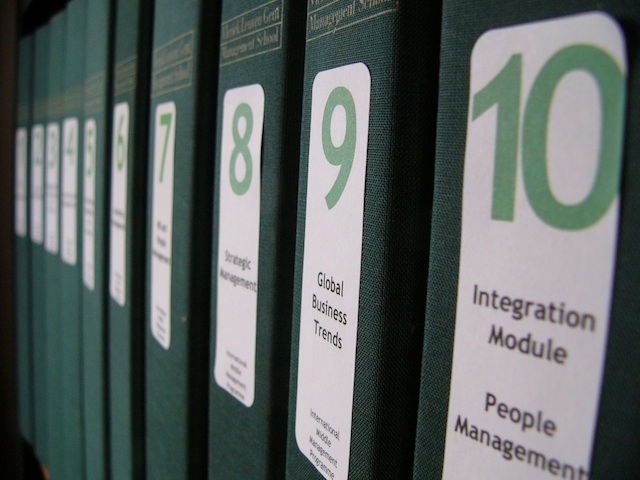
    Management manual image by Ulrik through SXC.hu
    Similar posts:

  • Hurtling into the post PC era

    Hurtling into the post PC era

    Consulting firm IDC quarterly report on PC shipment figures this quarter shows a stunning 14% drop of global computer sales. On those numbers, the PC era is definately over.

    Across the board the figures are horrible with double digit declines across the board. Market leader HP reported PC sales had fallen by nearly a quarter yet they retained their market lead as all of their competitors reported similar falls.

    What’s also notable is the PC industry’s ultrabook attempt to wean consumers off cheap nebooks has backfired terrible, as the analysts note;

    Fading Mini Notebook shipments have taken a big chunk out of the low-end market while tablets and smartphones continue to divert consumer spending.

    Instead of buying higher priced ultabooks, consumers have abandoned portable PCs altogether and gone to smartphones or tablet computers.

    The PC manufacturers must be rueing how they let the tablet computer market slip through their fingers during the 2000s.

    Failing to ship decent tablet computers is symptomatic of a bigger problem for the PC manufacturers – their inability to innovate.

    The PC industry is struggling to identify innovations that differentiate PCs from other products and inspire consumers to buy, and instead is meeting significant resistance to changes perceived as cumbersome or costly.

    As IDC point out, even if they do introduce new products, consumers are wary that any “innovation” is going to be cumbersome. Basically the PC manufacturers have lost their customers’ trust.

    How this affects Dell’s proposed buy out remains to be seen; it’s hard to see how investors would not be concerns at a 10% fall in sales, although Dell was one of the better performers.

    For Microsoft, this news should further accelerate their moving products and customers to their cloud and enterprise products. For their Windows division it looks like there are tough times ahead.

    The decline of the PC market is itself a study in product and innovation cycles. It could well be that the personal computer is going the way of the fax machine.

    For some businesses that will be tragedy, but the market – and the opportunities – move on.

    Similar posts:

  • They do it different over here

    They do it different over here

    Among expats in Thailand the saying was “the locals can ignore the law, but multinationals can’t.”

    Thailand has some pretty strict laws on employee wages, workplace safety and council permits. Pretty well every business ignores them except the multinationals.

    Generally Thais don’t complain about businesses not complying with the rules and the authorities are reluctant to take action.

    Unless you’re a multinational, in which case the slightest irregularity in pay risks a visit from the police.

    A few days in the Bangkok Immigration Gaol while the misunderstanding is sorted out is a good lesson for any sloppy farang country manager who hasn’t been ticking all the boxes.

    The recent protests in China against Apple and now Microsoft over warranties illustrate a similar situation in the PRC.

    What’s fascinating though is how the complaints against Microsoft and Apple are part of the rising Chinese consumer movement.

    It’s a tough life being a consumer advocate in China, leading protests against well connected local companies or their government cronies could be a career limiting move, or much worse.

    On the other hand it’s safe to criticise an American corporation and its much more likely to get results.

    So managers of foreign companies in China have to be far more responsive to complaints than their local counterparts as Apple and Microsoft have learned.

    For multinationals there is an upside to this, foreign companies tend to get better staff as they don’t mess people around with pay and their products are seen as being better because they do honor warranties.

    It ends up being swings and roundabouts, but it does emphasise the traps for inexperienced expat managers who can unwittingly get themselves in trouble.

    Apple and Microsoft have learned their lesson about customer service in China, you wonder how many others are still to do so.

    Similar posts:

  • is G’day China a good idea?

    is G’day China a good idea?

    Yesterday’s announcement by the Prime Minister’s  of an Australia Week in China may prove far more successful than the G’day USA events the idea is based upon.

    G’day USA has been run for a decade and showcases Australia’s attractions, skills and businesses at events in Los Angeles and New York.

    It’s been moderately successful but an emphasis on movie stars appearing at black tie Hollywood events illustrates Australian governments’ disproportionate focus in throwing money at US movie producers.

    If China Week follows the US example we can expect private, exclusive dinners where Twiggy Forrest, Clive Palmer and the BHP board entertain Chinese plutocrats over bowls of shark fin soup and braised tigers’ testicles.

    Should China Week follow that model then it will probably share G’day USA’s middling successes.

    The opportunity to do it differently though is great as the Chinese-Australian relationship is far younger and hasn’t been locked into Crocodile Dundee type stereotypes on both sides.

    As the Chinese economy matures and evolves, there’s an opportunity for Australian businesses and industries which haven’t been available for exporters to the US.

    Done properly, G’day China could help the profile of Australian businesses in many sectors, particularly in those affected by the great Chinese rebalancing.

    Let’s hope they do it properly.

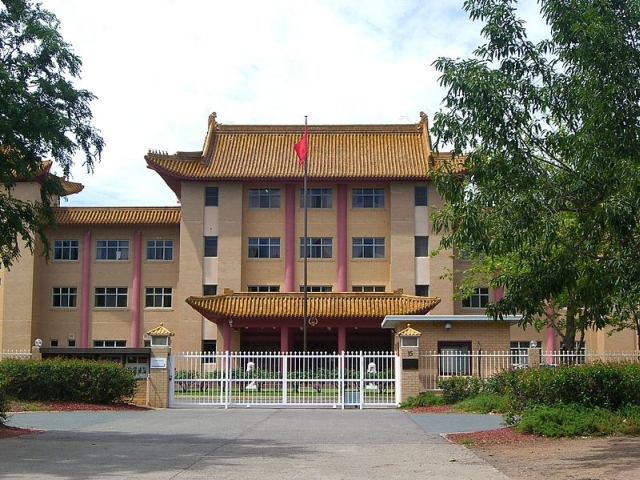
    Image of the Chinese embassy in Canberra, Australia from Alpha on Wikimedia

    Similar posts:

  • Tasmania and the travelling circus

    Tasmania and the travelling circus

    “We bring in almost everything,” says V8 Supercars director Mark Perry as he guided journalists around Launceston’s Symonds Plains racing track.

    Everything Mark showed us – a fleet of trucks, communications equipment, hospitality tents and the racing teams themselves would be packed up on Sunday night, shipped to Melbourne and flown to New Zealand for the next race.

    The V8 Supercar management are very proud of their work, and they should be given the massive task they have, but it exposes a weakness in the Tasmanian economy in that almost all the high value employment and equipment has to be flown in.

    Quiet times in downtown Launceston

    Arriving into Launceston on the Friday before the races, it’s interesting how little hype there is around the event. In Sydney, San Francisco or Cannes there would be banners and flags around the city welcoming visitors, in Launceston there’s almost nothing despite the race meeting being one of the state’s biggest events.

    It was also surprising how there were no downtown events to complement the main attraction.

    Almost every major sporting event from the Olympic Games and FIFA World Cup to the AFL Grand Final and Australian Open has some inner city satellite venues with big screens for the locals who can’t make it to the stadium.

    Having those satellite events adds to the buzz and hype in the host city. Something that downtown Launceston needs at 7pm on a Friday night.

    That lack of support by the community is notable, particularly in light of the $600,000 per year the cash strapped Tasmanian government pays in subsidies for the V8 Supercars.

    I’m against government support for events like these, but if that money is going to spent it may as well be spent properly to maximise the economic benefits.

    Subsidies like this would be even better if they were part of some grander economic plan, but like all the payments given to the film production, motor manufacturing and other industries, they are based more on populism than any strategy – the politicians may as well be giving free beer out in Launceston’s main street.

    Why the community support is so tepid for the Supercars event is so tepid is something I’m going to be exploring in the next few days as I meet various business leaders in Launceston and Hobart to hear how the state is positioning itself in the 21st Century.

    In the meantime, the V8 Supercars “travelling circus” has moved on, hopefully Tassie will have some more long term jobs to show for it.

    Paul travelled to Tasmania and the V8 Supercars courtesy of Microsoft Australia

    Similar posts: