The stakes are high, companies like Amazon have built their business models on basing themselves in low tax jurisdictions while many bricks-and-mortar retailers have complained they are at a disadvantage compared to out-of-state or international suppliers.
For consumers a few dollars in avoided tax isn’t the main reason they shop online, most internet shoppers cite a better range, convenience and, in many cases, superior service as the reasons they buy over the web.
But it is clear the online retailers do get an advantage over local stores.
While provincial governments cite protecting employment in their regions as part of the motivation for trying to tax online sales, the bigger issue is the desperate search for sources of revenue to balance cash strapped state and local budgets.
Those budget requirements aren’t going to ease – the global economy is restructuring in a way that doesn’t favour 19th Century levies like sales tax or stamp duty, while aging populations and declining incomes are increasing demands on government services.
With governments caught in a pincer of rising costs and falling revenues, it’s not surprising they are trying to find ways to get more money.
It’s not clear though they’ll win this battle though, the Senate vote is a symbolic gesture and the difficulties of being able to tax all forms of internet commerce can’t be underestimated.
The struggle ahead for local governments also can’t be understated, the public demands more services while administrators have to deal with rising infrastructure costs and the pension liabilities of retired public servants, teachers, firefighters and police.
Even the bravest politician struggles to find the political capital needed to deal with that challenge.
How we tax the internet is going to be a task that will define our governments and society in the first half of this century. We’re going to have to think very carefully about the choices we have ahead.
It seems the company’s dropping Google Reader into the deadpool proved the final straw for many of the tech early adopters who’d invested too much time building their feeds and other digital assets only to find services taken away from them.
Google are suffering corporate Attention Deficit Disorder (ADD) where management find a bright shiny thing, play with it for a while then get bored and wander off.
This is trait particularly common amongst cashed up tech companies. In the past Microsoft and Yahoo! were the best examples, but today Google is the clear leader in the Corporate ADD stakes.
Corporate ADD requires a number of factors – the main thing is a big cash flow to fund acquisitions.
In companies with this luxury, bored managers find themselves looking for things to do with all the money flowing through the door and when a hot new product or market sector appears those executives want to be part of it.
So a company gets acquired or a project is set up and the advocate drives it relentlessesly within the corporation, usually with lots of PR and write ups in the industry press.
Then something happens.
Usually the advocate – the manager or founder who drives the project – gets bored, promoted or sacked and the project loses its driving force within the organisation.
Without that driving force the service stagnates as we saw with Google Alerts or Reader and eventually company closes it down.
This has unfortunate effects on the marketplace, users invest a lot of time in the company’s service while innovators in the affected market struggle to get funding as the investors say “we can’t compete with Google’.
A changed perspective
What’s interesting now though is the sea-change in the attitude towards Google’s Keep announcement – rather than dozens of articles describing how competing services like Evernote are doomed in the face of the search engine giant entering their market, most are saying this validates the existing startups’ investment and vision.
More importantly, most commentators are saying they are going to stick with the services they already use because they no longer trust Google to maintain the product.
This is what happens when you lose the trust and confidence of the market place.
One of the mantras of the startup community is “focus” – focus on your product and the problem you want it to fix. That large businesses lack that focus shows how far from being a lean startup they have become.
Google’s real challenge is to regain that focus. Right now they have rivers of cash flowing through their doors but in an age of disruption, it may well be that they could dry up if no-one pays attention.
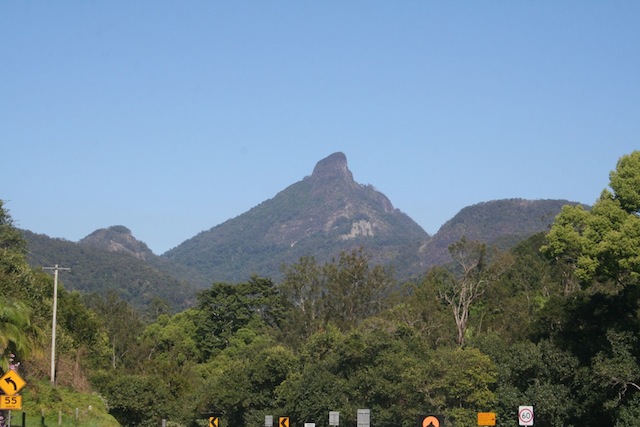
Nestled in the caldera of a long extinct volcano on the New South Wales – Queensland state border, Mt Warning is one of the spectacular and quirky geographic features of Australia’s East Coast which boasts being the first place on the continent to see the sunrise*.
Climbing Mount Warning is doable as a day trip from the Gold Coast, Byron Bay or even Brisbane but to get the best experience staying a few nights in the surrounding rainforests is a good idea, particularly in warmer weather when it’s not a good idea to climb mountains in the middle of the day.
Mount Warning Rainforest Park is a private campsite on the road to the mountain offering cabins, powered caravan sites and unpowered campsites.
Camping sites
Unpowered camping sites
We stayed in an unpowered camping site during the September school holidays. Despite it being a busy period, there was plenty of space available and each site had its own campfire. It’s up to you to get the wood.
The sites are comfortable and the ground isn’t too hard for tent pegs. Be warned that it can get cold at night depending on the season.
Beware of snakes!
As the site is in a rainforest, be prepared to meet some of the locals. There’s no shortage of brush turkeys, snakes, lizards and frogs around the grounds so tread carefully at night and don’t leave food lying around.
There are some less desirable locals as well and while the campsite does seem safe, the Mt Warning carpark does have a reputation for thieves. So keep valuables locked away and out of site.
Amenities
There’s plenty of powerpoints and free gas stoves at the camp kitchen, so there’s no problem with charging devices and cooking dinner.
The campsite kitchen with powerpoints.
Some large, ex-commercial fridges are available for residents to store food. Make sure you mark what’s yours and hide anything like chocolates, wine or beer as any communal storage is going to see those things walk.
The camping area toilet blocks are clean and pretty well maintained, although the hot water controls for the showers can be difficult to figure out.
Be prepared for a cold shower until you manage to get the buttons working. The buttons are also outside the shower cubicles so try and grab the stall closest to the controls so you can lean out and press them mid-wash.
Swimming pool and games room
Should the weather turn bad – the area is a rainforest – there is a games room has some basic arcade games ($2 a time), pool table and TV for shelter. Outside is a small, well-maintained swimming pool that’s handy for cooling off in the warmer weather.
It’s safe to say the wi-fi hotspot has become the modern campfire.
Outside the site’s reception is comfortable porch which has seats, coffee tables and free wi-fi. You can expect to find guests on their laptops and iPads at all hours checking email and Facebook posts. There’s also a couple of handy power outlets.
Mobile phone coverage is patchy in the district so don’t expect reliable phone communications or fast mobile data. The site has a Telstra payphone that’s accessible at all times.
Service
The site is family run and service is homely, the office isn’t always occupied so it’s sometime necessary to rouse some office help.
One of the missed opportunities is catering to the gathering of people accessing the wi-fi hotspot, offering drinks and snacks past the office’s 6 o’clock closing time would be nice.
Provisions
The office sells basics and snacks but for serious shopping it’s best to call in at Murwillumbah twenty minutes away which has all the major supermarket and shopping chains. There’s also camping supply stores if you’ve lost or forgotten anything.
Coming in from the West, Kyogle has a small choice of supermarkets while the local village of Uki offers a picturesque pub and general store.
Attractions
While climbing the mountain is the main attraction, there’s plenty of other things to see.
Being Australia’s capital of ‘alternate lifestyles’ there’s no shortage of yoga and healing centres. The hippy capital of Nimbin is picturesque 45 minute drive south.
The Border Ranges and the Gold Coast Hinterland are also worth exploring in their own right with some spectacular scenery and the campsite makes a good base for explorers.
Transport
Like most of rural Australia, there’s little public transport. There is a train service to Kyogle and frequent coaches to Murwillumbah from Brisbane, Sydney and the Gold Coast. A local bus passes the Mt Warning turn off once every weekday and its a fifteen minute walk to the campsite.
Rock sculptures in the creek on the way to Mount Warning
The best way of getting to Mount Warning is by car, taxi or to hire a bike in Murwillumbah. On the way to the campsite you’ll pass a creek where people have build various sculptures out of the rocks.
Costs
The cost for a family of four camping was $50 per night. There’s no extra charge for showers or cooking facilities.
Overall, the Mount Warning campsite is a good, economical place to stay for those happy to sleep out and enjoy the rainforest.
*While many say Mount Warning is the first place on the Australian mainland to see the sunrise, in the summer months parts of southern NSW see the sun earlier due to their latitude. If you count all Australian territories, then various small uninhabited rocks along with Lord Howe and Norfolk Islands see the sun first.
“Nobody got girls on the helpdesk” says Mikkel Svane, founder of online customer service company Zendesk.
Mikkel hopes to make customer service sexy again as businesses find they have to focus on keeping clients happy.
This is a reversal of management thinking of the 1980s where, as Mikkel says, “customer service is a cost centre, outsource it, don’t spend any time on it and don’t let customers steal any of your time.”
Now the internet gives customers to tell the world about a company’s service, the days of outsourcing or disregarding support are over.
Mikkel Svane and Michael Hansen of Zendesk
Cloud technologies are changing how software is used in business, as Mikkel found when he and his partners started Zendesk.
It became very obvious that building something that was easy to adopt, web based and integrated with email, websites. Something easy to use that didn’t clutter the customer service experience.
Something that moved from managing the customer service experience to focusing on customer service.
We built it, put it out there and customers starting coming.
A lot of these companies thought they could never implement a customer service platform. Suddenly small companies found they could compete with bigger competitors.
The appeal to investors
Having customers signing up proved to be a big advantage in Silicon Valley, no-one knew anything about a Danish company, but with local customers starting coming on board US Venture Capital firms understood what the company does.
That customer base proved powerful as Zendesk has to date raised $84 million dollars over four rounds of VC funding and is looking at a stock market float with an IPO in the next few years.
“Silicon Valley has a great tradition of building businesses.” Says Mikkel, “coming to Silicon Valley was such a big step for Zendesk, in taking it from being some little startup to being a real company that could scale very quickly.”
A question of scale
Groupon is a good example, when Mikkel and his team first met the Groupon team the group buying service was a team of four guys in Detroit. Groupon founder Andrew Mason personally signed off on the initial Zendesk subscription.
“What the hell is this company, we don’t get it.” Mikkel said at the time.
Three years later Groupon was the fastest growing company in history with thousands of support agents on their systems supporting hundreds of thousands of products.
Despite Groupon’s recent problems, Svane is proud of how Zendesk helped the group buying service with growth that no business had seen before.
“With Zendesk they got not only a beautiful, elegant system they also got the scale and the trajectory. Imagine if they’d tried to do that with an Oracle database? You’d have never been able to grow so quickly.”
On being a good internet citizen
In the past we talked about platforms – the Oracle platform, the Microsoft plaftorm – today the Internet is the platform.
“We are a good citizen on the Internet platform,” says Mikkel. “Shopify is a good citizen of the internet platform, these type of tools are easy to integrate. We are all good citizens of the Internet platform.”
Having these open system is the great power of the cloud services, they way they integrate and work together adds value to customers and doesn’t lock them into one company’s way of doing things.
The threat to incumbents
Vendor lock in has been a curse for businesses buying software. The fortunes of companies like Oracle, Microsoft and IBM have been built holding customers captive as the costs of moving to a competitor were too great.
Cloud services like Zendesk, Shopify and Xero turn this business model around which is one of the attractions to customers and it’s why huge amounts of money are moving from legacy solutions to cloud based services.
Another reason for the drift to cloud services is the reduction in complexity, the incumbent software vendors made money from the training and consulting services required to use their products.
Having simple, intuitive systems makes it easier for companies to adopt and use the new breed of cloud services.
Focusing on the business
Mikkel’s aim is to help businesses focus on their customers and products rather than worry about IT and infrastructure. In the long term it’s about helping organisations establish long term relations with their clients.
“Companies today realise that it doesn’t matter how much it matters how much I can sell to you right now, it pales into in comparison of how much I can sell you over the lifetime of our relationship. This ties into the subscription economy. It’s much more important for companies to nurture the long term lifetime relationship.”
Having a long term relationship with customers is going to be one of the keys for business success in today’s economy.
The days of transaction based businesses making easy profits from skimming a few percent off each sale are over and companies have to work on building long term relationship with customers.
Services like Zendesk, Xero and Salesforce are those helping new, fast growth companies grab these opportunities. For incumbent businesses, it’s not a time to be assuming markets are safe.
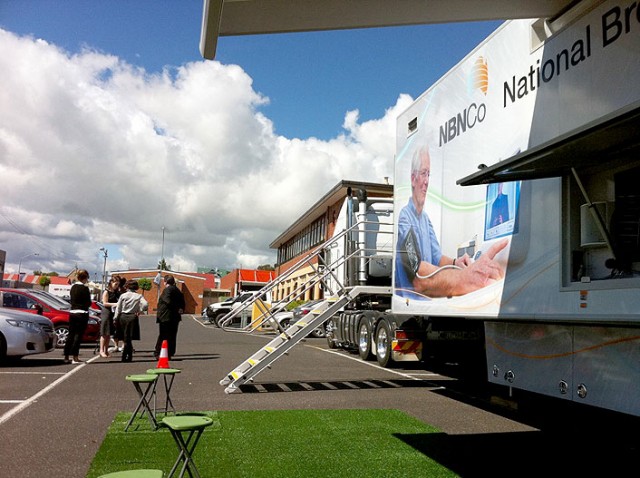
This is not good for the National Broadband Network project; contractor Service Stream announced it was handing back the Northern Territory rollout contracts to the Australian Security Exchange this morning.
It raises serious questions about the timetable of the project.
Service Stream advises that Syntheo, a 50/50 joint venture with Lend Lease, has reached agreement with
NBN Co to hand back the remainder of its design and construction activities in the Northern Territory. Syntheo is committed to working with NBN Co to complete its work in Western Australia and South Australia.
Given NBNCo abandoned its construction tender in April 2011 amidst hints of price fixing by contractors, this is a worrying development that indicates those ‘overpriced quotes’ may have been closer to the money after all.
I’ll be writing something up later today for IT News.