Author: Paul Wallbank

  • Yelp’s problem with activists

    Yelp’s problem with activists

    It’s been a bad couple of years for James Knight, a dentist in Fort Dodge, Iowa.

    First his wife found some text messages he’d exchanged with Melissa, his attractive assistant who’d been with his practice for ten years.

    Then James’ spouse demands Melissa is fired.

    James then has what was no doubt a difficult conversation with Melissa’s husband explaining why she’s been sacked.

    Then Melissa sues him for discrimination. He wins the case.

    Melissa appeals to the state’s Supreme Court and loses there as well however the case now has national attention.

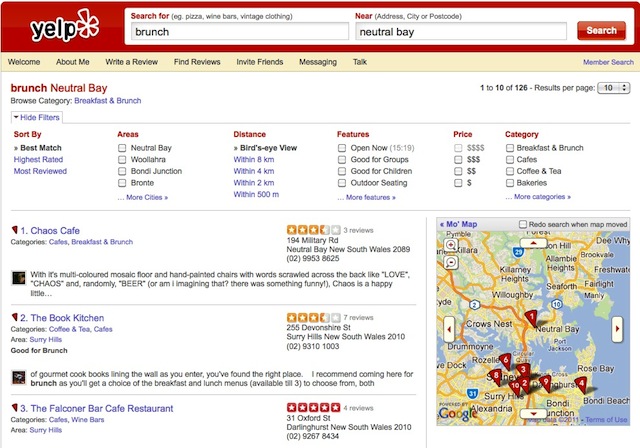
    This attracts the ire of the Internet mob, who start posting bad reviews about James on Yelp despite most of them not even living in Fort Dodge, let alone using his service.

    For Yelp, the rabble descending on James Knight’s review page is as much their problem as it is his.

    Yelp is one of the leading customer review sites which are changing the way small business operates and getting “smashed on Yelp” isn’t good for one’s reputation.

    Recently a builder also attracted the ire of the online lynch mob when he threatened to sue a customer over a poor Yelp review.

    As consequence, his Yelp page was overwhelmed with negative reviews by people who’d never used his business. The service had to delete 65 of those reviews which clearly had nothing to do with the quality of service the builder provided.

    The problem for Yelp, an other online review sites like Tripadvisor, is that for their sites to be trusted the reviews have to be reasonably accurate – self righteous internet mob skewing results is going to damage the service’s credibility as much as the targeted businesses.

    What this means for Yelp is that the low cost online business model doesn’t work, for the site to be relevant and credible there has to be administrators checking reviews and dealing with these situations.

    There’s also a lesson for all of us using the web – mindlessly joining online lynch mobs creates more damage than it fixes.

    Picking on a mid-Western dentist because he appears to be a pussy whipped jerk isn’t really solving humanity’s problems – we can all find causes that are a better use of our time.

    Similar posts:

  • Reskilling the workforce

    Reskilling the workforce

    One of the core objectives 1980s management philosophy is to shift costs and risks onto others. Staff training is one area that caught the brunt of the drive to slash expenses for short term gain, as a consequence we have a skills crisis with offers opportunities for savvy entrerpreneurs.

    In Why Good People Can’t Get Jobs: Chasing After the ‘Purple Squirrel Wharton management professor Peter Cappelli discusses his recent book that looks at this problem.

    Cappelli’s argument is that companies aren’t offering enough for the skills they desire, they often ask too much of candidates and they won’t train staff.

    In Cappelli’s book, he claims that staff training has plummeted;

    One of your chapters in the book is called “A Training Gap, Not a Skills Gap.” You have some figures showing that in 1979, young workers received an average of two and a half weeks of training per year. By 1991, only 17% of young employees reported getting any training during the previous year, and by last year, only 21% said they received training during the previous five years.

    The predictable consequence of neglecting training for the last thirty years is we now face skills shortages and those responsible – the managers and business owners who refuse to train workers – are now demanding governments do something about it.

    In many ways today’s skills shortages epitomise the short termism of 1980s thinking and how we now find society, and business, is struggling with the long term effects and costs.

    Wherever there’s a problem there is opportunity and there’s a breed of businesses, training companies and workers who will be taking advantage of the failures of the previous generation of managers.

    For those stuck in the 1980s mindset that training, like most staff expenses, is a cost and not an investment they are going to struggle in a world where adding value is more profitable than being the lowest cost provider.


    The photo THE BEAD MAKER — Apprentice Watches the Master — A Rosary Shop in Old Meiji-Era Japan was posted to Flickr by Okinawa Soba.

    Similar posts:

  • An infinite number of blogging monkeys

    An infinite number of blogging monkeys

    With the recent kerfuffle over writing for free, I thought I’d spend Christmas Day re-reading Chris Anderson’s Free.

    Deep in the book there’s the pertinent quote;

    Abundant information wants to be free. Scarce information wants to be expensive

    This is key question all writers, and anyone else in the creative industries need to ask, are we just adding to the tsunami of abundant information or are we adding something insightful and unique that has scarcity value?

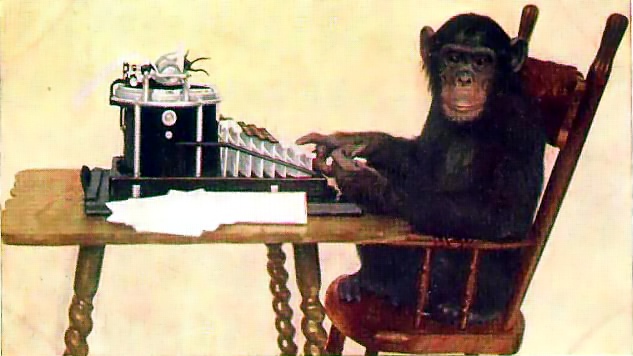
    On the web there’s a unlimited number of monkeys writing rubbish, even if we’re the one that’s managed to bash out Hamlet nobody is paying much attention.

    We need to be better than the noise, and the sites we give our work to – whether we get paid or not – need to be a step above those churning out rubbish.

    Similar posts:

  • Santa says buy more stuff

    Santa says buy more stuff

    Around the world, today marks the annual peak of consumerism. It’s interesting how one of the most important dates in the Christian calendar has been adopted by commercial interests.

    In non-Christian countries, particularly in East Asia, the lack of a religious tradition shows the modern ritual for what it is – an orgy of consumerism driven by a century of advertising and opportunistic businesspeople.

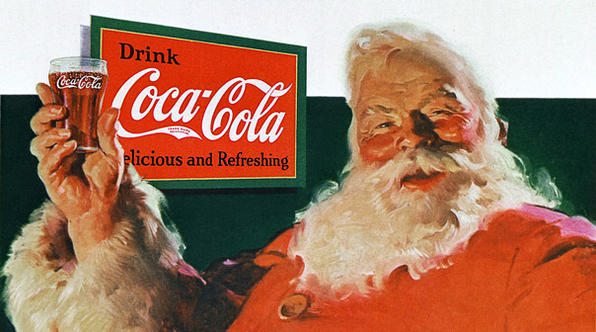
    For the western cultures, the biggest symbol of the occasion is Santa Clause, a figure largely invented by the Coca-Cola Corporation.

    It’s often said that successful religions co-opt the festivals and practices of earlier beliefs, many European Christian celebrations are said to be modern interpretations of older rites which marked key harvest and calendar dates.

    Today the religion of consumerism has co-opted the older Christian festivals which makes Christmas the grand celebration of consumption that it is.

    Religions though are a product of their times, the successful ones adapt to change and thrive for centuries while many wither away as their relevance to society and the economy fades.

    The Western religion of consumerism is at one of these points now after a century of unchecked growth.

    Will Consumerism continue to thrive as living standards rise in Asia and Africa or will it fade as overfed Americans and Europeans wear out their credit cards and look to defining themselves by something more than the expensive toys they can buy?

    Should Consumerism fade, will it be replaced with older traditions or will something else rise to meet the needs of 21st Century society?

    Is hard not to hope for the consumerist orgy that is the modern Christmas celebration to fade, if not for our communities then at least for our waistlines and bank balances.

    Similar posts:

  • Fiddling the prices

    Fiddling the prices

    Discriminatory pricing is nothing new, a good salesperson or market stallholder can quickly sum up a punter’s ability or willingness to pay and offer the price which will get a sale.

    Anybody who’s travelled in countries like Thailand or China is used to Gwailos and Farang prices being substantially higher even for official charges like entrance fees to national parks and museums.

    The Internet takes the opportunity for discriminatory pricing even further arming online stores armed with a huge amount of customer information which allows them to set prices according to what the algorithm thinks will be the best deal for the seller.

    Recently researchers found that the Orbitz website would offer cheaper deals for people searching for fares on mobile phones and prices would vary depending of which brand of smartphone people would use.

    Writers for the Wall Street Journal did an experiment with buying staplers and found the same thing.

    Interestingly, one of the factors Staples’ seems to take into account is the distance customers live from a competitors’s store – the closer you live to the competition, the lower the price offered.

    There’s also other factors at play; sometimes you don’t want a customer, or you don’t want to sell a particular product and it’s easy to guess the formulas used by Staples and other big retailers do the same thing.

    One of the great promises of the internet was that customers’ access to information would usher in a new era of transparency. In this case it seems the opposite is happening.

    Similar posts: