Author: Paul Wallbank

  • Disrupting the education ripoff

    Disrupting the education ripoff

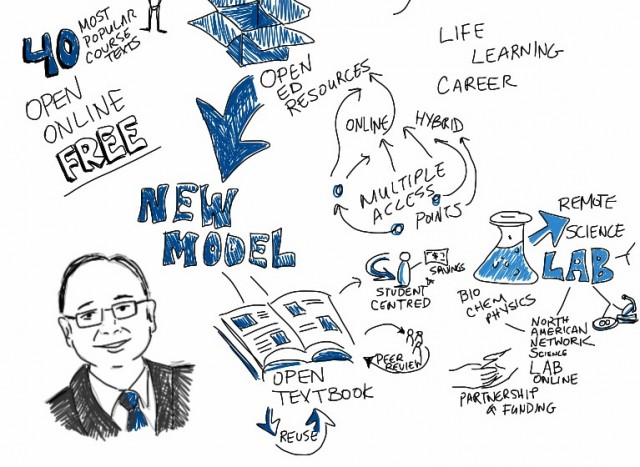
    British Columbia’s government has announced they are going to make most undergraduate textbooks free online or printed at low cost as part of their BC Campus program.

    One of the first lessons for university students is that they are going to be robbed at the campus bookshop – text books are one of the greatest rorts on the planet.

    This scam takes several forms with faculties stipulating the latest editions as course material through to individual professors having a nice little earner in demanding their, often poorly written and out-of-date, textbooks being essential reading for any unfortunate student taking their classes.

    Naturally all of these books are sold at eye wateringly high prices far in excess of what equivalent texts are selling for outside the university bookshop.

    Given all of this it’s no coincidence that the publishers who specialise in academic texts have been the least affected by the online models that have undermined the business models of the mainstream book sellers.

    Over the years there’s been a range of business ideas to setup exchanges to circumvent this legally sanctioned extortion racket and most have failed as the universities and faculty members have protected their cash cows with various tricks to prevent students from buying reasonably priced textbooks.

    That British Columbia’s government now sees that this is a barrier for cash strapped and debt ridden students is an encouraging sign and one that recognises the 1990s model of treating students – particularly international students – as easy money is over.

    For the Canadian and Australian education sectors which had come to depend upon an expensive “bums on seat” model of financing their faculties, the waves of change and competition is now threatening them.

    Probably the biggest threat to this model is from the top tier universities offering courses online. This is radically changing higher education as it’s making it easier for poorer people to access the best institutions.

    For the second rate institutions, this means they have to be providing real value for the fees they charge. A certificate purporting to be a degree is not going to be good enough.

    While it’s too early to call the end of the textbook ripoff – people don’t let juicy little rorts go easily – its days are numbered. Although we may find the old scams replaced by something DRM related.

    Image from Visual Notes of Honourable John Yap’s announcement at #opened12 / Giulia Forsythe / CC BY-NC-SA


    Similar posts:

  • Apple’s line in the sand

    Apple’s line in the sand

    The comprehensive refresh of Apple’s product lines announced by CEO Tim Cook this morning is a clear warning to Google and Microsoft that the market leader in the post-PC computer marketplace is not going away.

    With both Google and Microsoft having a major product releases over the next week, the pressure is now on both companies to match Apple’s announcements and product range.

    For Microsoft, the stakes are now substantially higher for their Windows Surface tablets. The Fourth Generation iPad and iPad Mini (or is that iPod Maxi?) are going to be the benchmarks the Redmond tablet PCs will be measured against.

    An interesting part of the Apple presentation was marketing chief Phil Schiller trash talking the Android competitors with a side-by-side comparison between the iPad and the Nexus.

    These comparisons are becoming a hallmark of Schiller’s marketing in the post Steve Jobs Apple, whether this is good or bad remains to be seen, but it is a difference compared to the old boss’ way of doing things. Although Jobs wasn’t adverse to poking fun at some of Microsoft’s confusing habits.

    For geeks, and those who like shiny things that go “beep”, it’s an exciting week and Apple have shown why they are masters at controlling the tech media.

    It’s now up to Google and Microsoft to see if they can match Cook’s announcements and meet Apple’s price points.

    Similar posts:

  • Amazon and the Soviet customer service model

    Amazon and the Soviet customer service model

    We all value our collections of CDs, books and photos, but what happens when we completely lose the digital equivalents?

    The story of Linn, a Norwegian lady who had her account terminated by Amazon, demonstrates the dangers of being locked into one Internet company’s empire. Get cut off and you lose everything related to them.

    A little understood part of the cloud computing and app world is that you, the customer or user – which isn’t necessarily the same thing – don’t really own anything. The money you spend on ebooks, mobile apps or web storage are for licenses to use the services, not the products themselves.

    Should the supplier decide they no longer want to provide you with their service, then you lose your account and everything with it.

    This is what happened to Linn when Amazon’s algorithm decided her account was in some way breaching their terms and conditions.

    We have found your account is directly related to another which has been previously closed for abuse of our policies. As such, your Amazon.co.uk account has been closed and any open orders have been cancelled.

    Per our Conditions of Use which state in part: Amazon.co.uk and its affiliates reserve the right to refuse service, terminate accounts, remove or edit content, or cancel orders at their sole discretion.

    “At their sole discretion” is the key point here. This is a standard term in most online contracts and reflects the legal realities of the physical world where a shopping mall manager or bar owner can ask you to leave their property without having to tell you why.

    When you use a virtual service, which includes e-books and cloud computing software, you are on someone’s virtual property and they can ask you to leave any time they feel.

    Of course those rights are subject to any contract you might have with that e-book seller, cloud computing service or shopping centre but you have to be in a position to enforce them – not an easy task when you’re in Norway and their lawyers are in Connecticut.

    Even if you want to enforce the agreement you believe these services have entered into, the grossly biased contracts attempt to put all obligations on users or customers while freeing the vendor of the distraction of being responsible for anything.

    The real problem though is the lack of notice and fairness – this blog’s previously looked at how PayPal, Facebook and Google will shut down business sites without any warning or due process.

    It’s one thing to get thrown out of a shopping mall but it’s another matter when your car and week’s groceries are still in there.

    Even more worrying in Linn’s case is how ebooks and music purchased with Digital Rights Management (DRM) controls can be erased by companies like Amazon. Which is like walking home from the shopping mall you’ve been banned from to find the manager has called by to confiscate the toaster and TV you bought last week.

    What’s particularly notable in all of these stories though is the Soviet customer service model, the Amazon”Executive Customer Relations” representative Linn dealt with refused to tell her what she’d done wrong or what rules she broke.

    The only thing “Michael Murphy” would tell her was she was effectively banned for being linked to a blocked account and stated;

    “Please know that any attempt to open a new account will meet with the same action.”

    No notice, no appeal, no rights. The computer says no and the bureaucrat cannot help you further.

    Trust lies at the core of all business and this is even more true when buying services like e-books and cloud computing products. If you can’t trust a vendor to provide a service, or to act openly and honest with you when a problem occurs, then it’s unlikely you’ll use that service.

    A lack of trust is what web 2.0 companies like Amazon and eBay risk with hostile, Soviet style customer service. This is the weak point of the entire online business model.

    For individuals and businesses it’s important to understand that those e-book, cloud storage or social media services may appear to be a bargain, but there are risks lurking in the fine print.

    The new Soviets might be doing well at the moment, but their days are numbered just as the USSR’s were.

    Similar posts:

  • Can Microsoft beat the PC marketplace’s structural decline?

    Can Microsoft beat the PC marketplace’s structural decline?

    In New York on Thursday Microsoft will have a marathon launch of their Windows 8 system and the futures of many of their hardware partners lie on the success of the new system.

    For Microsoft, Windows 8 could be the last throw of the dice for the desktop operating system that has sustained the company for thirty years.

    The figures aren’t good for Windows as Microsoft’s 2012 profit and loss shows, here are the figures broken out by operating unit segment from the company’s annual report.

    Year Ended June 30, 2012 2011 2010
    Revenue  bn $  bn $  bn $
    Windows & Windows Live Division 18,818 18,787 18,789
    Operating Income (Loss)
    Windows & Windows Live Division 11,908 11,971 12,193

    The core Windows & Windows Live Division has stagnant revenues and a slowly declining profit margin. We’ll leave the huge losses in the online division for a future post.

    Since the days of the first MS-DOS deal with IBM, Microsoft’s core business has been the licensing of operating systems to PC manufacturers and now that model is in trouble.

    For instance Dell had an 8% drop in revenue resulting in a worrying 22% drop in operating profit, their PC dominated consumer division suffered a fat 22% drop in sales and recorded a miniscule .5% profit margin. Similarly Asus had 25% drop in sales to record a 2011 loss.

    The pain being suffered by PC manufacturers’ sales and margins will almost certainly be shared by Microsoft as companies like Dell, HP and Asus simply can’t afford to pay the licensing fees which have sustained the Redmond business model for so long.

    Microsoft and their partners hope – or pray – that the PC decline is a temporary hiccup in computer sales similar to the traditional lull seen before the release of a new system.

    History’s not on their side with research company Asymco expecting sales of tablet computers to overtake PCs sometime in late 2013.

    This is not a cyclical trend – the PC industry is in structural decline; the traditional Windows upgrade cycle is dead and Google are running interference with their Chromebook networked laptops.

    Moving onto tablets and smartphones in this light makes sense for Microsoft and given the PC manufacturers have failed dismally to deliver decent tablet computers or phones over the last 15 years so it’s understandable the software giant wanted to develop their own hardware or team up with a struggling company like Nokia.

    The declining margins in personal computers means we’re seeing the end of the Windows desktop ecosystem. With the rise of the web and cloud computing the type of operating system we use is like arguing between Toyota and BMW drivers; one might be more prestigious but both will get you where you want to go.

    For Microsoft the challenge is to replace those Windows licensing rivers of gold with similar revenue streams through their phone and tablet products but with Apple and Google already dominating those fields, is it too late for the company that dominated personal computing? The next six months will tell us.

    Similar posts:

  • Building new technological Jerusalems

    Building new technological Jerusalems

    A Telegraph profile of Joanna Shields, the incoming Chief Executive of London’s Tech City Investment Organisation, is an interesting view of how we see economic development and the route to building the industrial centres of the future. Much of that view is distorted by the ideologies of our times.

    London’s Tech City is a brave project and somewhat reminiscent of future British Prime Minister Harold Wilson’s 1963 proclamation about the UK’s future lying in harnessing the “white heat of technology.” From Dictionary.com;

    “We are redefining and we are restating our socialism in terms of the scientific revolution…. The Britain that is going to be forged in the white heat of this revolution will be no place for restrictive practices or outdated methods on either side of industry.”

    Fifty years later a notable part of Wilson’s speech is the use of the word “socialism” – the very thought of a mainstream politician using the “s-word” today and being elected shortly afterwards is unthinkable.

    Today the ideology is somewhat different – much of Tech City’s objectives are around aping the models of Ireland and Silicon Valley – which in itself is accepting the failed beliefs of our times.

    Based around London’s “Silicon Roundabout” – a term reminding those of us of a certain age of a childhood TV series – the heart of the Tech City strategy lies the tax incentives used by the Irish to build the “Celtic Tiger” of the 1990s and government investment funds to create an entrepreneurial hub similar to Silicon Valley, something also done in Dublin with the Digital Hub.

    It’s hard not to think that copying these models is a flawed strategy – Silicon Valley is the result of four generations of technology investment by the United States military which is beyond the resources of the British government, and probably beyond today’s cash strapped US government, while the Celtic Tiger today lies wounded in the rubble of Ireland’s over leveraged economy.

    At the core of both Silicon Valley’s startup culture and Ireland’s corporate incentives are the ideologies of the 1980s which celebrates a hairy-chested Ayn Rand type individualism while at the same time perversely relying upon government spending. Ultimately failure is not an option as governments will step in to guarantee investment returns and management bonuses.

    Just up the M1 and M6 from London’s Silicon Roundabout are the remains of what were the Silicon Valleys of the eighteenth and nineteenth centuries.

    The manufacturing industries of the English Midlands or the woollen mills of Yorkshire revolutionised the global societies of their times. These were built by individuals and investors who knew they could be ruined by a poor investment and managers who retired to the parlour with a pistol if the enterprise they were trusted to run failed.

    Today’s investment attraction ideologies – tax discounts to big corporations and grants to entrepreneurs – are in a touching way not dissimilar to Harold Wilson’s 1960s belief in socialism.

    At the time of Wilson’s 1963 speech China and much of the communist world were showing that socialism, with its failed Five Year Plans and Great Leaps Forward of the 1950s, was not the answer for countries wanting to harness the “white heat of technology.”

    Similarly today’s Corporatist model of massive government support of ‘too big to fail’ corporations is just as much a failed ideology, like the socialists of the mid 1960s had their world views had been framed in the depression of the 193os, today’s leaders are blinded by their beliefs that were shaped by the freewheeling 1980s.

    Whether the next Silicon Valley will be in London, or somewhere like Nairobi or Tashkent, it probably won’t be born out of a centrally planned government initiative born out of the certainties of Margaret Thatcher or Ronald Reagan anymore than the 1960s technological revolution was born out of Karl Marx or Josef Engels.

    Silicon Valley itself was the happy unintended consequence of the Cold War and the Space Race, which we reap the benefits of today.

    Every ideology creates its own set of unintended consequences, those created by today’s beliefs will be just as surprising to us as punk rockers were to the aging Harold Wilson.

    Maybe Tech City will help Britain will do better at this attempt to regain its position as global economic powerhouse, but you can’t help thinking that economic salvation might come from some West Indian or Sikh kid working out of a storage unit in Warrington than a bunch of white middle class guys celebrating a government grant over a glass of Bolly in Shoreditch.

    Similar posts: