Author: Paul Wallbank

  • Travel review: Hilton South Wharf Melbourne

    Travel review: Hilton South Wharf Melbourne

    The Melbourn Hilton South Wharf is a good location for conference attendees, but for others it might be a little out of the way.

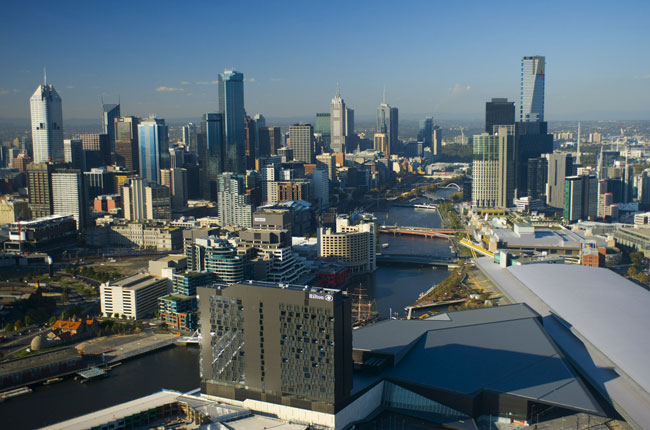
    Melbourne boasts two Hilton hotels – the Park Hilton in Jolimont just to the East of the city and near the iconic Melbourne Cricket Ground and the newer South Wharf Hilton on the Yarra River across from the refurbished Docklands precinct.

    For those attending events at the Melbourne Convention and Exhibition Centre, the South Wharf Hilton is an unbeatable location as you’re right next door to the venue. For most of the rest of Melbourne, the South Wharf Hilton’s a little bit out of the way.

    If you’re using public transport, the closest services are Southern Cross Railway station and the tram stops on Flinders Street, both are a reasonable walk and getting to the train station takes you through some depressing and pedestrian unfriendly architecture.

    On foot, it can be a slog from the city centre or Crown Casino through the convention centre, ladies with high heels should consider packing a pair of flats or be prepared to hail a cab.

    By car and cab, it’s a circuitous route from the city centre, although if you’re coming in from the airport or the highway from the North or West of Melbourne, the hotel’s easy to get to off the freeway.

    One of the interesting cultural aspects to Melbourne are the locals’ obsession with views – this probably comes from an inferiority complex over not having a nice harbour like Sydney’s. This means tourist and accommodation marketing often gushes about the views from the windows.

    For all of Melbourne’s attractions, views are not the city’s greatest asset and most of Melbourne looks like Minneapolis or any other Twentieth Century high rise city from anything above the third floor.

    In the case of my room, the view was of a freeway approach and a massive discount retail outlet complex, in the distance lay the docks and the West Gate Bridge – another manifestation of Melbourne’s civic desire to outdo Sydney in areas the city can’t compete.

    Drawing the curtains on this less than inspiring vista was harder than expected and it took a bit of hunting to find the controls for the electronically operated blinds.

    The hotel itself is a nice property and the rooms are lovely with comfortable beds. Unfortunately I was too busy with the conference to check out other facilities like the gym.

    At both check in and departure the staff were extremely efficient, pleasant and polite.

    If you’re attending a conference at the MCEC this is a good hotel to stay at and I’d recommend it, the main drawback is it’s a little out of the way if you’re wanting to explore Melbourne.

    Paul travelled to Melbourne courtesy of Xero.

    Similar posts:

  • Leaping seconds, new millennia

    Leaping seconds, new millennia

    Along with a storm disrupting cloud computing services, last weekend also saw computer networks being disrupted by the leap second.

    Servers needed to rebooted, websites froze and – as usual whenever there’s a technical glitch – airline check in systems fell over causing chaos for thousands for travellers.

    It’s all very reminiscent of what we thought would happen with the Y2K bug. While sensible people didn’t think planes would fall from the sky, dams collapse and the world financial system grind to a halt (we had to wait another eight years for that), we did think there would be a lot of dumb little things to irritate us over the first few days of the year 2000.

    That no real disruption happened, not even the airlines check in systems failed or tried to check in people for 1901, was credit to the entire IT industry. It a shame that the success in dealing with the complex unknowns of what was called the Y2K “bug” – which wasn’t really a bug but a feature – ended up being portrayed a scam by the entire IT sector.

    A couple of years ago I was talking to a finance guy who claimed “the whole global financial crisis was a scam, just like Y2K.”

    That view overlooks how the IT industry knew it had a problem and dealt with it, as opposed to the banksters and their friends in government who denied there was a problem right up to the moment it happened.

    Of course it’s easy to ignore your business or industry has a problem if you know your friends in government will make sure your bonuses, holiday homes and private school fees will be guaranteed by the taxpayer, the taxpayers’ children and the taxpayers’ grandchildren.

    Last weekend’s leap second and the cloud computing outage teach us that technology isn’t infallible and that things do go wrong.

    For most of us when they do go wrong, we won’t have the government to bail us out.

    This isn’t anything new. In any complex society, the unexpected can disrupt our comfortable way of living in ways we don’t expect. It’s something all of us should occasionally think about.

    Similar posts:

  • Is the Virginia storm outage bad news for cloud computing?

    Is the Virginia storm outage bad news for cloud computing?

    On the eve of the US Independence Day holiday weekend, the last thing you need is a storm taking out your services. Unfortunately a storm across Virginia did exactly that to one of Amazon’s key data centres, taking with it popular social media sites like Instagram and Pinterest along with the Netflix movie service.

    Having a key data centre going down and knocking out the services that rely on it surely exposes one of cloud computing’s greatest weakness – or does it?

    Last week I spoke to Eran Feigenbaum, Director of Security for Google Apps, who made the point “not all cloud providers are created equal”. The Virginia outage illustrates this.

    Netflix, Pinterest and Instagram all made choices to solely rely on one data centre for key parts of their services leaving them exposed should a storm, earthquake or tsunami affect that location.

    Eran introduced me to a term I hadn’t heard before – “shared fate zones” – a good example of which would be putting all your servers in Virginia where they can be knocked out by a storm, in California or Japan where an earthquake can disable them or solely around the Indian Ocean where a tsunami like that of 2004 could know them all out.

    All the major cloud providers have the facility to spread loads across the globe for exactly this situation. The services affected by the Virginia storm chose not to do this and they eventually were caught out.

    Events like this aren’t just an issue with cloud computing, or even technology in general. Storms, earthquakes, fires and many other natural or man made disasters are a fact of life which can disrupt business. If an earthquake hits your town, the question is how quickly can your business and customers get back to normal.

    Distributing services is actually the cloud’s strength, it means we’re not tied to one office or location so we can get back to normal a lot quicker than those who have lost everything.

    Computer networks being knocked out is nothing new, we’ve seen this plenty of times over the last fifty years as squirrels have chewed cables, technicians have pressed the wrong button or natural disasters have disabled data centres. By spreading the load, cloud computing services should make networks less prone to problems.

    A lot of people will say in the next few days that Amazon’s outage illustrates the unreliability of cloud computing, it’s actually the opposite.

    Similar posts:

  • Deep mining business data

    Deep mining business data

    This post originally appeared as Mining Business Data: Get ready to drill and excavate, the June 28, 2012 post on Smartcompany.

    The IT industry loves buzzwords and the phrase coming into fashion is “big data”. Forget “social media” or “cloud computing”, much of what you’ll be reading about in columns like this over the next few years will be about mining the information piling into our businesses.

    Big data’s power is illustrated in yesterday’s report that Mac users will pay more for hotels than those on Windows systems. So travel site Orbitz now plans to headline more expensive options to visitors using Apple computers.

    While social media and cloud computing are falling out of favour, we shouldn’t discount those old-fashioned terms as they are two of the main drivers of big data. Cloud computing makes it possible to crunch data cheaply, while social media is generating even more data for people to play with.

    Sydney business Roamz is a good illustration of how social media, cloud computing and big data come together. Born out of founder Jonathan Barouch’s desire to find local activities for his young child, Roamz pulls together data from Facebook, Twitter and Foursquare to build a picture of what’s interesting in your neighbourhood.

    It’s no coincidence direct marketing giant Salmat has invested in Roamz, as the data being gathered allows companies to paint a comprehensive picture of what their customers like.

    Another business making sense of big data is Kaggle, set up by former Reserve Bank economist Anthony Goldbloom. Kaggle is a crowdsourcing service which runs data analysis competitions on business problems through to things like HIV research, chess ratings and dark matter exploration.

    Like most things in the computing industry, these services were only available to those who could afford supercomputers a few years ago, today they’re available to anyone with a credit card and internet connection.

    The era of big data might help us overcome Pareto’s Principle – otherwise known as the 80/20 rule – that 80% of your profits come from 20% of your customers. We can also be sure that 80% of our problems come from a different 20% of clients.

    Having the ability to crunch numbers quickly means we can identify the good payers and problem customers before we do work for them. It might also mean we beat another business truism by finally being able to identify the 50% of our advertising budget that is being wasted.

    Even if you don’t think your business is ready to dive into the world of big data, it’s worthwhile at least having a look at your website analytics to see what your customers are looking at.

    Who knows? Like Orbitz, you might identify those cashed up Mac users who love spending money.

    Similar posts:

  • Darling Harbour and the peak of consumerism

    Darling Harbour and the peak of consumerism

    Sydney’s Darling Harbour was one the centre of the nation’s mercantile economy, from across the country millions of tons of grain, wheat, sugar and other commodities were loaded onto ships and exported to the empire.

    Eventually Darling Harbour fell into disuse, the docks became containerised, bulk goods moved to specifically designed loaders and the new breed of cargo ships were often too big to fit under the Sydney Harbour Bridge.

    What really sealed Darling Harbour’s fate was Australia moved from being a largely export based agricultural export economy to a service based consumerist economy.

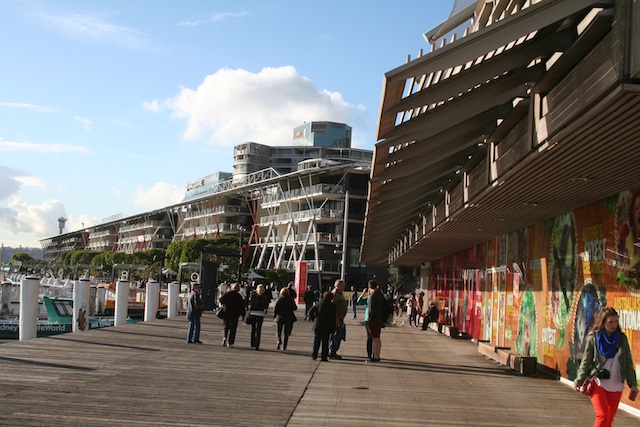
    Today Darling Harbour illustrates that change, the docks have become expensive restaurants, hotels and shopping centres. The notorious “hungry mile” of docks is being converted into “Barangaroo” complex of office blocks, apartments and possibly even a casino for “high roller” Chinese gamblers.

    Even the cruise liners are going. The 1980s vision of Darling Harbour as a temple to consumerism and property speculation is complete. In this way, Darling Harbour has become a picture of the Australian economy.

    Just as Australia’s mercantile era peaked just before The Great Depression of the 1930s – the depression of the 1890s was actually far harder on Australia, particularly Melbourne and Victoria – the consumerist era finished with the Global Financial Crisis of 2008.

    It will be interesting to see how Darling Harbour evolves over the next hundred years.

    For a glimpse of the final days of the old Darling Harbour, Island Shunters an ABC documentary from 1977 showed the working lives of railway workers in the goods yards on the Western side of the docks. Today those railyards are the Australian office of Google and Fairfax’s headquarters.

    Similar posts: