
Author: Paul Wallbank

  • Enemies of the state

    Enemies of the state

    One of the sad truths of today’s online world is that dissidents, lawyers and journalists are ripe targets for governments that want to suppress who they perceive to be their enemies.

    At the Black Hat security conference in Las Vegas today, the Electronic Frontier Foundation’s Eva Galperin and Cooper Quintin gave a demonstration of just what lengths governments will go in hacking their opponents.

    In When Governments Attack, Galperin and Quintin illustrated how Syria, Ethiopia and Vietnam are all countries whose hacking campaigns they’ve encountered but the particular focus was on Operational Menul, which resolved around the Kazakhstan regime’s attacks on its opponents.

    The government of Nursultan Nazarbayev is well known for its corruption, intolerance and global harassment of its opponents as Quintin and Galperin showed. What’s of particular interest to them is the use of off the shelf malware tools.

    Using cheap commodity tools has the advantage of not leaving distinctive patterns that may give investigators hints to who has developed the malware. The downside of course is that most anti-viruses can detect these tools.

    For the regimes this is not such a problem as most of their targets are relatively unsophisticated, as most of the activists, lawyers and journalists targeted by government agencies or their contractors do not have high level tech skills or use advanced security tools.

    Another concern is how private contractors are employed by these governments. An interesting tactic used by the EFF is to commence legal proceedings against US based corporation for operations they’ve conducted against dissidents visiting or living in the United States.

    Galperin and Quintin have three conclusions from examining these attacks.

    • Attacks don’t need to be sophisticated to work
    • None of this research is sexy
    • The tools and actors are not sophisticated

    While the tools and actors in these sad tales are not sophisticated, the costs to the targets are usually high as they and their families can be subject to terrible consequences.

    As we increasingly see both simple and sophisticated software tools available to be used against citizens we can expect to see more abuses by governments around the world. The job of organisations like the EFF is not going to get easier any time soon.

    We citizens though need to do what we can to demand safeguards and legal protections from our governments. Those of us in democracies should be making that clear at the ballot box.

    Similar posts:

  • Attack of the killer drones

    Attack of the killer drones

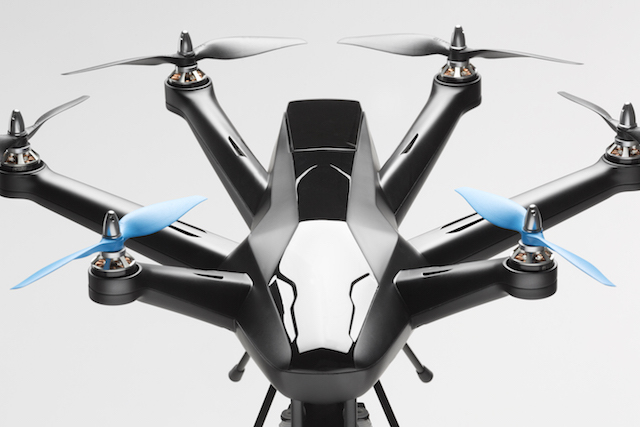
    We’ve heard much about the benefits of fun about drones – remote control aircraft – but what about the security and safety issues of the device. At the Black Hat Security conference today Jeff Melrose of the Yokogawa industrial controls company described the risks posed when bad people use these devices.

    With typical consumer drones having a range of up to five kilometers the idea of an attacker needing to be physically close to their target no longers applies. A drone, as Melrose points out, can  can tailgate workers easier than people and even navigate within offices.

    Fences are no barrier as Melrose showed with a camera equipped drone being able to fly up to valve within a gas field and then read its meter. The drone doesn’t even need to have to make it back, it could be landed on a roof where it quietly record its surroundings for weeks.

    Put more than a camera on a drone, say a wireless packet sniffer or a jamming device and the possibilities for mischief are endless. Melrose illustrated this by starting his presentation with a video of The Killer Drone, a flying chainsaw developed by a pair of Finnish farmers.

    Scarier still, was Melrose demonstration of the ‘target tracking’ technology included on the latest consumer drones by chasing one of his research assistants across a lawn. Despite the assistant’s best efforts to escape, the aircraft was able to follow her.

    Despite the scary aspects of drone spying, vandalism and harassment the devices aren’t invulnerable. The two Finnish farmers had their drone brought down by a balloon and all the risks – from chainsaws to signal jammers – that drones present they themselves are vulnerable to.

    Melrose’s demonstration shows how the physical security world is changing a drones become commonplace. Fences, padlocks and ‘keep out’ signs are not enough to keep today’s generation of technologically savvy trespassers.

    Jeff Melrose’s presentation was a thought provoking view of how the threat landscape is changing and that risks evolve with technology.

    Paul travelled to Las Vegas as a guest of Nuix

    Similar posts:

    • No Related Posts
  • Blood sucking freaks

    Blood sucking freaks

    Silicon Valley billionaire Peter Thiel wants to inject young people’s blood to stay youthful reports Vanity Fair.

    One man who isn’t concerned about eternal youth is veteran investor Bill Gross who believes the current record low interest rates are too risky.

    We live in interesting times.

    Similar posts:

    • No Related Posts
  • Microsoft quietly buries its smartphone ambitions

    Microsoft quietly buries its smartphone ambitions

    Last week Microsoft quietly buried its smartphone ambitions with the announcement they would shed 1,850 jobs largely from the remains of the Nokia business they acquired four years ago.

    Microsoft’s Lumia exercise was expensive for the company but even more costly in terms of missed opportunities.

    Those opportunities are now in cloud computing and artificial intelligence services. Shareholders will be hoping the current CEO Satya Nadell executes a lot better on them than his predecessor did with smartphones.

    Similar posts:

    • No Related Posts
  • Smartphones become a mature market

    Smartphones become a mature market

    As Apple celebrates shipping a billion iPhones, the smartphone industry has entered maturity reports IDC.

    The analyst firm’s latest survey of the global smartphone industry reports only 0.3% growth over the equivalent period of last year.

    While both Apple and Samsung have had successes over the past year with new models, IDC believes growth now lies in shifting ‘flagship products’ at lower price points with enhanced features.

    A more mature industry opens opportunities for the cheaper Chinese brands and IDC is finding those companies are unsurprisingly proving successful in emerging markets. For the established brands redefining their price points and models is going to be the challenge.

    That mature marketplace is going to focus the minds of product managers, marketers and executives at all the manufacturers as capturing profit and investors’ imaginations in a mature market is very different to that when selling a new, high growth product.

    Similar posts:

    • No Related Posts