Author: Paul Wallbank

  • The rise of new business models

    The rise of new business models

    As always Mary Meeker’s State of the Internet report hits us with mass of information, this year compressed onto a 355 slide Powerpoint presentation.

    There’s a wealth of detail in the report but two big trends stood out – that global internet advertising spend will overtake TV ad revenues and music industry revenues have reversed a 16 year decline as subscription services gain market share.

    Subscriptions becoming the main revenue source for music companies suggests ]new internet business models are slowly evolving although how that lessons can be applied to other industries remains to be seen.

    In the world of advertising, that online is now attracting a greater spend than TV is a major milestone in the shifting marketplace. Although Facebook and Google’s dominance – Meeker estimates 85% of revenue growth is going to the two companies – will present challenge to advertisers and agencies.

    Also notable is how mobile revenues and handset sales are slightly better than flat, indicating the biggest market of last decade is now mature.

    There’s many other insights in this report so it’s worth spending a few hours on it to reflect on how some of these trends may affect your industry.

    Similar posts:

    • No Related Posts
  • Clash of car cultures

    Clash of car cultures

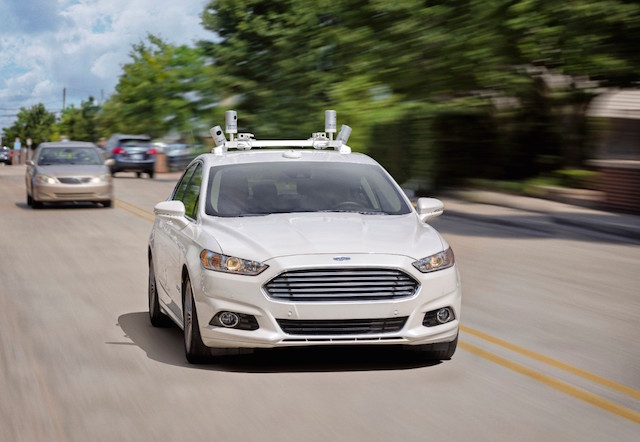
    With tech companies piling into the automotive industry – with varying results – it’s not surprising the established auto manufacturers are looking at making alliances with their potential Silicon Valley competitors.

    Ford’s alliance with Google was one of the most promising in the sector, however it fell apart in a classic clash of cultures as Automotive News reports.

    One of the key differences in the cultural crash was the priority of the two businesses – for Ford this is about the future of the company while for Google autonomous vehicles are just another moonshot.

    Coupled with that, Ford are locked into their traditional products and have a sceptical Wall Street to keep happy as Automotive News describe when the two company’s CEO’s met.

    In early December 2015, Fields came to Silicon Valley to discuss the deal with Google co-founder Sergey Brin. In a region where there are so many electric cars that office workers often argue over charging stations to plug in their Teslas and Nissan Leafs during the workday, Fields showed up at Google with an army of staffers in a fleet of Lincoln Navigators. Sources said Fields and his team were armed with a plan to make a big splash out of the partnership news, and much of the discussion centered around making an impression on Wall Street.

    With Google being generally secretive about their ‘moonshot’ programs, it’s not surprising Sergey Brin and his team were perturbed by Ford planning to make a big announcement about the partnership. Had the auto maker done its due diligence, their delegation would have been a lot less ambitious and lot more circumspect.

    Ford’s casting around for tech partners also illustrates the management didn’t understand the tech industry’s politics and dynamics, not only do they have a long standing agreement with Microsoft on their Sync product but they were also touting an alliance with Amazon to incorporate Alexa into their cars.

    While there’s undoubtedly some revisionism in the Automotive News story – there’s always some airbrushing of history when a new CEO takes over – the tale does illustrate the difficulties facing business owners and managers when building alliances with others who don’t necessarily have the same objectives.

    A clash of cultures is always tough to overcome and that’s often the biggest challenge facing industrial giants like Ford as they deal with a rapidly changing world.

    Similar posts:

    • No Related Posts
  • The myths of dead brands – busting disruption stories

    The myths of dead brands – busting disruption stories

    “These three brands have one thing in common – they’ve all been destroyed by digital disruption,” says one business commentator in a recent presentation.

    He cited three names; Kodak, Nokia and Blockbuster.

    It’s a nice, and often repeated meme, which is only really true of Blockbuster which failed to adapt to a changing market and could be a perfect example of a transition effect although some don’t buy the digital disruption reason for the company’s demise.

    Giving lie to the idea the company was a victim of Netflix’s rise, a former Blockbuster executive puts the chain’s bankruptcy down to management not understanding the company’s role in the market, and that it was in decline long before the streaming service’s arrival.

    A more fundamental problem with the statement is both Nokia and Kodak are still in business too, the latter having come out Chapter 11 financial in late 2013.

    Finland’s Nokia is somewhat more complex than Kodak or Blockbuster, having been founded as a paper pulp mill in 1865.

    The company became a global brand thanks to being a leader in mobile phones prior to the iPhone disrupting the market but the name faded as the Apple and a new breed of East Asian manufacturers came to dominate the market.

    Despite fading as a consumer brand, the company is still a major player in telecommunications – being a major supplier of cellular base stations – along with a range of other technologies.

    Both Kodak and Nokia are still very much alive, albeit no longer being recognised by the average consumer.

    There are major lessons from both companies for those studying the effects of technological disruption on brands and businesses. Even Blockbuster’s mistakes in the face of a changing and declining market has many lessons.

    Citing them as examples of ‘digital extinction’ though is untrue and almost certainly unhelpful in understanding what management can do to respond to new technology or societal shifts.

    Similar posts:

  • Being an industrial revolutionary

    Being an industrial revolutionary

    “The future isn’t pre-determined, technology doesn’t come from some outside force. It’s created by us. Some people have more power than others in that system, such as the big tech entrepreneurs, but at the end it’s people and organisations that have the power.”

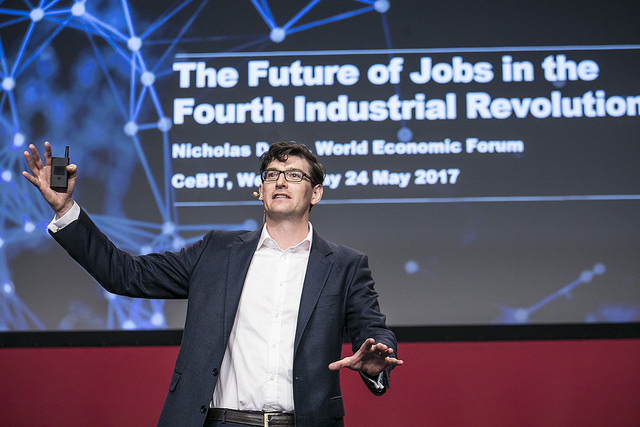
    Nicholas Davis, the World Economic Forum’s Head of Society and Innovation, was discussing at the recent Sydney CeBIT conference how we can take control of the digital economy and where workers fit into an increasingly automated world.

    Technology and online platforms aren’t neutral system, Davis observes. “It’s not just about how we use them, but the values that are designed into the systems, technology is not just a neutral thing. During a conversation like this if I put my iPhone between us, it’s proven that reduces our memory of that discussion and our sense of connection.”

    Politics and addiction

    “The purpose of the technology, the design of it, affects us in different ways.” Davis says, “if we design technologies for addiction, if we design business models that involve us being sucked into systems at the expense of other things in our lives, then that is a value choice that companies make and that we as users are trading off in our lives.”

    “In understanding that technology is not neutral then the question is how we, as revolutionaries have that political discussion? I don’t mean political like ‘Left’ and ‘Right’ but these are value decisions that we need to engage with.”

    “The difficulties about having discussions about technology is not getting sucked into a left-right divide and letting one group of people own innovation, but to say what do we want, How do we get there and how do we avoid the mistakes of previous industrial revolutions where the environment suffered, kids suffered and vulnerable populations suffered.”

    A change in thinking

    “One of the biggest problems is we don’t have regulatory or even democratic institutions where we can make collective decisions about technologies,” says Davis.

    “The average AI researcher, at the top of their game anywhere in the world, would only understand a small percentage of the AI space. So how do you expect a politician or a voter, to come to grips with it.”

    One of the key discussions missing in the public sphere is around automation and concepts like the Universal Basic Income, Davis believes. “We should have a serious chat about giving everyone the space to build up their skills.”

    In the development policy, Davis sees growing inequality and applying last century’s thinking to today’s challenges as among the biggest risks facing governments and communities.

    Rippling beyond business

    For business, the imperative is to recognise the effects of decisions on the wider community.

    “The big thing for business is understanding the technology decisions you make have a ripple effect beyond your company, you need to look forward to new ways of value adding.”

    Davis warns we are seeing a backlash against innovation and technology with concerns about privacy and security growing.

    “So much of the world is build on their use of data. Most companies and organisations don’t have good data hygiene or ontology to classify their information. People say data is their greatest assets – some say it’s the new oil – but it’s also their greatest liability. So understanding information security at the board level is critical.”

    The power of individuals

    For individuals, Davis believes the power lies with us in the choices we make as consumers.

    “Don’t underestimate your own power, but also don’t underestimate that more and more products around us are designed to influence our behaviour in ways we need to be aware of.”

    “In most cases, if the product is free then you and your data are the product, understand that and on what terms is important.”

    Conscious choices

    “Understand the externalities of these services as well. Appreciate the effects it has on your family, your mental health, on the ability to connect is important. Being able to make conscious choices about these things.”

    “Supporting open data standards and competition – not just accepting Android or Apple for instance – rather than allowing politicians and big business to fight over these things.”

    So in Davis’ view being an ‘industrial revolutionary’ in the digital era is a matter of being an informed, and empowered, consumer. Will that be enough?

    Similar posts:
  • Artificial intelligence and small business

    Artificial intelligence and small business

    How can small businesses use Artificial Intelligence? On Flying Solo, Rob Gerrish and I discuss the various ways AI is going to affect smaller enterprises.

    One of the important things about the discussion is how AI is going to change a range of industries and jobs. The effect on small businesses over the next twenty years will be as great at the Personal Computer was.

    The big takeaway I have for business owners is to actively think about how AI and automation are going to affect their industries, customers and individual companies.

    Have a listen.

    Similar posts:

    • No Related Posts