Author: Paul Wallbank

  • Augmented reality ideas accelerate

    Augmented reality ideas accelerate

    As video technology accelerates, the push for augmented and virtual reality applications accelerates. Of the two different technologies, it looks like augmented reality is beginning to get traction in the marketplace.

    One example of an augmented reality application is Skulley Systems, a motorbike helmet with a head up display similar to those in fighter jets.

    The idea was the result of the company’s founder having a motorbike accident in Barcelona as he was reading a street sign. Dr Marcus Weller wanted to buy a bike helmet that displayed driving information and found there was nothing on the market.

    Dr Weller is not alone in his idea of augmented reality devices, Sony have reportedly patented a contact lens that will record the details of your life and play it back to you. It’s just one of many different augmented reality ideas that inventors are proposing although Sony’s appears to be more of defensive patent ploy rather than a real product.

    Skulley though doesn’t have the smart motorbike market to itself, last year Intel demonstrated their own motor bike helmet that integrates with the bike’s internal management systems.

    The main difference between Sony’s patent and Skulley Systems is the motorcycle helmet is close to reality having been through a Kickstarter crowdfunding campaign, then seed and venture capital investment.

    What Skulley are showing is the augmented reality applications are close to fruition, partly because ideas like visor displays are clear solutions for today’s problems. We are though only at the beginning of the roll out of both artificial and virtual reality technologies.


    Similar posts:

    • No Related Posts
  • Confidence and open communications

    Confidence and open communications

    One of the big technology industry stories currently is the merger of Dell and data storage giant EMC, which at seventy billion dollars will be the biggest merger in the tech industry’s history.

    With fifty thousand employees managing such a change presents a challenge for EMC’s managers and something noticeable attending the company’s EMC World conference in Las Vegas this week is how upbeat almost all the staffers about the impending merger.

    In an interview with David Goulden, the CEO of EMC’s Infrastructure division, which is the company’s core business, I asked him how they were keeping staff morale up in the face of changes that will almost certainly cost jobs.

    “Change creates uncertainty,” says Goulden. “One thing I’ve learned from this is you cannot over-communicate and that’s true internally and it’s true with our customers. We’ve put an incredible amount of effort in communications so our teams are engaged to go and speak to their customers.”

    As change is now a constant in all industries Goulden’s lesson should be noted by all managers and business leaders – clear, honest and open communications with employees and customers is essential in keeping the trust of the markets and workforce.

    The old model of restricting information and hoping no-one finds out is increasingly harder to sustain and from a business point of view unprofitable in the medium term as well.

    Paul travelled to Las Vegas as a guest of EMC and Netsuite.

    Similar posts:

  • Missing the target

    In the last fifteen years of blogging I’ve rarely missed a day and in over last five years I haven’t missed one regardless of whether it has been on a friend’s couch, in an airport lounge or on a train.

    Tonight, in Las Vegas, it’s been tough as I’ve been slammed with many ideas and tips that have made it had to get a sensible blog post together.

    Roll on Friday.

    Similar posts:

    • No Related Posts
  • Startup truths

    Startup truths

    Anna Weiner writes a great piece on the brutal realities of working for tech startups. The food might be good but they are an anxious and stressful place to work. This story is worth a read for anyone considering working for one.

    Similar posts:

  • Google bets on artificial intelligence

    Google bets on artificial intelligence

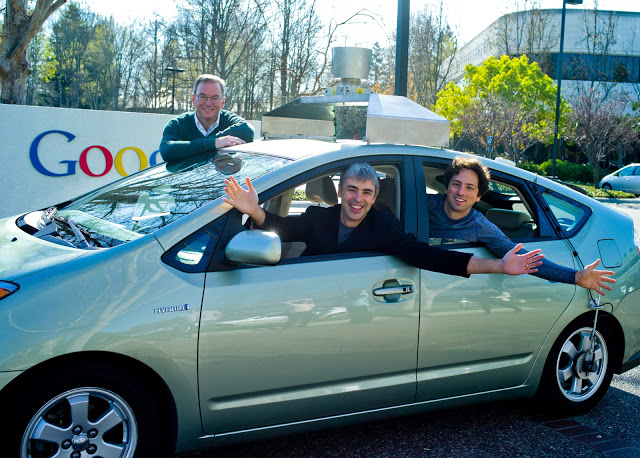
    Breaking with the company’s tradition of the Sergi, Google’s CEO Sundar Pichai writes this year’s founders letter laying out how the search engine giant is focusing of artificial intelligence and the machine learning.

    Pichai’s view of the world seems to tie in very closely with founders Larry Page and Sergei Brin with him laying out a vision of making the internet and computers accessible to all.

    The challenge for Google is the shift away from personal computers, something that the company is struggling with and a factor that Pichai acknowledges.

    Today’s proliferation of “screens” goes well beyond phones, desktops, and tablets. Already, there are exciting developments as screens extend to your car, like Android Auto, or your wrist, like Android Wear. Virtual reality is also showing incredible promise—Google Cardboard has introduced more than 5 million people to the incredible, immersive and educational possibilities of VR.

    Whether Google can execute on that vision and manages to diversify its revenues away from depending almost exclusively upon web advertising will be what defines Pichai’s time as the company’s CEO. He has a challenging task ahead.

    Similar posts:

    • No Related Posts