Microsoft Research ran an experiment last week on their artificial intelligence engine where they set a naive robot to learn from it was told on Twitter.
Within two days Tay, as they named the bot, had become an obnoxious racist as Twitter user directed obnoxious comments at the account.
Realising the monster they had created, Microsoft shut the experiment down. The result is less than encouraging for the artificial intelligence community.
Self learning robots may have a lot of power and potential, but if they’re learning from humans they may pick up bad habits. We need to tread carefully with this.
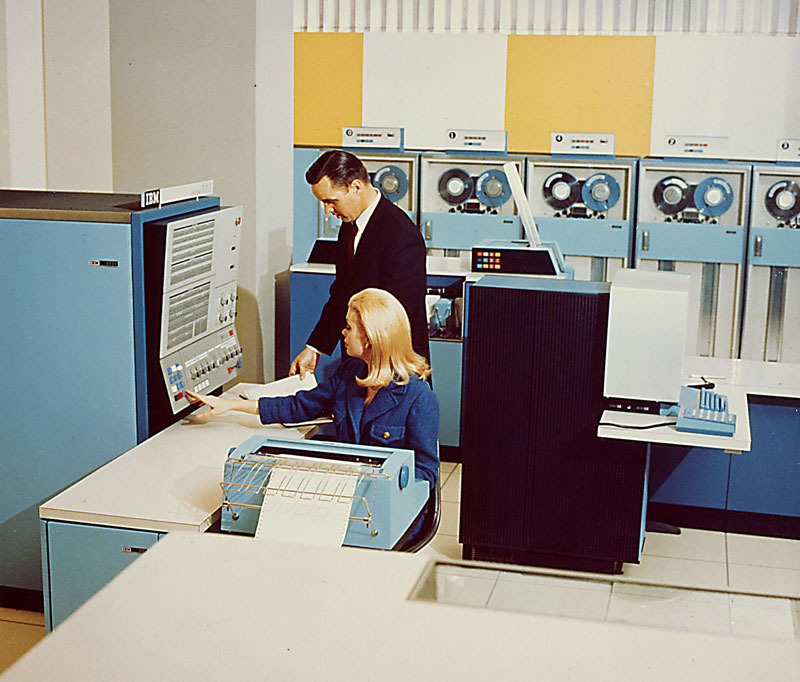
At the heart of everything is the question of what IBM’s customers really want, as Cringely points out.
The lesson in all this — a lesson certainly lost on Ginni Rometty and on Sam Palmisano before her — is that companies exist for customers, not Wall Street.The customer buys products and services, not Wall Street.
While investors are important, businesses only exist if customers want to pay for their wares. If a company can’t convince people to buy their products, or find a way to subsidise it like the media industry did for most of the Twentieth Century, then there is no reason for the venture, or its industry, to exist.
For many technology companies this is the situation they are facing right now, many other industries aren’t far behind.
The concentration of Australia’s business power has its roots in the 1980s where the then Hawke Labor government decided the nation’s corporations couldn’t be globally competitive unless they had scale in the home markets, and so a wave of mergers and acquisitions started.
An industry that was particularly problematic was telecommunications. At the time Hawke came to power in 1983 there were three government owned telcos; Telecom Australia that operated the domestic network and the Overseas Telecommunication Corporation which handled the nation’s global links along with a small satellite provider, Aussat, intended for remote access and some defense functions.
David Havyatt at InnovationAus describes the late 1980s thinking that lead to Telecom and OTC being merged to become Telstra, the company that dominates the Australian telecommunications industry today.
The then political troika of Prime Minister Bob Hawke, Treasurer Paul Keating and communications minister Kim Beazley decided allowing OTC and Telstra to merge would give the company global scale, as Havyatt quotes from a policy discussion around 1990.
“A strong vertically integrated national carrier which is able to provide a one-stop-shop for Australia’s telecommunications services both domestically and internationally, providing economies of scale and scope and the prospect of a unified and enhanced international profile.”
Despite the lofty ambitions and a few half hearted attempts to grow global business operations, a quarter century on sees Telstra’s international returns at an almost derisory level.
Dodging global bullets
One could argue that Telstra’s shareholders dodged a bullet – Canada’s Nortel followed the same path and, after early successes, failed spectacularly in the early 2000s.
For Australians in general though, Telstra’s insular focus has been a disaster as maintenance and investments were deferred to make the company’s yields more attractive and the Howard government’s compounding the Labor party’s mistakes in fully privatising the business without breaking its monopoly power.
Which lead Australia into the folly of the National Broadband Network – while the original intention of investing in the telecommunication sector and breaking Telstra’s lock on the industry was a good idea and supported by this writer – it quickly morphed into a massive waste of money and remains so today. If anything, the NBN will only increase Telstra’s market power while delivering more expensive services to the nation.
Australian exports by sector: Department of Foreign affairs and trade
Notable in the above graph is how in the 1990s it appeared the ‘go big, go global’ was working but by the turn of the century, the combination of the mining boom and the nation’s business elites – particularly in banking, insurance, retail and media – had starting looking at exploiting their domestic markets rather than competing internationally.
While there have been successes such as Westfield in shopping centres, Lend Lease in construction and Brambles in logistics management, the bulk of Australia’s corporate leaders are inwardly focused on extracting maximum revenue from their captive local companies.
Global ownership
Increasingly, those dominant companies aren’t even Australian. The brewing industry is a good example where locally owned beer producers make up less than ten percent of the market dominated by New Zealand’s Lion Nathan and British based global conglomerate SAB Miller. Australians, it seems, cannot even brew their own beer any more.
Australia’s managers have been the greatest beneficiaries from the nation’s failed business policies as it’s insulated them from global competition, life is good when you’re the biggest fish in a tiny pond.
While good for managers, the lack of business diversity competitiveness and insular focus leaves Australia’s economy deeply exposed. The failure of the 1980’s grand vision where Australia developed a cohort of globally leading businesses is one that will be regretted by future generations as they pay higher prices for poorer products.
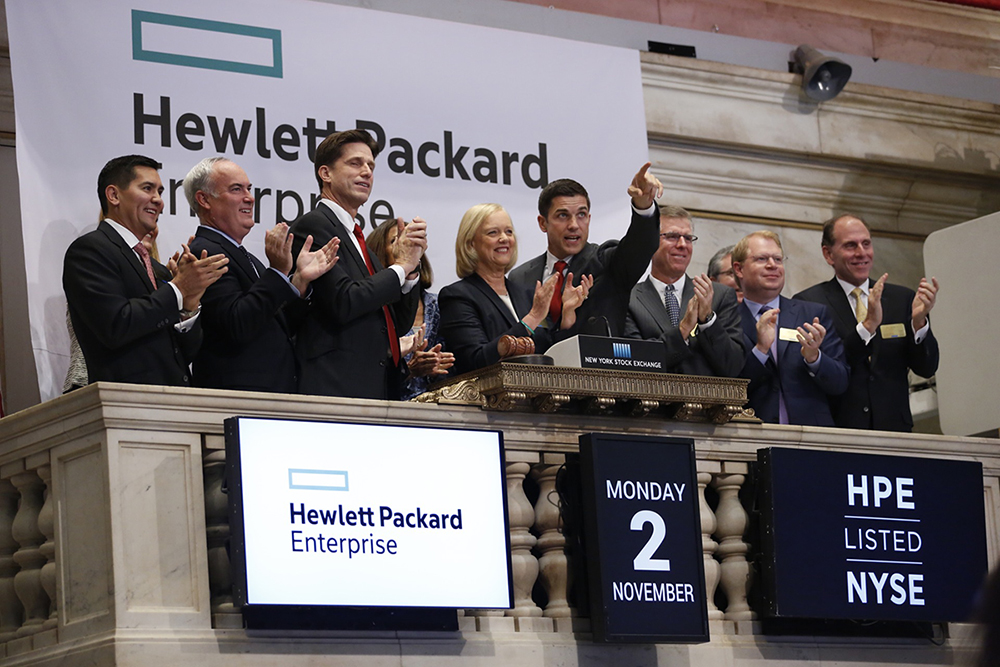
Like companies such as IBM and Google, HPE are looking to make money out of data feeds and analytics with a key part being a platform for developers to create applications.
In launching their Haven OnDemand service, HPE are entering a crowded field with IBM, Salesforce, AWS and Splunk – among others – offering similar products. What compelling difference HPE will add to the field will be something I’ll be asking the company’s executive later.
One of the other services, HP Vertica, looks running data analytics against structured and ‘semi-structured’ sources. Again this is a field where other companies are well established and have an advantage in being able to examine unstructured data.
The overwhelming question though is how big, and lucrative, the market is for these data products. It’s not clear exactly how all of these companies are going to monetize these services and, should they be able to, their profitability.
As a company finding its feet less than a year after being split in two with the added problem of seeing its core server hardware business being eroded, HP Enterprise is realigning its business around data analytics and cloud services.
The challenge for the company is differentiating itself and providing competitive products in these markets, this will be a tough challenge.
What are the trade offs in the connected city? Last week we had an opportunity to talk with Esmeralda Swartz, Ericsson’s Vice President of Marketing Enterprise and Cloud last week about what policy makers and citizens need to consider.
One of the important issues is security in both the data being collected, “what are the benefits and what is not acceptable?” Esmeralda asks.
In all the conversations this site has had with smart city advocates the topic of open data has been essential, but this raises the issue of security. Something lacking in the Internet of Things.
“Security has to be built into every level,” says Esmeralda who flags that the IoT adds a whole range of new risks.
Along with security, a critical part of a successful connected city is having open data, Esmeralda believes.
“if you start looking at the all the layers that need to be connected then they have to be open,” she says.
Open data is a critical point for smart cities and connected communities, if information isn’t open then it’s hard for an ecosystem to develop or for residents to have confidence their data is being used for their benefit.
For companies like Ericsson, who are trying to establish themselves outside of the traditional telco model, gaining the confidence of communities and their leaders is essential to their smart city strategies.
Much of the smart city movement is based upon solutions looking for problems – a common trait of the IT industry – for vendors like Ericsson to succeed in selling their products it’s essential to prove value to their customers and gain the confidence of communities as they trade off utility for privacy.