Category: artificial intelligence

  • Creating a Silicon Brain

    Creating a Silicon Brain

    Should we be rethinking how computers are designed? The co-founder and CEO of chip designer Nervana, Naveen Rao, believes so as artificial intelligence applications change the way systems work.

    “A brain only uses 20 watts of power to do far more than a laptop,” observes Naveen Rao at a breakfast following Intel’s Artificial Intelligence Day in San Francisco last week.

    “Presumably the brain is doing more computation than your laptop,” he continues. “What are we missing? Why is there such a big difference between what a computer can do and a brain can do. Let’s try to understand that and maybe what we learn can change how we design computers.”

    A lifetime passion

    Rao, whose company was acquired by Intel for over four hundred million dollars last August, was discussing the quest to make computers operate more like brains and less like adding machines.

    For Rao this has been a lifetime passion, having graduated as an electrical engineer and spending most of his career designing computer chips at Sun Microsystems and various startups he quit his job to do a PhD in neuroscience, “after ten years, I wanted to return to my passion of trying to use biology to better understand computers.”

    From that combination of study and experience Nervana was founded in 2014 and raised twenty million dollars from investors before being acquired by Intel.

    Replicating the bird, not the feathers

    The key part in creating a computer that acts more like a brain is to get the individual CPUs to be working together in a network similar to the mind’s neural paths, “look at a bird compared to a plane.” Rao says,” we don’t replicate the feathers, but we do the function.”

    Doing this meant rethinking how processors are designed, “there are tried are true methods of chip architecture that we basically questioned.”

    “We don’t need high levels of generality. We don’t need this to work on energy or weather simulations. We removed some of that baggage.”

    Paring back the processor

    So the Nervana team stripped down the individual processor and removed many functions, such as a cache, that are built into today’s advanced CPUs. Those lighter weight, and less power hungry, units can then be combined into neural networks more suited to artificial intelligence functions than today’s computers.

    “Nvidea, this sort of fell into their laps,” observes Rao of Intel’s key competitor in the AI, graphics and gaming space. “It just so happens the graphics functions on their chips are suited to Artificial Intelligence applications.”

    Without the more complex functions of modern CPUs, Rao and the Nervana team see the opportunity to build more flexible computers better suited to artificial intelligence applications.

    Intel focuses on AI

    That focus on AI has seen Intel branding its AI initiatives under the Nervana brand name as the iconic Silicon Valley company tries to move ahead with more nimble competitors like Qualcomm and NVidea.

    For the computer industry, artificial intelligence promises to be the next major advance, something necessary if we are ever going to make sense of the masses of data being collected by smart devices and the reason why Microsoft, Google, Amazon and Facebook are all making massive investments in the field.

    Regardless of whether Intel and Nervana are successful in the AI marketplace, Rao sees the entire field of neural computing as a great opportunity. “It’s exciting, there’s lots of chances to innovate.”

    Paul travelled to San Francisco as a guest of Intel
     

    Similar posts:

    • No Related Posts
  • Microsoft quietly buries its smartphone ambitions

    Microsoft quietly buries its smartphone ambitions

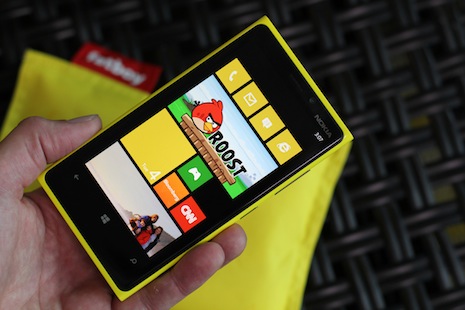
    Last week Microsoft quietly buried its smartphone ambitions with the announcement they would shed 1,850 jobs largely from the remains of the Nokia business they acquired four years ago.

    Microsoft’s Lumia exercise was expensive for the company but even more costly in terms of missed opportunities.

    Those opportunities are now in cloud computing and artificial intelligence services. Shareholders will be hoping the current CEO Satya Nadell executes a lot better on them than his predecessor did with smartphones.

    Similar posts:

    • No Related Posts
  • Microsoft imagines its future markets

    Microsoft imagines its future markets

    Currently Microsoft are running their Imagine Cup, the company’s annual student developer competition at their Seattle head office.

    A regular fixture for the last 14 years, the Imagine Cup is Microsoft’s opportunity to show how emerging applications can be based upon their technologies. It tells us as much about the company’s successes as it’s missed opportunities.

    With Artificial Intelligence and machine learning being the upcoming battlegrounds for the software giants, it’s not surprising many of this year’s competitors are focused on applying those technologies.

    A good example of this is the Ani platform of Australia’s entrant, Black.ai, which analyses spatial movement and biometric information. In many ways this adds intelligence to smarthomes and has immediate applications in fields like aged patient care.

    Black.ai’s timing is very good as patient monitoring has become an issue in their home country and veteran tech investor Mark Suster predicts tracking the flow of people is going to be a huge market.

    The patient care angle of Black.ai’s  is particularly pertinent to the Imagine Cup competition as health services have been a focus in the past. Two years ago the winners were another Australian medical services platform, Eyenaemia that used a smartphone app to detect anemia.

    While the Imagine Cup is a good showcase for Microsoft, the competition also shows how the market has evolved around the company. Most of the contests have a smartphone component and the cloud features heavily in all the applications, both are fields where Microsoft has either struggled or is playing catch up.

    The focus on cognitive computing and artificial intelligence in this year’s event shows the company is keen to show off its prowess in the emerging battle with Amazon, Google, Apple and no doubt other companies. Microsoft will be hoping they won’t be left behind in the next wave of computing.

    Similar posts:

    • No Related Posts
  • Microsoft and the AI future

    Microsoft and the AI future

    Despite the embarrassment of their foul mouthed racist bot, Microsoft are pressing on with a move into artificial intelligence.

    Ahead of this week’s Launch event in San Francisco, Microsoft’s CEO Satya Nadella laid out his vision for the company’s Artificial Intelligence efforts in describing a range of ‘bots’ that carry out small tasks.

    Bloomberg tagged Nadella’s vision as ‘the spawn of clippy’, referring to the incredibly irritating help assistant Microsoft included with Office 97.

    Tech site The Register parodied Clippy mercilessly in their short lived IT comedy program Salmon Days, as shown in this not safe for work trailer. While The Reg staff were brutal in their language and treatment of Clippy, most Microsoft Office users at the time shared their feelings.

    While Clippy may be making a comeback at Microsoft, albeit in a less irritating form, other companies are moving ahead with AI in the workplace.

    Robot manufacturer Fanuc showed off their self learning machine a few weeks ago which shows just how deeply AI is embedding itself in industry. Already there are many AI apps in software like Facebook’s algorithm and Google’s search functions with the search engine’s engineers acknowledging they aren’t quite sure what the robots are up to.

    For organisations dealing with massive amounts of data, artificial intelligence based programs are going to be essential in dealing with unexpected or fast moving events. Those programs will also affect a lot of occupations we currently think are immune from workplace automation.


    Similar posts:

    • No Related Posts
  • Exploring the downsides of artificial intelligence

    Exploring the downsides of artificial intelligence

    Microsoft Research ran an experiment last week on their artificial intelligence engine where they set a naive robot to learn from it was told on Twitter.

    Within two days Tay, as they named the bot, had become an obnoxious racist as Twitter user directed obnoxious comments at the account.

    Realising the monster they had created, Microsoft shut the experiment down. The result is less than encouraging for the artificial intelligence community.

    Self learning robots may have a lot of power and potential, but if they’re learning from humans they may pick up bad habits. We need to tread carefully with this.

    Similar posts:

    • No Related Posts