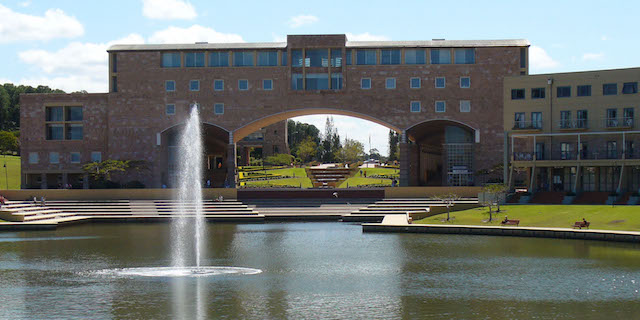
Today Cisco launched their latest Internet of Everything Innovation Centre in Perth, Western Australia. The facility joins the seven existing centres around the globe which includes Rio de Janeiro, Toronto, Songdo, Berlin, Barcelona, Tokyo and London.
As a joint venture with resources company Woodside and Curtin University, the centre will initially focus on the gas industry and will include a state-of-the-art laboratory, a technological collaboration area, and a dedicated space to show the Internet of Things in action.
Oil and Gas is one of the key sectors for targeted by Cisco in their Internet of Everything push with Brad Bechtold, the company’s Energy Lead, telling Decoding the New Economy earlier this year how the IoT is expected to deliver an eleven percent reduction of costs for the $1.5 trillion dollar a year industry.
Bechtold believes remote sensing and operations will be the driver of many of the cost reductions along with detailed analytics enabling more efficient operations.
Many of these technologies will be tested as part of Woodside’s Plant of the Future gas project with CEO Peter Coleman saying the scheme will link company’s knowledge base with artificial intelligence, data analytics, and advanced sensors and control systems.
“We are taking a collaborative approach to enhancing our operations as part of our digital transformation journey. This partnership will create a globally competitive centre for excellence that could be leveraged in our LNG operations, as we progress our remote operations capabilities,” Coleman said.
The Perth centre intends to bring together start-up companies, industry experts, developers, researchers and academics in an open collaboration environment to create a “connected community” focused on cloud, analytics, cyber security and IoT network platforms.
The Australian Commonwealth Science, Innovation and Research Organisation (CSIRO) has also flagged it intend to join the hub as part of its Square Kilometer Array deep space mapping project.
Another branch of the Australian hub is expected to open in Sydney later this year.
The lean startup model is based on getting the minimum viable product into the marketplace and should users be enthusiastic seeking investor funding to develop the business further.
Guy Kawasaki described this in an interview last year where he described the minimum viable valuable product idea of getting the most basic service to market at the lowest cost and then getting users and investors on board.
However it might be that model only works where “startup entrepreneurs have full access to eager and intelligent business customers, hosts of industry angels and venture capitalists with money to burn,” reports Canada’s Financial Post.
Blank came to that conclusion on a trip to Australia where he met with sports tech startups: “Meeting with a coalition of entrepreneurs in the tech and sports space, he realized the lean startup framework didn’t account for the vagaries of local economies. Australia sports-tech entrepreneurs trying to scale their businesses would find that their major customers are in the U.S., halfway around the world. And unlike most Valley startups, the Aussies would need to source manufacturing expertise — which means budgeting for several trips to China.
The problems facing Australia’s entrepreneurs probably extend further as the nation’s investors are notorious risk averse and the high cost of doing living means the burn rates for startups are much harder.
Blank’s recommendation is any region looking at establishing a startup community should identify its own strengths and advantages then build its own playbook.
We can be sure the next Silicon Valley – be it in the US, China, Europe or anywhere else in the world – will have different strengths than the Bay Area today.
Last week convicted fraudster and one time Australian national hero Alan Bond passed away. In many respects Bond’s rise, fall and comfortable dotage tells us much about Australia today.
Originally born in England, Bond was a ‘ten pound pom’ – like this writer and two of Australia’s last three Prime Ministers – whose family took advantage of subsidised immigration programs to leave the cold climate and dismal British economy for sunnier, more prosperous parts.
Building the Australian dream
In Australia Bond prospered. On leaving school he became a sign writer and set up a business where he quickly gained a reputation for sharp practices and cutting corners. However as with much of his generation real wealth was to be made in property speculation.
As Australian cities expanded through the 1960s, developers and speculators were at the forefront of the nation’s economic growth. Perth, Bond’s home town, doubled in size between 1961 and 71 and the once dodgy sign maker made his mark as a wheeler and dealer as he traded properties and build his fortune.
As the 1980s began a cashed up Bond was ready to take advantage of the economic orthodoxy of the time that to compete internationally, Australian businesses had to consolidate domestically to gain the scale required to be global players.
Bond added to his claims in 1983 when he wrested the America’s Cup out of the cold dead hands of Long Island’s Newport Yacht Club. Suddenly businessmen were the national heroes and Australians, particularly politicians, fell over themselves to bask in the glow of the nation’s entrepreneurial summer.
Dancing on the world stage
Around the time of the America’s Cup win the newly elected Hawke Labor government deregulated the Australian banking industry providing a ready supply of hungry financiers prepared to fund the global ambitions of Bond and his contemporaries.
The rest of the decade saw Bond leading a wave of Australian entrepreneurs using easy money to build international empires. Bond himself ended up building one of Australia’s brewery duopoly, holding prime Hong Kong property, buying the nation’s most popular TV station and owning a Chilean telephone company.
Naturally much of his money ended up in Switzerland and Lichtenstein, something that would work in his favour early in the 1990s.
The larrikin streak
Bond’s disregard for the law, investors and anyone unfortunate to get between his cronies and a bag of money – politely described as a ‘larrikin streak’ by many – continued as regulators and governments indulged his behaviour.
One good example of the free pass he received from Australian regulators in the 1980s were his insider dealings with his then mistress Diana Bliss, the latter of whom exquisitely timed a purchase of a small energy exploration company stocks in 1988 a week before Bond Corporation announced a take over offer.
Regulators at the time dismissed any claim of insider trading after being assured that neither Bond nor Bliss would ever countenance such behaviour, the Sydney Morning Herald later reported.
When the luck runs out
Eventually the 1980s Australian economic miracle and the entrepreneurs leading it proved to be chimeras based upon property valuations. When the 1990 downturn hit, the rampaging Aussie business heroes all quickly fell as their overindebted empires collapsed.
Bond’s personal fortune however survived thanks to his judiciously salting away assets controlled by loyal advisors. His 1994 bankruptcy hearing ended in farce when he successfully convinced the court he was suffering dementia and couldn’t remember anything of his business dealings.
He couldn’t stay too far ahead of the courts however and ultimately Bond served two prison terms totalling four years for dishonestly pillaging companies to keep his operation afloat.
At the same time Bond was being chased through the courts, Australia’s banks were licking the financial wounds incurred from their irresponsible exposure to the nation’s entrepreneurs. The lessons they learned define modern Australia.
Bearing the brunt
The country’s small business community eventually bore the brunt of the Australian banks’ losses as lenders’ balance sheets were rebuilt through high interest rates, massively increased fees and charges and tightened lending criteria. Many of those high fees and rates continue to cripple Australian business twenty-five years later.
Adding to the Aussie small business sector’s woes, the 1998 Basel I Accords were coming into force favoring property lending over business finance. Increasingly it became harder for any Australian businessperson to raise money from local banks while property speculators were welcome.
Over the next twenty years the result was stark. One chart from the Macrobusiness website illustrates the huge growth in Australian residential property lending and the stagnation of business finance since 1991. Only at one stage, in 2008, has business lending matched the levels of the late 1990s.
That shift to an economy based upon property prices, particularly speculation on residential accommodation, has served Australia well with the nation not experiencing a recession since the 1990s downturn.
The Australian economic miracle
Australia’s success allowed Reserve Bank governor Glenn Stevens to sneer in 2010 that Microsoft founder Bill Gates’ warnings about the Australian economy lack of diversity were misguided and foolish – the mining boom coupled with never ending property price growth guaranteed the nation’s prosperity.
In this respect, all Australians have become Alan Bond. Just as the bold riders of the 1980s boom based their future on property valuations so too have Australian households and the entire economy thirty years later.
Hopefully for Australians in general it will end better than it did for Alan Bond in 1996.
One though should not weep too much for Alan Bond, after being released in 2000 he quietly rebuilt his empire and in 2008 BRW magazine estimated his wealth at $265 million and named him among the 200 wealthiest people in Australia.
Time will tell if Australians share the deceased tycoon’s luck but in a way we’ve all become little Alan Bonds now in our dependence upon the valuations of our real estate holdings and the indulgence of those financing our lifestyles.
It may well be having a few bob hidden away in Switzerland might the best way for Australia’s indebted homeowners to protect their future.
I’m preparing a corporate talk for next week on the changing economy and one theme that sticks out is how the Twentieth Century was defined by cheap energy and physical mobility as mains electricity and the internal combustion engine became ubiquitous and affordable.
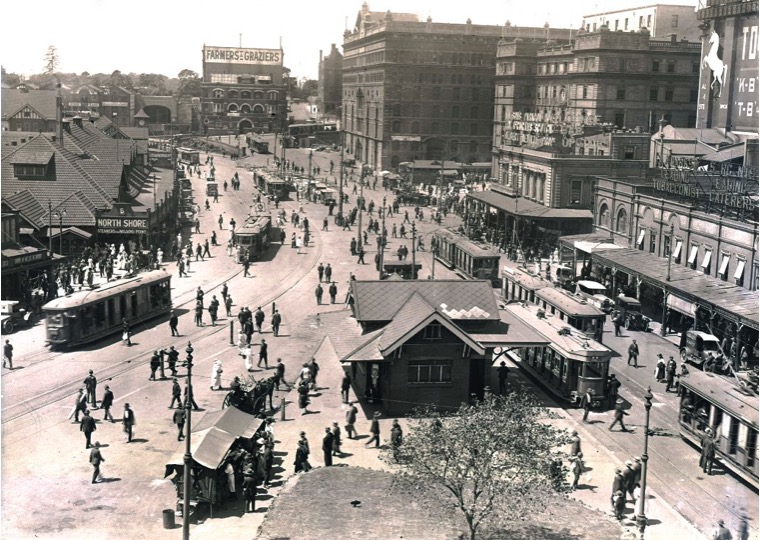
The picture accompanying this post illustrates that shift, Sydney’s Circular Quay a hundred years ago was just at the beginning of the automobile era. The previous fifty years had bought trams, the telegraph and reliable shipping but the great strides of the Twentieth Century were still to happen.
At that stage the steam engine and advances in electrical transmission had bought reliable power to the masses, although it was still expensive. What was to come over the next fifty years was that energy was about to become cheap and abundant. That drove the suburbanisation of western societies and the development of industries around the availability of cheap power and a mobile workforce.
At the time though information was still expensive, the control of broadcast networks by a few license holders and print operations by those who could afford the massive costs of producing and distributing magazines or newspapers made data difficult to get and worth paying for.
Today we’re at the start of a similar shift in information; it’s no longer expensive or difficult to obtain.
What that means for the next thirty years is what industries will develop in an economy where information is basically free and ubiquitous. Just as cheap energy created the consumerist economy, we’re going to see a very different environment in an age of cheap data.
In last week’s Federal budget the biggest news for business was the expansion of the accelerated depreciation limits where items up to $20,000 can be immediately claimed as a tax deduction.
While this was a reversal of the previous budget that slashed the previous allowance, it was welcome news for businesses looking at replacing older tools and equipment or investing in new technology.
One of the notable things about business technology is companies have a habit of holding onto older equipment long beyond what should have been its use by date.
The consequences of using old technology are real, the older equipment is often not as fast as the newer kit which affects productivity and unpatched software is often the way malware finds its way into a business.
Point of sale risks
Earlier this week computer security vendor Trend Micro held their Cybercrime 2015 breakfast in Sydney where the director of the company’s TrendLabs Research division, Myla Pilao, described some of the threats facing businesses.
One of the top risks were Point Of Sale systems (POS) where Trend Micro’s research had found over a third of US retailers had malware on their cash registers, in Australia it was six percent.
Most of those infected POS terminals would be older units with many of them being software running on out of date versions of Windows that haven’t been patched or upgraded since they were bought a decade ago.
Similar problems exist with older workstations, internet routers and even photocopiers where the technology has moved on and security holes discovered. Basically old equipment holds businesses back and exposes them to risks.
Now the carrot of an immediate tax deduction gives Australian businesses an opportunity to refresh their technology. So what is the technology, smart company managers and owners should be spending their money on?
Kick out your desktops
“If it ain’t broke, don’t fix it” is the mantra for most business IT and desktop computers are the best example of this. In most companies as long as the word processing software or accounting package works the PCs continue to be used.
With the withdrawal of support for the decade old Windows XP operating system last year, many older computers started being a liability in a business so now is the time to replace them.
Consider tablets
It may not be necessary to replace the old desktop computer with new ones, for many job roles a tablet computer is often a better choice. With cloud technologies increasingly being adopted there’s less of a need for a grunty PC sitting on each staff member’s desk.
Upgrade the router
One of the areas where businesses often compromise is with their internet access. Having an old, cheap router designed for home use is just not good enough for companies who rely upon being connected.
A new business grade router will improve office internet access along with resolving most of the security issues older equipment is notorious for.
Going mobile
If you’re struggling on old mobile phones, now might be the time to upgrade to the latest smartphone. Amongst other things this will improve your office productivity, particularly if you combine the investment with some of the cloud services that make working on the road a lot easier.
Cloud services are not part of the depreciation rules as they are usually subscription models and this shows the weakness in the Federal government’s thinking.
Indeed for those vulnerable Point of Sale systems, a cloud based service running on tablet computers is probably a better solution than most server and PC based packages.
A lack of vision
The ‘ladies and tradies’ theme of the budget shows the Federal government is stuck in with the vision that Australian businesses are mainly mom and pop service operations in the traditional trades and professions.
While the depreciation changes are welcome they do little to help startups or companies in emerging industries and for the economy in general will provide not much more than a GDP ‘sugar hit’ for retailers’ cash registers as we buy imported equipment for our businesses.
For the Australian economy in general, the move really only benefits Gerry Harvey who can buy a few more racehorses from his stores’ and his rich mates who can afford some more expensive wine fuelled brawls in Sydney waterside restaurants.
Australian businesses owners need to be demanding better thought out policies from a government that claims to be friendly to industry. The economy is changing and 1970s style tax benefit is not the way to prepare for a changing world.