Category: Australia

  • Mining for jobs in an automated future

    Mining for jobs in an automated future

    While politicians clamour to ‘bring jobs home’, automation is increasingly taking those jobs away with the mining industry being the best example.

    In 2015, McKinsey looked at the effects of automation in various US industries and found the production component of mining could lose over 80% of its jobs in coming years.

    In a piece for Diginomica this week, I looked at a case study featuring Western Australia’s Fortescue Metal Group (FMG) from the recent AWS Summit in Sydney.

    Slashing costs

    When Fortescue planned their Solomon groups of iron ore mines in the Pilbara region of North-Western Australia in 2010, they estimated 75 manned trucks would be needed. As it turned out they only needed 49 robotic vehicles.

    The savings, both in capital expenditure and operational costs was substantial and the entire operation saw its costs nearly halved.

    It’s not just trucks becoming autonomous, functions like drilling and explosives laying are also being automated reducing costs and risks even further.

    Dashed hopes

    So mining communities like those in the United States hoping Donald Trump will bring back prosperity or Australians who believe a billion dollar subsidy to an Indian coal mining company will guarantee jobs are doomed to disappointment.

    A modern mine is likely to employ more workers in an office thousands of miles away than on the site itself. Where once the surrounding region would get hundreds of jobs from a large mine, today it’s only going to be a handful.

    It isn’t just the mine workers themselves though, McKinsey’s study also forecast the mining industry’s administrative workforce could see 90% of jobs going while senior management had the potential of being 99% automated.

    Beyond blue collar roles

    That this wave of automation will affect ‘white collar’ jobs as much as trades or unskilled workers isn’t new – this piece in 2015 for The Australian described how many of the ‘knowledge economy’ jobs will soon be done by robots or artificial intelligence.

    Mining is a good indicator of where technology and employment is heading. We, and our political leaders, are going to have to think carefully where the future jobs are coming from as they aren’t going to be found in resurrecting old industries.

    Similar posts:

  • Sydney’s digital humiliation

    Sydney’s digital humiliation

    It’s hard not to see Google’s decision not to move the mooted digital hub at Sydney’s White Bay as nothing short of a humiliation for the New South Wales state government.

    The White Bay project is the centrepiece of the NSW government’s startup tech startup strategy and Google were hoped to be the anchor tenant for  the refurbished power station that’s been abandoned for over thirty years.

    With Google’s Sydney office currently overflowing and its staff numbers expected to increase from around 1500 today to 10,000 over the next few years, the White Bay precinct with its cathedral like power station made some sense.

    For the startup community, having something similar to the London Google Campus would have been a valuable part of the city’s ecosystem.

    However the location is in a traffic blackspot served by a woefully inadequate and unreliable bus service with a series of major road projects planned to start in the neighbourhood over the next five years which forced Google to rethink their plans.

    Now it looks like the White Bay project getting underway this year is doomed and meanwhile the Victorian state government is spending big to attract tech companies to Melbourne.

    This is far from the first time the NSW government has had ambitions for a digital hub and again a project stumbles in the face of poor planning by the NSW government.

    We don’t know if the Victorian government has made an offer to Google yet, but it wouldn’t be surprising if they have. It could be New South Wales is about to pay the price for its lack of vision and forethought.

    Similar posts:

  • Surviving Amazon’s onslaught

    Surviving Amazon’s onslaught

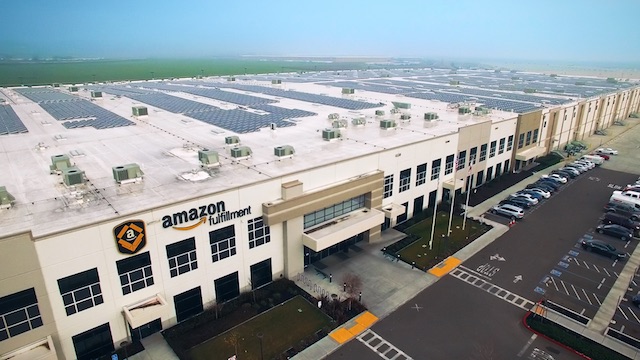
    The long awaited launch of Amazon in Australia seems to be finally happening with reports the giant is scouting locations for logistics centres for a late 2018 launch.

    While some are predicting a retail apocalypse, not all are convinced Amazon will do well. Australia doesn’t have a catalog culture buying culture like the United States and, as german supermarket chain Aldi found, the nation’s high property prices and restrictive zoning rules makes acquiring sites difficult.

    A further impediment for Amazon in Australia is the last mile with Australia Post dominating the delivery business, despite its mediocre service, and the dominance of incumbent retailers in the suburbs where most Australians live means the US giant isn’t guaranteed success.

    Whether Amazon’s entry into a market does mean a retail apocalypse is also another question, while its clear the mall era is drawing to close there are plenty of success stores with chains like Ulta Beauty, Sephora and Kiehls – not to mention the Apple Store – thriving despite Amazon’s growth over the past twenty years.

    In the Australian context, a bigger question should be around why local equivalents haven’t thrived with Billabong, Pumpkin Patch and Kathmandu all failing while the established majors have barely glanced at overseas markets – Harvey Norman and Westfield being the stand out exceptions, although the former hasn’t been a great success.

    Even in Amazon’s original market of bookselling, big chains like Borders have fallen victim but local independent bookshops have survived and grown despite the online threats. So local retailers can weather an Amazon onslaught.

    Another benefit of Amazon starting in Australia is to encourage new business, particularly given the US giant is rumoured to be focusing on groceries as it gives new entrants to the market an opportunity to enter without having to deal with the stultifying duopoly that dominates the market.

    One thing is clear though, Australian retailers have been slow in moving into online and international markets, probably due to the luxury of catering to consumers in an economy that hasn’t been troubled by recession for a generation.

    The year’s warning that Amazon will be opening shop is a warning for Australian business to lift their game and compete. Those who don’t won’t have any excuses.

    Similar posts:

  • Government cargo cults and community building

    Government cargo cults and community building

    Following the post on Building Digital Communities a few weeks ago, some friends forwarded me an excellent article from New Zealand tech evangelist Dan Khan on what he learned from from observing the development of Boulder’s tech community.

    Khan’s view is values are at the root of building a startup community, an open and distributed network of people bringing their disparate but relevant skills to a region is what builds an industry cluster.

    Equally it’s about values being aligned so the community reinforces its own strengths and advantages.

    To many, the startup community is not a tangible thing. Instead, it’s an amorphous, ever-changing network of support, knowledge, resources, and relationships which gives those creating ventures, a boost up to the next level when they need it.

    It’s simultaneously a safety net that eases founders down when their ideas fail; and a resounding cheerleader and network of scale for those flying high.

    The New Zealand experience is informative as Wellington’s tech sector explodes on the back of special effects studio, WETA along with Xero and the vibrant startup community based around initiatives like Enspiral. So much so the city is offering free trips to prospective workers.

    Enspiral itself is a good example of grass roots community initiative where a contractor’s collective has grown to 300 strong organisation building connections between Wellington’s creative, tech and businesses groups.

    History is on the side of those building grass roots communities as almost every industrial hub has grown out of motivated individuals harnessing a local region’s advantages to dominate a sector.

    As Steve Blank’s Secret History of Silicon Valley describes, the rise of today’s venture capital tech sector business model came out of a group of driven individuals leveraging the United States’ massive electronics research spending through the mid Twentieth Century along with a boost from tax changes in the late 1970s.

    Silicon Valley’s startup culture owes a lot to government spending and policies but the development of today’s ecosystem took fifty years and many motivated individuals working together.

    Which brings us to to the Victorian state government’s funding the establishment of a 500 Startups outpost in Melbourne. This is part of a sustained campaign to subsidise global tech companies’ setting up their regional offices in the city.

    As part of that campaign the Victorian state government has promised to spend sixty million Australian dollars on building a startup ecosystem in Melbourne, it’s a classic example of top down planning.

    History hasn’t been kind to Victoria in its tech industry subsidies, with the state government spending ten of millions at the beginning of the century to develop region’s gaming industry only to see the sector collapse as a high Australian dollar and soaring costs saw international studios leave and local producers close.

    In 1998, then Victorian Premier Jeff Kennett, triumphantly proclaimed subsidising Netscape’s Australian office would lead to Melbourne becoming a global tech centre. Twenty years later, that game continues.

    500 Startups founder Dave McClure hints at how the outpost will be limited, “Partnering with Melbourne and LaunchVic helps us bring a slice of Silicon Valley to Australia through our startup, investor, and corporate programs.”

    So there’s a strong sense of deja-vu, dare one say even cargo cult thinking, in the weekend’s announcement.

    While bringing a slice of Silicon Valley to Melbourne is nice, it doesn’t build an ecosystem which will take years of patient encouragement of local, motivated individuals. What’s worse, the government intervention threatens to distort the market and stifle the culture of grass roots development Khan identifies as being critical.

    The question for Melbourne’s startup community is how much patience does the government have? The nation’s political culture of announceables, which the current state minister is an enthusiastic participant, doesn’t bode well.

    For the moment, the priority for the Melbourne startup community is to decide if public sector funding should be a critical part of their ecosystem. If government subsidies for foreign businesses are the answer then ensuring bipartisan and long term political support for strategic initiatives should also be close to the top of the list.

    Similar posts:

  • How to reinvigorate a stale economy

    How to reinvigorate a stale economy

    What has gone wrong with Australian innovation? For a nation so wealthy, it’s remarkable how poorly the country performs globally in terms of bringing new products or technologies to market.

    At Ad:Tech Sydney yesterday, The Great Australian Innovation Fail panel discussed what has gone wrong and what can be done to get the nation back to a position more in line with its comparative affluence.

    Boasting a range of digital media veterans and startup founders, the panel was far from a group of muttering naysayers. Although all but Fleet Systems’ Flavia Tata Nardini were distressed at the failure of Australia’s innovation agenda and the country’s general disdain for new businesses and technologies.

    Michael Priddis, the CEO of research and development consultancy, Faethm,  pointed out that automation and artificial intelligence are not the future but the present and the job losses are happening now across industries.

    Caitlin Iles, founder of XChange, added that she believes the estimates of nearly fifty percent of Australian jobs being lost to automation are actually understating the effects and it’s more like 90% – “a doomsday statistic” – which is something that Priddis endorsed in observing how the mining industry has automated in the past decade.

    The employment shifts are being ignored by governments, says Beanstalk Factory’s Peter Bradd. “They have to get their heads out of the sand. We need to be supporting workers in threatened jobs to reskill. That’s just not happening at the moment.”

    Australia’s underperformance is stunning when you consider tech startup exits, says the Information Industry Association’s Tony Surtees. Unsurprisingly Silicon Valley dominates the global statistics with over 47% of the global value with London, Los Angeles and Tel Aviv following. Sydney was at the bottom of the table with only .01% of value.

    The value of exits is a problem, but that is more about the capitalisation of startups and may be changing. A bigger problem lies in how Australia’s corporate sector innovates and engages with new technologies.

    Corporate Australia’s failure to engage is shown in the OECD ranking the country at 81st globally in ‘innovation efficiency’, while the nation is tenth in inputs it fails dismally in applying those inputs into outputs.

    This is reflected in corporate Australia’s failure to compete globally outside the mining sector. Basically Australian executives have little desire in international markets and most have no interest in engaging with researchers, universities, innovators or entrepreneurs.

    “People don’t like to collaborate,” says Peter. “They want to keep everything to themselves.”

    “The CEOs of Australia’s top twenty companies need to get together with CSIRO and the universities and fix this problem. There’s money on the table.”

    Whether Australia’s business leaders are prepared to pick up that money, or they’re happy and comfortable with their lot is probably the question of whether Australia can start to pull its weight in the innovation stakes.

    “In ten or fifteen years we’ll be screwed if we don’t,” concludes Michael.

    Similar posts: