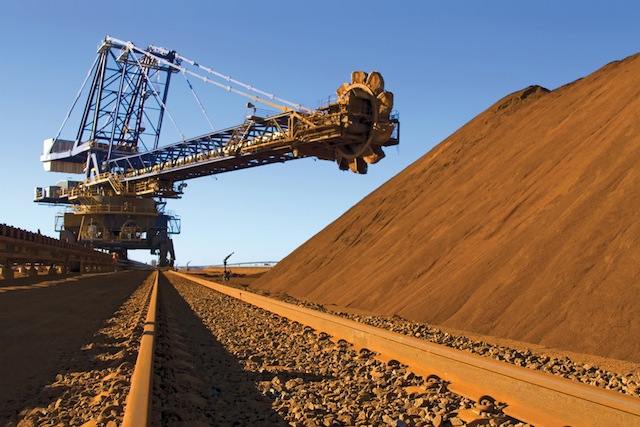
The Prime Minister’s comments at the ADC China Forum last week raised an important question about Australia’s mining boom – can the industry sustain employment as the construction of mines, ports and railways are completed?
In that interview, the Prime Minister was upbeat about the continued employment bonanza from the resources boom.
I think overwhelmingly the prospects are good for resources. There is nothing to fear here. The absolute peak of the price cycle has probably passed, but we will still be doing good business in resources. It will be supporting jobs.
Nev was a little more circumspect about the prospects for continued booming employment in the mining sector.
our capital expenditure program and expansion is coming to an end around mid-year. And then we’re into a very high volume phase and it’ll be a matter of driving the maximum efficiency out of the business through that phase.
So even if the iron price and export volumes do hold up, it looks like the resources employment boom may be reaching its end as mining projects move from the labour intensive construction phase to being relatively hands off production mines.
If Nev gets his way with ‘maximum inefficiencies there may be fewer jobs to go around.
The Prime Minister – along with all of Australia’s political leaders – remains hopeful, as she said in her speech.
So we are not, indeed we have never been, simply a quarry or a beach; ours is a diverse and sophisticated economy and a valued trading partner with the biggest global economies.
As the expansion phase of the mining boom tails off, that economic diversity is going to be tested. Hopefully there is a Plan B.
In a speech delivered last week the Australian Securities and Investments Commission’s Deputy Chair Belinda Gibson and Commissioner John Price gave some refreshing commonsense views on how businesses should handle public information.
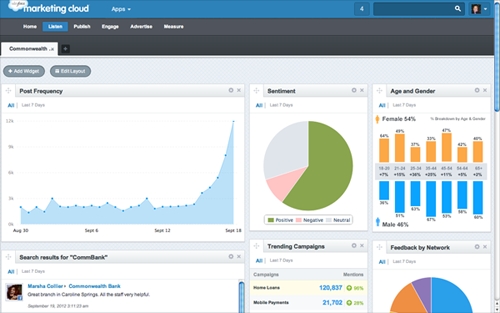
The continuous disclosure advice given by Price and Gibson is aimed at meeting the requirements of Australian corporate law, but it’s actually good social media advice.
Having delegations in place for who has authority to speak on behalf of the company – whether in response to an ASX ‘price query’ or ‘aware’ letter, or when they become aware of information that needs to be released to the market, perhaps in response to speculation.
Ensuring that there is a designated contact person to liaise with the ASX, who has the requisite organisational knowledge and is contactable by ASX.
Have a clear rapid response plan and ensure all board members and senior executives are fully appraised of it. Give it a practice run every so often – a stress test of sorts.
Have a plan for when you will consider a trading halt appropriate.
Have a ‘Request for trading halt’ letter template ready for use.
Have guidelines for determining what is ‘material’ information for disclosure, tailored to your company.
Prepare a draft announcement where you are doing a deal that will
likely require an announcement at some time, and a stop-gap one in case of a leak
Having a nominated contact person with requisite organisational knowledge is possibly the most important point for any organisation.
Even if you think social media is just people posting what they had for lunch or sharing cute cat pictures, it isn’t going away and those Twitter feeds and Facebook pages are now considered official communications channels.
The intern running your social media is now your company’s official spokesperson. Are you comfortable with this?
A good example of where this can go wrong is the Australian Prime Minister’s Press Office where an immature staff member has been put in charge of posting messages. The results aren’t pretty.
The funny thing is the Prime Minister’s office would never dream of some dill getting up and saying this sort of thing on her behalf, yet allows an inexperienced, loose cannon put this sort of material in writing on the public internet.
On a more mature level, the ASIC executives also have some good advice on writing for social media.
Don’t assume that the reader is sophisticated or leave readers to read between the lines. Companies need to highlight key information and tell it plainly.
While the ASIC speech is aimed at the specific problems of complying with company law and listing requirements, it’s a worthwhile guide for any organisation needing to manage its online presence.
Don’t be like the Prime Minister’s office, understand that an organisation’s social media presence is an official channel and treat it with the respect it deserves.
On one level this isn’t suprising as starting a business in Australia is easy compared to many other countries with the World Bank’s Doing Business survey rating the country second after New Zealand for the ease of setting up an enterprise.
The Productivity Commission speculates this might be because the mining boom is encouraging workers to take resource contracts rather than set up their own businesses.
No doubt there’s some truth there, as much of the nation’s investment has been directed into the mines and associated infrastructure in recent years however there’s probably some more mundane reasons.
Top of the list would be the nation’s property obsession; it’s difficult to service a massive mortgage while running your own business.
Fifty years of mainly increasing property prices has groomed Australians into believing that having a steady job and a brace of investment properties is a much easier path to success than taking a risk with your own business.
Overwhelmingly these petty regulations hurt those starting new businesses rather than bigger corporations.
The good news though is that people still want to start their own businesses. In an economy that’s increasingly concentrated in fewer hands, diversification is critical.
In a world that’s becoming increasing automated, we need smart startups finding ways to use the new tools and create the jobs to run them. If Australia can get its policy mix right, kick the property and nanny state addictions then it might open some great opportunities.
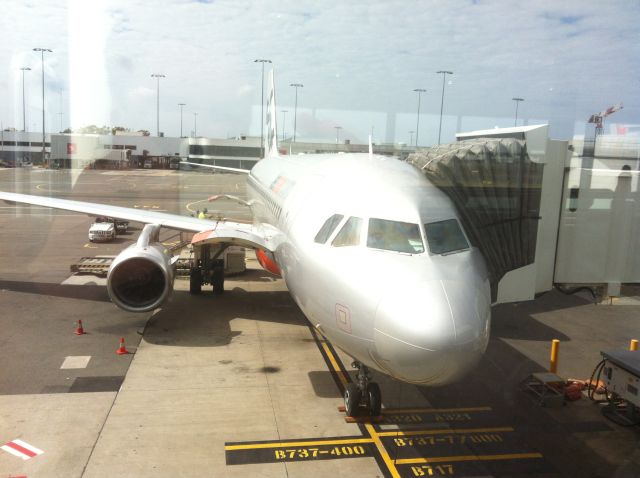
For the budget conscious business traveller, flying economy is an important way of saving money. In Australia, often that means the choice lies between Virgin and Jetstar.
When you’re self employed, you tend to watch your pennies and choose based on what you get for your money rather than just being focused on the perks when somebody else is paying.
Generally freelancers tend to be flying at the back of plane where it’s not so much worrying about whether Krug or Bolly to entitled executives but whether you’ll get slapped a $70 surcharge for your bag.
In Australia, affordable business flying tends to be between Virgin and Jetstar with Qantas being the best example of an Australian business exploiting its domestic market position while running down international operations.
Tiger doesn’t qualify as an airline suitable for anyone who needs to be somewhere at a given time so it isn’t relevant to business travellers.
Dollars please!
Much of the difference between Jetstar and Virgin are the underlying business models.
Virgin Australia was set up as a low cost carrier to compete against Ansett and Qantas but shortly after Virgin started operations, Ansett went bust and the startup airline found itself the nation’s number two airline.
Under CEO John Borghetti, any pretense of Virgin being a low cost carrier has been dropped and now the service competes on service against Qantas.
Jetstar on the other hand remains true to its roots as Qantas’ low cost operation and it plays firmly from the Ryanair book of screwing money out passengers at every opportunity.
While Virgin isn’t shy at trying to upsell you, booking a ticket though Jetstar involves twenty minutes of declining various options and additions. By the time you finish booking a Jetstar ticket, you’ll often find the price has gone up in the meantime and you have to start again.
Another irritation with Jetstar is its codeshare arrangement with Qantas which means the airline inherits its parent’s screwy seat allocation systems which block out availability based on a passenger’s frequent flyer number.
You will obey
A big difference between Jetstar and Virgin is the customer service, Virgin’s cabin crew tend to be helpful and cheerful while Jetstar’s seem to be on a KPI which encourages frowning and stern warnings.
Jetstar’s attitude to mobile phones is instructive. Unlike Qantas and Virgin who allow passengers to use phones until the cabin doors are closed, Jetstar order customers to shut down before boarding. This is a nuisance if you’re running your own business.
Another nuisance is the airline’s attitude towards laptops where Jetstar’s crew usually insist passengers have to shut down when the plane starts descending rather than when the pilot turns the Fasten Seatbelts sign on Qantas and Virgin.
This sounds trivial but just this alone should be a deal breaker for many small business travellers.
On a one hour Brisbane – Sydney or Sydney – Melbourne flight, this effectively gives a time poor business traveller twenty minutes work time from 90 minutes on the plane.
The Seventh Circle of Hell
The seventh circle of hell in Jetstar’s Melbourne terminal
While we’re on the topic of Jetstar’s Melbourne operations, a special mention should be given to their poorly signposted gates at the airport.
Situated at the most remote part of the terminal building – almost as remote as Tiger’s abysmal tin shed – Jetstar’s gates are disorganised mess that make boarding difficult. The airline advises getting to the gate half an hour before the flight and at Melbourne that is good advice.
For those arriving in Melbourne, getting off the plane involves fighting your way through queues, lost children, Bedouins building campfires and peasants clutching chickens. If you’re really unlucky you may find yourself accidentally trying to board JQ5749 to Wagga Wagga.
What’s good about Jetstar
Decent legroom on Jetstar flights.
Despite airline’s drawbacks Jetstar has some things going for it, the main one is the airline’s modern fleet compared to Qantas or Virgin. Jetstar’s A321s have better leg room than the 737s flown by the other carriers – Qantas’ 767s are comfortable like your grandad’s armchair and almost as old.
If you’re flying longer distances such as Melbourne – Cairns or Perth – Sydney, particularly the ‘red eye’ flights heading east from Western Australia, then Jetstar is the more comfortable choice for economy fliers.
Then there’s cost – usually Jetstar is cheaper than Virgin for most flights and at busy times the cost savings may be worth the irritations – but check fares from all three airlines before booking as sometimes the Airline Gods may decide Qantas has the cheapest fares for the time you want to fly.
As a low cost carrier, Jetstar is the reality of flying’s present and a vision of travel’s future. If you have visions of glamour when catching a flight, then shell out for a business class fare.
East Asian based expats have many conceits – the greatest being that they understand Asia.
For a high paid executive based in Hong Kong or Singapore sitting in a comfortable air conditioned CausewayBay or Beach Road highrise it’s easy to not to know what you don’t know.
In Bangkok though the drinkers at Bangkok’s Cheap Charlies Bar are under no illusions about the complexity of Asia as every night brings another surprise.
During the 1990s it was a regular drinking haunt of those working on the ground in South East Asia – aid workers from Cambodia, oil explorers from Vietnam. gem traders from Laos or builders in Myanmar all swapped stories about their trials and tribulations.
Through the late twentieth century the Australian government spent millions helping build the Thai industry with the intention of it helping the Aussie industry build markets and expertise.
Sometime in the late 1990s, the Australian industry decided programs like these were all too hard and not only withdrew from the Thai and Malaysian markets but also let the Chinese opportunity slip through their fingers.
Today, as Business Spectator reported last week, New Zealand’s Fonterra is not only beating the Aussies in China but also has substantial holdings in Australia as the company’s website describes;
The company has NZ$11.8 billion in total assets and revenues of NZ$13 billion and employs more than 18,000 people worldwide. In Australia, Fonterra has revenues of $1.9 billion, processes 21 per cent of all Australian milk and employs over 2,000 people. This makes Fonterra very much an Australasian company.
Fonterra’s story, both in China and Australia, illustrates how something went amiss in Australia’s business sector in the late 1990s.
The point of Australia’s deregulations and industry consolidations through the 1980s and 90s was to make local businesses and industries more competitive. Instead those Australian conglomerates have been sold to overseas interests as domestic investors find they aren’t interested in investing.
Instead Australian businesses decided that having being allowed to consolidate they could use their market power to clip the tickets of the industries they controlled rather than innovating or expanding internationally.
At the same time, Australia’s compulsory savings scheme poured billions into the local share market leaving boards under no pressure to perform better than the index.
The lazy investing philosophy forced internationally focused businesses to look for overseas investors and has created the steady flow of Australian business, farming and mining assets being sold onto overseas buyers.
In the meantime, the shock jocks and populists whip up xenophobia rather than holding Australian business community to account for its failure to seek and build new markets.
This doesn’t mean bad news for young Australians, there are opportunities for smart, innovative and hard working entrepreneurs to challenge the country’s staid duopolies.
If we choose not to challenge the comfortable duopolies, it may be the next generation of Aussie expats find more opportunities at Cheap Charlies in Bangkok than at home.