Category: Australia

  • Can Huawei come in from the cold?

    Can Huawei come in from the cold?

    Last Friday the Parliamentary Joint Committee on the National Broadband Committee met in Sydney, I’ll have a story on this in tomorrow’s Business Spectator.

    An interesting exchange during the meeting was  between the committee’s chair Rob Oakeshott and Mike Quigley, the CEO of NBNCo.

    Rob Oakeshott: “You have advice that either as a department or a statutory body that says there are certain companies that should not be involved with the National Broadband Network build? If so, is that advice still in place?”

    Mike Quigley: “Well chair, we work very closely with the appropriate government agencies in this area, obviously there are things we can and things we can’t say, but we have a very close working relationship with those entities and we obviously take their advice on things we should and shouldn’t do.”

    “Their advice is still in place and we’re following it.”

    I’m going to be in Melbourne tomorrow attending the Australian Davos Committee’s China Forum where, among other luminaries, the Prime Minister and various key people in the Australian-Chinese relationship will be talking.

    The company in question is Chinese communications vendor Huawei and their banning from Australian contracts adds an interesting dimension to the discussion on trade relations between the two countries.

    Australia has followed the US lead in blocking the Chinese communication hardware company from key contracts like the NBN on security grounds and it’s hard to see how this doesn’t test the patience of the PRC.

    We’ll see how this issue plays out as it’s one that seems to be largely overlooked when we discuss trade ties and relationships with Chinese companies.

    Similar posts:

  • Why Australia needs foreign ownership

    Why Australia needs foreign ownership

    Such are the vagaries of radio that I’ve been asked to comment on ABC Radio South Australia about foreign ownership based on an article that was picked up by The Drum 14 months ago.

    That article was written shortly after Dick Smith came out grumbling about the prospect of Woolworths selling the electronics store chain named after him to foreign interests.

    My point at the time was that foreign owners would be preferable to some poorly managed, undercapitalised local buyer as the Australian retail industry – even in a declining market like consumer electronics – needs more innovation and original thinking.

    As it turned out, Dick Smith Electronics was sold to Anchorage Capital, a private equity turn around fund with an interesting portfolio of businesses.

    In the meantime, the argument about foreign ownership of property and businesses, particularly farms, has ratcheted up as opportunistic politicians and the shock jock peanut gallery that sets much of Australia’s media agenda have found a cheap, jingoistic issue to score points from.

    So why is foreign ownership of businesses like farms, mines and factories important for Australia?

    A fair price for hard work

    The main reason for supporting foreign buyers for Aussie businesses is it gives entrepreneurs a chance to get a fair price for their hard work.

    A farmer or factory owner who builds their business shouldn’t have to accept a lower price because Australians don’t want to pay for the asset.

    It’s not a matter of being able to pay Australians as have plenty of money to invest – a trillion dollars in superannuation funds and three billion dollars claimed for negative losses in 2009-10 show there’s plenty of money around – it’s just that Aussies don’t want to invest in farming, mining or other productive sectors.

    We’re already seeing this play out in the small business sector as baby boomer proprietors find they aren’t going to sell their ventures for what they need to fund their retirement.

    Access to capital

    Should the protectionists get their way then the businesses and farms will eventually be sold to undercapitalised Australian investors at knock down prices.

    This is the worse possible thing that could happen as not only do the entrepreneurs miss out, but also the factories and farms decline as they are starved of capital investment.

    Cubby Station

    A good example of both the lack of capital affecting investment and finding a fair price for ventures is Queensland’s Cubby Station.

    While I personally think Cubby Station is an example of the economic bastardry and environmental vandalism that are the hallmarks of the droolingly incompetent National Party and its corrupt cronies, the venture itself is a good example of why the agriculture sector needs foreign investment.

    Having been converted from cattle to cotton in the 1970s, Cubbie grew as successive owners acquired water licenses from surrounding properties.

    Eventually the company collapsed under the weight of its debts in 2009 and the property was allowed to run down by the administrators until it was bought by Chinese backed interests at the beginning of 2013.

    At the time of the acquisition, the company’s former chairman told The Australian,  “on reflection, I would go into those things with an even stronger balance sheet — in other words, with less gearing.”

    In other words, the company was under-capitalised.

    Competition concerns

    Another reason for encouraging foreign ownership is that Australia has become the Noah’s Ark of business with duopolies dominating most key sectors.

    Bringing in foreign owners at least offers the prospect of having alternatives to the comfortable two horse races that dominate most industries.

    The property market

    An aspect that has excited the peanut shock jocks has been the prospect of Chinese buyers purchasing all the country’s property.

    For those of us with memories longer than goldfish, today’s Chinese mania is almost identical to the Japanese buying frenzy of the late 1980s.

    Much of what we read about the Chinese buying homes is self serving tosh from property developers and real estate agents and what mania there is will peter out in a similar way to how the Japanese slowly withdrew.

    This isn’t to say there shouldn’t be concerns about foreign ownership – tax avoidance, loss of sovereignty and Australia’s small domestic market are all valid questions that should be raised about overseas buyers, but overall much of the hysteria about foreign ownership is misplaced.

    What Australians should be asking is why the locals aren’t investing in productive industries or buying mining and farming assets.

    The answer almost certainly is that we’d rather stick with the ‘safety’ of the ASX 200 or the residential property market.

    We’ve made our choices and we shouldn’t complain when Johnny Foreigner sees opportunities that beyond negative geared investment units or an tax advantaged superannuation fund.

    Similar posts:

  • Australia’s economic Hari-Kari

    Australia’s economic Hari-Kari

    The Golden Era of Credit is Now Over” writes Maximillian Walsh in the Australian Financial Review today.

    Max’s story relies mainly on the April edition of Bill Goss’ monthly newsletter where the founder of investment firm PIMCO writes about the talents of today’s market wizards;

    All of us, even the old guys like Buffett, Soros, Fuss, yeah – me too, have cut our teeth during perhaps a most advantageous period of time, the most attractive epoch, that an investor could experience.

    The credit boom of the last fifty years created many winners – investment bankers, property owners and those who sell things funded by easy finance.

    One of the best examples of a fortune made through easy credit is Australia’s Gerry Harvey. Here’s one of Gerry’s ads from 1979.

    Hurry into Norman Ross. You can use Bankcard or our easy credit system. You can even use cash!

    Three years later Gerry was sacked from the business he founded and he set up Harvey Norman, promising John Walton and Alan Bond “I’m going to beat you.” By the end of the 1980s he had.

    Gerry’s success is built on easy credit and the rise of the consumerist economy. From the hire purchase plans of the 1960s, the introduction of credit cards in the 1970s and the banking deregulations of the 1980s, Gerry was able to sell goods to eager consumers who could worry about paying later.

    In the 1990s and 2000s a happy coincidence of easy credit and cheap Asian manufacturing – note the prices of electrical goods in that 1979 commercial – saw businesses like Harvey Norman grow exponentially.

    Mao promised the Chinese a chicken in every pot, Gerry delivered a plasma TV in every Australian bedroom.

    Today, as Bill Goss says, the credit party is over. Last drinks were called with the failure of Lehman Brothers on September 16th, 2008.

    However this hasn’t stopped the Aussie economy, as the Sydney Morning Herald reports today Sales growth cheers Gerry Harvey.

    In the same edition the SMH reports the government science organisation, the CSIRO, is cutting hundreds of staff. Notable in that article is a comment from the organisation’s CEO;

    Dr Clark said more than 2000 companies collaborated with CSIRO but that industries were reducing the amount spent on research.

    So at a time when the Australian economy is struggling with the effects of a high currency and exhibiting all the symptoms of the Dutch Disease, consumers are spending more on TVs and sofas while business cuts investment in research and development.

    Karl Marx famously predicted that the last capitalist will be hanged with the rope they sold, Australians have a bunch of Harvey Norman branded credit cards for their financial seppuku.

    Similar posts:

  • Tasmania and the travelling circus

    Tasmania and the travelling circus

    “We bring in almost everything,” says V8 Supercars director Mark Perry as he guided journalists around Launceston’s Symonds Plains racing track.

    Everything Mark showed us – a fleet of trucks, communications equipment, hospitality tents and the racing teams themselves would be packed up on Sunday night, shipped to Melbourne and flown to New Zealand for the next race.

    The V8 Supercar management are very proud of their work, and they should be given the massive task they have, but it exposes a weakness in the Tasmanian economy in that almost all the high value employment and equipment has to be flown in.

    Quiet times in downtown Launceston

    Arriving into Launceston on the Friday before the races, it’s interesting how little hype there is around the event. In Sydney, San Francisco or Cannes there would be banners and flags around the city welcoming visitors, in Launceston there’s almost nothing despite the race meeting being one of the state’s biggest events.

    It was also surprising how there were no downtown events to complement the main attraction.

    Almost every major sporting event from the Olympic Games and FIFA World Cup to the AFL Grand Final and Australian Open has some inner city satellite venues with big screens for the locals who can’t make it to the stadium.

    Having those satellite events adds to the buzz and hype in the host city. Something that downtown Launceston needs at 7pm on a Friday night.

    That lack of support by the community is notable, particularly in light of the $600,000 per year the cash strapped Tasmanian government pays in subsidies for the V8 Supercars.

    I’m against government support for events like these, but if that money is going to spent it may as well be spent properly to maximise the economic benefits.

    Subsidies like this would be even better if they were part of some grander economic plan, but like all the payments given to the film production, motor manufacturing and other industries, they are based more on populism than any strategy – the politicians may as well be giving free beer out in Launceston’s main street.

    Why the community support is so tepid for the Supercars event is so tepid is something I’m going to be exploring in the next few days as I meet various business leaders in Launceston and Hobart to hear how the state is positioning itself in the 21st Century.

    In the meantime, the V8 Supercars “travelling circus” has moved on, hopefully Tassie will have some more long term jobs to show for it.

    Paul travelled to Tasmania and the V8 Supercars courtesy of Microsoft Australia

    Similar posts:

  • Australia and the Chinese Mexican stand off

    Australia and the Chinese Mexican stand off

    Twenty years ago visitors to Sanya on the south coast of China’s Hainan Island could find themselves staying at the town’s infectious diseases clinic, converted into a backpackers hostel by a group of enterprising doctors.

    The Prime Ministers and Presidents attending of Boao Asia Forum this week won’t get the privilege of staying at the infectious diseases hospital as Sanya’s hotel industry has boomed, bust and boomed again following the island being declared a tourism zone in 1999.

    Instead, their focus is on the pecking order of nations and for the Australians the news is not good. As the Australian Financial Review reports, the Aussies have been seated well below the salt by their Chinese hosts.

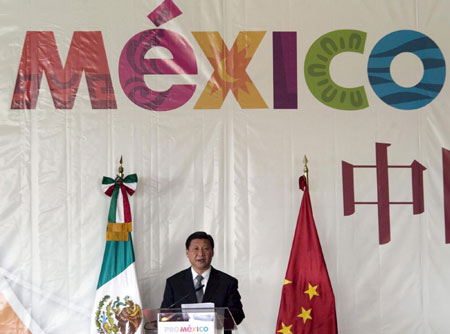
    On the Boao list, Australia is outranked by Brunei, Kazakhstan, Myanmar, Zambia, Mexico, and Cambodia – even New Zealand Prime Minister John Key gets higher billing.

    Central and South East Asian countries make sense as countries like Myanmar and Kazakhstan are China’s  neighbours with strong trade ties.

    That the Kiwis have been given priority over the Aussies by the Chinese government is not surprising in light of this.

    An unspoken aspect for the Australian attendees to the Baoa conference is how long Canberra’s political classes can continue their forelock tugging fealty to the US without offending the nation’s most important trading partner.

    Mexico’s entry on that list could be one of the most important with consequences for Australia and the world.

    During the 1992 US Presidential campaign candidate Ross Perot coined the phrase “the great sucking sound” in his opposition to the North American Free Trade Agreement and the risk of losing jobs to lower cost Mexico.

    As it turned out, the giant sucking sound was China – it turned out China’s admission into the World Trade Organisation had far greater consequences for the United States and Mexico than NAFTA.

    Mexican manufacturing was one of the greatest victims of China’s rise as US companies found it easier to subcontract work to Chinese factories rather than setup their own plants in Mexico.

    Now China is finding its own costs creeping up and labor shortages developing and Mexico is attractive once again. The Chinese and Mexican governments have been working on their relationships for some time.

    As manufacturing moves out of China, the shifts in world trade we’ve seen in the last two decades are going to be repeated, this time with Chinese moving up the value chain the lower level work moving to Mexico and other nations.

    The leaders at the Baoa conference have their work cut out for them in dealing with another decade of global change.

    Similar posts: