Category: Australia

  • Australia in the Asian Century – Chapter One: The rise of Asia

    Australia in the Asian Century – Chapter One: The rise of Asia

    This post is one of the series of articles on the Australia in the Asian Century report. An initial overview of the report is at Australian Hubris in the Asian Century.

    “Just over two decades ago, the Australian Government commissioned a study of Australia and the Northeast Asian ascendancy” starts the opening of the Australia in the Asian Century report. That sentence describes how this paper is the latest of Australia’s earnest efforts to understand the region.

    The opening chapter of the report follows the sensible principle that to plan for the future we have to first understand the present so this section seeks to explain the development of various Asian economies and put those changes into an Australian perspective.

    Notable in the narrative is the North East Asian focus, while India gets a brief mention most of the story revolves around the development of China, Hong Kong, Japan and South Korea. Chart 1.2, “Asia’s economic dividend” gives the game away when all but one ‘Asian’ country listed is East Asian.

    Russia, along with most of South and Central Asia – not to mention other Asia countries like Iran, Turkey and the former Soviet Republics – rate no mention all.

    The narratives around the countries which are covered is also deficient – for instance the discussion on Japan’s, South Korea’s and Vietnam’s developments totally ignore post-war reconstruction efforts and their relations with the United States.

    China does get a more detailed examination rightly noting it was the country’s admission to the World Trade Organisation in 2001 that really set the economy’s export sector moving, however it skates over the massive dislocations and market reforms introduced in the 1980s which laid the foundations for China’s successful bid to join the WTO.

    More notably, the analysis overlooks – probably to avoid upsetting PRC diplomats and making life difficult in Canberra – the role of Taiwanese investment in China and Taiwan’s development itself.

    In a similar vein the scant discussion of India misses the role of Non-Resident Indians (NRIs) in the country’s economic development along with the concentration of power in the various industrial conglomerates like the Tata Group.

    Again, the same omission is made when discussing the South Korean Chaebols and Japanese Keiretsu. Given the investments made in Australia by all of these industrial conglomerates it’s curious they barely rate a mention in discussing Asia’s industrialisation process.

    The discussion on innovation in Chapter 1.3 is useful however it lacks substance in identifying exactly which sectors various Asian economies are specialising in and which industries are in decline as various countries move up the value chain.

    Singapore’s success in becoming East Asia’s hub for banking and corporate regional headquarters is a notable omission and again one has a suspicion this is because of ongoing Australian governments’ doomed ambitions to establish Sydney as a regional financial and business centre.

    Probably the most glaring omission in Chapter One though is the role of the United States. In tracking the rise of the Indian service sector or Chinese, Japanese and South Korean manufacturing the trade policies of the US cannot be ignored. And yet they largely are.

    That failure to acknowledge the US role means report overlooks the Clinton and Bush I Administrations’ forced opening East Asia’s largely closed economies which radically changed South Korea, Taiwan and Japan in the late 1980s and early 90s. Not to mention the critical role the US had during that period in allowing China and Vietnam to join the global trade networks.

    Chapter One of Australia in the Asian Century is an unsatisfactory introduction to the complexities of the Asian economies and one suspects is because of the compromises made to assuage the egos and groupthink of Canberra’s mandarins and politicians.

    Most importantly, it fails to put the last thirty years’ developments in Asia into an Australian context or perspective. In this respect, it’s a fitting start to a largely inadequate report.
    Similar posts:

  • Australian Hubris in the Asian Century

    Australian Hubris in the Asian Century

    This post is one of the series of articles on the Australia in the Asian Century report.

    The release of the Australia in the Asian Century discussion paper today raises the question of where the country sees itself and where it is going. It lets us down on many levels.

    While there’s a lot more to discuss in the paper, which I’ll do over the next few days, there’s a few issues that come to mind on first reading.

    The reliance on mining

    A constant  in the discussion about Australia’s future is the continued mining boom. This was the underlying theme of Monday’s Mid-Year Economic Outlook and is also the case in the Asian Century paper. Here’s chart 4.4.2 from the document which shows the forecast makeup of Australia’s exports.

    Today mining exports are shown as being just over 50% of Australia’s trade with Asia and have mineral income growing to well over 60% of trade by 2025.

    What is frightening about this is the belief across Australia’s political and business leaders that the mining boom is here to stay and will continue to keep growing.

    Little risk analysis

    Also notable about the report is how little acknowledgement of risk there is in the document. Most of the risks are dismissed in six paragraphs in Chapter 4.4

    Geopolitical risk does get its own chapter, but even there most of the challenges are glossed over. Eventually most of the risks are dismissed with this line.

    None of these developments of themselves make major power conflict likely—in some important ways they will probably act as a constraint. All the major powers recognise how interdependent their economic interests are.

    This is reminiscent of the line used in the late 1980s – “no two countries with a McDonalds have ever gone to war against each other.” A glib nonsense which ceased to be true when NATO attacked Serbia in an effort to stop the massacres of the Yugoslavian disintegration.

    Trivialising the big risks

    Had anyone predicted in 1986 that within five years, there would be a bloody civil war in Yugoslavia, the Eastern Bloc collapse and the Russian Empire’s eagle replace the hammer and sickle on the Kremlin they would have been dismissed as fools.

    Yet that is exactly what happened.

    The risk of instability within the People’s Republic of China isn’t mentioned or even the effects of what a collapse of North Korea would mean to South Korea – another key Australian mineral market – both of which would have massive effects on Australia’s export markets over the next decade.

    While I’m certainly not forecasting the collapse of either the DPRK or the Communist Party of China in the near future, these are massive risks to any plan which purports to look at the next decade. Ignoring them or trivialising them does not help the paper’s credibility.

    Australian hubris

    Most notable in the white paper is the tone of Australian Exceptionalism through the commentary. In the Prime Minister’s speech she said “we are the nation that stared down the economic crisis.”

    Calling massive stimulus packages, reinflating the property market and guaranteeing bank liabilities is hardly ‘staring down’. Australia’s avoiding going to into recession after the 2008 crisis was due to the “go early, go hard” philosophy of pumping money into the economy which was learned by Australia’s bureaucrats in the 1990s recession.

    That policy worked to stave off recessions during the Asian currency crisis of 1998, the Long Term Credit Bank collapse and the post September 11 uncertainty. It worked on massive scale during the post-Lehmann Brothers collapse.

    Crediting Australia with some sort of miracle economy is hubris on a grand scale and hardly the basis for developing a sensible plan to guide us through the next decade.

    What is Australia’s competitive advantage?

    Essential to understanding where the nation can prosper from the rise of Asian economies is where our current strengths lie. Apart from empty phrases on “skilled workforces” and “new opportunities will emerge in manufacturing” there’s no explanation of exactly where Australia can profit from these.

    In fact most of the case studies refer to Australian companies outsourcing or Asian trading patterns that really don’t need any skilled or valued added contribution at all, a case in point is the story of ‘Hitesh’, one of India’s rising middle class.

    Hitesh, 31, is a stockbroker in a firm that he opened with his friend several years ago. He brings in an annual income of US$5,280, placing his family squarely in the middle of Ahmedabad’s middle class.

    Nowhere does the case study explain exactly what Australia can offer him – the air conditioners and cars certainly won’t be made or designed in Australia and his daughters’ educations in 2025 might well come through the internet from MIT or the London School of Economics instead of them flying to Melbourne to drive taxis and do barista courses in the hope of getting Australian permanent residency.

    In fact if anything, it’s difficult to see why an Asian company would choose to do business with an Australian stockbroker when they earn thirty to a hundred times more than Hitesh.

    1980s thinking

    Much of what is in the white paper is what we’ve heard before in the 1980s – back then it was Yuske in Nagoya who was going to buy our wine and come to the Gold Coast for holidays.

    There’s nothing in the projections we haven’t heard before, except today we’ve squandered two decades of opportunity by ramping up our property markets and building an unsustainable middle class welfare state.

    Sometime in the 1990s – possibly around the time of John Howard’s election – Australia turned inwards and insular. We had the opportunity  to position Australia as a credible mid-level power in the region but we chose instead to renovate our kitchens.

    That opportunity has been lost and repeating the mantras of the 1980s with the words ‘China’ and ‘Chinese’ substituted for ‘Japan’ and ‘Japanese’ won’t cut it.

    Australia in the Asian Century was an opportunity to show some vision and stake a claim on sharing some of the 21st Century’s riches. Instead the writers chose to give us platitudes underpinned by the certainties of a never ending economic boom.

    Similar posts:

  • What are businesses thinking about?

    What are businesses thinking about?

    Last night the Sydney Business Awards honoured the city’s best enterprises at a gala dinner where a whole group of great businesses were acknowledged for their great work.

    The awards were the result of a three month process where the public voted on several hundred businesses to determine ten finalists in each category. The finalists were then evaluated by judges for each category. I judged the Online Business group.

    The Events Agency who organized the awards today sent me a word cloud taken from the winners’ entry forms. This illustrates what the entrants were talking about in their submissions.

    A wordcloud of the Sydney Business Awards winners entries
    The word cloud of the Sydney Business Awards winners’ entries.

    Staff is the biggest issue for businesses, followed by the two instances of ‘increase’ caused by one having a capital and the other not. If we combined the two instances ‘increase’ would probably be the biggest word.

    Given training is one of the other big words we can see the real challenge is training up staff. Marketing and funding also figure prominently.

    While basic and from a very narrow survey base, that word cloud gives us some ideas of what worries business owners and a base to start answering those challenges.

    The word cloud also explains why education, training and industrial relations are such important issues to the business community which is something both politicians and the media should consider.

    Overall the quality of the businesses entered into this year’s awards was terrific. In the online section I really struggled to separate the great finalists and there was very little between Appliances Online who won the category and the two runners up.

    What’s also interesting is how many of the finalists in other categories had strong online presences, illustrating how the web is important for all businesses.

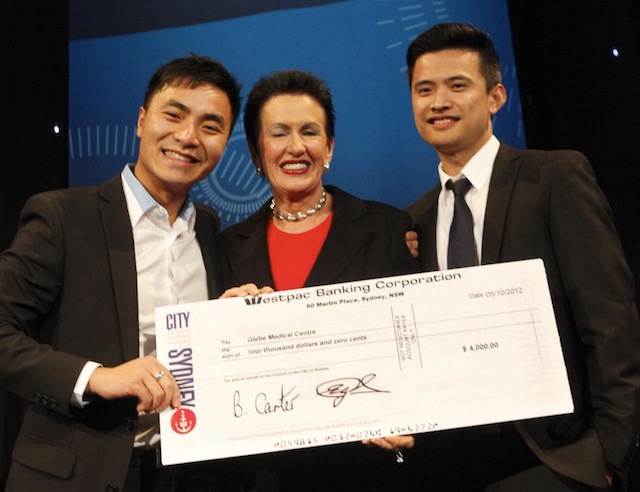
    Congratulations to all the entrants and particularly Climate Friendly who not only won the main Business Award but also the Sustainability and Environmental awards. Glebe Medical Centre was the winner of the Small Business Award and the Healthcare and Fitness category.

    For those who didn’t win this year, it’s worth entering next year as good businesses only get better with time. Hopefully we’ll see your business or vote next year.

    Similar posts:

  • A swelling feeling of pride

    A swelling feeling of pride

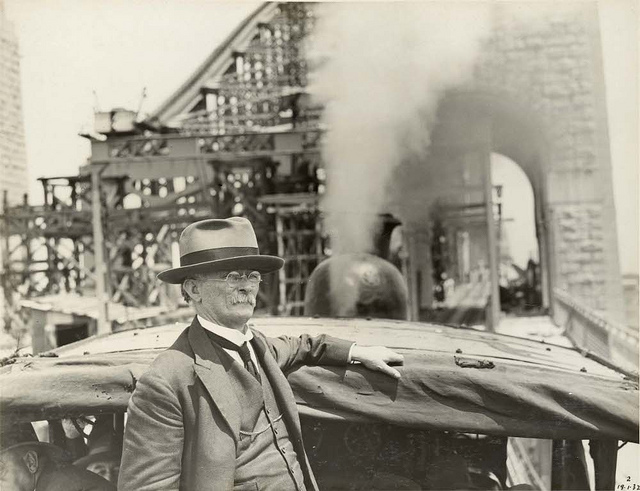
    Doctor John Bradfield shaped modern Sydney. His program of public works, such as building the Sydney Harbour Bridge and the city’s railway network served the city for nearly a century.

    The picture of him from the NSW State Records archives riding the first train across the Harbour Bridge shows him swelling with pride. And so it should.

    What we need to ask ourselves is whether our works could survive a century of massive change and become an international icon as the Sydney Harbour Bridge did.

    If we can just strive toward that – even though most of us will fail – we can be proud of our works as Dr Bradfield was when he rode that train across the Harbour Bridge.

    Similar posts:

  • Travel review – Jetstar JQ406 Sydney to Coolangatta

    Travel review – Jetstar JQ406 Sydney to Coolangatta

    One of the delightful aspects of the low cost airline model is the contempt management has for their customers.

    That scorn for the people who fund management’s salaries is guilty pleasure to watch on a third rate TV “reality” show, but it’s not fun when you’re on the receiving end.

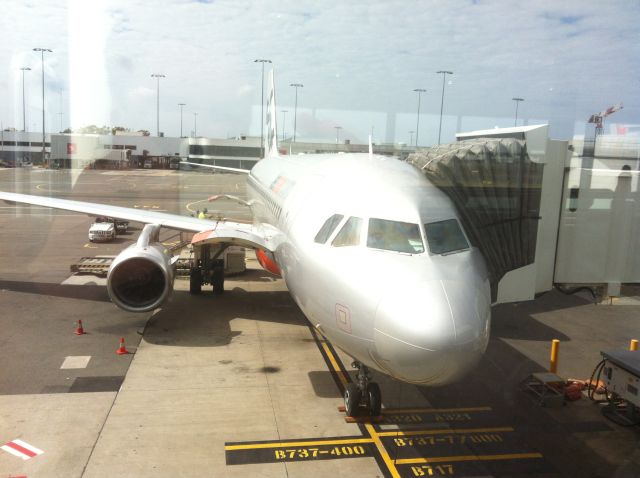
    So with a fixed smile and a grim determination not to to let the bastards grind me down, I headed to Sydney Airport to catch Jetstar’s flight JQ406 to the Gold Coast

    Check in

    It’s no conincidence people make reality TV shows documenting the clash of penny pinching, ticket clipping corporatism with the modern lumpenproletariat; the queues are long and the tempers are frayed.

    The key to your temper surviving Jetstar’s check in is not to have checked baggage so you can dodge the general grumpiness in the queues.

    Otherwise have your all your documents handy when you get to the check in clerk as they are quite friendly once they realise you aren’t going to mess them around.

    Seats

    A positive with Jetstar is the seats are spacious and comfortable compared to their Virgin competition and Qantas cousins.

    While seat comfort isn’t an issue on a one hour flight it is a plus on longer flights and actually makes Jetstar a reasonable choice if you want to sleep on a ‘red eye’ from Perth.

    Meals

    As a low cost airline, meals and drinks are an extra charge on Jetstar and really who can be bothered on a mid-morning one hour flight?

    During the Flight

    An irritation with JQ is the early “turn of electronic devices” policy that sees cabin crew telling you to turn off devices the moment the plane starts its descent.

    On short trips this weird policy means as little as twenty minutes time available to use a laptop or tablet, if you want to work on your flight then choosing Virgin or Qantas will give you more time to get things done.

    On arrival

    Baggage collection was surprisingly slow for a relatively quiet airport and Coolangatta Airport’s management save a few bucks by opening a minimum of luggage carousels which can cause crowds if two flight arrive at once.

    Getting away

    Coolangatta Airport is a delight for transport with plenty of taxis, including Maxi Cabs that seat half a dozen people and a regular city bus service that runs the length of the Gold Coast.

    Overall Jetstar delivers what it promises, an 21st Century air flight that does its best to imitate a 20th Century bus.

    If there is an alternative at a reasonable cost then go for it, otherwise accept the low prices and avoid checking baggage.

    Paul travelled to the Gold Coast courtesy of Microsoft to attend their Australian TechEd event.

    Similar posts: