Category: Australia

  • Cargo cults and your business

    Cargo cults and your business

    “We need an interest rate cut” thunders the business media.

    “Give us GST relief” plea the big retailers.

    “China will boom forever” assert the government economists.

    “Big corporations will buy us out for a billion dollars” pray the hot new start ups.

    “I’ll win the lottery this week” thinks the overworked cleaner.

    We’re all waiting for the big saviour that’s going to rescue us, our business or the economy.

    It could be a big win, a big client or a big government spending program to rescue us.

    Sadly, should we lucky enough for that saviour to arrive, it may not turn out to be all we expected.

    There’s many lottery winners who curse their win while many disaffected founders who watch their startup baby fade away neglectful new owners.

    For a lumbering department store, tax changes will do little to save them from market changes their managements are incapable of comprehending.

    Interest rate cuts are great for business when customers are prepared to take on more debt but in a period where consumers are deleveraging a rates cut will do little to stimulate demand.

    The clamour for interest rate cuts are a classic case of 1980s thinking; what worked in 1982, 1992 or 2002 isn’t going to work the same way in 2012.

    What’s more, the Zero Interest Rate Policies – ZIRP – of the United States and Japan are a vain attempt to recapitalise zombie banks saddled with overvalued assets rather than an effort to help the wider economy.

    China is more complex and there’s no doubt the country and its people are becoming wealthier and there are great opportunities.

    The worry is most of what we read today could have been the wishful thinking written about Japan thirty years ago. Lazily selling commodities to the Chinese while they create the real value is not a path to long term prosperity.

    In business we have a choice, we can pray for luck or we can make our own luck.

    Some choose to join the cargo cult and pray, or demand, that someone else does something. Others get out and do it.

    John Frum gravesite image by Tim Ross through Wikimedia Commons

    Similar posts:

  • ANZAC Day

    ANZAC Day

    It’s ANZAC Day in Australia where the anniversary of the World War One landings in Gallipoli marks the first national action of the then new nation.

    At its heart, ANZAC Day remembers sacrifice and bravery. The men and women who volunteered for the Great War and all those that have followed over the last hundred years were prepared to sacrifice relationships, safe careers and their lives to protect the King or Country from the threats of the Kaiser, Hitler, Japan, Communism or Terrorism.

    We should remember though that those politicians saying fine words today and posing for photo opportunities at the landing beaches are the much the same people who started an unnecessary war in 1914 and many of those wars since.

    Compare the words of Billy Hughes supporting Australian conscription in 1915 and the words of John Howard or Julia Gillard.

    Stripped of spin doctors’ dressing and the words of today’s politicians are the same.  Only the empire has changed.

    Today’s politicians know of concepts like sacrifice, patriotism and bravery, exploiting them can prove handy at election time.

    Luckily for most of them their political and business careers rarely call for such qualities.

    Hopefully our children won’t find themselves in the trenches  – or fall out shelters – to meet the short term gains of an Obama, Cameron or Gillard and their corporate friends.

    The real lesson of ANZAC Day, Veterans Day and all the other national days of remembrance around the world for those every nation has lost in battle is that war is the final act and represents a failure by the Kings, Presidents and Prime Ministers who choose to lead us.

    They shall not grow old, as we that are left grow old:
    Age shall not weary them, nor the years condemn.
    At the going down of the sun and in the morning,
    We will remember them.

    Lest We Forget

    Similar posts:

  • Tracking the end of the consumer society

    Tracking the end of the consumer society

    I’m currently researching a presentation about the retail industry.

    One of the things that leaps out when researching consumer behaviour is the savings rate.

    For twenty-five years from the early 1980s to mid 2000s, the savings rate collapsed in Western economies; below are the US and Australian rates.

    The US Personal savings rate shows the rise of consumerism
    US Savings rates 1950 to 2020 – St Louis Federal Reserve
    How did the Australian savings rate fall during the consumer boom
    Australian Savings Rates 1980 to 2012 – Reserve Bank of Australia


    The graphs show the same thing; households spent their savings over the 25 years which drove the consumer economy. It’s no accident that period was a good time to be a retailer.

    Being on a deadline, I don’t have time to analyse these number further right now, but one thing is clear; most of the consumer boom from the Reagan Years onwards – or the equivalent from Maggie Thatcher or Paul Keating – was driven by households reducing their savings.

    That couldn’t last and didn’t. Businesses and governments that are basing their decisions on what worked through the 1980s and 90s are going to struggle in the next decade.

    Looking at these figures raises another suspicion – that graphs showing non-real estate investment by businesses and government would show similar declines over the 1980-2005 period.

    It might be that golden period of what appeared to economic success was just us living off society’s collective savings.

    Similar posts:

  • What if Bill Gates had been born in Australia?

    What if Bill Gates had been born in Australia?

    Microsoft founder Bill Gates is today one of the world’s biggest philanthropists having built his business from an obscure traffic management software company to what was at one stage the world’s biggest technology corporation.

    But what if he’d been born in Sutherland, New South Wales rather than Seattle, Washington? How different would things have been for an Australian Bill Gates?

    The first thing is he would have been encouraged to study law; just like his dad. In the 1970s lawyers had far more status and career prospects than software developers in Australia.

    Causing more concern for his parents and career counselor would have been his determination to run his own business. It’s far safer to get a safe job, buy a house then start buying investment properties to fund your retirement.

    The Funding Drought

    If Bill still persisted with his ideas, he’d have hit a funding problem. No bank wouldn’t be interested in lending and his other alternatives would restricted.

    In the Australia of the 1970s and 80s they’d be few alternatives for a business like Micro Soft. Even today, getting funding from angel groups and venture capital funds depend upon luck and connections rather than viable business ideas.

    Bill Gates’ big break came when IBM knocked on his door to solve their problem of finding a personal computer operating system; the likelihood of any Australian company seeking help from a small operator – let alone one run by a a couple of twenty somethings – is so unlikely even today it’s difficult to comprehend that happening.

    Eventually an antipodean Bill Gates would have probably admitted defeat, wound up his business and gone to work for dad’s law firm.

    Invest in property, young man

    Over time a smart, hard working young lawyer like Bill would have done well and today he’d be the partner of a big law firm with a dozen investment properties – although some of the coastal holiday properties wouldn’t be going well.

    While some things have changed in the last thirty years – funding is a little easier to find in the current angel and venture capital mania – most Australians couldn’t think about following in Bill Gates’ path.

    Part of the reason is conservatism but a much more important reason are our taxation and social security systems.

    Favoring property speculators over entrepreneurs

    Under our government policies an inventor, innovator or entrepreneur is penalised for taking risks. The ATO starts with the assumption all small or new businesses are tax dodges while ASIC is a thinly disguised small business tax agency and assets tests punish anyone with the temerity to consider building an business rather than buying investment properties.

    At the same time a wage earner is allowed to offset losses made in property or shares against their income taxes, something that those building the businesses or inventing the tools of the future are expressly forbidden from doing.

    Coupled with exemptions on taxing the capital gains on homes, Australian households – and society – is vastly over invested in property.

    Making matters worse, the ramping up of property prices over the last thirty years has allowed generations of Australians to believe that property is risk free and doubles in value every decade.

    That perception is reinforced by banks reluctant to lend to anyone who doesn’t have real estate equity to secure their loans.

    So we have a society that favours property speculation over invention and innovation.

    Every year in the run up to Federal budget time tax reform becomes an issue, the real effects of negative gearing and other subsidies for housing speculation – the distortion of our economy and societies investment attitudes – are never discussed.

    In Australia there are thousands of smart young kids today who could be the Bill Gates’ of the 21st Century.

    The question is do we want to encourage them to lead their generation or steer them towards a safe job and an investment property just like grandpa?

    Similar posts:

  • Should Australia pass a jobs act?

    Should Australia pass a jobs act?

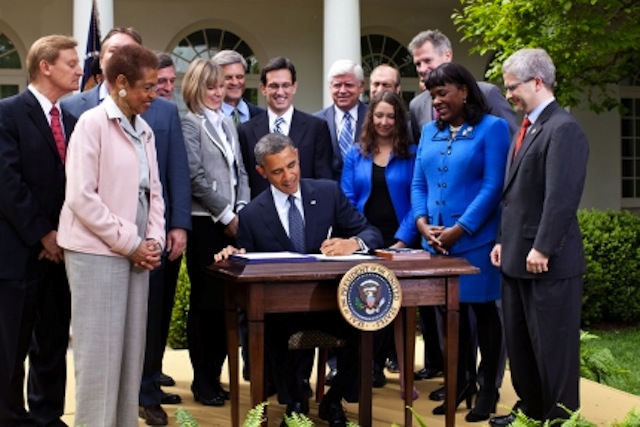
    Last week the US President signed the Jumpstart Our Business Startups (JOBS) Act into law.

    The US law seeks to make funding easier for new businesses by lifting the burden of regulations like the Sarbannes Oxley Act (SOX) and various other financial rules.

    One of the main planks of the reforms is it changes shareholder thresholds, for instance allowing 2,000 investors rather than 500 maximum before it has to go public, and allows companies to advertise their shares subject to certain restrictions.

    Whether it achieves the stated aim of allowing new innovative businesses to raise funds or triggers a new generation of “boiler rooms” and investor fraud remains to be seen but it begs the question of should Australia pass a jobs act.

    The funding crisis

    There is no doubt Australia has a business funding crisis. Before the global financial crisis of 2008, it was difficult for smaller business to access finance.

    In the aftermath of the GFC, it became even harder for businesses to raise funds as banks withdrew from the small business sector, increased their lending rates and tightened criteria.

    While this situation has eased somewhat, partly due to the entrance of new angel and VC investment funds, financing of startup and small business is patchy and still tough.

    An Australian Jobs Act would make it easier for business to raise funds and well crafted one might encourage both self managed and public superannuation funds to allocate some of their investments into the startup and innovation sectors.

    A Scammer’s dream?

    One of the big criticisms is that it reduces investor protections; while it restricts investors with less than $100,000 in annual income from punting more than 5% of their income, it’s quite clear in a full blown mania the Jobs Act will enable plenty of shoeshine boys and self funded retirees will do their life savings.

    The question of course is how well the existing regulations protect investors or the community given the financial disastersof 2008.

    Despite tough rules like SOX and the Basel Agreements, massive institutionalised fraud occurred and it’s surprising there have been no reforms in these rules given the huge and unprecedented costs of rectifying the problems.

    In an Australian context, it’s clear local regulations aren’t working when thousands of investors are defrauded by their financial advisors in financial planner led scams like Westpoint. So reform is due.

    While it’s clear the legislation isn’t working, it’s also clear the Australian financial planning industry doesn’t have the skills or ethics to advise clients should a local Jobs Act be passed.

    Perhaps we should be accepting there is risk in investing and an Australian Jobs Act could help by simplifying business rules and improving transparency in accounts rather than bogging business and investors down in masses of unread paperwork.

    Is the US experience valid?

    Looking at the US Jobs Act it appears the Silicon Valley insiders are finding ways to extend their business models, whether this is successful creating new American jobs or just enriching the good folk of Sand Hill Road will pan out in the next few years.

    For Australia it’s important we reform our laws to make business and innovation easier though we need to be careful we don’t ape the worst aspects of the Silicon Valley business model.

    Similar posts: