Category: business advice

  • Splitting two former internet giants

    Splitting two former internet giants

    Just how mismatched PayPal and eBay were is now becoming apparent since the two companies separated last year.

    Yesterday, PayPal beat the street with 23 percent growth in its payment figures along with an additional six million new users. The company’s stocks rose 17% following the news.

    For eBay’s investors the news wasn’t so good with the company reporting no increase in US sales over the key Christmas buying quarter despite the National Retail Federation reporting a nine percent gain for the entire industry.

    One of the main criticisms of eBay being part of PayPal was that there were no reasons for the two companies to be joined and so it is proving now they have gone back to separate entities.

    For eBay, it’s hard not think that the opportunity has passed with the market moving on from the days of households selling their unwanted items to e-commerce now being a major industry dominated by traditional chains and, most menacingly, Amazon.

    While PayPal is travelling better its business is still under great threat from other payment platforms, particularly while much of its revenue is still locked into desktop software. Shifting to more API and mobile based streams is going to be essential for the company wanting to compete in a very changed marketplace.

    The failed PayPal-eBay venture will go down as one of the great missed opportunities of the first Dot Com wave as both companies were distracted from growing while the industry evolved over the last decade. No doubt some of today’s unicorns will suffer the same fate as they respond to a changing marketplace.

    Similar posts:

    • No Related Posts
  • Confessions of a serial creditor

    Confessions of a serial creditor

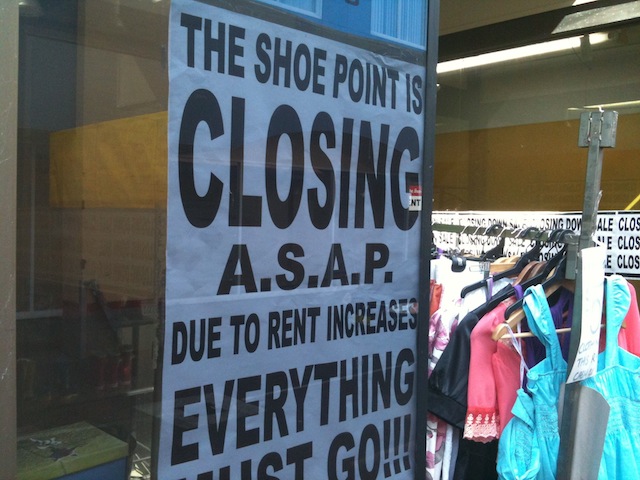
    One of the sad facts of business is that ventures go broke, and when they do there’s a trail of former customers, suppliers and employees that end up out of pocket.

    The recent appointment of administrators to the recently listed Australian electronics retailer Dick Smith Holdings leaving thousands of gift card holder – including the writer of this blog – out of pocket is a good example of this.

    Over twelve years of running a service business having customers go bust was a regular thing. Luckily this wasn’t frequent as once the assets had been liquidated and divided among creditors one was lucky to get five cents for every dollar owed.

    Early warning signs

    When a customer did go broke it was rarely unexpected. With long standing clients the payment times would blow out and often a business going bust showed the signs of poor maintenance, declining stock levels and distracted management long before the money ran out.

    The other notable thing was the failing company’s staff were often on your side. At one company, a whisky broker that went under owing millions to creditors who’d effectively bought ‘time share’ in liquor, the receptionist insisted in paying for some of the work we’d done out of the petty cash.

    Five years later the remaining outstanding invoices were settled and, as expected, we received almost nothing apart from the entertainment of reading the administrator’s reports detailing the struggles of angry creditors trying to get their drinking money back in the face of what had almost certainly been a scam.

    Ethical proprietors

    Most business owners that go broke aren’t crooks however, most are honest people who made bad decisions or were just plain unlucky. Often these people suffer far more than the creditors.

    One pleasant experience we had with a failed customer was a dance studio on Sydney’s Lower North Shore. The business went broke, the proprietor fled to her native New Zealand and I resigned myself to never seeing the outstanding thousand dollars.

    Two years later the formal liquidation proceedings had finished and unsurprisingly we received none of the monies owing. A few months after a cheque from the business owner arrived for the entire outstanding amount with a note apologising.

    A tough life

    While the former dance studio owner probably broke the rules in paying back the debts outside the official channels, she illustrated most failed business people are good people who were caught out by their own mistakes or being on the wrong side of lady luck.

    Business failure for those running startups or smaller enterprises often comes at a high personal financial, mental and relationship cost so it’s not surprising those sinking trying to hold on later than they should and then take personal responsibilty for the damages they cause.

    Sadly the same doesn’t hold true at the corporate level and in the case of Dick Smith Holdings the executives, the institutional shareholders frittering aways investors’ money, the private equity swashbucklers and the staid corporate managers responsible for the firm’s failure probably won’t see a hiccup to their stellar careers.

    The moral for anyone in business remains never to be too exposed to any one creditor. Regardless of how well a client’s management means, when things go bad it’s unlikely you’ll see most of the money you’re owed.

    Similar posts:

  • Value versus valuation

    Value versus valuation

    “There are people who build media companies for valuation, then there are others who build media brands for value,” writes Skift c0-founder Rafat Ali in his account of how the business stopped worrying about raising venture capital and focused on bootstrapping the travel industry website.

    Ali’s story of how Skift’s founders gave up on finding investors, refocused their business and found revenues to bootstrap the organisation is worth a read for anybody starting a venture, not just a tech or media startup.

    Notable is Ali’s distancing Skift from the startup label, claiming it’s “a meaningless word that comes with too much baggage”.

    The story of Skift is an interesting perspective on growing a business outside the current focus on external investors, instead focusing on the value it adds for customers, users and readers. Just as Skift went back to basics, many of us should also focus on how we and our businesses add value.

    Similar posts:

  • An entrepreneurial paradox

    An entrepreneurial paradox

    Being an entrepreneur has become fashionable in western countries, but according to the Global Entrepreneurship Monitor it’s not the developed nations which are the most enterprising.

    UK purchasing platform Approved Index took the GEM’s 2014 report and looked at which countries have the most entrepreneurs, defined as being “the percentage of an adult population who own (or co-own) a new business and has paid salaries or wages for at least 3 months.”

    Surprisingly Uganda came out on top with 28.1% of the population meeting the GEM’s criteria for being entrepreneurs with Thailand and Brazil in second and third place. Of the developed nations, Australians were the most entrepreneurial at position number 26.

    This raises the questions of what is the definition of an entrepreneurs and what drives people to become one?

    What drives entrepreneurs?

    Part of the answer to the second question is necessity. In Nigeria, a part time business is known as the “5 to 9 job” and, as the BBC reports, those evening enterprises are the way most Nigerians see as being a pathway to the middle classes which wouldn’t be possible for most wage earners.

    That becoming an entrepreneur is often a result of necessity is borne out by Uganda’s profile in the GEM report where the authors note are scathing about the government’s support of business.

    The biggest enabler of entrepreneurship in Uganda is its internal market dynamics. The most significant constraints are the unsupportive government policies, in terms of bureaucracy and taxes, and a lack of financing.

    Indeed, the GEM itself noted in its 2014 report on global entrepreneurship that “there tends to be more entrepreneurial activity in less competitive economies” and Uganda ranked 122nd of 144 economies in the World Economic Forum’s 2014/15 Global Competitiveness Index.

    Comparing the indexes

    Looking at the Countries listed in the GEM’s top ten and listing the countries by the World Economic Forums competitiveness index ranking and the World Bank’s ease of doing business index starkly illustrates the correlation between business strangling bureaucracy and people setting up their enterprises outside the regulatory strictures.

    GEM rank

    Country

    WEF rank

    World Bank rank 

    1

    Uganda

    122

    122

    2

    Thailand

    31

    49

    3

    Brazil

    57

    116

    4

    Cameroon

    116

    172

    5

    Vietnam

    68

    90

    6

    Angola

    140

    181

    7

    Jamaica

    86

    64

    8

    Botswana

    74

    72

    9

    Chile

    33

    48

    10

    Philippines

    52

    103


    Of the top ten countries by their entrepreneur ranking, only Chile and Thailand make the top 50 of either the World Bank’s Ease of Business index or the World Economic Forum’s Global Competitiveness Index. To summarise, the urge to be entrepreneurial is a reaction to a poor business climate.

    Defining entrepreneurs

    What we could be seeing is a poor definition of an entrepreneur although it’s hard to draw the line between a Ugandan housewife who sets up a market food store and an Australian family that buys a fast food franchise. Is one more entrepreneurial because they have more access to capital?

    Perhaps the Silicon Valley definition of an entrepreneur – the founder of a technology startup – is a more appropriate however that excludes vast tracts of western economies and almost all the developing world.

    On many levels the Global Entrepreneurship Monitor’s definition is probably the fairest as it indicates how many people are starting their own ventures regardless of their capital position or the nature of their business.

    If the GEM’s definition is fair then the leader board indicates that maybe having a nation of entrepreneurs is actually the symptom of a constrained business community rather than that of a vibrant economy.

    Maybe political and business leaders need to be careful what they wish for when they call for a more entrepreneurial nation.

    Similar posts:

  • Apple opens the kimono

    Apple opens the kimono

    Something strange is happening at Apple, the once secretive company is now becoming far more open in its plans and relations with the media.

    The latest example is the company inviting Sixty Minutes and Charlie Rose into its inner circles to interview CEO Tim Cook and go on tour of a future concept store with retail chief Angela Ahrendts.

    Apple’s media friendliness marks a big change for the company that’s reflected in its markets as engaging with other partners becomes critical for future success. Successfully achieving this will mean another fundamental shift in the organisation’s management.


    Similar posts:

    • No Related Posts