Category: business advice

  • First steps in an online journey

    First steps in an online journey

    “The days of getting a PhD to get your businesses online are over” declared James Carroll, GoDaddy’s International Executive Vice President last week on a visit to Sydney.

    GoDaddy is the world’s biggest internet domain name registration service and Carroll was in Australia to promote the expansion of the company’s local operations.

    Australia’s a prime target for the company with nearly half the nation’s two million businesses not having a web presence. “I think there’s an awareness issue about the skill that are needed to get online,” says Carroll.

    GoDaddy’s Australia and New Zealand country manager Tara Commerford suggested two reasons why small businesses aren’t going online, “I think it’s lack of awareness and people don’t know how to do it”.

    Commerford suggests that simplified online tools are making it easier along with the easy access to other platforms like social media and location online services.

    The problem though is these tools are not new, this blog has been discussing how companies need to get online for years and yet the proportion of small businesses getting a web presence has remained fixed around the fifty percent mark.

    One of the barriers to getting online is confusion and the new top level domains haven’t helped this by muddying the message about which domains they should be registering under. This is only increasing the fear among small business owners that going online is complex, expensive and risky.

    It’s understandable that domain registrars like GoDaddy would push the new domains given the industry’s low margins and need for scale, but that’s not the problem for smaller operators.

    The problem for small businesses is getting the basics right with with a mobile friendly website, particularly for hospitality and tourism operators. Having the right domain name is an important first start of an important journey for most businesses.

    Similar posts:

    • No Related Posts
  • Businesses and the Windows 10 upgrade

    Businesses and the Windows 10 upgrade

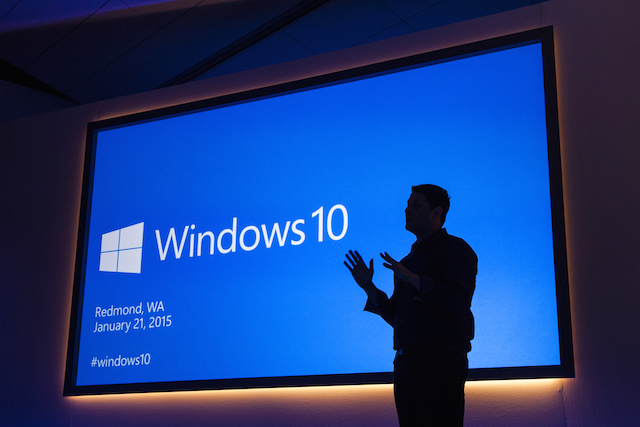
    Last night Microsoft formally launched Windows 10, the company’s latest desktop operating system.

    A decade ago a new Microsoft operating system would have had people queuing at computer shops all night but today, in a world of cloud computing, what software runs on a computer has become less important to users.

    To entice users onto the new operating system, Microsoft are making the upgrade to Windows 10 free for the next year to those using the earlier versions 8 and 7 and many will have noticed the messages appearing on their computers over the past few weeks.

    Windows 10 is a good system, Microsoft has learned from the user unfriendly missteps of Windows 8 and added features that make the system smoother and takes advantage of the desktop computers’ power.

    Microsoft have also continued with their philosophy of providing a system that works on all sizes of devices from smartphones to large monitor PCs and Windows 10 adapts to the needs and use patterns of the different screens.

    That Windows 10 works on smartphones is less of a pressing matter given Microsoft’s attempts to crack the mobile market have been unsuccessfully and Windows phones languish with a tiny market share.

    For business users, the question is whether to take advantage of the upgrade. The short answer is maybe if use cloud based services in your company and wait if you have desktop applications that rely on Windows.

    Should you have applications that run on desktops and servers in your office then it’s essential to wait and see if your software runs properly on Windows 10. You’ll need to talk to the program’s supplier and your IT support person. Generally the advice is to wait a few months to iron out any bugs.

    If you’re using cloud services then the operating system running on your computer is largely irrelevant as long as you have a modern web browser. Microsoft’s new Edge web browser that’s built into Windows 10 so far appears to be a fast and capable piece of software that’s an improvement on the much maligned Internet Explorer that still lurks on the system for backwards compatibly reasons.

    Upgrading though isn’t without its risks, sometimes things go wrong and even the best planned transition doesn’t always work out and generally most cautious IT advisors will take the attitude “if it ain’t broke, don’t fix it.”

    One other potential trap is in hardware. It may be that some printers, cameras and other hardware doesn’t have the right drivers for the new system so while the software upgrade is free, you may end up having to stump up a few hundred dollars for new peripherals.

    For businesses users, if things ain’t broke and the existing computers are working well then the upgrade to Windows 10 is adding unnecessary complexity to the office and it’s probably best to hold off the transition until new computers are needed.

    Similar posts:

  • Five basic software tools for a new business

    Five basic software tools for a new business

    Last week I was asked by someone considering starting a business what I’d recommend in the way of software for a new company.

    That’s a good question as cloud services have completely changed what a business should buy over the past five years when the answer back then would have been to buy a new PC with Microsoft Office preloaded along with a boxed accounting package.

    More importantly for a cash strapped business, whether it’s a tech startup or a more conventional business, today’s cloud based tools don’t need new computers and most have free versions that suffice for those early days before a venture has established a cash flow or its viability. That radically changes the economics of setting up a new business.

    Google Docs

    This is the basic essential tool for a new business giving a basic word processing, spreadsheet and presentation package. The free version of Google Docs is technically only available to educational or home users, but then you are running your new business from home aren’t you?

    Paid versions of Google Apps are either five dollars or ten dollars per user per month depending on the features or storage you want. Again for most small business the cheaper version will usually suffice.

    For power users, Microsoft Office is often unavoidable as the spreadsheet and wordprocessing features of Excel and Word are far more extensive than Google’s.

    Email and calendar functions

    Once upon a time your choice of email tool mattered, today it doesn’t as there’s no shortage of free cloud based tools or, if you’re a Mac user, Apple Mail. For most small businesses it’s easiest just to choose Google’s Gmail or Microsoft’s Outlook.com. If you’ve chosen Microsoft’s Office 365 package than Outlook is part of the business bundle.

    Also in the past having an online, shareable calendar was a nice to have but often expensive feature that required a server. Now almost all systems come standards with calendars although Google has the edge in terms of sharing calendars between workgroups.

    Storage

    Being able to store and share files into the cloud has been a boon for small businesses which in the past needed to have an expensive and clumsy inhouse server if they want to share information or even just to access it on the road.

    Microsoft give unlimited storage for Office 365 subscribers while Google offer 15Gb for the free Docs service, 30Gb for the $5 Apps Plan and unlimited space for the $10 Apps plan if you have more than five users. Apple’s pricing is more complex with five different tiers although iCloud is a much more elegant solution for backing up iOS and OS X devices.

    Two third party storage providers such as Box and Dropbox are also worth considering with both offering advanced tools and integration with other cloud services. Dropbox offers a free version with 2Gb of data, a Pro version including a Terabyte of space and a business version that is unlimited at $17 per month.

    Accounting

    One of the biggest mistakes a new business makes is skimping on accounting software. This is one of those areas where cutting corners early can be expensive later. The most popular cloud accounting service for small business is Xero which does a great job in integrating with other online platforms including Office 365 and Google Apps for $25 a month.

    Xero though is not alone in this field with MYOB, Reckon, Quicken and others fighting for marketshare. It’s best to talk to your accountant and find what they work with as this will save problems when you come to do your books.

    Website

    Every business needs a web presence. If your new company is a local service, retail or hospitality outlet then you have to be listed on Google My Business which literally puts your company on the map. Listings on Facebook and signing up with all the main social media services is a must do as well.

    The cornerstone though of an online presence though is a website and the easiest, quickest and no-cost way is to set up a website on Google’s Blogger platform. Once your business gets up and running then having your own web server running WordPress is the best long term solution but in those early days Blogger will suffice and the upgrade path between the two is surprisingly painless.

    Every business though is unique and your business might need more than these five basic tools. If you’re in hospitality and retail you’ll need a Point of Sale solution while if you’re a tech startup products like Slack and Basecamp may be needed as well.

    The five basics though are common to all businesses regardless of the industries they’re in and regardless of the aspirations of the owners. The fact you can set up a business for almost nothing is one of the reasons why it’s worth giving it a go.

    Similar posts:

  • Twitter’s search for meaning

    Twitter’s search for meaning

    New York Times writer Nick Bilton delves into Twitter’s search for a new CEO and comes up with a left of field conclusion – the company doesn’t actually know what it is.

    Twitter has certainly been casting around to define itself, particularly after its stock market listing that saw it valued at over twenty billion dollars.

    Bilton flags one reason why management is so uncertain about their company’s identity, that it’s directors don’t use the service themselves.

    As I see it, the problems at Twitter come down to a lack of leadership and a micromanaging board.

    And the churn is constant: many of its founders, chief executives, numerous product directors and other top brass have been fired or pushed out. Three of the eight positions on the current board belong to Mr. Dorsey and the former chief executives. About half of the board barely tweets.

    The lack of social media credibility on the board raises another issue about how much direct industry expertise should a company’s directors have. While it’s almost certainly not desirable to have insiders dominate a board certainly some, if not the majority, of directors should have some experience in the industries the company operates in.

    For Twitter though they desperately need to define the business and what its valuation really is. Even more pressing is to show how the platform differs from Facebook as the confusion of investors, users and advertisers isn’t helping.

    Ultimately as Bilton suggests the direction of a business is determined by the board, it’s time Twitter found at least a few directors who at least use social media, if not have some understanding and experience in the business.

    Similar posts:

  • Towards the zero defect economy

    Towards the zero defect economy

    At 2.03 in the morning of July 11, 2012, a Norfolk Southern Railway Company freight train derailed just inside the city limits of Columbus, Ohio.

    The resulting crash and fire caused over a hundred people to be evacuated, resulted in over a million dollars in damages and created massive disruption throughout the US rail network.

    Could accidents like this be avoided by the Internet of Things? Sham Chotai, the Chief Technical Officer of GE Software, believes applying sensor technology to locomotives can detect conditions like defective rails and save US railway operators around a billion dollars a year in costs.

    “We decided to put the technology directly on the locomotive,” says Chotai in describing the problem facing railroad operators in scheduling track inspections. “We found we were mapping the entire railway network, and we were mapping anything that touched the track such as insulated joins and wayside equipment.”

    This improvement in reliability and its benefits to business is something flagged by then Salesforce Vice President Peter Coffee in an interview with Decoding the New Economy in 2013.

    “You can proactively reach out to a customer and say ‘you probably haven’t noticed anything but we’d like to come around and do a little calibration on your device any time in the next three days at your convenience.’”

    “That’s not service, that’s customer care. That’s positive brand equity creation,” Coffee says.

    Reducing defects isn’t just good for brands, it also promises to save lives as Cisco illustrated at an Australian event focused on road safety.

    Transport for New South Wales engineer John Wall explained how smarter car technologies, intelligent user interfaces and roadside communications all bring the potential of dramatically reducing, if not eliminating, the road toll.

    Should it turn out the IoT can radically reduce defects and accidents it won’t be good news for all industries as John Rice, GE’s Global Head of Operations, pointed out last year in observing how intelligent machines will eliminate the break-fix model of business.

    “We grew up in companies with a break fix mentality,” Rice says. “We sold you equipment and if it broke, you paid us more money to come and fix it.”

    “Your dilemma was our profit opportunity,” Rice pointed out. Now, he says engineering industry shares risks with their customers and the break-fix business is no longer the profit centre it was.

    A zero defect economy is good news for customers and people, but for suppliers and service industries based upon fixing problems it means a massive change to business.

    Similar posts:

    • No Related Posts