Category: business advice

  • Looking outwards to beat change

    Looking outwards to beat change

    Only one in four Australian businesses are prepared for change says a report released today by telco Optus.

    The Future of Business report is based upon interviews with over 500 business leaders across twelve industries and exposes a disconnect between managers’ beliefs of how ready their businesses are to confront change and the reality.

    Over four hundred of the respondents felt ‘confident or highly confident’ in their organisation’s readiness for change while the survey found only 23% of these organisations are actually ‘highly ready’.

    Organisations that appeared to be highly ready tended to be outward focused with almost all of them citing the desire to meet customer needs as the top trigger for transformation while less change ready businesses are primarily driven to change in order to reduce costs.

    “Change ready businesses are not only prepared for, but also anticipate and predict change. Disruption is happening everywhere and businesses of every size and in every industry need to be prepared to deal with rapid technological change and shifting consumer expectations,” says John Paitaridis, Optus Business’ Managing Director.

    While the Optus survey doesn’t produce any great surprises it does emphasise how the dynamics of change work, organisations that are outward focused are more likely to identify and understand change than those looking inwards.

    Listening to the marketplace and society almost always beats those counting paperclips.

    Similar posts:

  • Tech and tax write offs

    Tech and tax write offs

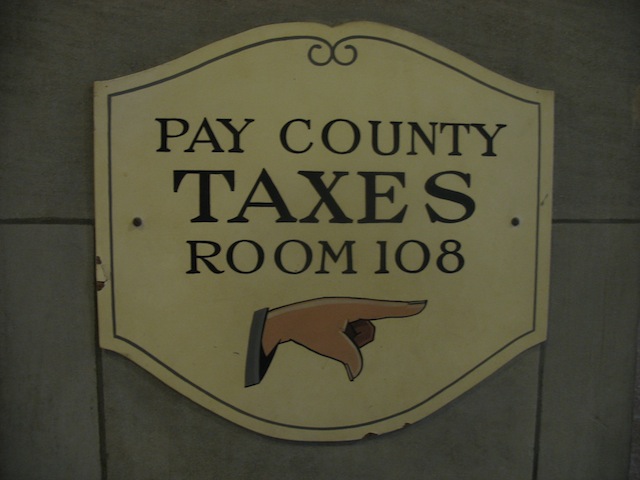
    In last week’s Federal budget the biggest news for business was the expansion of the accelerated depreciation limits where items up to $20,000 can be immediately claimed as a tax deduction.

    While this was a reversal of the previous budget that slashed the previous allowance, it was welcome news for businesses looking at replacing older tools and equipment or investing in new technology.

    One of the notable things about business technology is companies have a habit of holding onto older equipment long beyond what should have been its use by date.

    The consequences of using old technology are real, the older equipment is often not as fast as the newer kit which affects productivity and unpatched software is often the way malware finds its way into a business.

    Point of sale risks

    Earlier this week computer security vendor Trend Micro held their Cybercrime 2015 breakfast in Sydney where the director of the company’s TrendLabs Research division, Myla Pilao, described some of the threats facing businesses.
    One of the top risks were Point Of Sale systems (POS) where Trend Micro’s research had found over a third of US retailers had malware on their cash registers, in Australia it was six percent.

    Most of those infected POS terminals would be older units with many of them being software running on out of date versions of Windows that haven’t been patched or upgraded since they were bought a decade ago.

    Similar problems exist with older workstations, internet routers and even photocopiers where the technology has moved on and security holes discovered. Basically old equipment holds businesses back and exposes them to risks.
    Now the carrot of an immediate tax deduction gives Australian businesses an opportunity to refresh their technology. So what is the technology, smart company managers and owners should be spending their money on?

    Kick out your desktops

    “If it ain’t broke, don’t fix it” is the mantra for most business IT and desktop computers are the best example of this. In most companies as long as the word processing software or accounting package works the PCs continue to be used.

    With the withdrawal of support for the decade old Windows XP operating system last year, many older computers started being a liability in a business so now is the time to replace them.

    Consider tablets

    It may not be necessary to replace the old desktop computer with new ones, for many job roles a tablet computer is often a better choice. With cloud technologies increasingly being adopted there’s less of a need for a grunty PC sitting on each staff member’s desk.

    Upgrade the router

    One of the areas where businesses often compromise is with their internet access. Having an old, cheap router designed for home use is just not good enough for companies who rely upon being connected.

    A new business grade router will improve office internet access along with resolving most of the security issues older equipment is notorious for.

    Going mobile

    If you’re struggling on old mobile phones, now might be the time to upgrade to the latest smartphone. Amongst other things this will improve your office productivity, particularly if you combine the investment with some of the cloud services that make working on the road a lot easier.

    Cloud services are not part of the depreciation rules as they are usually subscription models and this shows the weakness in the Federal government’s thinking.

    Indeed for those vulnerable Point of Sale systems, a cloud based service running on tablet computers is probably a better solution than most server and PC based packages.

    A lack of vision

    The ‘ladies and tradies’ theme of the budget shows the Federal government is stuck in with the vision that Australian businesses are mainly mom and pop service operations in the traditional trades and professions.

    While the depreciation changes are welcome they do little to help startups or companies in emerging industries and for the economy in general will provide not much more than a GDP ‘sugar hit’ for retailers’ cash registers as we buy imported equipment for our businesses.

    For the Australian economy in general, the move really only benefits Gerry Harvey who can buy a few more racehorses from his stores’ and his rich mates who can afford some more expensive wine fuelled brawls in Sydney waterside restaurants.

    Australian businesses owners need to be demanding better thought out policies from a government that claims to be friendly to industry. The economy is changing and 1970s style tax benefit is not the way to prepare for a changing world.

    In the meantime, enjoy your tax write offs.


    Similar posts:
  • The not so smooth rise of 3D printing

    The not so smooth rise of 3D printing

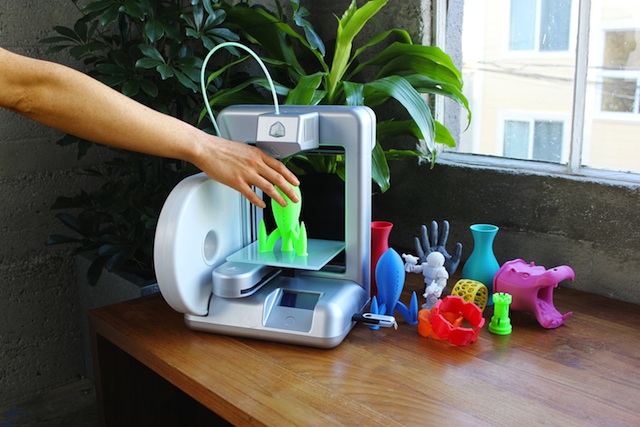
    Vice’s Motherboard details the remaking of MakerBot, the rescue of an early leader of 3D printing industry.

    The story is great long read for any business owner or want to be startup founder and a reminder that the development of new industries is never smooth sailing.

    Similar posts:

  • Adventures in Startupland – the brutal truth of starting a business

    Adventures in Startupland – the brutal truth of starting a business

    Startupland is a magical, mythical place where the unicorns roam free and much of the advice dished out to nascent entrepreneurs has more in common with a romantic fantasy novel than the hard work of building a business.

    Mikkel Svane’s Startupland is not one of those books. Svane, the co-founder and CEO of cloud based customer business Zendesk, is instead a tough description of the challenges and personal costs of venturing into business for yourself and the harsh, demanding realities of the Silicon Valley statup model.

    “No-one tells you how little you get paid,” warns Svane as he charts his own journey from developing and selling through Stockholm’s computer shops of the mid 1990s a basic program that created 3D optical illusions through to floating Zendesk on the NASDAQ in 2014.

    During Zendesk’s journey Svane and his business partners experienced the entire range of challenges that a business founder could face ranging from managing high growth, laying off staff in the face of a downturn, the inevitable pivots and, sadly, the passing of a valued employee.

    “Startups are fragile” warns Svane and observes how he nearly fell for the trap all business owners have been tempted by in doing consulting work to provide cash for the business. Invariably the side job comes to dominate and the new venture withers due to lack of attention.

    Working from home

    For those starting out in business, whether it’s a tech startup or something a big more mundane, the observations and tips on working for home are worthwhile in themselves, if you find you’re one of the type that “sits at home and eats toasts and masturbates” then it’s probably best to find an office or coworking space.

    Having had the opportunity to interview Svane a number of times, his own passion and character comes clearly out of the book including his view that seemingly boring things like customer support is sexy, citing how Marilyn Monroe fell for Arthur Miller (although that didn’t end well).

    The ‘boring is sexy’ mantra is one Svane repeats throughout the book, and his contention is seemingly mudane areas like customer support are where the real business opportunities lie.

    Business is about relationships

    Ultimate Svane sees business as being about relationships; between customers, staff and investors. His view on accepting investor’s money is an important lesson from the book.

    “Great investors have unique relationships with their founders, and they are dedicated to growing the company,” writes Svane. “Mediocre and bad investors work around founders, and the company ends in disaster.”

    The brutal truth

    In telling the brutal truth about starting a business Svane gives anyone considering the idea of ditching the cubicle a realistic view of the challenges ahead. That advice alone will save many families from the stresses and costs of self employment and startup land.

    Those considering entering the world of startups, small business or self-employment should read Startupland. If you’ve already started that journey, then Svane’s story is worth reading to show you aren’t alone in your daily challenges.


    Similar posts:

  • Webinar: Future proofing your business using cloud computing, social media and other tools

    Webinar: Future proofing your business using cloud computing, social media and other tools

    On April 29 I’m helping Flying Solo with a webinar on how small and single operator businesses can future proof their businesses.

    During the webinar we’ll be looking at how businesses can adapt and profit from a rapidly changing economy.

    Some of the things we plan to discuss include the trends driving the changing marketplace, some of the tools businesses can be using to harness a rapidly evolving workforce and methods to attract mobile consumers.

    We’ll also have a look at some of the ways canny business owners can use social media, cloud computing and other online services to make their businesses more profitable and flexible in a tougher business world.

    The webinar itself is free and you can sign up at the Flying Solo website. Hope to see you there.

    Similar posts: