Category: business advice

  • Small business and the importance of design

    Small business and the importance of design

    One thing the iPhone era has taught us is the importance of good design.

    In a piece for Fairfax Small Business this week, I had a look at some small businesses that had used compelling design to launch their products.

    As part of the research for this I interviewed Murray Hunter, founder of Sydney’s Design + Industry, about what businesses should be looking for when taking a product to market.

    One of the interesting points about the story was the two businesses featured, Elanation and Pod Tracker, didn’t use professional designers as the founders of both had expertise in that field themselves.

    But it is clear, good design matters to users and it will avoid problems down the track with manufacturers shippers and possibly regulators so for most small businesses and founders hiring a professional could be a very good investment indeed.

    Similar posts:

    • No Related Posts
  • Beating the bots: The evolving call centre business

    Beating the bots: The evolving call centre business

    The call centre business is very much an example of an industry driven by technological change, having only coming into being over the last 50 years as telecommunications became ubiquitous and affordable before being one of the biggest offshored industries.

    In an age of artificial intelligence, web based help pages and chatbots, it’s easy to think the call centre era may be coming to a close but Acticall Sitel Group’s Australian and New Zealand managers Steve Barker, the regional Chief Operating Officer, and Sally Holloway, Director of Business Operations, believe the industry has a long way to go yet.

    Miami based Acticall Sitel Group operates call centres in 22 countries with 75,000 ‘associates’ providing services to over 200 major companies so their view on how the industry is evolving is worth hearing.

    Technological shifts

    Naturally technology is the driving force with the increasing availability of broadband meaning more ‘associates’ can work from home rather than in call centres while cloud services are reducing the cost and complexity of call centres.

    The work from home aspect is proving popular with their clients as well as businesses see retaining skilled staff and the expense of real estate driving many organisations to extend their programs. An interesting observation given IBM’s and Yahoo!’s moves in restricting home office options in recent times.

    Social media has also changed the type of interactions consumers are having with organisations while artificial intelligence and robots – chatbots – are automating many call centre functions.

    A broader industry

    Holloway though says she doesn’t see voice services going away, “some interactions still require the personal touch”, but technology is broadening the ways customers interact with businesses.

    Interestingly, both Holloway and Barker believe that the commoditization of call centres is over as companies have realised the importance of good service in competitive markets although that varies between industries.

    Added to that is the stripping out of costs in areas like customer service has largely run its course over the past few decades and in most organisations there is little fat left to cut from client facing functions.

    Falling prices for technology, if not labour, does offer scope for smaller businesses to engage call centre providers that were once only available to larger corporates.

    Like most industries, the relationship between workers and automation in call centres is playing out in complex ways as staff get to use more advanced skills and low value tasks are given to machines.

    The evolution of the call centre may well be a pointer for other industries as we all grapple with the effects of automation.

    Similar posts:

  • Bootstrapping to success

    Bootstrapping to success

    One of the downsides of the current tech startup boom is the obsession with investor funding, the race to be a billion dollar ‘unicorn’ like Uber or AirBnB obsesses most of us reporting on this space.

    The paradox is while we gleefully report businesses raising hundreds of millions of dollars at ever increasing valuations, we’re also discussing how the cost of entering industries or launching new companies is collapsing, making it easier to launch a venture than every before.

    Which leads us to good old fashioned ‘bootstrapping’ – funding a business’ growth out of sales.

    A recent story I wrote on Sydney based HR tech company Expr3ss! reminded me of that where owner Carolyne Burns described how she financed her business initially through the sale of her house and has never taken a cent from investors over a decade of profitable operations.

    Bootstrapping is the traditional way generations of business owners and entrepreneurs have funded their ventures and it’s only in recent years with the rise of the tech startup that venture capital or private equity has been seen as investment sources for most small businesses.

    That rise of VC and PE investors though could be partly due to the banks stepping out of their role of financing small businesses as they’ve focused on financial engineering and funding speculators.

    Also driving things in the last decade has been the flood of cheap money that’s washed across the world as governments and central bankers try to stave off deflation.

    Many businesses needing money to fund capital investment or expansion have found it’s become harder to go to banks or traditional investors and that partly explains the rise of VC’s, Private Equity and the range of new online lender and crowdfunding platforms.

    Venture Capital and investor money though never really comes cheap and having raised funds from investors, a founder or business owner’s job becomes as much about managing investor expectations as running the company.


    For many business founders, the whole reason for starting their own company was to run their own show. So answering to a bunch of investors defeats the purpose of going on one’s own.

    Carolyne Burns’ story is a reminder that the best, and cheapest, form of business financing is profitable sales. It’s something we should remember in an age that celebrates loss making companies dependent upon indulgent investors.

    Similar posts:

  • Retail’s evolving face

    Retail’s evolving face

    On the back of last week’s discussion about Amazon’s Australian expansion, I spoke to Sydney community radio station 2SER-FM this morning about the challenges facing suburban shopping strips.

    Like the rest of the world, Australia’s suburban and small town retail strips have been doing it hard for a generation. While technology has a lot to do with this, it’s not online commerce that’s the killer.

    The decline, recovery and shift of the suburban retail strip really started in the 1960s as people moved to the suburbs and started shopping at supermarkets – the technology driving that shift was affordable motor cars and refrigerators.

    Around the developed world, the removal of tram (or streetcar) systems during the 1950s and 60s also hurt the inner city shops as local foot traffic declined. In Sydney it’s striking that fifty years after the removal of the tram system those suburbs that developed around them are still easily recognisable.

    Shifting back to the city

    In the 1980s another shift happened. Suddenly in the inner city became fashionable again for affluent and young residents and a new generation of shopkeepers sprung up attracted by relatively cheap rents.

    The shift we’re now discussing is that generation of the 1980s and 90s has been dispersed as rents become increased or shops are demolished for apartment blocks that cater for the populations moving back into the inner cities now suburbia isn’t so fashionable.

    Like all shifts this has consequences – just as the corner grocery store and local butcher was forced out of business by supermarkets in the 1960s and 70s, today the indy fashion store or old fashioned immigrant run cafe is being displaced by high priced gelato shops and restaurants catering for whatever the current food fad is.

    The push against consumerism

    With increasing rents, tenants increasingly become upmarket brands although the upper end of the market though is not what it was as the middle classes – particularly in cities like Sydney, San Francisco, Singapore and London – find soaring property prices make it harder to indulge in luxury items.

    So high rents are driving shopkeepers out of business and in Australia at least, the perverse incentives in taxation laws and investment regulations means that landlords have a positive disincentive to drop their asking prices, which means vacancies increase.

    Renew Newcastle successfully skirted landlords’ reluctance by ‘licensing’ space rather than leasing it from landlords. This allowed land banking property developers and valuation conscious commercial owners to let out space without formal leases that created legal or financial issues.

    Regional challenges

    It will be interesting to see how Newcastle will perform as that land banked buildings are being developed into apartments and, the developers hope, high rent shops.

    For other regional areas the news isn’t as great with technology in everything from mining to agriculture automating more jobs out of existence. Much of the decline in country towns and regions during the Twentieth Century was due to the mechanisation of farming.

    Pervasive broadband promises some hope for regional communities but at present both jobs and wealth are being increasingly concentrated into major population centres. This however may be a transition effect exacerbated by governments propping up financial sectors after the 2008 economic crisis.

    It’s interesting too that the financial sector now is undergoing an automation revolution not dissimilar to that of the twentieth century agriculture industries, something that’s bad news for cities and governments staking their future on those sectors.

    Technology driving change

    A lesson from the last hundred years is how technology changes our communities, the arrival of refrigeration and the motor car allowed suburbs and supermarkets to develop. While tractors and trucks radically changed the structure of rural communities.

    With the rise of new technologies in everything from agriculture to transport and manufacturing, we’ll see similar changes to our societies and businesses in coming years.

    The changes faced by today’s retail business are part of an evolving economy, just as the horse and tram dependent city of hundred years ago looked very different from car dependent suburbias of the late 20th Century, tomorrow’s cities will look very different from today’s.

    Similar posts:

  • Surviving Amazon’s onslaught

    Surviving Amazon’s onslaught

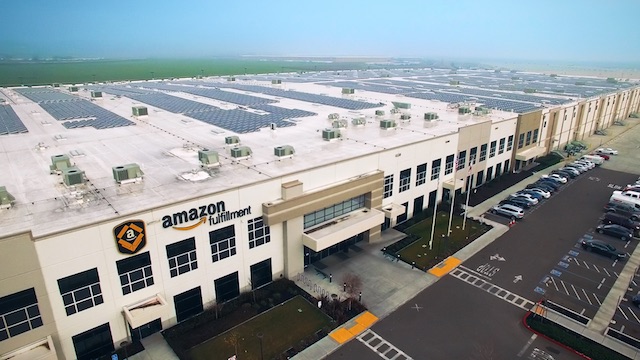
    The long awaited launch of Amazon in Australia seems to be finally happening with reports the giant is scouting locations for logistics centres for a late 2018 launch.

    While some are predicting a retail apocalypse, not all are convinced Amazon will do well. Australia doesn’t have a catalog culture buying culture like the United States and, as german supermarket chain Aldi found, the nation’s high property prices and restrictive zoning rules makes acquiring sites difficult.

    A further impediment for Amazon in Australia is the last mile with Australia Post dominating the delivery business, despite its mediocre service, and the dominance of incumbent retailers in the suburbs where most Australians live means the US giant isn’t guaranteed success.

    Whether Amazon’s entry into a market does mean a retail apocalypse is also another question, while its clear the mall era is drawing to close there are plenty of success stores with chains like Ulta Beauty, Sephora and Kiehls – not to mention the Apple Store – thriving despite Amazon’s growth over the past twenty years.

    In the Australian context, a bigger question should be around why local equivalents haven’t thrived with Billabong, Pumpkin Patch and Kathmandu all failing while the established majors have barely glanced at overseas markets – Harvey Norman and Westfield being the stand out exceptions, although the former hasn’t been a great success.

    Even in Amazon’s original market of bookselling, big chains like Borders have fallen victim but local independent bookshops have survived and grown despite the online threats. So local retailers can weather an Amazon onslaught.

    Another benefit of Amazon starting in Australia is to encourage new business, particularly given the US giant is rumoured to be focusing on groceries as it gives new entrants to the market an opportunity to enter without having to deal with the stultifying duopoly that dominates the market.

    One thing is clear though, Australian retailers have been slow in moving into online and international markets, probably due to the luxury of catering to consumers in an economy that hasn’t been troubled by recession for a generation.

    The year’s warning that Amazon will be opening shop is a warning for Australian business to lift their game and compete. Those who don’t won’t have any excuses.

    Similar posts: