Category: business advice

  • Building an accountable society

    Building an accountable society

    Making governments and businesses more accountable is ultimately the role for voters and consumers.

    Suzanne Snively, Chair of Transparency International’s New Zealand arm and Mick Macauley of Victoria University laid out the objectives of the Open Government Partnership at the Open Source, Open Society conference in Wellington today.

    The partnership, driven by the British government but endorsed by US President Obama, was launched in 2011 to make governments more open, accountable, and responsive to citizens.

    Underlying the partnership are four principles; technology, accountability, open participation and transparency.

    For governments the biggest challenge is probably in transparency in making information on government activities and decisions comprehensive, timely and freely available to the public.

    Probably the biggest challenge is accountability, a topic which goes far beyond governments, including both politicians and public servants, into the business community and society in general.

    “The role of civil society is absolutely crucial,” says Macauley while Snively adds “Democracy is going to have to start with the user.”

    Ultimately democracy and the markets will decide how transparent societies become, it’s up to voters not to tolerate secretive government and consumers not to tolerate untrustworthy businesses.


    Similar posts:

    • No Related Posts
  • Ethics and profitable business

    Ethics and profitable business

    Does being an ethical business pay off? Transparency International found in 2014 that New Zealand come in only second to Denmark in being the least perceived corrupt country in the world, while Australia comes in as tenth out of 174 countries.

    Suzanne Snively, chair of the New Zealand branch of Transparency International, believes this is an opportunity for both countries and their businesses as emerging nations deal with reforming their institutions and management cultures as she told me today at the Open Source, Open Society conference in Wellington.

    “Companies do better when they are not corrupt,” Snidely states. “Energy can be used in much more productive way when you don’t have the overhead of corruption.”

    Having a relatively clean society and ethical business cultures should be a massive advantage. It’s best not to squander it.


    Similar posts:

  • The engineer’s return – GE heads back to its roots

    The engineer’s return – GE heads back to its roots

    In his mission to refocus GE on its engineering roots, CEO Jeff Immelt last week announced a restructuring plan that will see the company divest most of its real estate portfolio and shrink its finance arm faster than expected.

    Bloomberg News reports the stock market took the announcement very well with the shares jumping 8.7% on the news.

    GE now expects “high-value industrials” such as jet engines, oilfield equipment and diesel locomotives to generate more than 90 percent of earnings by 2018, up from just over half in 2014.

    That the company’s announcement has been taken so well by the market shows how the US economy is slowly shifting from financial engineering and debt driven spending to building real products.

    For the rest of the world there’s a clear message – the 1980s era of Gordon Gekko is coming to a close. It’s time to start figuring out where the real growth is going to come from rather than just goosing household spending with easy credit.

    Where companies like GE are going today is where governments will be looking in five to ten years time. Some will find they are further behind than others when the shift becomes apparent.

    Similar posts:

  • Could a robot put you out of business?

    Could a robot put you out of business?

    Transaction based businesses are in the firing line as robots and algorithms are taking over the tasks that are the mainstay of many service businesses.

    In How To Know if a Robot Will Take Your Marketing Job, Gartner consultant Martin Kihn identifies two factors that indicate roles at risk of being overtaken by technology.

    “The two dimensions relate to the things computers do best: (1) repetitive tasks, and (2) structured data,” states Kihn. “If you’re a knowledge worker, your biggest enemy is routine. To the extent your work is predictable, it’s codable . . . and you’re a target.”

    Kihn describes a curve where repetitive, structured jobs are at risk of automation while at the other end are more abstract analytic roles which are relatively safe from the algorithms and robots.

    will-a-robot-take-your-job

    While Kihn is focusing on marketing jobs, his message is clear for all occupations and businesses – if your company makes most of its revenue from low skill, easily automated tasks then it is ripe for being overtaken by algorithms or robotics.

    Even for businesses that are higher up the value chain, there are roles that can be replaced within the enterprise; a good example are the mining companies replacing high paid drivers with automated pit trucks.

    There are even many management jobs that may be affected as artificial intelligence advances. Approving spending or hiring requests for example can be largely dealt with by algorithms with only the rare exceptional case requiring a manager to intervene.

    So the executive suite may well be just as vulnerable as the lower status roles in an organisation.

    MIT professor Andrew McAfee who Kinh quotes has been clear that we’re on the cusp of massive change in the workplace as robots, algorithms and artificial intelligence progress. It may well be there are far more jobs and businesses at risk than we think.

    Similar posts:

  • Beating Facebook envy

    Beating Facebook envy

    Do economies and businesses need to be at the cutting edge of tech or is staying behind the early adopters the key to get the most out of technology?

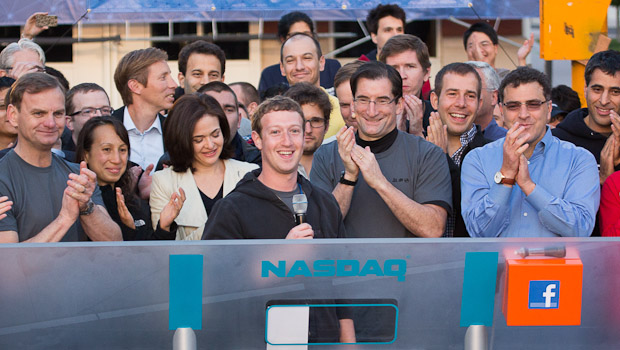
    “Everybody has Facebook envy,” says Oracle’s Neil Mendelson, the company’s Vice President for Big Data, about business life in Silicon Valley.

    Mendelson was talking about how the Silicon Valley business environment is a high pressure bubble where the focus on shipping products is different from the needs of users outside the tech sector.

    “The farther out you go from Silicon Valley the more people fundamentally understand the value is in getting something out of it,” says Mendelson who was speaking at an executive lunch in Sydney earlier today.

    “Being a late follower has an advantage because companies aren’t going to get fired up about this Facebook envy trying to assemble a solution but rather they can get something out of the cloud that will deliver value.”

    The Minitel problem

    An example of being too far ahead could be Minitel, a text based network operating across France between 1982 and 2012.

    Minitel was a visionary project intended to deliver services similar to the Internet through a dedicated terminal, however the open nature of the net made the French service less than attractive and eventually France Telecom wound the service up in 2012 as user interest evaporated.

    How much the French bet on Minitel held the nation’s digital economy back is open to question, the World Economic Forum lists France as 25th in the world in its 2014 Networked Readiness Index however the gap between most of the top nations is quite close.

    Falling off the bleeding edge

    The idea that the best return on a tech investment is by being behind the ‘bleeding edge’ isn’t new, for years the advice from serious computer experts was to never buy a Microsoft product until version three came out however there is a risk that the early adopters might get an early advantage over the slow movers.

    Another risk is missing out altogether; as Oracle’s Australian manager Tim Endrick told the room, “our experience is organisations are doing two things; they are either managing disruption and/or they are leveraging their structures to innovate. Those who are sitting on the back step doing nothing are in serious trouble.”

    So while there are risks with being too an early an adopter of new technology, it’s important to be aware of the trends and tools that are changing business.

    With the pace of change in both technology and industry accelerating, it may be that staying too far behind the cutting edge risk falling off altogether. Maybe it’s worth being envious of Facebook.

    Similar posts: