Category: business advice

  • Are brands doomed?

    Are brands doomed?

    A few days ago we covered the Great Transition research paper by Colonial First State Funds Management’s James White and Stephen Halmarick and followed up with a piece in Business Spectator looking at the ramifications for the Australian economy.

    One of Halmarick and White’s assertions is that brands are dead as consumers in emerging economies don’t care about corporate names and in developed nations people have better information about local businesses.

    The former argument seems flawed from the beginning; Apple for example is making huge inroads in China while local manufacturers like Lenovo, Huawei, Great Wall and Haier are all working hard to establish their names in international markets.

    In developed markets, White and Halmarick’s views have more basis with brand names not having the cachet they once did now consumers have a global platform to voice complaints and find alternatives.

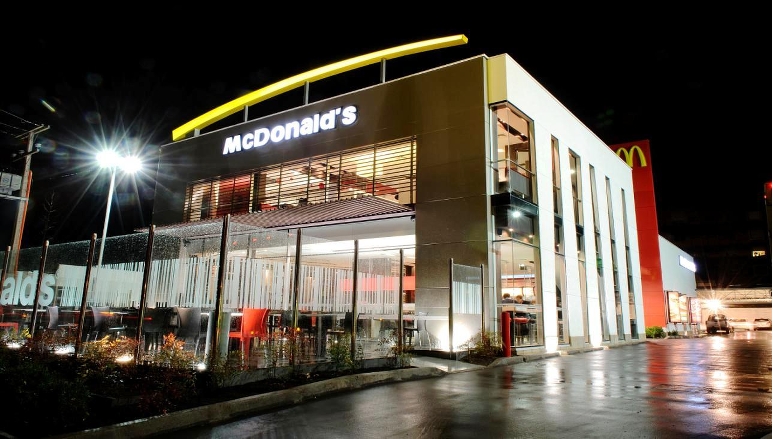
    A good example of brands that are struggling are companies like Microsoft and McDonalds, although in the case of both companies this could be more because of a shift in the marketplace rather than better informed consumers.

    However brands are surviving as they lift their game and adapt to changed marketplaces, in fact its possible to argue that today’s consumers are more responsive to brand names than ever in the past.

    A good example of this is again Apple which has more fans than ever before. Apple are also a good example of how big corporations can invest huge amounts into new technologies and products to give them an advantage over upstarts.

    We should also remember that brands as we currently know them are largely a Twentieth Century phenomenon born out of the development of mass media communications and many of today’s household names came into the culture thanks to television in the 1950s and 60s.

    So as creatures of last century’s media it’s not surprising that brands are having to evolve to a changed world, some of them will thrive and grow while others will shrivel away.

    It’s safe to say though that the concept of brands isn’t dead, although many of the names we know today may not exist by the end of the decade.

    Similar posts:

  • Business in a time of falling technology costs

    Business in a time of falling technology costs

    Personal Computers cost one thousandth of what they did in 1980 reports Aki Ito in Bloomberg Business.

    For the computer industry that’s been both a blessing and curse; cheap systems have allowed computers to become pervasive but at the same time the collapsing prices have destroyed the business models of those who built their companies upon the industry economics on 1980 or 2000.

    Software has fallen a similar amount with computer programs now costing 7/1000ths of what they did 35 years ago. Again this has dramatically changed the structure of the industry with Google and Amazon taking over from Microsoft and Adobe.

    While the computer industry is the starkest example of the collapse in prices due to technological change, it’s not the only sector being affected – almost every industry is under similar pressures as margins get stripped away.

    Anywhere where middlemen are exploiting market inefficiencies are opportunities for new technologies to destroy the existing business models, Uber are a good example of this with the taxi industry.

    With technological change accelerating in all industries, no business or its managers can assume they are safe from shifting marketplaces or new, unexpected competitors.


    Similar posts:

  • Building trust in an age of suspicion

    Building trust in an age of suspicion

    The world’s trust in business, government and innovation is falling reports global PR giant Edelman in its 2015 Trust Barometer.

    Surveying 27,000 participants around the world, Edelman follows up with questions to what they call ‘informed publics’; 6,000 college-educated followers of business and news media with a household income in their country’s and age group’s top 25%.

    Across the board trust in institutions have fallen with nearly 60% of countries falling into the ‘distruster’ category and the news isn’t good for businesses and governments.

    That decline in trust is a striking result given the ‘informed publics’ cohort are their country’s middle class and it shows the stresses being felt in affluent groups.

    “There has been a startling decrease in trust across all institutions driven by the unpredictable and unimaginable events of 2014,” the company’s release quotes CEO Richard Edelman“The spread of Ebola in West Africa; the disappearance of Malaysian Airlines Flight 370, plus two subsequent air disasters; the arrests of top Chinese Government officials; the foreign exchange rate rigging by six global banks; and numerous data breaches, most recently at Sony Pictures by a sovereign nation, have shaken confidence.”

    Whether the events of 2014 are responsible for the erosion in trust as Edelman claims is up for debate, the decline of trust in innovation indicates the general atmosphere of mistrust is a much bigger issue.

    Trusting innovation

    Particularly notable is the Australian result where over half the respondents believe innovation is happening too quickly and that it is being driven by greed. Only some, a piddling 14 percent, see innovation as making the world a better place.

    Those results are a concern for a country looking at dealing with a high cost economy. At this stage of Australia’s development it’s necessary for industry and society to be implementing new ways of doing business, not looking back to the past.

    One shift that marks a change in society is that online search engines are now more trusted than the media outlets that provide the news, that  the population trusts algorithms more than journalists is something that should concentrate the minds of newspaper and magazine proprietors.

    Regaining trust

    Towards the end of the survey Edelman suggests ways businesses and governments can regain the trust of their communities through ethical business behaviour, taking responsibility to address issues, along with having transparent and open business practices

    Other opportunities for building trust include listening to customer needs and feedback, treating employees well, placing customers ahead of profit and communicating frequently on the state of the business.

    Clearly building trust is the task of all staff but it starts with an organisation’s leaders to ensure ethics and openness are rewarded. In that light it’s not surprising that trust is declining given the way unethical financiers and opaque politicians have been the main beneficiaries of the post crisis economy.

    While a time of declining trust means our institutions are under great stress, it also means there are great opportunities as well for smart businesses and leaders. The challenge is to show the ethics and openness that the public is calling for.

    Similar posts:

  • Leaving the Jagger generation behind – Coca-Cola’s journey into milk

    Leaving the Jagger generation behind – Coca-Cola’s journey into milk

    Coca-Cola are now selling milk as their markets move away from consuming sugary drinks, how much of this is due to the baby boomer era coming to an end?

    Following yesterday’s post on McDonalds and the franchising model, it’s worthwhile considering how other businesses are being affected by today’s changing society.

    Certainly the fast food industry is one of the most deeply affected as KFC owner Yum Food starts experimenting with a modernised layouts and menus to counter the drift in consumer tastes.

    KFC are not alone in struggling with this as McDonalds experiments with own changes in response to the demographic and market shifts.

    75-3

    McDonalds’, KFC’s and most particularly Coca-Cola’s Twentieth Century success is largely due to the post war baby boom, as the children born during and after World War II reached adolescence – the Jagger generation as described by Irish economist David McWilliams – they indulged themselves in their newfound wealth and personal freedoms that were unthinkable for their parents who struggled through two world wars and a depression.

    Coca-Cola was the emblem of that freedom and wealth which made up the twentieth century American dram that the world envied, adopted and copied. Today the world still looks to the United States but its a different America they see.

    As the Jagger generation retires and sugary drinks are no longer their first priority their kids and grandkids are looking to different beverages; coffee, energy drinks, bottled water and, possibly, milk which are more in line with their lifestyles.

    The task of Coca-Cola, and all the other brands that represented post War American affluence, the task now is to adapt to a very different generation and a society with priorities very different to that of the previous century.

    Similar posts:

    • No Related Posts
  • McDonalds and the end of the Franchise era

    McDonalds and the end of the Franchise era

    One of the biggest business innovations of the late Twentieth Century was the franchising model. Now as technology changes that way of working isn’t necessarily the force it was a quarter century ago.

    While the concept itself wasn’t new – The East India Company at the beginning of the Seventeen Century was a type of franchise – the model really took off in modern business with the automotive industry where different manufacturers granted franchises to their brands.

    After World War II it was the fast food industry that developed the franchise model into a tightly controlled, procedure driven way of doing business.

    Building the fast food franchise

    The fast food franchise model worked well for everybody; for the brand, it meant they could expand without huge layouts of capital while for budding local entrepreneurs purchasing a franchise meant buying into a proven business model with a known brand name.

    McDonalds was the leader in the fast food franchising sector; the company expanded across the US and then globally on the back of the procedures first developed by the founding brothers then expanded by Ray Croc as he sought to roll out an industrial scale burger chain where a cheeseburger in Arkansas tasted the same as one in Alaska.

    To achieve this, he chose a unique path: persuading both franchisees and suppliers to buy into his vision, working not for McDonald’s, but for themselves, together with McDonald’s.  He promoted the slogan, “In business for yourself, but not by yourself.” His philosophy was based on the simple principle of a 3-legged stool: one leg was McDonald’s, the second, the franchisees, and the third, McDonald’s suppliers. The stool was only as strong as the 3 legs.

    Croc’s concept was fantastically successful as the franchisees took the operational risks and stumped up most of the capital while McDonalds providing the branding, procedures and supplies.

    Many other industries, and fast food chains, copied Croc’s idea and the modern franchise model spread from hamburgers to lawn mowing to industrial safety services. During the 1970s and 80s, a smart, hard working entrepreneurs could do very well buying one of the bigger franchises.

    Wobbling franchises

    Around the turn of the century though that model started to wobble; during the 1990s the sharks began to move into the franchising industry with many sub-standard systems. McDonalds and the other fast food chains compounded the problem of poor performance by selling too many franchises in a mad dash for growth.

    Young entrepreneurs have changed as well; rather than raising several hundred thousand dollars to pay franchise fees to be constrained by a strict set of procedures, today’s keen young go getters are more interested in the opportunities of building new businesses from scratch as startups.

    Access to capital is also a problem as today its harder to raise money from a bank unless a business owner has ample home equity or other real assets to secure lending; the risk adverse nature of banks is making it harder for these capital intensive businesses.

    Technological change

    The killer though for the franchise model seems to have technological and social change; as consumer lifestyles and preferences changed, so too has the underlying demand for both franchises and their products.

    McDonalds’ fading in the United States illustrates this change as companies like Chipotle take over from the once dominant chain as technology has made it more efficient to standardise procedures and customise food service.

    Once McDonalds was an investor in Chipotle and Quartz Magazine describes how the relationship foundered with one of the key points of friction being differences over the franchising model.

    “What we found at the end of the day was that culturally we’re very different,” Chipotle founder and co-CEO Steve Ells said. “There are two big things that we do differently. One is the way we approach food, and the other is the way we approach our people culture. It’s the combination of those things that I think make us successful.”

    Just as technology – the automobile created the increasing suburbanisation of America – drove McDonalds’ growth so too is it now contributing to the chain’s demise as chains like Chipotle can cater to a market with different expectations and deliver a product that doesn’t need the mass production techniques of the 1950s.

    As a consequence, the big procedure driven model of franchising isn’t so necessary any more. While the concept of franchising remains sound, what worked in the post World War II years isn’t so compelling today.

    It’s fashionable to think of companies like newspapers as being the victims of technological change but the truth is most of the businesses we think as being dominant today are the result of advances over the last 150 years, the evolution of McDonalds and the franchising model is just another chapter.

    Similar posts: