Category: business advice

  • Blurring the boundaries between home and office

    Blurring the boundaries between home and office

    “My ambition is to only spend four or five hours in the office,” said Vodafone Australia CEO Iñaki Berroeta when asked at a lunch in Sydney today about how he would like to structure his working day.

    For many Australians, this is becoming the reality of work as increasingly their job is following them home and into their social lives according to Microsoft’s Life On Demand white paper released this week.

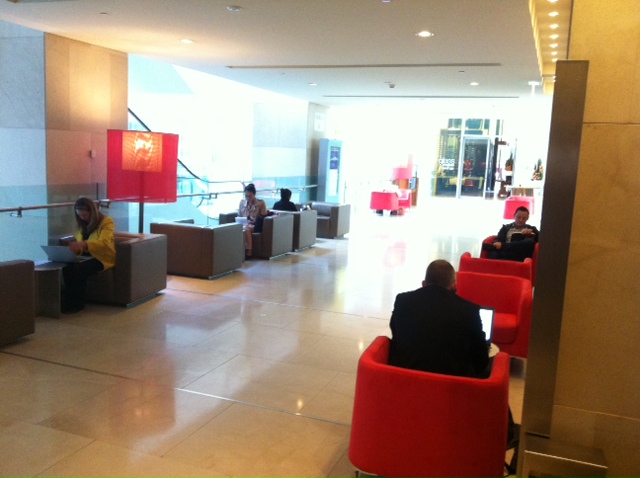
    The blurring of the lines between home and work is no surprise to small business owners, senior executives or those establishing a startup, however according to Microsoft this is becoming normal for the majority of workers.

    In their paper, Microsoft found 30% of Australian workers are checking work emails on devices at home before they leave for work and 23% are doing work activities while they are socialising with their friends.

    Overall, more than a quarter of Australians work from anywhere which has more than doubled in the last five years.

    This is largely due to the rise of tablet computers and accessible wireless broadband. A direct consequence of this is nearly half of commuters work or study while on public transport.

    Being able to work on the train, bus or tram is changing the usage of public transport with many commuters preferring to use the usually slower option (at least in Australia) over driving as it’s seen as more productive time. This is a cultural change that governments have been slow to understand.

    Equally slow have been many businesses in understanding they have to deploy the tools that allow workers to be efficient while out of the office, this is the whole point of cloud services.

    The workplace is changing as mobile internet becomes an expected part of society. How is your businesses catering to both your staff and customers’ needs in the age of the smartphone and tablet computer?


    Similar posts:

    • No Related Posts
  • It’s time to educate our politicians

    It’s time to educate our politicians

    In mid 2003 I put an employment ad online for two computer technicians. I was expecting a healthy response as it was the depths of the computer industry’s depression following the tech wreck two years earlier.

    A healthy response is what I got. Two thousand job applications came in; it took me a week to wade through them.

    I was reminded of that story with the Federal government’s recent thought bubble requiring those on unemployment benefits to apply for forty jobs a months.

    Like most of the business community I was appalled at the thought of being buried under hundreds of pointless job applications that served nothing but to fulfil a Liberal Party staffer’s ideological fantasies.

    Within a week an Adelaide grandfather had come up with the idea of a jobseeker app that would automate the task which shows just how far out of touch both sides of politics have become with the modern world, particularly the digital economy.

    The Australian political classes’ lack of understanding of technology has been on painful display over the last week with the Federal government’s fumbling over proposed data retention laws; one gets the impression George Brandis needs other people to use the toaster for him, let alone be trusted to use a computer without assistance.

    This incomprehension of what’s driving the modern economy among our political leaders is no longer a joke – when the Prime Minister himself proudly states ‘I am not a geek’, it’s clear this nation is being led away from having any serious role in the 21st Century.

    In fairness, this is not the fault of any single party or individual; it’s the result of Australians – particularly Australian businesses – voting like sheep for the blue team or the red team at every election.

    As a consequence, Australian politics is now dominated by comfortable, arrogant and somewhat dim careerists who have little in skills beyond being able to float to the top of the shallow, fetid sewers that are the party political machines.

    This is our fault and it is where Treasurer Joe Hockey is right in bemoaning how business won’t stand up and strongly lead the nation’s reform agenda.

    Unfortunately for Joe, a true reform agenda is about making the nation more competitive in an era where the world’s economy is radically changing. The old ‘ship out resources and watch your property go up in price’ model that has sustained the Aussie economy is not a recipe for long term success.

    If Australia is going to compete in the Twenty-First Century then we are going to have to invest in modern training, education and capital equipment while putting in the tax and social security systems that reward genuine entrepreneurs and job creators over property speculators and corporate ticket clippers.

    Right now Joe, and his friends in both the Liberal and Labor parties, are doing exactly the opposite.

    Joe’s right. We need to voice our concerns loudly. We also need to demand our politicians at least take the time to understand the basics of the technologies that are radically changing today’s world.

    Next time you see a politician, of either colour, try to get five minutes of their time to explain how technology is changing your business. Hopefully it might make them pause before the next thought bubble.

    Similar posts:

  • Standing up to the giants – why the big software companies don’t always win

    Standing up to the giants – why the big software companies don’t always win

    In the latest Networked Globe post I have an interview with QNX founder Dan Dodge on how BlackBerry wants to be at the heart of the Internet of Things.

    One of the things Dodge discusses is how twenty years ago Microsoft told QNX they would be driven out of business by the software giant’s Windows CE operating system.

    As it turned out Microsoft failed dismally.

    QNX’s survival in face of a big competitor is similar to Google’s failed attempts to enter various industries. Everyone assumes Google will succeed against the smaller players because they are rich and smart.

    Often however the rich player doesn’t win because the smaller incumbent is savvy, focused and knows their market well.

    Sometimes bigger is not always better in the software industry.

    Similar posts:

    • No Related Posts
  • Everyone is a critic on the internet

    Everyone is a critic on the internet

    “Everyone’s a critic” is the old saying. Today this is truer than ever as anyone can post a review online.

    One of the notable things about business in the internet age is how sensitive people are to criticism.

    A good example of this is a story going around the web this week of a Dallas chef, John Tesar, who had a magnificent breakdown over a review of his restaurant in the local newspaper.

    This set off a chain of claims and counterclaims including some truly bizarre pieces on various blogs about ‘chefs winning the war against critics.’

    Probably the strangest thing with this whole debacle is the review by Leslie Brenner in the Dallas Morning News is actually quite constructive and certainly no AA Gill style demolition of the establishment.

    This silly little spat illustrates how business people, not just temperamental chefs, have glass jaws. Another story going around the web this week is of Union Street Guest House in Hudson, New York, that fines guests for bad reviews

    Tesar’s response is pretty typical of many business owners – attack the critic instead of addressing the problems. Given Tesar threw the Twenty Rules of Social Media – which apply to businesses as much as social media – out the window, he was lucky not to find his reaction backfiring horribly on him.

    What business owners have to understand is that you will get criticism, unfortunately most of it you will never know about as unhappy customers tell their friends and relatives.

    If you get the opportunity to hear that criticism, then you have the opportunity to fix the problem.

    This is something business owners need to understand about review sites and social media; it’s an opportunity to get some honest feedback about how things are going.

    So start listening to what your customers are saying online and stop being so defensive.

    Similar posts:

  • Rent doesn’t matter to startups

    Rent doesn’t matter to startups

    Following yesterday’s post about the factors behind cities like New York, London and San Francisco becoming startup hubs, a friend asked “let me gues — cheap rents?”

    In truth it’s the opposite; none of the cities cited as startup centres are cheap places to live or work and London is usually towards the top of the most expensive places on the planet.

    That rents aren’t a huge factor is possibly because the typical tech startup is a lean operation with a small team crammed into a crowded location.

    One suspects though there are limits to how much a business conserving its cash will pay — you don’t see many startups based in A-grade locations alongside big law firms and banks — and this may be the weaknesses of these big cities.

    Certainly in London’s Silicon Alley the complaint is the days of cheap rent are long gone and newer startups have to base themselves in other locations across the city.

    Overall, rents are important but they aren’t the critical factor in developing a tech sector hub. Whether that remains the case depends upon how the industry develops.

    Similar posts: