Category: business advice

  • Startups as a dream job

    Startups as a dream job

    “It’s my absolute dream job” says Melanie Perkins of her role as CEO and co-founder of online design app Canva in the latest Decoding the New Economy video.

    Since being set up ten months ago, Canva has grown to over a half a million people using the tool to create graphics for applications such as books, marketing banners and website logos.

    The idea for Canva came out of the difficulties Melanie found in using design software while lecturing at university and it’s growth has been as a result of the idea catching the imagination of investors like Lars Rasmussen, one of the driving forces behind Google Maps, and Guy Kawasaki, Apple’s original Mac evangelist.

    “We’ve got some great things coming in the next few months,” says Perkins. “So stay tuned.

    Similar posts:

  • Fighting a loss making business

    Fighting a loss making business

    Having deep pockets is a great help in business as the online cab war in San Francisco shows.

    As competition heats up on the streets of San Francisco, Uber is trying to put Lyft out of business by offering fares below what they pay drivers.

    This has been the long term tactic of Amazon; raise a lot of money and then run your main line of business at a loss.

    Amazon have shown you can do this for a long time if investors stay patient. Fighting it is difficult if you don’t have deep pockets yourself.

    In the long term though you can’t see this being good for customers, although in the meantime San Franciscans can enjoy cheap taxis.

    Similar posts:

    • No Related Posts
  • Demoting the newspaper

    Demoting the newspaper

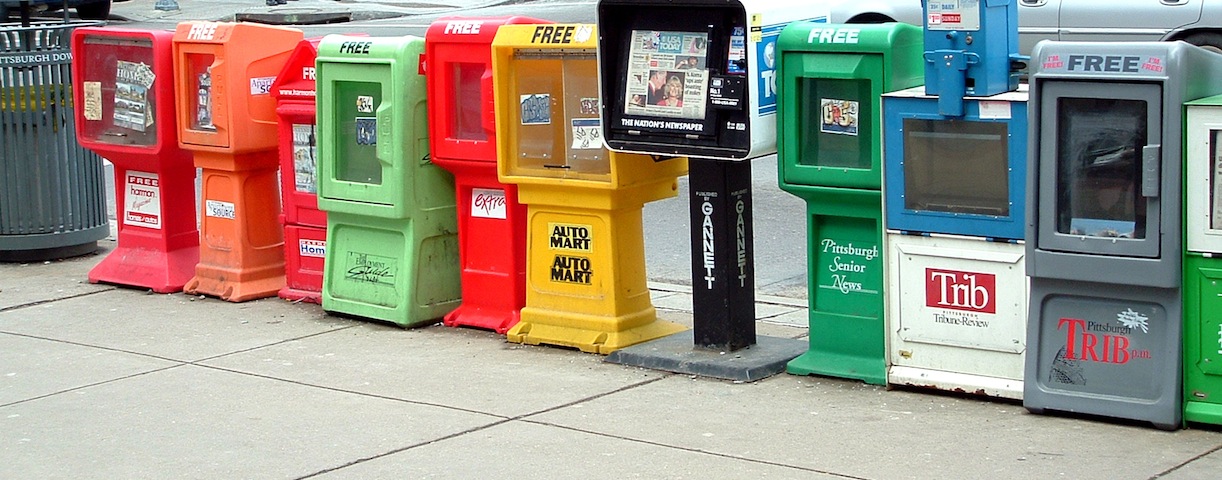
    You know a product has problems when retailers start start moving it out of key retail positions. When the product was the retailers’ core business, you know the entire industry is in serious trouble.

    Mark Fletcher describes in the Newsagency Blog how he’s moved his city’s number two selling paper off the main level of his newspaper display.

    “Sales are not paying for the space,” Mark says bluntly.

    Newsagents relegating newspaper fits nicely into Ross Dawson’s Newspaper Extinction Timeline, in the case of Mark Fletcher’s newsagency Dawson sees the Australian newspaper industry vanishing by 2022.

    For newsagents the signals have been clear for some time that they have to adapt to a society where paper based products – newspapers, stationery and greeting cards – aren’t in demand.

    The process of adapting isn’t easy or smooth – many experiments will fail and even the smartest business people will make expensive mistakes. That’s the nature of evolution.

    Newsagents though are just one example of changing marketplaces, there’s few industries that aren’t being disrupted by the technology and economic changes of our times. All of us are going to have to adapt to a rapidly changing world.


    Similar posts:

    • No Related Posts
  • Debunking the myth of the digital nomad

    Debunking the myth of the digital nomad

    Last century’s myth of the proud nomad is being modernised with the dream of the digital nomad. Unlike the Twentieth Century legends, today’s tales are far more mercenary.

    “Quit your cubicle” is one of the war cries of the current cult of entrepreneurs. It’s a nice thought that overlooks the real risks of striking out on your own and usually pushed by those selling self help books or related services.

    A related concept to quitting your cubicle is the ‘digital nomad’, a quaint idea pushed by the same people.

    The theory of the digital nomad

    In theory, the digital nomad is a knowledge worker who travels the world tethered only to an internet connection and a power socket. It’s best illustrated by this tweet.

    This is a wonderfully privileged western middle class view of the world – backpack around the world in cheap, or free, accommodation while earning a good middle class income through oDesk or Taskrabbit.

    Conveniently this view overlooks that making a western middle class income through oDesk or Taskrabbit is pretty difficult. For most, the digital nomad lifestyle is a myth and seated more in long standing romanticism.

    Building the nomad myth

    The noble nomad myth has a proud history that gained currency in modern times thanks to the mid-Twentieth century stories of Lawrence of Arabia and Sir Wilfred Thesiger.

    While the romantic myths about Arab nomads developed, Thesiger and TE Lawrence pulled no punches about the difficulties of nomadic life – it was a tough, hard and precarious existence that suited a spartan minimalist like Thesiger.

    For the modern digital nomad life is tough and precarious as well unless you have a trust fund or tolerant, affluent employer.

    Western privilege

    The idea of sitting on a Boracay beach sipping a cold cocktail while working a four hour work week is lovely, but for clients there’s little reason to hire a privileged westerner at New York rates when they can employ a better qualified Filipino for a fraction of the price.

    Most wannabe Digital Nomads will find picking fruit in Australia or teaching English in Bangkok is easier and better paid before returning to their community manager jobs in San Francisco, Melbourne or Manchester.

    Thesiger himself would have been appalled at the whole idea of ‘digital nomads’ – entitled middle class people tied down by credit cards, encumbered with expensive laptops and obsessed with Wi-Fi access.

    We should remember the romance of the nomad was built around retreating to a simpler lifestyle, the digital equivalent is actually far more complex – and precarious – than its advocates will admit.

    The digital nomad lifestyle is a nice marketing line for self help books but for most it’s a cruel myth.

    Similar posts:

    • No Related Posts
  • Limits of the black box business

    Limits of the black box business

    One of the paradoxes of the modern tech industry is that while its leaders preach openness and collaboration, their own businesses are mysterious unaccountable black boxes.

    This website has often looked at how the Silicon Valley business model leaves users and partners exposed to arbitrary enforcement of vague policies and indifferent customer service.

    A good example of the black box business model is eBay’s major security breach where it appears millions of users have had their personal and banking details compromised. Instead of informing customers immediately, the company’s management hid the problem and hoped stonewalling inquiries would make the problem go away.

    Lacking accountability

    In the black box business model, not being accountable is the key – we see it with Amazon’s bullying of book publishers, Google’s high handed identity policies and Facebook’s puritan censorship.

    Those high handed attitudes to customers’ and users’ rights is born out of arrogance; all of these company’s managements, and the corporate bureaucrats who enforce the policies, believe their hundred billion dollar businesses are untouchable.

    Such arrogance might though be ill-founded as each of these businesses is less than twenty years old and, while they themselves have deeply disrupted existing industry models, there is no reason why their own market dominance and huge cash flows can’t be usurped by new technologies or challengers.

    In age where trust is the greatest currency, hiding beyond a block box of algorithms and impassive customer support may not turn out to be a successful management strategy.

    Similar posts: