Category: business advice

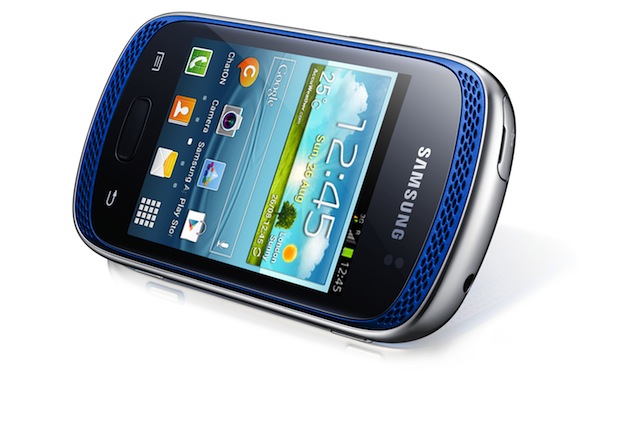
  • Potentially unwanted applications – what are we are installing on our smartphones?

    Potentially unwanted applications – what are we are installing on our smartphones?

    One of the notable things about the technology industries is there are always new terms and concepts to discover.

    During a visit to Sophos’ Oxford headquarters last month, the phrase ‘Potentially Unwanted Applications’ – or PUAs – raised its head.

    PUAs come from the problem application developers have in making money out of apps or websites. The culture of free or cheap is so ingrained online that it’s extremely hard to make a living out of writing software.

    As result, developers and their employers are engaging in some cunning tricks to get customers to download their apps and then to monetize them, particularly in the Android world which lacks the tight control Apple exercises over the iOS App Store.

    “What’s interesting about Android,” says Sophos Labs’ Vice President President Simon Reed, “is it’s attracting aggressive commercialisation.”

    The fascinating thing Reed finds about this ‘aggressive commercialisation’ is where the distinction lies between malware and monetisation and when does an app or developer cross that line.

    Reed’s colleagues Vanja Svajcer & Sean McDonald explore where that line lies in a paper titled Classifying PUAs in the Mobile Environment which they submitted to the Virus Bulletin Conference last October.

    In that paper Svajcer and McDonald discuss how these applications have developed, the motivations behind them and the challenge for anti virus companies like Sophos and Kaspersky in categorising and dealing with them.

    The authors also flag that while the bulk of the revenue generated by these apps comes from advertising, there are serious privacy risks for users as developers try to monetize the data many of these packages scrape from the phones they’re installed on.

    Svajcer and McDonald do note though that potentially unwanted applications aren’t really anything new, we could well classify many of the drive by downloads that plagued Windows 98 users at the beginning of the century as being PUAs.

    What we do need to keep in mind though that what is driving the development of PUAs is users’ reluctance to pay for apps and that it’s going to take a big change in customer attitudes for this problem to go away.

    For businesses, this is something managers are going to have to consider as they move their line of business applications onto mobile devices, as Marc Benioff proposed at the recent Dreamforce conference.

    Sophos’ Simon Reed believes potentially unwanted apps won’t be such a problem in the workplace however. “Consumers may have a different tolerance towards PUAs than commercial organisations,” he says.

    The prevalence of PUAs on mobile devices does underscore though just how careful organisations have to be with who and what can access their data. It’s another challenge for CIOs.
    Similar posts:

    • No Related Posts
  • Building great work

    Building great work

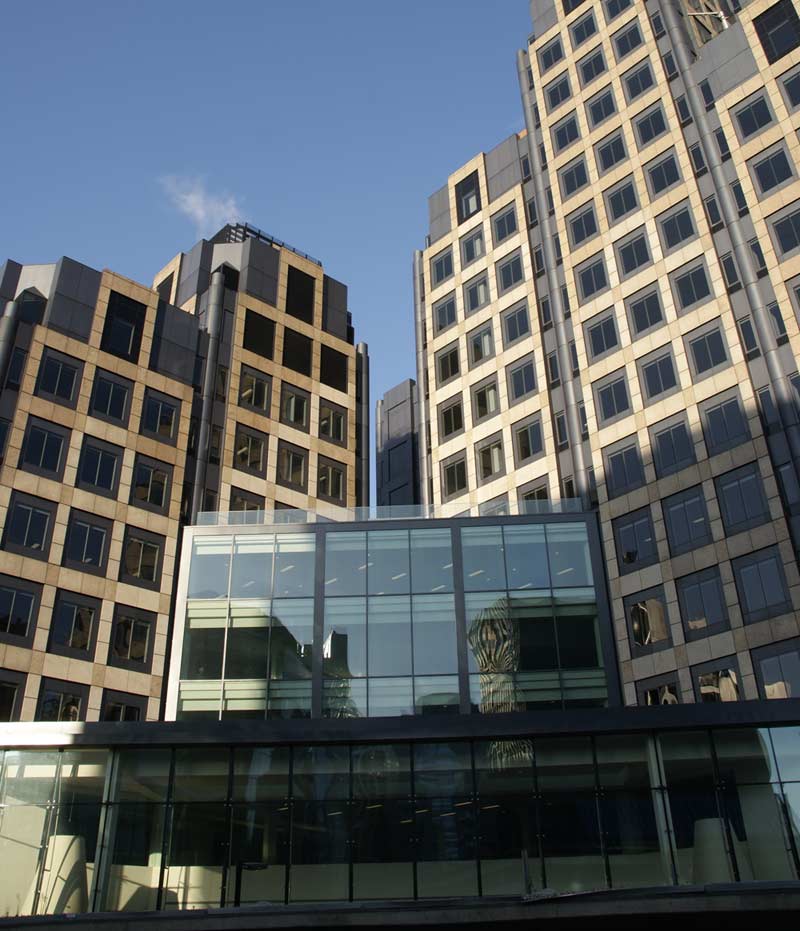
    “You have to understand Paul that we are building a structure designed to last twenty-five years,” sneered the consulting engineer as we sat in a site meeting on a high rise construction site just inside the City of London.

    I sighed deeply and let the matter of cladding fire protection water tanks slide and pondered nearby St Paul’s Cathedral, wondering what Christoper Wren would have thought about the mediocre architecture being thrown up around his masterpiece.

    The consulting engineer was a suitable person to build mediocre buildings, he and his firm were only on the project by virtue of the property developer being from the same masonic temple and the calibre of their shoddy and visionless work reflected their suitability for the project.

    Apart from the pedestrian architecture and engineering, the lack of foresight extended through poor design right through to not allowing enough for future expansion of the building’s communications – by the early 1990s it had already become apparent modern office towers were going to need plenty of space for network cables and the lack of which probably contributed to the structure being totally refurbished in the mid 2000s.

    That day was the beginning of the end of my engineering career as I found I didn’t much care for being patronized by mediocrities all too often encountered in the building industry in the mid 1990s.

    At the time most of the architecture in London was pedestrian and bland late Twentieth Century mirror glass. The real tragedy being that modern construction techniques give architects and builders possibilities that Wren couldn’t have dreamed of.

    Thankfully London snapped out of that era of mediocrity and today building like The Gherkin, The Shard and London City Hall show what’s possible with imagination and modern building techniques, although things can go wrong.

    Mediocrities patronizing those who don’t share their narrow, bland look on life will always be with us, thankfully we don’t have to accept them in our lives.

    If we want to build great things that push the boundaries or change the world, then those grey mediocrities have no role in our lives.

    Where that consulting engineer and his masonic friends are today, I have no idea but it’s not likely they built any of the iconic buildings that now dot London’s skyline.

    Similar posts:

    • No Related Posts
  • Abolishing the service visit

    Abolishing the service visit

    “Service used to be an act of damage control,” said Salesforce’s Peter Coffee at the recent Dreamforce conference. “You are bleeding brand equity until that problem is fixed.”

    Coffee’s view is that the internet of things is an opportunity to delight the customer with proactive service that allows companies to fix customers’ problems before they happen.

    Zero planned maintenance

    Taking this idea further is GE’s Chief Economist, Marco Annunziata, who sees the internet of things as an opportunity to introduce the concept of Zero Planned Downtime where there is no need to stop machines for scheduled repairs and maintenance.

    “A lot of the maintenance work is done on a fixed schedule,” Annunziata. “You end up wasting time and money servicing machines that are perfectly fine.”

    “On the other hand you might miss that something is about to go wrong between two maintenance periods.”

    “The idea of the industrial internet is that by gathering so much data from these machines themselves – plus having the software to analyse this data – you will have information that flags to you when intervention is needed.”

    Annunziata’s view is that connected machines won’t need to have regular service intervals, instead of insisting a car has  an inspection every ten thousand kilometers where the tyres are replaced and the oil changed, often unnecessarily, the vehicle need only be called in for maintenance when its sensors flag that a part or consumable needs attention.

    Finding the benefits

    While that can mean big savings for car owners, it’s in fields such as aviation, mining and logistics where the greatest benefits of Zero Planned Downtime would be found.

    For businesses it’s another example of how they will fall behind if they don’t invest in modern technology as those who invest in newer, connected equipment will be able to reduce downtime and maintenance cost.

    How achievable Zero Planned Downtime is in many fields remains to be seen, not least because of regulatory hurdles in sectors like aviation, however the idea does promise to change the business model of companies that depend upon service revenue.

    Similar posts:

    • No Related Posts
  • Delighting the customer – the new business normal

    Delighting the customer – the new business normal

    Salesforce’s Executive Vice President of Strategic Reserach, Peter Coffee joined the Decoding The New Economy channel at last week’s Dreamforce conference to discuss the new normal — delighting the customer.

    Coffee’s role at Salesforce is to help the company’s potential clients understand the new normals of business life. “It’s a lot of listening,” he says.

    In describing the new normal, Coffee is in tune with Salesforce’s CEO Marc Benioff in seeing mobile services as being one of the key parts of how business will look in the near future.

    “The fundamental statement is your mobile device is no longer an accessory,” says Coffee. “It’s the first thing you reach for in the morning and it’s the last thing you touch at night.”

    “Fundamentally people are mobile centric so we need to rethink our operations.”

    Continuing the social journey

    It’s not just mobile services that are changing the way we do, social media continues to be companies’ weak points in Coffee’s opinion.

    “There’s research that’s come out of places like MIT that shows traditional print and broadcast media are still valuable for creating awareness of your brand but the final step of turning someone from knowing who you are into deciding to do business with you is now made today only when a trusted network confirms it.”

    “People don’t make that final step of buying from you until they’ve consulted their trusted advisors.”

    “Another fundamental change that’s happened is that the connectivity of the customer is such that if you have a customer that’s unhappy with you for even five or ten minutes there’s a tweet or a Facebook post or a LinkedIn update just begging to leak out and damage your brand,” says Coffee.

    “The closer you can get to instantaneous resolution to the issue, the better.”

    Internet of machines

    With the internet of machines, the ability to resolve customers’ problems instantaneously becomes more more achievable in Coffee’s opinion.

    “Connecting devices is an extraordinary thing,” says Coffee. “It takes things that we used to think we understood and turns them inside out.”

    “If you are working with connected products you can identify behaviours across the entire population of those productslong before they become gross enough to bother the customer.”

    “You can proactively reach out to a customer and say ‘you probably haven’t noticed anything but we’d like to come around and do a little calibration on your device any time in the next three days at your convenience.’”

    “Wow! That’s not service, that’s customer care. That’s positive brand equity creation.”

    Delighting the customers

    All of these mobile, social and internet of things technologies will give businesses the tools to delight their customers and Coffee sees that as the great challenge in the new business normal.

    While many businesses will meet the challenges presented by mobile customers and their connected machines Coffee warns those who don’t are in for a painful time.

    “If you do not have delighted customers you have no market.” States Coffee, “the way that you delight customers is by making sure every interaction with you leaves them happier than they were before.”

    “Traditional silos of sales, service, support and marketing must be dissolved into one new entity which is proactive customer connection.”

    “Companies that neglect to adopt it will discover they have customers who are sensitive to nothing but price,” warns Coffee.

    Paul travelled to Dreamforce in San Francisco as a guest of Salesforce.

    Similar posts:

    • No Related Posts
  • Becoming an all mobile executive

    Becoming an all mobile executive

    “I don’t want to use a laptop again,” Marc Benioff told the closing Dreamforce 2013 customer Q&A. “The desktop remains the biggest security threat to corporations — it’s a nightmare. The PC and laptop we never designed to be connected to a network.”

    Benioff was walking his talk in promoting his company’s Salesforce One mobile platform, claiming at the Dreamforce conference opening that he hadn’t used a PC or laptop or nine months as he’s moved over to tablet and smartphone apps.

    That push to move the company and its customers onto mobile services was emphasised by Peter Coffee, Salesforce’s Vice President for Strategic Research.

    “Your mobile device is no longer an accessory,” says Coffee. “It’s the first thing you reach for in the morning and it’s the last thing you touch at night.”

    Salesforce’s push into into the post-PC market follows Google and Apple’s lead, much to the distress of Microsoft and its partners.

    “We saw the phenomenal engineering work of Scott Forstall at Apple and the visionary work of the late, great Steve Jobs,”  Benioff told his cutomers at the final Dreamforce Q&A. “When we saw the iPhone we sat up and thought ‘wow, what are we going to do about this?’”

    “This is a paradigm shift, we’re moving from the desktop world to the mobile phone world and then of course we saw the iPad world emerge and that amplified it.”

    Salesforce’s impressions were shared by much of the business community as senior executives, board members and company founders quickly embraced the first version of the iPad, which on its own triggered the Bring Your Own Device (BYOD) trend in enterprise computing.

    In a mobile age, Benioff now sees three key priorities for Salesforce; “we want to be feed first, we want to be mobile first and we want to be social first.”

    Regardless of Benioff’s vision, not everyone will go mobile which is something that Peter Coffee acknowledges.

    “The laptop will occasionally be used to author creative work like a presentation or to deal with something that needs a large screen like pipeline analysis,” says Coffee.

    Marc Benioff though is adamant. “Honestly I don’t ever want to use a laptop again,” he told his audience.

    It will be interesting to see how many business leaders follow him in abandoning their desktops and portable computers as the post-PC era of computing develops.

    Similar posts:

    • No Related Posts