Category: business advice

  • Shifting to a better return

    Shifting to a better return

    As part of Deloitte’s Building the Lucky Country series, the consulting firm had a briefing last week from John Hagel, co-chairman of Deloitte’s Silicon Valley Centre for the Edge, to discuss how industries are responding to shifts in the workplace and their markets.

    John’s thesis is that businesses can be broadly split into into three groups; infrastructure, product innovation and customer relationship business which he covers in his Shift Index that looks at how industries are being affected by digital technologies.

    Infrastructure businesses are high volume, transactional services like call centres, logistics and utilities companies.

    The product innovators are those who develop new products, get them to market quickly and accelerating adoption of those goods.

    Customer relationship businesses focus on understanding their clients and using that knowledge to add value.

    Each of these business models require different mindsets and because most large companies try to do all three, they manage to do none well.

    One of the results of this is a lousy Return On Assets, which Hagel says have fallen in the United States to one-third of the levels of 1965 and he doesn’t see this improving as the ‘competitive intensity’ of US markets increases.

    A big feature of this decline in overall ROA is how the best performers have travelled compared to the laggards with the ‘winners’ barely maintaining their returns while the ‘losers’ are seeing their results declining dramatically.

    How Hagel sees the solution to this poor performance is through rewarding creative and passionate workers better.

    Firms have untapped opportunities to reverse their declining performance by embracing pull. To accomplish this, firms must develop and encourage passionate workers at every level of the organization.

    Additionally, companies must tap into knowledge flows and expand the use of powerful tools, such as social software to solve operational/product problems more efficiently and effectively as well as to discover emerging opportunities.

    If Hagel is right, it’s the businesses who want to micro-manage their workers while stifling innovation, initiative and creativity in their businesses who will be the great losers in this next decade as we move to the next phase of the ‘Big Shift’ where knowledge flows improve business performance.

    Starting the process of dealing with these shifts involves understand what the DNA of your business really is; if it is a transactional infrastructure business then management needs to acknowledge this and not kid itself about being in customer relationships.

    There are weakness in John Hagel’s proposition – one being that businesses can be easily pigeonholed into three categories.

    Apple is a good example of this where a company that is clearly product focused has also shown it can be customer orientated with the success of the Apple Stores.

    There’s also the question of why are there only three categories? In the breakdown the immediate thought is that there are businesses that don’t fit in any of these boxes. Legacy airlines or struggling motor manufacturers are good examples.

    Despite the criticism, John and the Center For The Edge have some good points about the future of business and it’s something we’ll explore more over the next few weeks.


    Similar posts:

  • Management by fear

    Management by fear

    The sad story of the passing of Bea, the Golden Retriever who died while in the care of United Airlines portrays a fundamental problem in many organisations’ managements – the rule of fear by middle managers.

    A telling part of Bea’s sad tale is how her owner Maggie Rizer was treated when she went to collect her two dogs from United,

    When we arrived in San Francisco to pick up our dogs we drove to the dark cargo terminal and on arrival in the hanger were told simply, “one of them is dead” by the emotionless worker who seemed more interested in his text messages.  It took thirty minutes for a supervisor to come to tell us, “it was the two year old.”  Subsequently we requested that our dog be returned to us and were told that she had been delivered to a local vet for an autopsy. Whatever thread of trust remained between us and United broke and we then insisted that she be returned to us for our own autopsy by our trusted veterinarian, Shann Ikezawa, DVM from Bishop Ranch Veterinary Center. Over the next two hours the supervisor’s lie unraveled as it became clear that Bea was right behind a closed door the whole time and he had been discussing how to handle the potential liability with his boss who had left and sticking to the divert and stall tactic that they had been taught. Eventually Bea was returned and we drove her to the vet at midnight.

    The ‘divert and stall’ tactic took over two hours for Maggie and her partner to get around.

    When I recently flew United I saw a similar attitude from the cabin crew, their lack of initiative and beaten attitude was noticeable. As I said in the post;

    Overall the cabin crew seem tired and beaten, while they aren’t rude or unpleasant one wonders if they have all received too many stern memos from management about being friendly to customers.

    Those stern memos have a corrosive effect on a business where every employee worries more about being sanctioned for breaking a rule or directive rather than helping customers.

    Eventually the entire organisation becomes risk adverse and focused on protecting staff, or management’s, interests rather than looking after those of customers, shareholders or taxpayers.

    Too many organisations are like this, where the staff are motivated by staying out of trouble rather than helping and adding value to their customers.

    Making staff fear you is one way to run a company, or a nation, but ultimately those who are scared of the leaders lose all initiative and the empire collapses because every decision has to be sent to head office as the minions are scared to do anything that will be bring the Imperial Displeasure down upon their hapless heads.

    From ancient Rome to the Soviet Union empires have fallen because of this, in today’s private sector companies that run on fear are ultimately doomed, including the ones who can tap into government subsidies to kick the can down the road. Even public sector agencies where this attitude reigns will change when the chill winds of austerity blow through their corridors.

    One staff member taking a little bit of initiative probably would have saved Bea the golden retriever. One supervisor taking responsibility and helping Maggie Rizer would have avoided the PR disaster United now have.

    In an economy that’s radically changing, inflexibility and slow decision making are possibly the worst possible traits an organisation can have. It’s time for dictatorial managers, along with control freak politicians and their public service directors, to let the reigns go on their staff.

    Similar posts:

  • Today’s business Neanderthals

    Today’s business Neanderthals

    “Bringing a knife to a gunfight” describes showing up hopelessly ill-equipped for the task at hand.

    Two recent conferences, the massive Dreamforce in San Francisco and the smaller, but still fascinating, Australian Xerocon in Melbourne illustrate just how radically the commercial world is changing and how many business leaders are poorly equipped for today’s times.

    In July, the Melbourne Xero Convention bought together 400 Australian partners of the cloud accounting service which showed how how one New Zealand based company is building it’s business through engaging other suppliers who add features to the basic service.

    Vend, a Point Of Sale cloud service provider, was one of the companies exhibiting at XeroCon. In the past POS systems have been a pain for retail businesses with most suppliers’ business models being about locking customers into expensive contracts.

    With cloud services, the old vendor lock in model dies as stores can use any device they like such as a PC, tablet computer or a smartphone so a business is no longer locked into using an overpriced and often antiquated piece of equipment.

    Making the cloud offering even more attractive is that Vend, and many of their competitors, also take advantage of APIs – Application Program Interfaces – built into other services so they can seamlessly change records.

    So a shop can make a sale in their physical store and inventory levels will automatically change in the online stores and on services like eBay. If an item is now of stock, the websites are automatically updated to reflect this.

    This business automation makes it easier and cheaper to run a business. It’s everything that computer have promised for the last thirty years and is now being delivered through cloud computing services.

    At Dreamforce in San Francisco last week, Salesforce.com CEO Marc Benioff showed the 90,000 attendees how these services work on a corporate level with demonstrations from companies as diverse as General Electricski company Rossignol, and Australia’s own Commonwealth Bank.

    What really stood out with all of these presentations was how each business had made major technology investments that in turn allowed them to deploy modern tools.

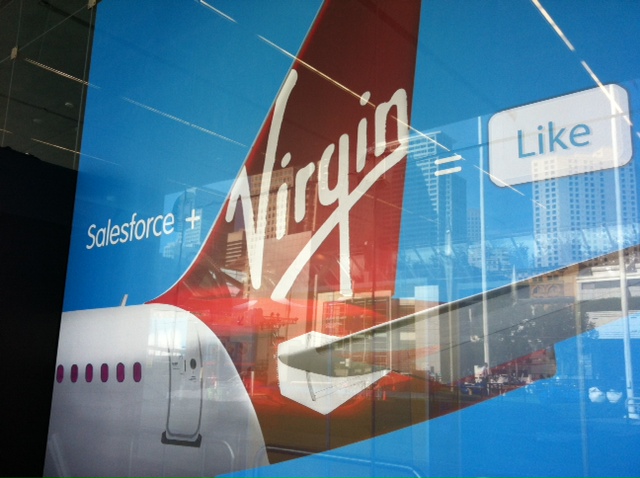
    The Virgin America Dreamforce presentation was particularly telling. Having just endured a 13 hour United Airlines flight in a plane that had been barely refurbished since 1988 it was clear that the older airline simply didn’t have the hardware to compete with the upstart even if management and staff wanted to.

    From both Dreamforce and XeroCon the message has been clear, those legacy managers who won’t invest in new technologies or re-organise their businesses to meet the realities of the 21st Century are simply doomed.

    In Australia this sense of doom in the business community is confirmed when MYOB and Google missed their target of giving away 50,000 free business websites as part of their Getting Aussie Business Online program.

    Depending on whose figures you use, between 50 and 65 percent of Australia’s 1.7 million small businesses don’t have a website – and websites are last decade’s technology.

    Business has moved onto mobile and social platforms, those 800,000 businesses who are yet to move into the new century are roadkill – the competition are just going to run over them.

    If you are still struggling with the idea of a website – let alone a mobile site, mobile phone app or social media strategy – then you haven’t bought a knife to a gunfight, you’ve bought a sharpened stick. It’s time to figure out whether you still want to be in business.

    Disclaimer: Paul travelled to XeroCon in Melbourne courtesy of Xero and to Dreamforce in San Francisco as a guest of Salesforce.com

    Similar posts:

  • Towards the social media enabled jet engine

    Towards the social media enabled jet engine

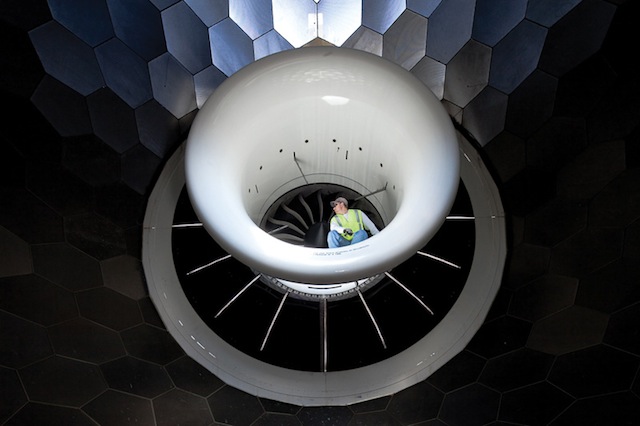
    “What if my jet engine could talk to me and what would it say?” Asked Beth Comstock, General Electric’s Chief Marketing Officer, at the Dreamforce 2012 conference.

    The idea of social media connected jet engine is strange, but the idea that a key piece of technology can talk to engineers, pilots, salespeople and management makes sense.

    At the Dreamforce conference, Salesforce.com were showing how their Chatter social communications tool can be applied to more than just salesteams, in GE’s case by giving their new GEnx engine the opportunity to talk to its support teams.

    In flight telemetry is nothing new to the aviation industry, ACARS – Aircraft Communications Addressing and Reporting Systems – have allowed airlines to monitor the performance of their aircraft over high frequency radio or satellite links during flight since 1978.

    The difference today is the sheer amount of data that can be collected and who it can be shared with. If relevant data is being shared with the right people it makes managing these complex systems far easier.

    More importantly, it helps teams collaborate. The GEnx engine is a new design that’s fitted to Boeing’s latest airlines including the troubled and late Dreamliner 787 so streamlining the design process of a new, high performance piece of technology pays dividends quickly.

    Although things can still go wrong – one wonders what the final tweet from this engine would have been.

    We’ve been talking for a long time about how social media and cloud computing services improve collaboration in a work place, the GEnx jet engine illustrates just how fundamental the changes these technologies are bringing to organisations.

    If an industrial jet engine can be using social media it begs the question why service based companies and workforces aren’t. It’s where the customers and staff are.

    These tools are radically changing the way we work right now – the question is are we, and the organisations we work for, prepared for these changes?

    Paul travelled to Dreamforce 2012 courtesy of Salesforce.com

    Similar posts:

  • Legacy people

    Legacy people

    “The problem with legacy businesses is legacy people” said David Cush, the CEO of Virgin America at the Dreamforce conference.

    For many organisations this is indeed the problem; that managements, workforces and shareholders are locked into a way of doing business that has worked for them in the past, so when change arrives they are ill-equipped to deal with it.

    One of the key take aways from the Dreamforce conference is that the rate of business change is accelerating as technologies like cloud computing and the Internet mature.

    For the legacy businesses locked into old ways this means they are going backwards faster than they could imagine.

    A good example of this is when Virgin America showed their vision of how customer service works in a connected, social world.

    The problem for companies like United and the other legacy carriers with their older aircraft and lumbering IT systems is they simply don’t have the infrastructure to provide these services if they wanted to.

    One of the characteristics of 1980s management thinking is under-investing in equipment. ‘working your assets’ by flogging them way past their replacement dates is a handy way to increase profits and management bonuses, but it leaves a business exposed when newer technologies come along.

    That’s the problem the legacy businesses, whether they are airlines, banks, telcos or in any other sector. Those who are nimble and those who have invested in new systems can take advantage of the change.

    For some of these businesses even if they had the wits, and cash, to make those investments it’s dubious whether they could make the tools work properly.

    ‘Getting it’ is more than just understanding how to turn on an iPhone or send a tweet, it’s about how these tools can be used in a business.

    If you don’t know how to use these tools, or understand the consequences of using them, then the investment is wasted.

    For those organisations who are falling behind, they have to start moving quickly or their legacy is the only trace there will be of their existence.

    Similar posts: