Category: business advice

  • Towards the Zettabyte enterprise

    Towards the Zettabyte enterprise

    Toward the Zettabyte Enterprise originally appeared in Smart Company on May 31, 2012

    Two hundred years ago, the idea of equivalent power of hundreds of horses in a single machine was unthinkable; then steam engine arrived with what seemed unlimited power and that, followed by electricity and the motor car, changed our society and the way we do business.

    Back then it was inconceivable that the average person would have the equivalent of several hundred horses of power in their household, today most of us have that sitting in our driveway.

    The same thing is happening with the explosion in data, it’s changing how we work in ways as profound as the steam engine, electricity or the motor car.

    A couple of surveys released this week illustrate the how business is changing. The Yellow Social Media Report 2012 and the Cisco VisualNetworking Index both show how business and our customers are adapting to having high speed internet at their fingertips.

    The Cisco index illustrates the explosive growth of data across the Internet as more people in Asia and Africa connect to the net while users in developed countries like Australia increase their already heavy usage.

    In Australia, Cisco see a sixfold growth in traffic between now and 2016. As the National Broadband Network is rolled out, they see speeds increasing substantially as well, with Australia moving from the back of global speed tables up to the front.

    Many people are still struggling with the Megabyte or Gigabyte, but very soon we’re going to have to deal with the Zettabyte – a trillion Gigabytes.

    For businesses, this means we’re going to have to deal with even more data, it’s clear our hardware and office equipment aren’t going to deal with the massive traffic increases we’re going to see in the next few years.

    Even if we have that equipment, it’s another question whether we have the systems, or intellectual capacity to use it effectively.

    The Sensis social media report shows consumers are expecting not just rich data but also 24/7 online services.

    A worrying part of the Sensis survey is that businesses aren’t keeping up with these demands; something that jumps out with the survey is that while 79% of big businesses have a social media presence, only 27% of small businesses have bothered setting one up.

    Australian small businesses have basically given the turf away to the big end of town.

    The real worry with these statistics is that small business just isn’t taking advantage of the tools available to them — not only are they leaving the field open to bigger competitors, but there’s a whole new generation of lean new startups about to grab markets off slow incumbents.

    While the big companies are vulnerable, it’s the smaller businesses who are the low hanging, easy to pick fruit. If you’re in a profitable niche segment this is something you’ll need to keep in mind.

    In the near future we’ll be dealing with inconceivable amounts of data, the businesses that understand this will thrive while those who don’t probably won’t even understand what has hit them.

    Similar posts:

  • Falling Dominos, Fading Businesses

    Falling Dominos, Fading Businesses

    “When the tide goes out, we find out who’s naked” goes the saying – nowhere is this more true than in the engineering and construction industries.

    One of the hallmarks of an economy that has passed its peak is the systemic failure of contracting companies.

    During a boom, or a steady growth phase of an economy, contracting companies see cashflows increase as more projects come online.

    That growth affects contractors in a number of ways – they start getting used to fatter margins and management starts to believe in their own invulnerability.

    Blue sky seems to stretch on forever and massive growth rates seem guaranteed far into the future.

    As the market matures the sky starts to turn grey as more contractors start fighting for lucrative jobs seeing cost estimates being fudged and dodgy deals done to win jobs.

    Those dodgy contracts eventually come in at a loss and management starts desperately winning more projects to cover the losses on earlier work.

    And so a spiral begins.

    To make matters worse, the more aggressive contractors start buying out smaller competitors.

    Often those competitors have similar bad projects on their books and their impressive growth rates are based upon winning jobs they should never have tendered for.

    Eventually the spiral ends when the market stalls and there aren’t enough new projects available for the loss making contractors to cover the accumulated losses. Then the failures begin.

    Collapses of the Hasties Group, Reed, St Hilliers and other construction and engineering contractors are classic examples of this cycle.

    While shareholders and management carry some of the burden, the real pain of failure is felt by the armies of sub-contractors – largely small, family owned businesses – these companies employ.

    Most of these subcontractors will not get paid for their outstanding invoices, forcing all of them to cut back their own employment and spending. For some, they will be forced into liquidation as they can’t pay their own bills.

    For the families that own those small businesses the financial and emotional pain is real and immediate. Spending stops, debts go unpaid and relationships fail.

    In some cases that small bankrupt plumber, bricklayer or concreter finds the stresses of failure too great and a family loses their breadwinner.

    This multiplier effect of business failures and redundancies is one of the reasons the real economy is in a much tighter position than Australia’s political, business and media elites can bear to admit.

    Another saying is “a recession is when your neighbour loses their job, a depression is when you lose yours.” For most families, the economy has been in recession for three years as they’ve seen friends and relatives accept reduced hours or have contracts terminated.

    Much of the commentary about Australians being irrationally pessimistic misses this aspect of our economy. It’s amusing when the smug comments come from financial and economic journalists who don’t seem to have noticed the difficulties their own industry going through.

    There’s a lot of naked people treading water at the moment and the tide is heading out. The question for all of is where the deep water is and where the hell did we leave our speedos.

    Similar posts:

  • Google merges business with social

    Google merges business with social

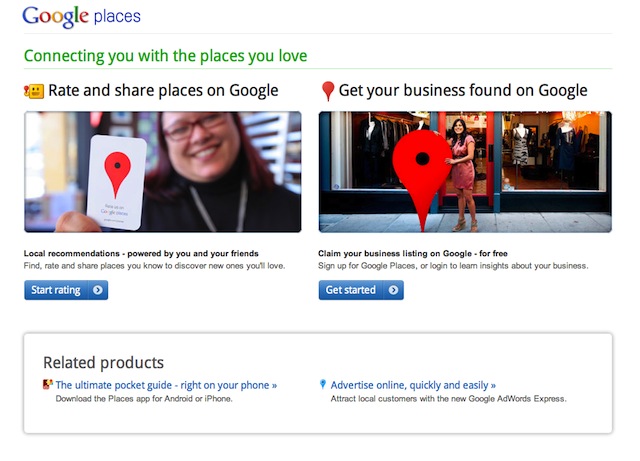
    As of today, Google Places is now part of Google Plus with the old accounts being merged into the social media and identity service.

    The effect of the merger means listings will now appear with the features of Google Plus added, for US based hospitality businesses, Zagats’ reviews are now also integrated into the results.

    For business owners, there’s little change in the administration panel and it appears any accounts that are suspended because of Google’s obscure listing policies remain in limbo.

    How the complexities of the Google Places policies mesh with the arcane and arbitrary rules applied to Google Plus identities will be an interesting thing to watch.

    One area of concern is that the owner of a Google+ Local listing will need a personal profile – for businesses this means a nominated individual has to run the account. Should that individual leave the business, then there will problems with shifting ownership.

    I have some questions in with Google’s PR folk about these aspects of the transition and hopefully we’ll get some more ideas on how to deal with these issues.

    While this merger of the two services are to be expected, it’s going to be interesting to see how it evolves. Right now it appears Google have dropped the ball on local with their focus on social and identity management.

    The identity management aspect of this integration is the key point as Google’s hope is that individuals will check into and rate businesses which in turn will give them a more complete picture of that person’s habits and preferences.

    How that pans out depends on how individuals value their personal information, it may be that once people understand the value of this data they’ll demand more than just the warm feeling of sharing their meal review with a circle of their friends.

    Similar posts:

  • FUD on the Desktop

    FUD on the Desktop

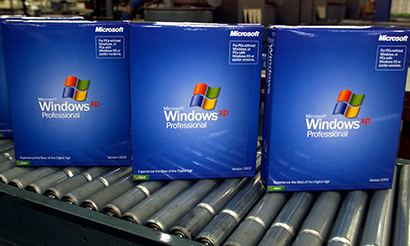
    “User productivity costs jump up a staggering 40 percent“, “return on investment over 130 percent over a three-year period” and an eighty four percent drop in IT support costs are some the latest claims from Microsoft in their campaign to wean users off Windows XP.

    These, undoubtedly true, claims are pretty impressive and compelling for cash strapped IT managers, but do they really matter anymore?

    With the rise of Bring Your Device policies and cloud computing, what operating system employees use is rapidly becoming irrelevant.

    In large organisations that supply workers’ computers, most systems are run on SOEs – Standard Operating Environments – which means users have limited accounts and can’t install rogue software.

    For those organisations wedded to supplying staff with desktop or laptop computers XP is fine and almost all of them are well advanced in their plans to redeploy to Windows 7 or 8 when the XP support period runs out in April 2014.

    We’re seeing fewer organisations locked into the SOE model as the financial sums and business benefits of moving over to an employee Bring Your Own Device – BYOD – model start to look compelling.

    Developing an SOE is a complex, time consuming task for an organisation – the package has to be tested to work on the company’s hardware which might include dozens of different types of printers, laptops and other devices. Then it has to be tested on all the software employees use.

    In a big organisation developing new operating environments is not done lightly. It’s a complex, expensive process.

    With a BYOD policy the company can develop a standard desktop environment that runs on a web browser. Staff can then bring their own device running on Mac OSX, Android, Linux or even Windows XP and, as long as their browser is up to date, they can run on the corporate network.

    The IT department no longer has to care about what the staff member has on their desk and can focus on more important business technology issues – although sadly the password issue doesn’t go away.

    For Microsoft, this evolution in corporate IT is a problem. Increasingly big organisations aren’t placing orders for big fleets of centrally managed desktops. The IT industry has moved to the cloud.

    In a perverse way Microsoft are winning the desktop battle, most of those workers in companies implementing BYOD policies will choose Windows 7 or 8 systems because they are cheap and work well in a business environment. The problem is that’s where the profit no longer lies.

    While we’ll see more FUD – Fear, Uncertainty and Doubt – about cloud computing, BYOD and Windows XP over the next year, the battle has been fought and won.

    Increasingly Microsoft are looking like an exhausted army that has won an irrelevant battle while the real war has moved elsewhere.

    The challenge for Microsoft is to find its way back to relevance in an era where the operating system doesn’t really matter.

    Similar posts:

  • Creative Quandaries

    Creative Quandaries

    In February, musician, coder and uber-geek David Lowery gave a talk to the SF Music Tech Summit on the difficulties musicians have making money in the online economy.

    Meet the Old Boss, Worse Than The Last Boss is an excellent dissection of the economics of the music industry as it currently stands – and it doesn’t look good for artists.

    David shows how the old distribution model was more rewarding for artists than today’s digital model, the old fashioned record store has largely gone out of business and has been replaced with the iTunes where Apple receive half the income of the local shop but assumes no risk, few costs and a far greater profit margin.

    Similarly, the record labels’ costs and risks haven’t substantially changed but their income has plummeted.

    We’ve seen the controllers of the music distribution business replaced with a far smaller, and more profitable, group of digital gatekeepers.

    A  great line in David’s presentation is just how much money technology company executives are making compared to their record industry counterparts of the 1980s, without taking on the responsibilities for keeping the creative supply pipeline flowing.

    Record labels value content and content creators. Sure they kept a lot of money for their executives (although even mid 90?s music executive pay is dwarfed by tech executive pay.)  But record labels unlike tech companies, know they built  their businesses on those who create content.  Therefore when they were flush with cash they set out to buy the services of as many artists as they could.  This  had the effect of sharing the wealth with musicians.  It may have been uneven it may have been wasteful, it may have not touched every artists and the labels may have pocketed most of the revenue but at least they felt they needed to give something back to the content creators.  They knew artists created something of value.

    The key words in the above passage are “content creators” as the struggles of the music industry are similar to those of writers, photographers and anybody creating original works that can be digitized.

    Probably one of the most interesting aspects of this are that many of the digerati David criticises for their utopian views on technology are themselves marginalised, and often impoverished, by the same economics.

    David links to a number of Huffington Post articles examples, yet it’s Adrianna Huffington and her contemporaries like Chris Anderson who are aggregating paid writers work and turning most of us into digital sharecroppers.

    It’s the Lords of the Digital Manor who are making a return while the bulk of content creators struggles.

    Those digirati, like myself, are making just as poor a living from their work as David’s friends in the music industry.

    What’s clear is we have to find the methods of distributing music and other valuable creative works that benefit the artist or writer, the old models of the publishing, broadcasting and music industries did this – not always fairly, but at least creators were rewarded.

    Right now we’re in a world where information is free and a small group of gatekeepers are controlling what revenues are available.

    It’s unlikely that situation is sustainable and over time we’ll see new models develop to displace the current gatekeepers who may be part of the transition effect to a changed economy.

    The person who figures out the successful model will be the 21st Century’s Randolph Hearst – hopefully they’ll spread the wealth around a bit more than the current gatekeepers.

    Similar posts: