Category: business advice

  • Forget Plastics, today it’s Big Data

    Forget Plastics, today it’s Big Data

    “Plastics” was the career advice to uni students in the 1967 movie The Graduate. Today the same advice to a smart young entrepreneur would be “big data”.

    Big data is the current buzzword for the IT industry, we’re seeing start-ups with cool tools popping up and whole new job descriptions to manage it, while big and small businesses ponder how to use another technology in their operations.

    At the end of the month, the third of the City of Sydney’s 2012 Let’s Talk Business series will see SmartCompany’s James Thomson among others discussing how data drives business.

    How we use data in our business is something we’ve had to come to grips with for ages, but many of us haven’t really started to find those nuggets of value in our databases.

    We’ve actually been in the era of big data for decades since computers were introduced in the workplace. One thing that PCs do very well is gather and store information.

    Today computerised point-of-sales systems, database software, loyalty programs and web-tracking tools mean we have a massive amount of data about our clients at our fingertips.

    As computers get more powerful and cloud-based services start making detailed data analysis more available, we’re going to see even more data pouring into our businesses.

    Social media services add to the data deluge as they gather, giving even more intelligence about our markets, individual customers and the performance of our businesses.

    The problem is that many of us are already overwhelmed by what we have. The thought of even more data we can’t use causes many managers and business owners to hide under their desks and weep.

    An article in the MIT’s Technology Review about Peter Fader, co-director of the Wharton Customer Analytics Initiative at the University of Pennsylvania looked at this problem.

    Professor’s Fader’s view is that most businesses have enough data – the problem is managing what we have, along with the risk of trying to extrapolate too much from historical information.

    To deal with this overload we’re seeing companies like Kaggle starting-up to help us mine this data and get useful information about our businesses and customers.

    What these data-mining companies are promising is the ability to see the patterns in what appears to be just a mass of confusing data.

    Already we’re seeing businesses that can connect the dots get a head start on their slower competitors who don’t appreciate the value locked in their databases and CRMs.

    Making sense of the data we’re accumulating is the real challenge. If we’re not paying attention to what we already have then there’s little point in gathering more.

    Tickets for How Your Customer Data Can Drive New Business at the Sydney Town Hall on May 29 are still available.


    Similar posts:

  • Digital roadkill

    Digital roadkill

    Digital Roadkill first appeared in Smart Company on 10 May 2012

    Just over thirteen years a group of Silicon Valley technologists wrote The Cluetrain Manifesto detailing what they saw as being the new rules of business in a connected world.

    Cluetrain was mandatory reading when terms like “information superhighway” were fashionable and Yahoo! was the dominant web portal. It’s somewhat fallen out of fashion today.

    Like most manifestos Cluetrain was partially unreadable and heavy on dramatics but it did lay down the principles that are now largely accepted in both the online and mainstream business worlds.

    I was reminded of the Cluetrain Manifesto earlier this week at a suburban marketing event run by one of the country’s biggest media organisations. The lessons of the last thirteen years seemed to have passed by almost every business in the room.

    Most of these businesses were operating they way they did in the 1990s. While some of them had a website and a couple had Facebook pages, their businesses had barely changed in the last twenty years.

    These businesses are digital roadkill. Many of them have no idea what’s about to hit them as they sit paralysed wondering what the bright lights baring down on them are.

    In this respect they aren’t dissimilar to the big department stores or electrical chains that are working to a model that’s ticked along nicely for decades and don’t realise how the fundamentals of the economy have shifted in the last five years.

    Many of these small traders are still taking orders by fax and some of them still keep their cheque book ready to pay their suppliers bills. It’s that bad.

    The idea of selling over the net is completely beyond them, only big overseas companies dodging GST do that sort of thing.

    Even in the marketing field, these businesses have ignored the obvious for years with many still advertising in their local Yellow Pages and freebie community newspaper, despite barely making a sale from either in five years. But these channels worked for them once.

    Few of them have up to date websites, are doing the bare minimum search engine or mobile optimisation and almost every single one hasn’t bothered to claim their local business listings.

    To be fair to the little guys the host organisation was no better, this large media organisation has a good online product – they even own one of the major online local business listing services – but their sales people on the night didn’t mention it as they are too locked into selling their traditional local newspaper advertising products.

    At least that company is wealthy and has other profitable arms that can prop up its dying local newspaper arms which can at least appear profitable while there are costs to be stripped from the operation.

    Unlike those big media companies and retailers, the small local business doesn’t have big cash reserves or deep pocketed investors allowing them to survive for years in a declining market.

    These small businesses are just going to drag their owners into poverty.

    Not only have the old rules of business gone, but the value of businesses which choose to live in the past has evaporated. Few people are going to buy a business with an old, declining customer base.

    “Roadkill” is an apt term for a business that probably won’t be around in two years.

    Today the Cluetrain is big lumbering road train carrying ecommerce goods down the fast lane of the information superhighway with a driver that has no intention of stopping.

    Make sure your business isn’t the cute fluffy rodent sitting in its path.

    Similar posts:

    • No Related Posts
  • Bringing your own device and business change

    Bringing your own device and business change

    Two years ago I realised that the management trend of staff bringing their own computers to work – BYOD – was more than a fad when I noticed executives were bringing the then new iPads to meetings.

    Most of these executives worked in organisations where IT departments had waged war on employees connecting their own equipment to the corporate network, so this was a serious development in the computing world.

    In many ways employees had been bringing their own technology devices to work for years. It was, and still is, quite common to see public servants and those working for other bureaucratic organisations arriving at meetings with an underfeatured work supplied handset and their own smartphone.

    IT managers hated this as they saw those private devices as a security risk and another headache for their overworked staff to deal with.

    When the iPod was enthusiastically adopted by the executive suite, the game was over for those IT managers. Suddenly they had to deal with these devices and the issues involved.

    At a seminar run by systems integrator Logicalis earlier this week looked at some of the issues around BYOD for companies. What was striking in their presentations were the need for HR and legal departments to be part of the process for adopting this philosophy.

    The BYOD philosophy is a big jump for organisations as it means relaxing controls on employees and for many managers that is the biggest challenge.

    Part of that challenge is controlling the organisation’s data on devices that could be going anywhere and doing anything.

    While companies like Logicalis and Citrix address this with remote desktop applications that create a virtual Windows desktop on the employee’s device, networking giant Cisco offer their ISE devices to run “identity services” that set up rules controlling what staff can access and where they can access it from.

    Cisco Australia’s Chief Technology Officer Kevin Bloch gave a good round earlier this week up of where they see BYOD driving business. To Cisco, the move to mobile devices is irresistible as shown in their Global Mobile Data Traffic Update.

    Interesting both Kevin and the Logicalis speakers see BYOD as being part of the recruitment process. Increasingly younger workers expect they will be able to use their own devices rather than relying upon employer issued workstations and mobile phones.

    According to Kevin, Cisco’s research is finding many employees would trade salary for the right to bring their own device which is something that should grab the attention of budget constrained managers.

    This also ties into other employer trends such as Activity Based Workplaces where companies provide hot desks and staff are expected to store their items away at the end of each workday.

    Ross Miller of the GPT Group described how this is another trend driving the paperless office as staff using hot desks find packing away files and paperwork each day is an unnecessary hassle.

    What we’re seeing with businesses adopting BYOD policies is a big change in the way places operate and this has consequences for all divisions of an organisation from HR and legal through to marketing and corporate affairs. It’s a genuine game changer.

    How the BYOD philosophy is changing business is good example of technology driving our habits and work practices in ways we don’t always anticipate.

    One thing is for sure, the workplace of the future is far more autonomous and diverse than those we’ve been used to for the last hundred years, the businesses who don’t adapt are those being left behind.

    Similar posts:

  • No exit

    No exit

    The men’s hairdresser down the road from me has hung up his scissors after twenty-four years.

    The sign on his shop window apologizes and the shop itself is up for lease. Shortly there won’t be any evidence a long standing local business was once there.

    Roy had no exit from his business and he sell the operation as a going concern.

    For Roy his retirement will be funded solely out of his savings. If he’s lucky he’ll have saved enough of his income from the business for a comfortable retirement – unfortunately many small business owners they’ll eke out the rest of their lives on the pension.

    Even for those who have planned for an exit, many of their plans have fallen over in the aftermath of the 2008 financial crisis.

    It’s always been questionable whether Gen X and Y entrepreneurs could afford to pay the sums for the affluent retirement of Baby Boomer business owners but now the post 2008 contraction in lending means it’s even less likely retiring business owners like Roy will find someone to buy their businesses.

    While the focus is on twenty something app developers selling their businesses for a billion dollars, the truth is that wealth for most business owners lies in the local newsagent, hairdresser or coffee shop owner being able to sell their operation for a reasonable return.

    For many baby boomer business owners it’s going to mean working more years than they intended and sharply reduced retirement expectations.

    Property values too are difficult. Many boomer businesses had the sensible model of buying the property their business occupies as a retirement nest egg.

    Again those properties are too expensive for the new generation and the deleveraging economy means the outlook for property values isn’t good.

    On every level, things are going to be tough for those wanting to sell businesses over the next decade.

    Those who do get good prices for their businesses are going to be those doing something exceptional to gain attention with income and profits that make them stand out from the cloud.

    Just being the best hairdresser in the neighbourhood or having a popular cafe isn’t going to be enough.

    Hopefully Roy The Barber managed to stash away enough for a well deserved comfortable retirement.

    Similar posts:

  • Continuing the online payments battle

    Continuing the online payments battle

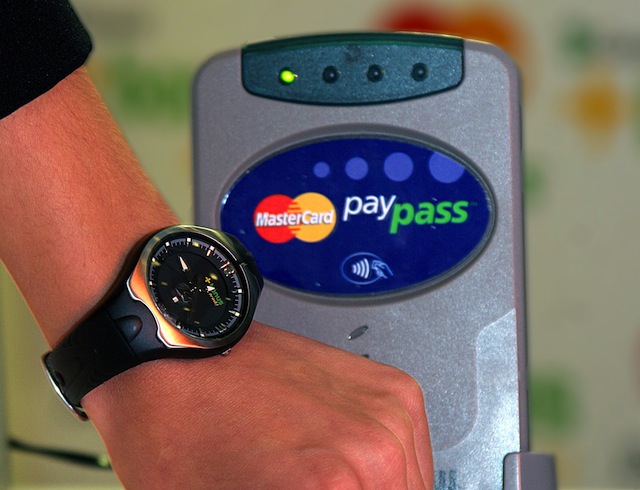
    Today Mastercard announced their PayPass service, a “digital wallet” that allows consumers to pay through various online channels including the web and their smartphones.

    Mastercard’s PayPass is the latest move in the battle to control the online payments industry as consumers move from plastic cards to using their mobile phones and Internet devices.

    One of the interesting aspects of PayPass is how it is a direct challenge to PayPal who in turn recently launched their PayPal Here service which threatens incumbent credit card services like Mastercard and Visa along with upstarts like Square.

    While its early days yet in the mobile payments space as consumers slowly begin to accept using smartphones and tablet computers to pay for goods and services, its clear the industry incumbents are moving to secure their positions in the market place.

    It’s going to be interesting to see how this develops, many merchants will be hoping this competition starts to drive down transaction costs.

    Similar posts: